Besatzungen der ISS

ISS: Expedition 15 |
 |
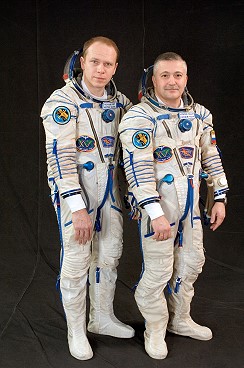
hochauflösende Version (626 KB) alternatives Crewfoto |

|
|
|
 |
 |
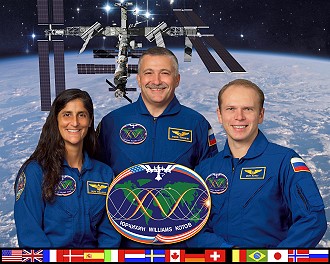
hochauflösende Version (690 KB) alternatives Crewfoto |
alternatives Crewfoto |
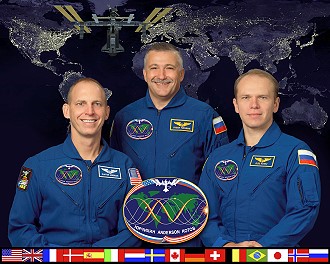
Besatzung, Start- und Landedaten
| Nr. | Nation | Name | Vorname | Position | Raumschiff (Start) |
Startdatum | Startzeit | Raumschiff (Landung) |
Landedatum | Landezeit | Flugdauer | Erdorbits |
| 1 |  |
Jurtschichin | Fjodor Nikolajewitsch | ISS-CDR | Sojus TMA-10 | 07.04.2007 | 17:31:14,194 UTC | Sojus TMA-10 | 21.10.2007 | 10:35:49 UTC | 196d 17h 04m 35s | 3106 |
| 2 | |
Kotow | Oleg Walerijewitsch | Bordingenieur-1 | Sojus TMA-10 | 07.04.2007 | 17:31:14,194 UTC | Sojus TMA-10 | 21.10.2007 | 10:35:49 UTC | 196d 17h 04m 35s | 3106 |
| 3 |  |
Williams | Sunita Lyn "Suni" | Flugingenieurin-2 | STS-116 | 10.12.2006 | 01:47:35,009 UTC | STS-117 | 22.06.2007 | 19:49:36,152 UTC | 194d 18h 02m 01s | 3062 |
| 4 | |
Anderson | Clayton Conrad | Flugingenieur-2 | STS-117 | 08.06.2007 | 23:38:04,012 UTC | STS-120 | 07.11.2007 | 18:01:16 UTC | 151d 18h 23m 12s | 2389 |
Ersatzmannschaft bzw. Double Crew
| Nr. | Nation | Name | Vorname | Position |
| 1 | |
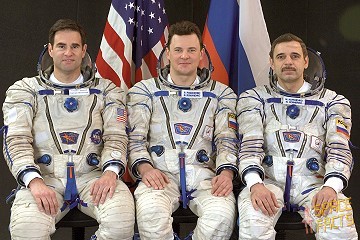
Romanenko | Roman Jurjewitsch | ISS-CDR |
| 2 | |
Kornijenko | Michail Borissowitsch | Bordingenieur |
| 3 | |
Anderson | Clayton Conrad | Flugingenieur |
| 4 | |
Chamitoff | Gregory Errol | Flugingenieur |
 |
alternatives Crewfoto |
 |
Expeditionsverlauf
|
Start vom Kosmodrom Baikonur (Fjodor
Jurtschichin und Oleg
Kotow
mit Sojus
TMA-10). Clayton
Anderson kam mit
STS-117 am 10.
Juni 2007 auf der
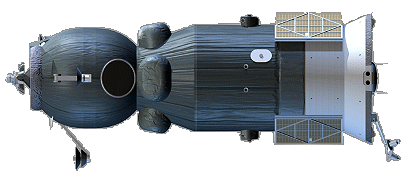
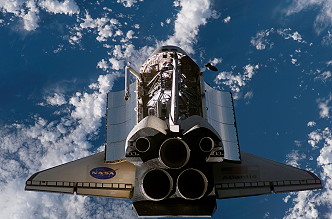
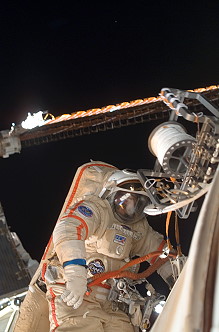
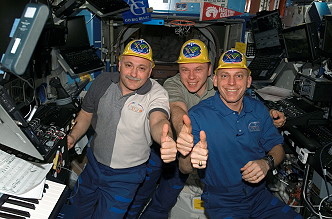
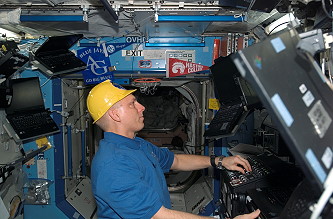
ISS an. Offiziell begann die Expedition 15 mit der Abkopplung des russischen Raumschiffs Sojus TMA-9 am 21. April 2007 um 09:11:39 UTC. Gleichzeitig war damit die Expedition 14 beendet. Die Bordingenieurin Sunita Williams, die seit Dezember 2006 auf der Station arbeitete, sollte ursprünglich mit der Shuttle-Mission STS-118 zurückkehren und gleichzeitig von Clayton Anderson abgelöst werden. Wegen der Startverschiebung von STS-117 von März auf Juni 2007 entschied die NASA am 26. April 2007, den Besatzungswechsel um einen Flug vorzuverlegen. Durch die kleine Umstellung wird die Besatzungsplanung der ISS nicht beeinflusst. Im März und April 2007 führten Sunita Williams und ihre Kollegen weitere SPHERES-Tests (Synchronized Position Hold, Engage, Reorient, Experimental Satellites) durch. Dabei handelt es sich um kleine Experimentalsatelliten, die vom Space Systems Laboratory des Massachusetts Institute of Technology entwickelt wurden. Der erste Mini-Satellit erreichte ein Jahr zuvor mit Progress M-56 die ISS, den dritten Ball hatte Sunita Williams bei ihrer Ankunft im Gepäck. Beim sechsten SPHERES-Flug am 17. März 2007 wurde erstmals die dritte Kugel eingesetzt – damit ist das ganze System einsatzbereit. Die drei je 20 Zentimeter großen Kugeln sind batteriegetriebene Geräte, die in der Raumstation ausgesetzt werden und frei fliegen. Computergesteuert können sie sich über kleine Gasdüsen positionieren und ausrichten. Ziel von SPHERES ist die Entwicklung von einfachen autonomen Kopplungsverfahren durch die Verbesserung der eingesetzten Software. Regelmäßig sprechen die Raumfahrer der Station über die ARISS-Anlage (Amateur Radio on the International Space Station) mit Funkamateuren auf der Erde. Nachdem Sunita Williams bereits am 23. April 2007 mit Schülern der Europäischen Schule im italienischen Varese und Kindern einer Grundschule in Virginia Kontakt aufgenommen hatte, war sie fünf Tage später mit deutschen Jugendlichen verabredet. Am Nachmittag hatten fünf Schüler des Samuel-von-Pufendorf-Gymnasiums im sächsischen Flöha Gelegenheit, der Bordingenieurin 18 ihrer 20 vorbereiteten Fragen zu stellen. Das Gespräch stellte den Höhepunkt einer dreijährigen Projektarbeit dar, in deren Verlauf die Schulfunkstation eingerichtet worden war. Der unbemannte russische Frachter Progress M-60 legte am 15. Mai 2007 um 05:10 UTC an der Internationalen Raumstation an. Er war am 12. Mai 2007 um 03:25:36 UTC vom Kosmodrom Baikonur gestartet. Das Transport-Raumschiff brachte insgesamt 2,3 Tonnen, darunter 476 Kilogramm Treibstoff, 420 Liter Trinkwasser, 45 Kilogramm Sauerstoff, 241 Kilogramm Lebensmittel (Konserven, frisches Obst und Gemüse), Medikamente, Kleidung und wissenschaftliche Geräte zur Stammbesatzung. Außerdem waren Post, Bücher, DVD-Filme (russische Komödien und der sowjetische Science-Fiction-Klassiker Solaris) und Zeitschriften zur Erbauung der Raumfahrer an Bord. Am 19. September 2007 um 00:36:51 UTC koppelte Progress M-60 wieder ab. Im Rahmen des Plasma-Progress-Programms wurde er dann noch für wissenschaftliche Aufgaben verwendet. Der Frachter wurde kontrolliert zum Absturz gebracht und verglühte am 25. September 2007 über dem Pazifischen Ozean. Die erste EVA durch Fjodor Jurtschichin und Oleg Kotow wurde am 30. Mai 2007 (5h 25m) ausgeführt. Hauptziel des Ausstiegs war die Installation mehrerer SMDP-Schilde (Service Module Debris Panels) am Modul Swesda. Die 2,5 Zentimeter dicken Aluminiumplatten zum Schutz vor Mikrometeoriten waren auf einer Struktur zusammengefasst, die sich am PMA-3 befand. Dieser wegen seines Aussehens als "Weihnachtsbaum" bezeichnete Adapter wurde mittels des Strela-Frachtkrans in die Nähe des Swesda-Moduls verlegt und vorübergehend abgelegt. Dazu war der 13,7 Meter lange Strela 2 extra mit einer 4,6-Meter-Verlängerung ausgerüstet worden. Danach unterbrachen die zwei Kosmonauten die Montage der Schutzbleche und verlegten entlang von Swesda ein GPS-Kabel, das für die Navigation des europäischen ATV-Zubringers benötigt wird, der im Frühjahr 2008 die ISS erstmals anflog. Anschließend kehrten Oleg Kotow und Fjodor Jurtschichin an das vordere Ende von Swesda zurück, um die fünf SMDP-Paneele zu installieren. Insgesamt 17 der 60 Zentimeter mal 90 Zentimeter großen Platten waren in drei "Ästen" des Weihnachtsbaums gebündelt, der mit STS-116 im Dezember 2006 zur Station gebracht worden war. Die zweite EVA unternahmen Fjodor Jurtschichin und Oleg Kotow am 06. Juni 2007 (5h 38m). Zunächst tauschten sie einen Probencontainer für das russische Experiment Biorisk aus, das die Anpassungsfähigkeit von Pilzsporen und Bakterien untersucht. Danach wurde ein 13,1 Meter langes Ethernet-Kabel an der Außenseite des Sarja-Moduls verlegt. Damit wird es künftig möglich sein, im Notfall Steuerungsbefehle über das Computernetz vom amerikanischen zum russischen Teil der Raumstation zu senden. Während ihrer Arbeiten an der Außenhülle von Sarja entdeckten die Kosmonauten den Einschlag eines Kleinstmeteoriten. Kommandant Fjodor Jurtschichin meldete an das Kontrollzentrum, die Beschädigung sehe aus wie das Loch einer Revolverkugel und sei fünf bis sechs Millimeter groß. Der Mikrometeorit hatte das Isoliermaterial des Moduls durchschlagen und ein Versorgungsgerät getroffen, sonst aber keine ernsthaften Schäden verursacht. Wann Sarja, das sich seit November 1998 in der Umlaufbahn befindet, getroffen wurde, war nicht feststellbar. Solche Zerstörungen waren bereits an den großen Sonnenflügeln festgestellt worden, aber es war das erste Mal, dass ein Einschlag ein Modul der Raumstation traf. Anschließend widmeten sich Oleg Kotow und Fjodor Jurtschichin ihrer Hauptaufgabe: die Montage der restlichen SMDP-Bleche an Swesda, von denen jedes zweieinhalb Zentimeter stark ist. Mit den zwölf Schutzplatten dieser EVA, den fünf von letzter Woche und den ersten sechs, die 2002 angebracht wurden, verfügt das russische Modul über 23 SMDPs zum Schutz vor Meteoriteneinschlägen. STS-117 koppelte am 10. Juni 2007 an die Internationale Raumstation an. STS-117 (ISS-13A ITS-S3 / ITS-S4) brachte das S3/S4-Element zur Internationalen Raumstation. Das Bauteil besteht aus der Gitterstruktur S3 und dem Solarzellenträger S4. Die Solarpaneele wurden nach der Installation ausgefahren. Außerdem wurde der zweite Flügel des Solarmoduls P6 eingefahren, um diesen später an seine endgültige Position bringen zu können. Die Integrated Truss Structure (ITS; dt.: Integrierte Gitterstruktur) ist die tragende Gitterstruktur der Internationalen Raumstation (ISS). Sie bildet deren Rückgrat und ist senkrecht zur Flugrichtung ausgerichtet. Die ITS ist wie die gesamte Raumstation modular aufgebaut. Die einzelnen Elemente tragen Bezeichnungen aus einer Buchstaben-/Zahlenkombination ("P" steht für Port, von engl. Backbord; "S" steht für Starboard, von engl. Steuerbord): P1, P3/P4, P5 und P6 sind in Flugrichtung links angeordnet, während auf der rechten Seite die Elemente S1, S3/S4, S5 und S6 montiert sind. Das Element S0 liegt in der Mitte und ist über das Destiny Labor mit dem bewohnten Teil der Station verbunden. Die Integrated Truss Structure ist eine im Querschnitt trapezförmige, starre Leichtmetallstruktur mit zusätzlichen Querstreben. Für die Verbindung der einzelnen Segmente der Gitterstruktur existiert ein spezielles "Module-to-Truss Segment Attachment System". Für jede Verbindung gibt es einen fernbedienbaren Fangriegel, der beide Elemente zunächst locker verbindet und danach festgezogen wird. Außerdem greifen dann vier motorgetriebene Bolzen, die zusätzlich gesichert werden. Die Integrated Truss Structure ist eine im Querschnitt trapezförmige, starre Leichtmetallstruktur mit zusätzlichen Querstreben. Für die Verbindung der einzelnen Segmente der Gitterstruktur existiert ein spezielles "Module-to-Truss Segment Attachment System". Für jede Verbindung gibt es einen fernbedienbaren Fangriegel, der beide Elemente zunächst locker verbindet und danach festgezogen wird. Außerdem greifen dann vier motorgetriebene Bolzen, die zusätzlich gesichert werden. ITS-S3 / ITS-S4 bestehen jeweils aus zwei einzelnen Segmenten, die bereits vor dem Start miteinander verbunden wurden: die Gitterstrukturen P3 bzw. S3 und die Solarzellenträger P4 bzw. S4. Sie unterscheiden sich geringfügig voneinander: P3/P4 ist 13,81 Meter lang, 4,88 Meter breit, hat eine Höhe von 4,75 Meter und besitzt eine Masse von 15,8 Tonnen. S3/S4 ist 13,66 Meter lang, 4,96 Meter breit und 4,63 Meter hoch bei einer Masse von 16,2 Tonnen. Das S3-Element ist über das SARJ-Gelenk (Solar Alpha Rotary Joint) drehbar mit dem S4-Element verbunden an dem sich zwei ausfaltbare Solarzellenflügel befinden, die der Energiegewinnung dienen. Die Flügel sind drehbar montiert und können so senkrecht zur Sonne ausgerichtet werden. Innerhalb der Gitterstruktur des S4-Elements befinden sich Akkus zur Speicherung der erzeugten Energie. Weiterhin befindet sich an dem Element auch ein Radiator, der überschüssige Wärme in den Weltraum abgibt und damit die Elektronik des Solarkollektors kühlt. In der Nähe der Station führte Frederick Sturckow ein spektakuläres 360°-Manöver - das Rendezvous Pitch Maneuver (RPM) - durch, wobei er die Raumfähre innerhalb weniger Minuten um ihre Querachse drehen ließ. Die Besatzung der Raumstation fertigte währenddessen hochauflösende Aufnahmen des Shuttle-Hitzeschildes an. Die Aufnahmen wurden später zur Erde übertragen und von Fachleuten ausgewertet. Mit einer direkt vor der ISS reduzierten Annäherungsgeschwindigkeit auf zuletzt nur noch 3 Zentimeter pro Sekunde flog der Orbiter auf den Ankopplungsstutzen der Internationalen Raumstation zu. Wie die Kommandanten bei allen Kopplungsmissionen steuerte er den Raumgleiter von der hinteren Konsole im Flugdeck aus, weil er von dort freie Sicht auf die Raumstation hatte. Ohne Probleme konnte er sein Raumschiff an die ISS ankoppeln. Nach den üblichen Dichtigkeitsprüfungen öffneten STS-117-Kommandant Frederick Sturckow und der Kommandant der ISS Expedition 15 Fjodor Jurtschichin die Luken zwischen den beiden Raumfahrzeugen. Clayton Anderson baute seinen im Space Shuttle mitgebrachten Schalensitz in das angedockte Raumschiff Sojus TMA-10 ein. Dies geschah nur als Vorsichtsmaßnahme für den Fall einer überhasteten Rückkehr vor Abholung durch das nächste Space Shuttle. Damit gehörte er offiziell zur 15. Besatzung der Raumstation. Im Gegenzug baute Sunita Williams ihren Schalensitz aus dem Sojus-Raumschiff aus und wurde damit Mannschaftsmitglied von STS-117. Im Mitteldeck der Atlantis war ein Liegesitz für sie eingebaut, um ihr bei der Landung die Anpassung an die Schwerkraft zu erleichtern. Noch am gleichen Tag wurde gegen 21:20 UTC das S3/S4-Segment aus der Nutzlastbucht der Atlantis gehievt und an den Stationsarm weitergegeben. Zudem wurden zur Vorbereitung auf den ersten Außenbordeinsatz (EVA) die Raumanzüge von der Shuttle- zur Stationsluftschleuse Quest gebracht, wo James Reilly und John Olivas die Nacht verbrachten. Während dieses sogenannten Campouts atmeten sie in der Luftschleuse reinen Sauerstoff unter geringerem Druck. Die erste EVA unternahmen James Reilly und John Olivas am 11. Juni 2007 (6h 15m) zur Befestigung von elektrischen Strom-, Kühlungs- und Datenkabeln zum Beginn der Aktivierung des S3/S4-Trägers und Vorbereitung der Aktivierung des Solar Alpha Rotary Joint (SARJ). Dazu gehörten das Abmontieren und Umsetzen von Halterungsbolzen und das Anbringen der Vorrichtungen, in denen die neuen Sonnenkollektoren verankert werden. Im Verlauf des 11. Juni 2007 entschied die Flugleitung nach intensiven Beratungen, die Mission um zwei Tage zu verlängern und einen vierten Weltraumausstieg in den Flugplan zu integrieren. Während dieser EVA sollte die Isoliermatte an der Backbord-OMS-Gondel des Orbiters repariert werden, an der kurz nach dem Start eine Beschädigung entdeckt worden war. Der 12. Juni 2007 brachte mit der Entfaltung der S4-Solarpaneele eine signifikante Änderung des Stationsäußeren. Zunächst wurde der vordere Flügel halb und nach einiger Zeit komplett ausgefahren, bevor er in die Arbeitsposition gedreht wurde. Danach wurde mit dem hinteren Paneel ebenso verfahren. Das Entfalten erfolgte stufenweise, damit sich die Flügel in der Sonne erwärmen konnten. So wird verhindert, dass die einzelnen Lamellen aneinanderkleben. Dieses Problem trat beim Ausrollen des ersten Solarmoduls während STS-97 auf, als die Tafeln in einem Durchgang ausgeklappt wurden. Die Flächen des P6-Kollektors entfalteten sich ruckartig, was wellenartige Bewegungen entlang des Mastes verursachte. Dadurch schlugen die Solarzellen, die sich noch im Transportkanister befanden, gegen dessen Wände. Die zweite EVA durch Patrick Forrester und Steven Swanson erfolgte am 13. Juni 2007 (7h 16m) zur Fortsetzung der Aktivierung des S3/S4-Trägers und Assistenz beim Abbau des an Steuerbord befindlichen Sonnensegels am P6-Träger. Dabei konnten sie zwar alle Halterungen lösen, aber einige Haltegriffe nicht. Das wurde auf den nächsten Ausstieg verschoben. Nach dieser EVA traten unerwartete Probleme mit den Navigationscomputern aus dem russischen Sektor auf, die fast vollständig ausfielen. Im Laufe der Tage, gelang es den russischen Kosmonauten der ISS, mit viel Improvisationstalent und Bodenunterstützung die Computer wieder zum Laufen zu bringen; die Mission musste somit nicht abgebrochen werden. Infolge der Probleme und der verzögerten Arbeiten entschied man sich sogar, die Mission zu verlängern. Weil nur 13 der 31 Lamellen des P6-Moduls zusammengefaltet werden konnten, wurde am siebten Missionstag, dem 14. Juni 2007, ein weiterer Versuch unternommen. Dreieinhalb Stunden lang gab die Bodenstation das Kommando zum Einrollen, trotzdem war der Erfolg gering. Der Flügel war noch immer bis zur Hälfte ausgefahren. Deshalb wurde entschieden, das Paneelproblem während des dritten Ausstiegs am folgenden Tag anzugehen. Daneben hatten die ISS-Bewohner mit Computerproblemen zu kämpfen: Im russischen Teil der ISS fielen während des Entfaltens der S4-Solarpaneele drei Rechner gleichzeitig aus, die unter anderem für die Lagekontrolle der Station zuständig sind. Nach Auskunft der NASA hätte die Besatzung im schlimmsten Fall die Station verlassen müssen, falls das Problem nicht behoben würde. Die Lageregelung wurde an die Atlantis übergeben. Nach mehreren Stunden konnte einer der drei Rechner wieder gestartet werden. Danach wurde versucht, auch die anderen Computer zu starten. Dabei wurden eine Reihe von Feueralarmen produziert, die die Besatzungen eine Stunde früher als vorgesehen weckten. Nach und nach gelang es, alle Rechner wieder zu starten. Direkt danach wurde mit den Triebwerken des Sarja-Moduls eine Kurskorrektur durchgeführt. Nach wenigen Minuten stürzten alle Rechner erneut ab. Während dieser Zeit führte die Atlantis die Kurskorrekturen aus. Da allerdings die Treibstoffreserven der Fähre begrenzt waren, mussten die Computer vor dem Abdocken wieder stabil laufen. Die NASA wies die Raumfahrer an, Energie zu sparen, um für die Atlantis einen zusätzlichen Andocktag zu erreichen und den Computerexperten mehr Zeit zu geben. Als Grund wurde unter anderem vermutet, dass der Ausfall durch elektromagnetische Interferenzen des neu installierten S3/S4-Elements verursacht wurde. Die dritte EVA wurde wieder durch James Reilly und John Olivas am 15. Juni 2007 (7h 58m) ausgeführt. Sie diente der Entfernung der restlichen Sicherungsbolzen des Solar Alpha Rotary Joint (SARJ), um es zu aktivieren und Reparatur des Hitzeschildes der Atlantis. Eine Hitzekachel war beim Start teilweise hochgeklappt und musste von John Olivas wieder in die richtige Position gebracht und fixiert werden. Die vierte und nicht geplante EVA unternahmen Patrick Forrester und Steven Swanson am 17. Juni 2007 (6h 29m). Dabei wurden abschließende Arbeiten zur Aktivierung des Solar Alpha Rotary Joint (SARJ) durchgeführt. Zu den weiteren Arbeiten gehörten das Umsetzen einer GPS-Antenne, die Installation eines Computer-Netzwerkkabels an Unity und Arbeiten am Schutzschild des Destiny-Labors. Am 19. Juni 2007 koppelte die Atlantis-Besatzung mittels Federkraft wieder von der ISS ab. Dadurch wurden Beschädigungen oder Verunreinigungen der Station vermieden. Erst danach wurden die Steuerungstriebwerke aktiviert und die Raumfähre entfernte sich von ihr bis zu einer Distanz von etwa 150 Meter. Von dort aus umflog Lee Archambault die Orbitalstation eineinhalb Mal, ehe die Triebwerke der Atlantis erneut gezündet wurden und der Raumgleiter seine Distanz vergrößerte. Der Orbiter stoppte dann in einer Entfernung von etwa 75 Kilometer. Mit Hilfe des OBSS wurde eine letzte Überprüfung des Hitzeschutzschildes vorgenommen. Im Notfall hätte das Space Shuttle zur Internationalen Raumstation zurückkehren können. Die dritte EVA durch Fjodor Jurtschichin und Clayton Anderson erfolgte am 23. Juli 2007 (7h 41m). Zunächst brachten Fjodor Jurtschichin und Clayton Anderson eine 23 Kilogramm schwere Kamerahalterung an der Gitterstruktur der ISS an. Der VSSA-Halter (Video Stanchion Support Assembly), der 148 Zentimeter lang ist, wurde an der Verbindung zwischen den Elementen S0 und P1 installiert. Fjodor Jurtschichin tauschte dann einen defekten Stromschalter aus, damit der Ersatzstromkreis für den Mobile Transporter wieder funktioniert. Währenddessen begab sich Clayton Anderson zum ISS-Greifarm und befestigte sich an einer Fußraste, nachdem er den Stromanschluss einer S-Band-Antenne überprüft hatte. Der 17 Meter lange Arm wurde von Oleg Kotow gesteuert, der sich im Destiny-Modul befand, und war damit der erste Russe, der den Roboterarm bediente. Anschließend warf Clayton Anderson das Gestell, an dem das Kamerastativ befestigt war, gegen 13:20 UTC über Bord. Es folgte die Hauptaufgabe dieses Außenbordeinsatzes: das Entfernen eines mit Ammoniak gefüllten Behälters, der nicht länger benötigt wird. Dieser sogenannte Early Ammonia Servicer (EAS) wurde mit STS-105 im August 2001 zur Raumstation gebracht und am P6-Element montiert. Der EAS diente als Zusatztank für den provisorischen Kühlkreislauf der Station, bevor im Dezember 2006 das Hauptkühlungssystem in Betrieb genommen wurde. Nach dem Trennen aller Verbindungen wurde der 635-Kilogramm-Tank von am Roboterarm befestigten Clayton Anderson um 14:36 UTC mit Schwung hinter die ISS geworfen. Er wurde daraufhin unter der Norad Katalog Nr. 31928 als Weltraummüll verfolgt und verglühte am 03. November 2008 um 04:51 UTC. Als Vorbereitung auf die fünf Wochen später durchgeführte Umsetzung des PMA-3-Adapters säuberten die beiden Raumfahrer anschließend den erdzugewandten CBM-Kopplungsstutzen (Common Berthing Mechanism) am Unity-Modul. Dorthin wurde Ende August 2007 PMA-3 versetzt. Eine Videoinspektion vier Wochen zuvor ergab kleine Verunreinigungen durch Schmiermittel, die eine luftdichte Kopplung hätten verhindern können. Nach diesen geplanten Tätigkeiten erledigten Fjodor Jurtschichin und Clayton Anderson Aufgaben, die während eines späteren Ausstiegs hätten durchgeführt werden sollen: der ISS-Kommandant verlegte eine Tasche, die zum Deponieren von Werkzeug und Ausrüstung verwendet wird, von ihrer Position am P6-Solarmodul an ihre neue Stelle an der Z1-Struktur. Clayton Anderson begab sich zum Segment S0 und baute eine defekte GPS-Antenne aus. Das Frachtraumschiff Progress M-59, das die Raumstation am 20. Januar 2007 erreicht hatte, dockte am 01. August 2007 um 14:07 Uhr UTC vom Kopplungsstutzen Pirs ab. In den zurückliegenden Tagen hatten die Raumfahrer den Zubringer mit nicht benötigten Ausrüstungsteilen und Müll gefüllt. Der Raumfrachter trat fünf Stunden später in die dichten Schichten der Erdatmosphäre ein und verglühte größtenteils, während die restlichen Teile im Pazifik niedergingen. Der unbemannte russische Frachter Progress M-61 legte am 05. August 2007 um 18:40 UTC an der Internationalen Raumstation an. Er war am 02. August 2007 um 17:33:47 UTC vom Kosmodrom Baikonur gestartet. Zu Ehren des 150. Geburtstages des "Vaters der russischen Raumfahrt" wurde der Zubringer auf den Namen Konstantin Ziolkowski getauft und trug an der Nutzlastverkleidung dessen Porträt. Das Transport-Raumschiff brachte 2,3 Tonnen Nachschub darunter eine neue Prozessoreinheit sowie Kabel und Stecker für die Computer im russischen Teil der Station, die im Juni ausgefallen waren zur Stammbesatzung. Weiterhin brachte Progress Treibstoff (720 Kilogramm), Trinkwasser (210 Liter), Sauerstoff (48 Kilogramm), wissenschaftliche Ausrüstung, Ersatzteile, Lebensmittel wie frisches Obst und Gemüse sowie Post von den Familien zur Station. Am 22. Dezember 2007 um 03:59 UTC koppelte Progress M-61 wieder ab. Er wurde dann noch für rund einen Monat im Rahmen des Programms Plasma-Progress für wissenschaftliche Zwecke verwendet. Der Frachter wurde kontrolliert zum Absturz gebracht und verglühte am 22. Januar 2008 über dem Pazifischen Ozean. Mit STS-118 koppelte am 10. August 2007 ein zweites Space Shuttle während der ISS Expedition 15 an die Internationale Raumstation an. Die Endeavour (Mission ISS 13A.1 SH-LSM ITS-S5) transportierte den S5-Träger zur Internationalen Raumstation (ISS). Außerdem wurden mit dem Spacehab-Modul 2,2 Tonnen Ausrüstung angeliefert. Umgekehrt wurden 1,8 Tonnen nicht mehr benötigter Geräte und abgeschlossener Experimente zurück auf die Erde gebracht. Bei den Segmenten P5 und S5 handelt es sich jeweils um ein 3,37 m langes Adapterstück, um die P6- und S6-Solarmodule an den P4- und S4-Solarmodulen montieren zu können. In der Nähe der Station führte Scott Kelly ein spektakuläres 360°-Manöver - das Rendezvous Pitch Maneuver (RPM) - durch, wobei er die Raumfähre innerhalb weniger Minuten um ihre Querachse drehen ließ. Die Besatzung der Raumstation fertigte währenddessen hochauflösende Aufnahmen des Shuttle-Hitzeschildes an. Die Aufnahmen wurden später zur Erde übertragen und von Fachleuten ausgewertet. Mit einer direkt vor der ISS reduzierten Annäherungsgeschwindigkeit auf zuletzt nur noch 3 Zentimeter pro Sekunde flog der Orbiter auf den Ankopplungsstutzen der Internationalen Raumstation zu. Wie die Kommandanten bei allen Kopplungsmissionen steuerte er den Raumgleiter von der hinteren Konsole im Flugdeck aus, weil er von dort freie Sicht auf die Raumstation hatte. Ohne Probleme konnte er sein Raumschiff an die ISS ankoppeln. Während die Dichtigkeitstests durchgeführt wurden, aktivierte Missionsspezialistin Tracy Caldwell den Greifarm des Orbiters und hob das S5-Element aus der Nutzlastbucht. Nachdem zwei Stunden nach der Ankunft die Luken geöffnet wurden und sich die zwei Mannschaften von STS-118 und ISS Expedition 15 begrüßt hatten, wurde S5 an den Greifarm der Raumstation übergeben. Bis zur Montage am nächsten Tag blieb das neue Stations-Element hoch über der ISS. Am Ende des Tages begaben sich Richard Mastracchio und Dafydd Williams in die Luftschleuse Quest und übernachteten dort. Während dieses sogenannten Campout atmeten sie reinen Sauerstoff niedrigen Drucks, um sich für ihren ersten Außenbordeinsatz (EVA) am nächsten Tag vorzubereiten. Wie die NASA noch am selben Tag mitteilte, hätte die erste Auswertung der zur Erde gefunkten Nahaufnahmen Hinweise auf einen möglichen Schaden an der Unterseite des Orbiters geliefert. Eine weiße Furche sei in der Nähe der Tür des rechten Hauptfahrwerks entdeckt worden. Diese hebe sich deutlich von den übrigen schwarzen Kacheln ab und sei neun x sechs Zentimeter groß. Die beschädigte Stelle befinde sich anderthalb Meter hinter der Tür und sei möglicherweise auf ein Stück Eis zurückzuführen, dass sich während des Aufstiegs vom Treibstofftank gelöst und die Endeavour 58 Sekunden nach dem Start getroffen habe. Die Astronauten wurden angewiesen, die Stelle am 12. August 2007 eingehend mit dem OBSS zu untersuchen. Die erste EVA erfolgte durch Richard Mastracchio und Dafydd Williams am 11. August 2007 (6h 17m) zur Entfernung von Start-Sicherungsbolzen des S5-Segmentes und anschließende Befestigung am vorgesehenen Platz. Gleichzeitig wurden auch die Anschlüsse hergestellt. Damit die Astronauten in Ruhe arbeiten konnten, wurden die Solarzellenflächen des S4-Moduls für die Dauer der Arbeiten blockiert. Außerdem wurde der P6 Radiator eingefahren und zum Fuß des S5 Segmentes verlegt, damit die Sonnensegel zur Sonne ausgerichtet werden können. Während der späteren Mission STS-120 wurde der Radiator dann an seinem endgültigen Standort installiert. Aus zunächst unbekannten Gründen fiel während dieser EVA - ähnlich wie bei der vorangegangenen Mission - der Hauptcomputer im US-Teil der Station aus. Der Ersatzrechner übernahm sofort die Aufgabe des C&C-Computers (Command and Control). Der dritte Computer des Systems, der bis dahin im Wartemodus lief, wurde "aktiviert" und als neuer Ersatzrechner eingerichtet. Wenige Stunden später konnte das Hauptgerät wieder zum Laufen gebracht werden. Das Problem war durch einen falschen Befehl verursacht worden. Am 12. August 2007 wurde die von der Missionskontrolle angeordnete erneute Inspektion des Hitzeschildes durchgeführt - von der NASA als "Focused Inspection" bezeichnet. Insgesamt prüften Tracy Caldwell und Barbara Morgan zusammen mit Scott Kelly fünf Bereiche des Hitzeschildes, die von den Ingenieuren als nicht eindeutig gefahrlos eingestuft wurden. Abgesehen von einer Beschädigung konnten alle Bereiche als gefahrenlos eingestuft werden. Zudem wurde der russische Bordcomputer, der während der letzten Mission ausgefallen war, ausgetauscht. Auch wurde zum ersten Mal der vierte und letzte Spannungswandler des SSPTS aktiviert. Er funktionierte wie die anderen drei einwandfrei. Deshalb konnte im Anschluss daran der Verlängerung der Mission um drei Tage sowie einem vierten Ausstieg zugestimmt werden. Dieses Station-to-Shuttle Power Transfer System erlaubt es, dass der Orbiter seine Energie während des Andockens von der ISS bezieht und somit seine eigenen Energiereserven sparen kann. SSPTS war ein Upgrade der Shuttle-eigenen Assembly Power Converter Unit (APCU) mit einer neuen Einheit, Power Transfer Unit (PTU) genannt. Die APCU stellte die Möglichkeit zur Verfügung, Energie von der 28-V-Gleichspannungsversorgung des Shuttles zur 120-V-Stromversorgung der ISS zu transferieren. Damit ließ sich zu Beginn des Aufbaus der Raumstation die verfügbare Leistung des russischen Swesda-Moduls erhöhen. Die PTU ermöglichte es nun, aus der 120-V-Gleichspannung der ISS in die 28-V-Stromversorgung des Orbiters einzuspeisen. Die maximale Übertragungsleistung lag bei acht Kilowatt. Damit konnten sich Space Shuttle und Raumstation nun, wenn nötig, gegenseitig mit Energie versorgen. Allerdings wurde von der Möglichkeit des Transfers von der Raumfähre zur ISS kein Gebrauch mehr gemacht. Die zweite EVA unternahmen Richard Mastracchio und Dafydd Williams am 13. August 2007 (6h 28m). Dabei tauschten Richard Mastracchio und Dafydd Williams ein Gyroskop aus, das der Lageregelung der Station dient. Das defekte Gerät, das ein Jahr zuvor ausgefallen war, wurde auf der ESP-2-Plattform befestigt und sollte mit einer der nächsten Shuttle-Missionen zur Erde gebracht werden. Zudem wurde die Stelle vorbereitet, an der am folgenden Tag die Plattform ESP-3 montiert wurde. Zwischenzeitlich hielt Barbara Morgan ihre erste von drei geplanten Unterrichtsstunden im All ab, unterstützt von ihren Kollegen. Zwanzig Schüler aus Boise in Idaho, hatten die Möglichkeit, ihr und ihren Kollegen verschiedene Fragen zu stellen. Damit führte diese Mission führte das sogenannte "Teacher in Space Project" durch, welches schon für STS-51L geplant war, aber durch den Verlust der Raumfähre Challenger in einem tragischen Unfall endete. Damals war Barbara Morgan Ersatzfrau für die tödlich verunglückte Christa McAuliffe. Das Missionsemblem von STS-118 enthält auch jene Flamme, die Symbol des "Teacher in Space Project" war und nun auf den Namen "Morgan" zeigt. Die dritte EVA wurde durch Richard Mastracchio und dem Crewmitglied der ISS Expedition 15 Clayton Anderson am 15. August 2007 (5h 28m) unternommen. Die beiden Astronauten trafen Vorbereitungen für das Versetzen von P6, das für die nächste Mission (STS-120) vorgesehen war. Während der EVA wurde eine SASA-Antenne (S-Band Antenna Structural Assembly) von P6 nach P1 verlegt und ein Transponder entfernt. Außerdem fuhren die Beiden die CETA-Plattformen von der Backbord- zur Steuerbordseite der ISS. Beide Astronauten kamen mit ihren Aufgaben sehr gut zurecht und waren bald ihrem Arbeitsplan voraus. Gegen Ende der EVA teilte die NASA mit, dass die EVA wegen eines Risses in der oberen Schicht von Richard Mastracchios Handschuh abgebrochen werde müsse. Dieser kehrte darauf in die Luftschleuse zurück, um sich sicherheitshalber mit den Lebenserhaltungssystemen der Station zu verbinden, während Clayton Anderson noch eine Stunde weiterarbeitete. Bis auf das Abbauen des MISSE-Experiments konnten alle Aufgaben erledigt werden. Als Ursache für den Riss in Richard Mastracchios Handschuh wurde nach der Landung eine scharfe Kante an einem ISS-Bauteil ermittelt. Zwischenzeitlich entschied die Bodenstation, dass eine Reparatur der beschädigten Hitzeschutzkachel nicht erforderlich sei. Außerdem teilte die NASA mit, dass die Astronauten kurz nach dem Aufstehen eine kleine Beschädigung an einem der Cockpitfenster entdeckt hatten. Während der Schlafperiode war die äußere Scheibe eines der Fenster des Kommandanten auf der linken Seite der Endeavour von einem winzigen Teil Weltraumschrott oder einem Mikrometeoriten getroffen worden. Nachdem die zur Erde gefunkten Fotos des ein Millimeter tiefen Einschlags von Technikern geprüft wurden, erklärte die NASA, dass die Besatzung nicht gefährdet sei und die Mission fortgesetzt werde. Die vierte und letzte EVA durch Dafydd Williams und dem Crewmitglied der ISS Expedition 15 Clayton Anderson erfolgte am 18. August 2007 (5h 02m). Während des Außenbordeinsatzes wurden von den Astronauten eine Antenne installiert sowie bei einer bereits am Z1-Segment angebrachten S-Band-Antenne vier Schrauben einer Schelle erfolgreich festgezogen. Zudem wurde eine Halterung für den OBSS-Inspektionsarm auf der Oberseite des S1-Segments angebracht, damit dieser dort am Ende der STS-123-Mission zwischenzeitlich deponiert werden kann (das Volumen der Nutzlast bei der nachfolgenden Mission STS-124 ist zu groß, um den OBSS mitzunehmen). Außerdem wurde das MISSE-Experiment geborgen und zur Rückkehr auf die Erde in der Endeavour verstaut. Der Ausstieg, der von der NASA bereits im Vorfeld für den Fall einer Missionsverlängerung geplant wurde, wurde wegen einer geplanten vorzeitigen Abkopplung um zwei Stunden verkürzt. Dadurch musste die endgültige Befestigung einiger Schutzschilde gegen Mikrometeoriten verschoben werden. Diese Bleche mussten während der Mission STS-117 von Unity und Destiny entfernt werden, um ein Wasserstoffventil zu installieren, ließen sich dann aber nicht mehr richtig befestigen. Seitdem waren sie nur provisorisch durch Haltebänder arretiert und wurden bei einem späteren Ausstieg festgeschraubt. Am 19. August 2007 koppelte die STS-118-Besatzung mittels Federkraft wieder von der ISS ab. Dadurch wurden Beschädigungen oder Verunreinigungen der Station vermieden. Erst danach wurden die Steuerungstriebwerke aktiviert und die Raumfähre entfernte sich von ihr bis zu einer Distanz von etwa 75 Kilometer. Mit Hilfe des OBSS wurde eine letzte Überprüfung des Hitzeschutzschildes vorgenommen. Im Notfall hätte das Space Shuttle zur Internationalen Raumstation zurückkehren können. Auf die sonst übliche Umfliegung der Internationalen Raumstation wurde bei STS-118 aus Zeitgründen verzichtet. Nach einer Woche intensiver Vorbereitung wurde von der dreiköpfigen Stammbesatzung am 30. August 2007 ein Bauteil der Station an eine andere Stelle verlegt. Der PMA-3-Kopplungsadapter (Pressurized Mating Adapter) wurde von der Backbordseite des Unity-Moduls um 90 Grad an dessen Unterseite versetzt. Die Arbeiten begannen gegen 09:30 Uhr UTC mit dem Ausschalten der Lageregelungskontrolle der Station, um zu verhindern, dass die Triebwerke plötzlich gezündet werden. Bekleidet mit gelben Bauarbeiterhelmen, die die Mannschaft von STS-118 mitgebracht hatte, prüften die drei Raumfahrer, ob über Nacht der Druck in PMA-3 abgelassen und die Luken korrekt geschlossen wurden. Clayton Anderson bediente den ISS-Greifarm vom Steuerpult im Destiny-Labor und wurde von Oleg Kotow unterstützt. Der Kopplungsmechanismus wurde von Fjodor Jurtschichin gesteuert. Nachdem Clayton Anderson den PMA-3 um 10:08 Uhr UTC mit dem Roboterarm erfasst hatte, öffnete Fjodor Jurtschichin die motorgetriebenen Schrauben des CBM-Kopplungsstutzens (Common Berthing Mechanism). Danach wurde PMA-3 um 12:18 Uhr UTC von Bordingenieur Clayton Anderson abgekoppelt und mit dem ISS-Greifarm zum sogenannten Nadir-Port geschwenkt. 49 Minuten später dockte der 1,2 Tonnen schwere Kopplungsadapter um 13:07 Uhr UTC am erdzugewandten CBM-Ring an. Gegen 13:30 Uhr UTC wurde der Roboterarm von PMA-3 getrennt. Diese Aktion wurde durchgeführt, damit das nächste Modul (Harmony), das im November 2007 mit der Shuttle-Mission STS-120 angeliefert wurde, am Backbordstutzen von Unity befestigt werden konnte. Am 27. September 2007 stiegen die Raumfahrer, nachdem sie die Station für den unbemannten Flug konfiguriert hatten, in ihr Sojus-Rettungsboot, um es vom Sarja-Nadir-Port zum hinteren Swesda-Kopplungsadapter zu bringen. Dieses Manöver diente dazu, den Andockpunkt für die Neuankömmlinge der ISS Expedition 16 freizugeben. Der Flug begann um 19:20 UTC und verlief ohne Probleme. Um 19:47 Uhr UTC koppelte Sojus TMA-10 nach 27 Minuten wieder an der ISS an. Anschließend wurde die Station wieder bemannt und die abgeschalteten Systeme reaktiviert. Damit während der nächsten Shuttle-Mission die Radiatoren von S1 und P1 ausgeklappt werden können, mussten die Solarzellenträger des Sarja-Moduls eingefahren werden. Der Steuerbordflügel wurde am 28. September 2007 eingezogen. Der vom russischen Flugleitzentrum gesteuerte Einsatz begann um 14:14 UTC und dauerte eine Viertelstunde. 23 Stunden später wurde das backbordseitige Solarmodul eingefahren. Obwohl die Flügel seit der Inbetriebnahme von Sarja vor neun Jahren nicht mehr aktiviert wurden, funktionierte das Zusammenfalten problemlos. Am 12. Oktober 2007 brachte das russische Raumschiff Sojus TMA-11 zwei neue Crewmitglieder der Expedition 16 zur ISS. Gegen Ende der Mission übertrug der russische Kosmonaut Fjodor Jurtschichin das Kommando über die Station an die amerikanische Astronautin Peggy Whitson. Mit der Abkopplung von Sojus TMA-10 am 21. Oktober 2007 um 07:14:17 UTC endete offiziell die Expedition 15 und die ISS Expedition 16 begann. Während ihres Aufenthaltes an Bord der ISS führte die Crew der Expedition 15 folgende wissenschaftliche Experimente durch (vollständige Auflistung): ALTCRISS (Alteino Long Term Cosmic Ray Measurements on board the International Space Station), ALTEA (Anomalous Long Term Effects in Astronauts' Central Nervous System), ANITA (Analyzing Interferometer for Ambient Air), Antigen (Optimization of Heterological Expresssion in Yeasts-True Yeasts in Microgravity for Example Synthesis of the HBS Antigen of the Virus Hepatitis B), ARISS (Amateur Radio on the International Space Station), BIMS (Assessment of the Efficiency of the Use of Telemedicine Technologies On-Board ISS), Biodegradation (Initial stage of Biodegradation and Biodeterioration in Space), Bioekologia (Generation of High Efficiency of Microorganisms for the Production of Preparations of Biodegradable Oil, Organophosphorus Material, Measures for the Protection of Plants, as well as, of Exopolysaddharides Uses in the Petroleum Industry), Bioemulsia (Research and Development of a Self-Contained Reactor of the Shielded Type For Production of Biomass of Microorganisms and Biologically Active Substances), Biorisk (Influence of Factors of the Space Environment on the Condition of the System of Microorganisms-Hosts Relating to the Problem of Environmental Safety of Flight Techniques and Planetary Quarantine), Biotrek (Influence of the Flow of Heavily Charged Particles of Space Radiation on Gentic Properties of Cell Production), BTN-M1 (Examination of the Flow of High Speed and Thermal Neutrons), Caf (Crystalization of th Protein Caf1M and its Combination with the Terminal Peptide Caf1 as the Elements for the Development of a New Generation of Antimicrobial Medicinal Preparations and Components of Vaccines from Yeasts), Cardio-ODNT (Dynamics of the Main Factors of Cardiac Function, of Central and Regional Circulation in Rest and During the Influence of Lower Body Negative Pressure), Cardiocog-2 (Cognitive Cardiovascular Experiment), CBTM-2 (Commercial Biomedical Test Module - 2), CCISS (Cardiovascular and Cerebrovascular Control on Return from ISS), CCM-Immune Response (Cell Culture Module - Immune Response of Human Monocytes in Microgravity), CCM-Wound Repair (Cell Culture Module - Effect of Microgravity on Wound Repair: In Vitro Model of New Blood Vessel Development), CEO (Crew Earth Observations), CEO-IPY (Crew Earth Observations - International Polar Year), CFE (Capillary Flow Experiment), Chromosome-2 (Cytogenetic Effects of Ionizing Radiation in Peripheral Lymphocytes of ISS Crewmembers), Conjugation (Development of Methods for Designing New Recombinants Producing Strains of Bacteria in Space Flight), CSI-01 (Commercial Generic Bioprocessing Apparatus Science Insert - 01: C. elgans and Seed Germination), CSI-02 (Commercial Generic Bioprocessing Apparatus Science Insert - 02: Silicate Garden, Seed Germination, Plant Cell Culture and Yeast), Diatomeya (Stability of Geographical Position and Configuration of Borders of Bioproductive Water Zones of the World Oceans, Observations by Orbition Station Crews), Dykhanie (Regulation and Biomechanics of Respiration in Space Flight), EarthKAM (Earth Knowledge Acquired by Middle School Students), EDOS (Early Detection of Osteoporosis in Space), Ekon (Experimental Survey on Evaluating the Possibility of Using th Russian Segment of ISS for Environmental Inspection of Work Areas of Various Facilities (Features)), EMCH (Elastic Memory Composite Hinge), Environmental Monitoring (Environmental Monitoring of the International Space Station), EPO-Demos (Education Payload Operation - Demonstrations), EPO-Educator (Education Payload Operations-Educator), EPO-Kit C (Education Payload Operations - Kit C: Plant Growth Chambers), Epstein-Barr (Space Flight Induced Reactivation of Latent Epstein-Barr Virus), Glidoproteid (Extraction and Investigation of surface glycoproteins E1-E2 Alphavirises on Earth and in Space), Identifikatsia (Identification of the Sources of Dynamic Loads on ISS), Immuno (Neuroendocrine and Immune Responses in Humans During and After Long Term Stay at ISS), Inflight Education Downlinks (International Space Station Inflight Education Downlinks), InfoTekh (S Band Radio Signal Passage Through ISS and Test of Data Downlink), Infrazvuk-M (Integrated Research of Electromagnetic and Acoustical Fields of Extremely Low Frequency Bands Inside the Russian Modules on ISS), Interleukin-K (Production of Hight Quality Crystals of Interleukin -1Alpha, -1Beta and Receptor of Antagonist of Interleukin-1), ISS Acoustics (International Space Station Acoustic Measurement Program), Izgib (Effect of Performance of Flight and Science Activities on the Function of On-Orbit Systems on ISS (Mathematical Model)), JAXA-GCF (Japan Aerospace and Exploration Agency - Granada Crystallization Facility High Quality Protein Crystallization Project), Journals (Behavioral Issues Associated with isolation and Confinement: Review and Analysis of Astronaut Journals), Kristallizator (Crystalization of Biological Macromolecules and Generation of Biocrystal Film in the Conditions of Microgravity), Latent Virus (Incidence of Latent Virus Shedding During Space Flight), LOCAD-PTS (Lab-on-a-Chip Application Development-Portable Test System), MAUI (Maui Analysis of Upper Atmospheric Injections), Midodrine-SDBI (Test of Midodrine as a Countermeasure Against Post-flight Orthostatic Hypotension - Short Duration Biological Investigation), Mimetik-K (Crystalization of antigen Binding Fragment of Monoclonalical Antibody to Glucosaminilmuramildepeptide), MISSE-3 and 4 (Materials International Space Station Experiment - 3 and 4), Multigen (Molecular and Plant Physiological Analyses of the Microgravity Effects on Multigeneration Studies of Arabidopsis thaliana), Muscle (Study of Low Back Pain in Crewmembers During Space Flight), Neocytolysis (Effects of Microgravity on the Haemopoietic System: A Study on Neocytolysis), NOA-1 (Exhaled Nitric Oxide-1), Nutrition (Nutritional Status Assessment), ORZS (The Optimization of Root Zone Substrates (ORZS) for Reduced Gravity Experiments Program), PFE-OUM (Periodic Fitness Evaluation with Oxygen Uptake Measurement), Pilot (Individual Characteristics of Psychophysiological Regulatory Status and Reliaility of Professional Activities of Cosmonauts in Long Duration Space Flight), Plasma-MKS (Plasma-ISS: Examination of Plasmic Environments on the External Surface of ISS Through the Characterization of Optical Radiance), Plasma-Progress (Observation of the Reflective Characteristics of the Spacecraft Plasma Environment from On-Board Thruster Activity Using Ground-Based Instruments), Plasma Crystal (Dusty and Liquid Plasma Crystals in Conditions of Microgravity), Plasma Interaction Model (Analysis of International Space Station Plasma Interaction), Plazmida (Transfer of Molecules of DNA by Conjugation in Space Flight), PMDIS (Perceptual Motor Deficits in Space), PMZ (Bioavailability and Performance Effects of Promethazine During Space Flight), Pneumocard (Examination of the Influencing Factors of Space Flight on Autonomic Regulation of Blood Circulation, Respiration and Cardiac Contractile Function in Long Duration Space Flight), Profilaktika (Mechanisms of Action and Influence, and Effectiveness of Various Methods of Phrophylaxis Directed Toward Prevention of Disturbances of the Human Locomotion System in Weightlessness), Prognoz (Development of a Method of Operational Prediction of Work Load on Crew Piloting Objectives), RAMBO (Ram Burn Observations), Regeneratsia (Effect of Weightlessness on Processes of Regeneration by Electrophysiological and Morphological Factors), Relaksatia (Processes of Relaxation in the Ultraviolet Band Spectrum by High Velocity Interaction of Exhaust Products on ISS), SAME (Smoke and Aerosol Measurement Experiment), Sleep-Long (Sleep-Wake Actigraphy and Light Exposure During Spaceflight-Long), Sleep-Short (Sleep-Wake Actigraphy and Light Exposure During Spaceflight-Short), SPEGIS (Streptococcus pneumoniae Expression of Genes in Space), SPHERES (Synchronized Position Hold, Engage, Reorient, Experimental Satellites), Sreda (Examination of the Features of IS as an Environment for Conducting Research), Stability (Stability of Pharmacotherapeutic and Nutritional Compounds), Statokonia (Growth Potency of Statoconia (Otoliths) in the Organ of Equilibrium of Gastropod Mollusks in Weightlessness), SWAB (Surface, Water and Air Biocharacterization - A Comprehensive Characterization of Microorganisms and Allergens in Spacecraft Environment), Ten'-Mayak (Study of Transmit/Receive Radio Signal Conditions in the Russian Segment of ISS Using the World-Wide Ham Radio Network), TRAC (Test of Reaction and Adaptation Capabilities), Uragan (Hurricane: Experimental Development of Groundbased System of Monitoring and Predicting the Progression of a Naturally Occurring Technogenic Catastrophe), Vaktsina-K (Structural Study of Protein Candidats in a Vaccine for AIDS on Earth and in Space), Vektor-T (Study of a High Precision System for Prediction Motion of ISS), ZPM (International Space Station Zero-Propellant Maneuver (ZPM) Demonstration). |
EVA-Daten
| Name | Beginn | Ende | Dauer | Mission | Schleuse | Anzug | Streifen | |
| EVA | Kotow, Oleg | 30.05.2007, 19:05 UTC | 31.05.2007, 00:30 UTC | 5h 25m | ISS-15 | ISS - Pirs | Orlan-M Nr. 26 | blau |
| EVA | Jurtschichin, Fjodor | 30.05.2007, 19:05 UTC | 31.05.2007, 00:30 UTC | 5h 25m | ISS-15 | ISS - Pirs | Orlan-M Nr. 25 | rot |
| EVA | Kotow, Oleg | 06.06.2007, 14:23 UTC | 06.06.2007, 20:01 UTC | 5h 38m | ISS-15 | ISS - Pirs | Orlan-M Nr. 26 | blau |
| EVA | Jurtschichin, Fjodor | 06.06.2007, 14:23 UTC | 06.06.2007, 20:01 UTC | 5h 38m | ISS-15 | ISS - Pirs | Orlan-M Nr. 25 | rot |
| Name | Beginn | Ende | Dauer | Mission | Schleuse | Anzug | Streifen | |
| EVA | Reilly, James | 11.06.2007, 20:02 UTC | 12.06.2007, 02:17 UTC | 6h 15m | STS-117 | ISS - Quest | EMU Nr. 3010 | rot |
| EVA | Olivas, John | 11.06.2007, 20:02 UTC | 12.06.2007, 02:17 UTC | 6h 15m | STS-117 | ISS - Quest | EMU Nr. 3004 | ohne |
| EVA | Forrester, Patrick | 13.06.2007, 18:28 UTC | 14.06.2007, 01:44 UTC | 7h 16m | STS-117 | ISS - Quest | EMU Nr. 3018 | rot-weiß linear |
| EVA | Swanson, Steven | 13.06.2007, 18:28 UTC | 14.06.2007, 01:44 UTC | 7h 16m | STS-117 | ISS - Quest | EMU Nr. 3006 | rot-weiß diagonal |
| EVA | Reilly, James | 15.06.2007, 17:24 UTC | 16.06.2007, 01:22 UTC | 7h 58m | STS-117 | ISS - Quest | EMU Nr. 3010 | rot |
| EVA | Olivas, John | 15.06.2007, 17:24 UTC | 16.06.2007, 01:22 UTC | 7h 58m | STS-117 | ISS - Quest | EMU Nr. 3004 | ohne |
| EVA | Forrester, Patrick | 17.06.2007, 16:25 UTC | 17.06.2007, 22:54 UTC | 6h 29m | STS-117 | ISS - Quest | EMU Nr. 3018 | rot-weiß linear |
| EVA | Swanson, Steven | 17.06.2007, 16:25 UTC | 17.06.2007, 22:54 UTC | 6h 29m | STS-117 | ISS - Quest | EMU Nr. 3006 | rot-weiß diagonal |
| Name | Beginn | Ende | Dauer | Mission | Schleuse | Anzug | Streifen | |
| EVA | Anderson, Clayton | 23.07.2007, 10:24 UTC | 23.07.2007, 18:05 UTC | 7h 41m | ISS-15 | ISS - Quest | EMU Nr. 3008 | rot |
| EVA | Jurtschichin, Fjodor | 23.07.2007, 10:24 UTC | 23.07.2007, 18:05 UTC | 7h 41m | ISS-15 | ISS - Quest | EMU Nr. 3006 | ohne |
| Name | Beginn | Ende | Dauer | Mission | Schleuse | Anzug | Streifen | |
| EVA | Mastracchio, Richard | 11.08.2007, 16:28 UTC | 11.08.2007, 22;45 UTC | 6h 17m | STS-118 | ISS - Quest | EMU Nr. 3015 | rot |
| EVA | Williams, Dafydd | 11.08.2007, 16:28 UTC | 11.08.2007, 22:45 UTC | 6h 17m | STS-118 | ISS - Quest | EMU Nr. 3017 | ohne |
| EVA | Williams, Dafydd | 13.08.2007, 15:32 UTC | 13.08.2007, 22:00 UTC | 6h 28m | STS-118 | ISS - Quest | EMU Nr. 3017 | ohne |
| EVA | Mastracchio, Richard | 13.08.2007, 15:32 UTC | 13.08.2007, 22:00 UTC | 6h 28m | STS-118 | ISS - Quest | EMU Nr. 3015 | rot |
| EVA | Mastracchio, Richard | 15.08.2007, 14:37 UTC | 15.08.2007, 20:05 UTC | 5h 28m | STS-118 | ISS - Quest | EMU Nr. 3015 | rot |
| EVA | Anderson, Clayton | 15.08.2007, 14:37 UTC | 15.08.2007, 20:05 UTC | 5h 28m | STS-118 | ISS - Quest | EMU Nr. 3008 | unbekannt |
| EVA | Williams, Dafydd | 18.08.2007, 13:17 UTC | 18.08.2007, 18:19 UTC | 5h 02m | STS-118 | ISS - Quest | EMU Nr. 3017 | ohne |
| EVA | Anderson, Clayton | 18.08.2007, 13:17 UTC | 18.08.2007, 18:19 UTC | 5h 02m | STS-118 | ISS - Quest | EMU Nr. 3008 | unbekannt |
Umkopplungen bemannter Raumschiffe
| Raumschiff | von | Abkopplung | Zeit UTC | nach | Ankopplung | Zeit UTC |
| Sojus TMA-10 | ISS - Sarja | 27.09.2007 | 27.09.2007 | ISS - Swesda | 27.09.2007 | 19:47:24 |
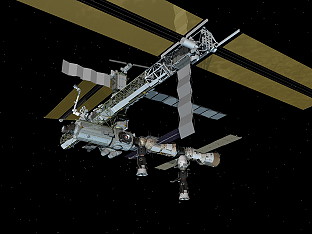
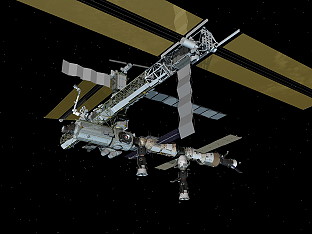
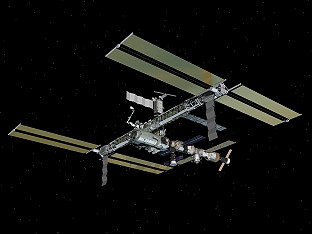
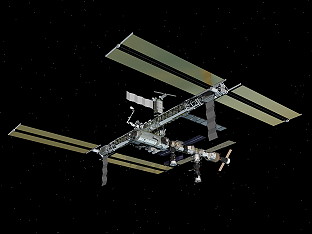
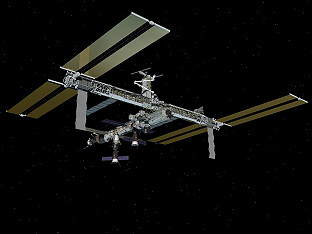
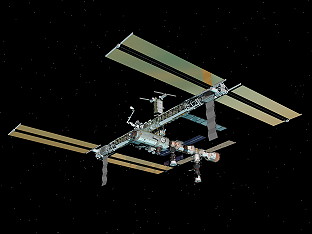
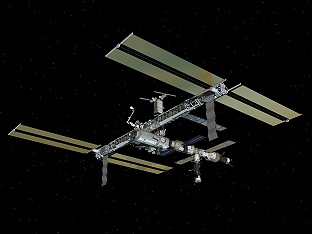
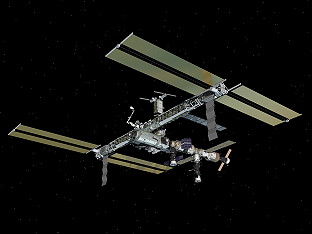
Aufbau der ISS
 |
 |
 |
 |
 |
 |
 |
 |
 |
 |
Fotos / Grafiken
 |
 |
 |
 |
 |
 |
 |
 |
 |
 |
 |
 |
 |
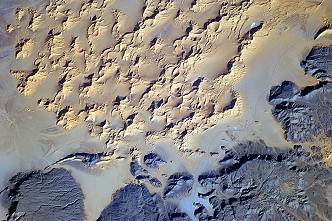 |
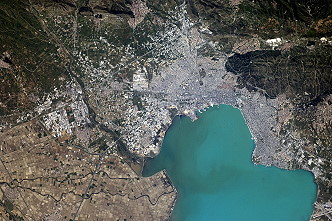
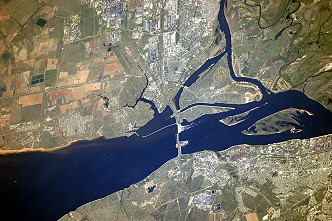
mehr Fotos Erdbeobachtung |
|
mehr EVA-Fotos |
|
mehr Fotos von Bord der ISS |
|
| © |  |
Letztes Update am 10. November 2023.  |
 |