Resident Crews of the International Space Station (ISS)

ISS: Expedition 5 |
 |

alternative crew photoalternative crew photoalternative crew photoalternative crew photoalternative crew photoalternative crew photo |
 |
 |
 |
||
Crew, launch- and landing data
| No. | Nation | Surname | Given names | Position | Spacecraft (launch) |
Launch date |
Launch time |
Spacecraft (landing) |
Landing date |
Landing time |
Mission duration |
Orbits |
| 1 |  |
Korzun | Valeri Grigoriyevich | ISS-CDR | STS-111 | 05.06.2002 | 21:22:49.008 UTC | STS-113 | 07.12.2002 | 19:37:12 UTC | 184d 22h 14m 23s | 2910 |
| 2 |  |
Whitson | Peggy Annette | Flight Engineer-1 | STS-111 | 05.06.2002 | 21:22:49.008 UTC | STS-113 | 07.12.2002 | 19:37:12 UTC | 184d 22h 14m 23s | 2910 |
| 3 | |
Treshchyov | Sergei Yevgeniyevich | Flight Engineer-2 | STS-111 | 05.06.2002 | 21:22:49.008 UTC | STS-113 | 07.12.2002 | 19:37:12 UTC | 184d 22h 14m 23s | 2910 |
Backup Crew
| No. | Nation | Surname | Given names | Position |
| 1 | |
Kaleri | Aleksandr Yuriyevich | ISS-CDR |
| 2 | |
Kelly | Scott Joseph | Flight Engineer |
| 3 | |
Kondratiyev | Dmitri Yuriyevich | Flight Engineer |
 |
 |
Expedition Report
|
Expedition 5 launched with
STS-111 from
Cape Canaveral (KSC) and returned with
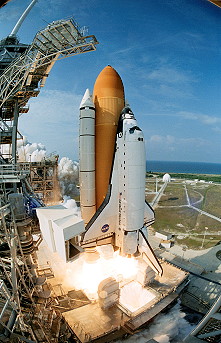
STS-113 to Cape
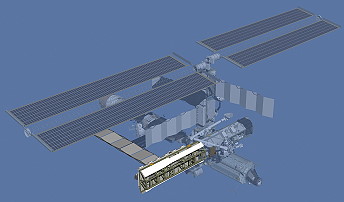
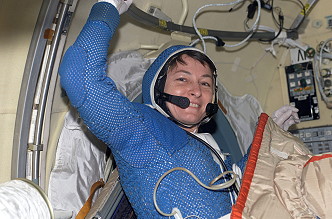
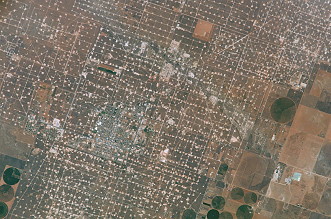
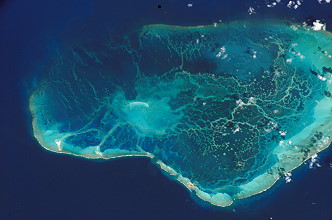
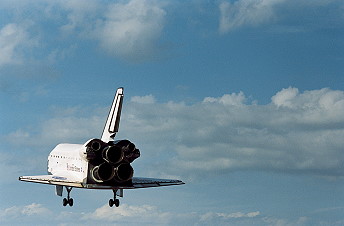
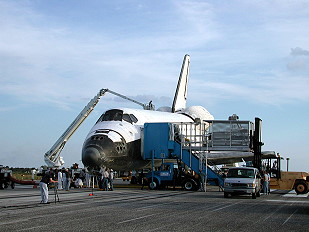
Canaveral (KSC). Yelena Kondakova was scheduled to be part of the ISS-5 crew from July to December 1999. After her retirement from the coskonaut corps she was replaced by Sergei Treshchyov. The Expedition 5 officially began with undocking of Space Shuttle STS-111 on June 15, 2002 at 14:32:00 UTC and Expedition 4 ended. A new International Space Station crew, the fifth flight of an Italian-built Multi-Purpose Logistics Module (MPLM) and three spacewalks are major elements of the STS-111 (ISS-14-UF2, MPLM) flight of Endeavour. Top priorities of the STS-111 (UF-2) mission of Endeavour were rotation of the International Space Station Expedition 4 and Expedition 5 crews. The space station's Expedition 5 crew was Russian Commander Valeri Korzun, Astronaut Peggy Whitson and Cosmonaut Sergei Treshchyov. Crewmembers extended a continuous human presence aboard the space station that began when the Expedition 1 crew arrived on November 02, 2000. They replaced the Expedition 4 crew, Russian Commander Yuri Onufriyenko and Astronauts Carl Walz and Daniel Bursch. That crew was brought to the station on Endeavour's STS-108 flight launched December 05, 2001, and returned to Earth on Endeavour. The Italian MPLM named Leonardo made its third visit to the space station. It first flew on STS-102 in March 2001 and again on STS-105 in August 2001. It was one of three virtually identical modules that served as pressurized moving vans, bringing equipment and supplies to the space station. A sister module named Raffaello had visited the station twice, on STS-100 in April 2001 and on STS-108 in December 2001. Leonardo was lifted out of Endeavour's payload bay and attached directly to the station's Unity node for the unloading of its cargo. The MPLM brought to the station contents of eight resupply stowage racks, five resupply stowage platforms, two international standard payload racks and two scientific racks for the U.S. laboratory Destiny. One of the scientific racks was EXPRESS (for Expedite the Processing of Experiments to the Space Station) Rack No. 3. The other was the Microgravity Science Glovebox. After docking and Orbiter Docking System (ODS) preparation, the crew opened the ODS hatch and the ISS and shuttle crews meet for the first time in space. The ISS crew gave a safety briefing to the shuttle crew. Spacewalking equipment and one of the custom seat liners for the Soyuz (of Sergei Treshchyov) crew return vehicle were transferred later in the day. The next day the two remaining Expedition 5 crewmembers Valeri Korzun and Peggy Whitson transferred their seat liners to the Soyuz. The crew also checked the MPLM environment, and installed, activated and outfitted the vestibule, and prepared for entering the MPLM. Some equipment and supplies were transferred from the middeck to the station and other cargo was moved from the station to the shuttle for return to Earth. Flight day five consisted of MPLM transfer preparations and handover operations between ISS Expedition 4 and 5 commanders and the Flight Engineers. The first EVA by Franklin Chang-Diaz and Philippe Perrin was performed on June 09, 2002 (7h 14m) to install a Power and Data Grapple Fixture to the station's P6 truss, to gather six micrometeoroid debris shields from the shuttle cargo bay and to store them temporarily on the PMA-1. Franklin Chang-Diaz conducted a visual and photographic inspection of the failed gyroscope. The first spacewalk began with the installation of a Power and Data Grapple Fixture (PDGF) for the station's robotic arm on the complex's P6 truss. The PDGF will allow the robotic arm to grip the P6 truss for future station assembly operations. Franklin Chang-Diaz and Philippe Perrin installed the new fixture about halfway up the P6 truss, the vertical structure that currently supports the station's set of large U.S. solar arrays. The grapple fixture will be used during a later assembly flight when the robotic arm must reposition the P6 truss from its current location. Working from a foot platform at the end of the station arm, Franklin Chang-Diaz removed the new grapple fixture from a shuttle cargo bay carrier where it was secured for launch. While Franklin Chang-Diaz was removing the grapple fixture from its payload bay carrier, Philippe Perrin was installing a temporary attachment on the station's Pressurized Mating Adapter 1 (PMA 1). The attachment will be used later in the spacewalk to hold debris protection panels to be installed on the exterior of the station's Zvezda service module during a future spacewalk by station crewmembers. When Philippe Perrin had completed that task, he climbed up the P6 truss to await the arrival of Franklin Chang-Diaz, being maneuvered at the end of the station arm, carrying the grapple fixture. Midway up the P6 truss, the spacewalkers worked together to bolt the new fixture into place. Once the grapple fixture was installed, both spacewalkers moved to Endeavour's payload bay to unload the package of Service Module Debris Panels, shielding panels that will be installed on the Zvezda exterior by station crewmembers on a future spacewalk. Once unfastened from Endeavour, Franklin Chang-Diaz, still at the end of the station arm, secured the panels as he was maneuvered to the station's PMA 1, a conical adapter between the Unity and Zarya modules of the station. Philippe Perrin moved to PMA 1 as well to assist with stowing the panels on the exterior of that adapter. Once the panels were stowed on PMA 1, Franklin Chang-Diaz got out of the arm foot platform and worked free-floating for the remainder of the spacewalk along with Philippe Perrin. Before the spacewalkers began the final task of EVA 1, Expedition 5 Flight Engineer Peggy Whitson maneuvered the station's robotic arm into position and latched it to a fixture on the MBS launched in Endeavour's payload bay. Once latched to the MBS, connections between the arm's tip and the MBS fixture supplied power to the base system's electronics heaters. Once those heaters were confirmed operating, Franklin Chang-Diaz and Philippe Perrin began removing insulating blankets from the MBS that had been in place for launch. Removing the blankets cleared the way for the initial installation of the MBS atop the Mobile Transporter "railcar" that rides atop the station's truss. The MBS will serve as a movable base of operations for the station's robotic arm, enabling it to ride the railway on the station truss as it builds and maintains the eventual 356-foot-long (108.5 meters) structure. Removing the thermal blankets was the final task for the first spacewalk. While Franklin Chang-Diaz and Philippe Perrin were gathering the tools and equipment they used during the work outside, Peggy Whitson, assisted by Carl Walz, used the station arm to lift the MBS from Endeavour's payload bay. They maneuvered the new station component into position just above the Mobile Transporter on the station truss where it will be installed. It remained in that position overnight, to ensure temperatures on the MBS and the MT are similar before the MBS is lowered into place. On flight day 6 the mission also installed a component of the Canadarm2 called the Mobile Base System (MBS) to the Mobile Transporter (MT) (which was installed during STS-110). Peggy Whitson and Carl Walz lowered the MBS into position to be initially latched to the MT. Once the MBS was lowered into the proper location on the MT, a capture latch on the MBS was commanded to close around a bar on the MT, providing the initial attachment of the new base system. This completed the Canadian Mobile Servicing System, or MSS. This gave the mechanical arm the capability to "inchworm" from the U.S. Lab fixture to the MSS and travel along the Truss to work sites. The MBS has four anchor points, referred to as Power Data Grapple Fixtures, which can serve as a base for operation of Canadarm2 and the SPDM robot. Through these anchor points, the MBS provides power and data to the robots as well as to the payloads that they may be supporting. These anchor points also transfer computer commands and video signals to and from the Robotic Work Station, a console located inside the station, from which the astronauts operate the entire MBS. The MBS is a strong and resistant aluminum structure with a life expectancy of at least 15 years. Like all elements of the ISS, the MBS is built with a series of separate and interchangeable modules called Orbital Replacement Units. In case of problems, the separate and interchangeable ORUs can be replaced during spacewalks or remotely once the SPDM has been installed on the space station. The MBS is also equipped with two main computer units. The MBS measures about 18.7 by 14.7 by 9.5 feet (5.7 by 4.5 by 2.9 meters). Its mass is about 3,307 lbs (1,500 kg). Its mass handling transportation capacity is about 46,076 lbs (20,900 kg). The peak power (operational) of the MBS is 825 W. The average power (keep alive) is 365 W. The second EVA by the same astronauts occurred on June 11, 2002 (5h), to complete the installation of the second component of Canada's Remote Servicing System to the ISS. They connected power and data cables to the newly installed Mobile Base System (MBS) and bolt it to the Mobile Transporter. They also relocated a TV camera. The second spacewalk focused on hooking up power, data and video lines to the newly attached MBS as well as bolting it permanently in place. During the second spacewalk, both spacewalkers were free-floating. At the start of the spacewalk, the station's Canadarm2 had a grip on the MBS, which it had maneuvered into place and attached to the Mobile Transporter on day six. Through its grip, the Canadarm2 were providing power to heaters and electronics on the base system. As the spacewalkers prepared to begin hooking up power and other lines from the MT to the MBS, the power provided to the base system by the arm was shut off. Then Franklin Chang-Diaz and Philippe Perrin worked together to connect primary and redundant cables for video and data and primary cables for power between the MT and the MBS. Once the cable connections were completed, commands were sent to the MT to remotely plug in its umbilical attachments to receptacles on the railway, a system called the Umbilical Mating Adapter (UMA), which will supply power and other services to the MBS via the MT. While the spacewalkers moved on to other tasks, ground controllers began a check of MBS systems to ensure all connections were established. Next, Franklin Chang-Diaz and Philippe Perrin rotated a payload accommodations fixture, called the Payload Orbital Replacement Unit Accommodation (POA), on the MBS. The POA fixture will hold future cargoes on the base system as it is moved along the truss railway. Then, with the ground-controlled MBS checks completed, Franklin Chang-Diaz hooked up redundant power cables between the MBS and the MT. Next, using a power wrench, the two spacewalkers secured four bolts that complete the permanent structural connection between the MBS and the transporter railcar. The final tasks for the second spacewalk had the two EVA crewmembers work together to relocate a television camera on the MBS and to attach a bag to the MBS structure that contains a contingency MBS extension cable. The camera was relocated from a position on the keel of the MBS, where it was used to provide visual cues needed to attach the MBS to the MT, to a position atop the MBS where it will be used to assist with the addition of the next station truss segment. The third and final EVA was again performed by Franklin Chang-Diaz and Philippe Perrin on June 13, 2002 (7h 16m) to replace a faulty wrist-roll joint on Canadarm2. The third spacewalk, added to STS-111 in March 2002, replaced the wrist roll joint on the International Space Station's Canadarm2 with a new joint carried to the station by Endeavour. The wrist roll joint being replaced had experienced a problem that prevents brakes from being released when operating in a secondary mode. For the replacement, Franklin Chang-Diaz worked free-floating while Philippe Perrin worked from a foot platform at the end of the shuttle's robotic arm. The station's arm was positioned with its free end poised several feet away from the underside of the Destiny laboratory, the side of the lab that was facing Endeavour's tail and was directly above the shuttle payload bay. All of the Canadarm2's joints are removable and were designed to be replaceable in orbit during a spacewalk. The new wrist roll joint was carried aboard a special plate in Endeavour's cargo bay, a plate that will allow the faulty joint to be secured as well for the trip home aboard the shuttle. To access the wrist of the arm, the spacewalkers first removed the Latching End Effector (LEE), the tip of the arm that is used to grip objects. Once the LEE was removed, the next portion of the arm is the wrist roll joint. Before removing the LEE, Philippe Perrin installed an insulating cover over the temperature-sensitive television camera and light assembly on the LEE. The insulation moderated the temperatures experienced by that assembly while the LEE was unpowered. After the blanket was installed, the station crew rolled the end of the arm to provide access to the areas required for the joint changeout. Once in position, power was shut off to the station arm. When the station arm was powered off, Philippe Perrin turned a bolt that disconnected internal power, data and video connections between the LEE and the wrist roll joint. Next, Philippe Perrin and Franklin Chang-Diaz loosened six special bolts, called Expandable Diameter Fasteners (EDFs), around the circumference of the LEE and roll joint. With those disconnected, Philippe Perrin, assisted by Franklin Chang-Diaz, removed the almost 500-pound (227 kg), washing machine-sized LEE from the arm and temporarily stowed it in a fixture a few feet away on the exterior of the Destiny lab. With the LEE removed, the wrist roll joint to be replaced then was at the tip of the station's arm. The two spacewalkers, Philippe Perrin continuing to work from a foot platform at the end of Endeavour's robotic arm and Franklin Chang-Diaz working from a foot platform attached to Destiny, turned their attention to removal of the faulty joint. In a fashion identical to the removal of the LEE, they turned a bolt that detached power, data and video connections within the roll joint and then loosened six EDF bolts. Once those were disconnected, the faulty joint was detached from the rest of the arm. Philippe Perrin, carrying the wrist roll joint, then was maneuvered to Endeavour's payload bay to temporarily stow the faulty joint in a location adjacent to the new joint's launch position on a carrier designated the Flight Releasable Attachment Mechanism (FRAM). The joint could be "soft-docked" to the FRAM carrier. Installing three or four EDF bolts completed the temporary stowage. Later, once the new joint was removed and installed on the arm, the old joint was permanently secured into the position where the new joint was for launch. Together, the spacewalkers then released the new joint from the FRAM payload bay carrier. Before removing the new joint from the FRAM, Paul Lockhart turned off power that ran heaters on the joint during its time in the shuttle bay. To release the new joint, the spacewalkers first folded back insulation blankets that covered it during launch and then released six EDF bolts to free it from the shuttle carrier. Philippe Perrin then carried the new joint as he was maneuvered at the end of the shuttle arm back up to the end of the station arm. Franklin Chang-Diaz meets him there to begin the task of installing the new joint. To install the new joint, Philippe Perrin and Franklin Chang-Diaz aligned the wrist roll joint with the wrist yaw joint which was at the end of the arm at that time and soft docked the new joint in place. Then, the two spacewalkers worked together to sequentially insert and tighten the six EDF bolts around the joint's circumference. They tightened the bolts to a specified torque in stages. Once all of the EDFs were properly secured, Philippe Perrin tightened a bolt that connected power, video and data cables internal to the new joint with connections on the arm. The next task was to reinstall the LEE. The two worked together to remove the LEE from its position stowed on the exterior of Destiny and aligned it with the newly installed wrist joint. The LEE was soft docked into position first, and then the six EDF bolts around its circumference tightened to secure it in place. Then a bolt was turned to reconnect internal power, video and data connections. Once the LEE was reconnected and verified operating, the insulating cover was removed from the camera assembly. The final task for Franklin Chang-Diaz and Philippe Perrin was to secure the failed joint in Endeavour's payload bay for return to Earth. The spacewalkers, with Philippe Perrin still working from a foot platform at the end of the shuttle's robotic arm, first removed the joint from the payload bay bracket where they had temporarily secured it earlier. Then, they moved it to the adjacent bracket upon which the newly installed joint had been secured for launch. Using six EDF bolts, they secured the joint in place for return to Earth. The bracket also allowed power to be supplied for heaters on the joint during its trip aboard Endeavour. The crew also covered the old joint with a thermal cover that had protected the new joint during launch. When the Space Shuttle Endeavour returned to the International Space Station during the STS-111 mission, it arrived with new equipment that enhances the orbiting outpost's construction and science capabilities and improved its safety. Leonardo was filled with new experiments and a major new science facility - the Microgravity Science Glovebox. The glovebox - a sealed container with built-in gloves on its sides and fronts - provides a facility that safely contains fluids, flames, particles and fumes, but still allows the crew to "get a grip" on science equipment via the gloves. The glovebox, designed to stay in the Destiny laboratory for 10 years, will support the first two space station materials science experiments, also being delivered on STS-111. These experiments will study materials processes similar to those used to make semiconductors for electronic devices and components for jet engines. In exchange for building the glovebox, the European Space Agency will be able to perform experiments inside Destiny until that agency's space station laboratory - the Columbus Orbital Facility - was attached to the station. The Microgravity Science Glovebox (MSG) is a sealed container with built-in gloves that provides an enclosed workspace for experiments with fluids, flames, particles or fumes. The MSG provides vacuum, venting and gaseous nitrogen, as well as power and data interfaces for experiments. The MSG occupies an entire rack inside the Destiny lab and is more than twice as large as gloveboxes flown previously on the space shuttle. This enables the MSG to hold experiments about the size of an airline carry-on bag. NASA's Marshall Space Flight Center worked with the European Space Agency to build the MSG - a facility that will support station experiments for the next 10 years. The MSG was delivered during STS-111. EXPRESS Rack 3, also ferried inside Leonardo, was the fifth EXPRESS rack built at Marshall Space Flight Center, Huntsville, to be delivered to Destiny. These racks housed experiments and provided them with power, fluids, cooling, data and other basic utilities. The Expedition 5 research complement included 24 new and continuing investigations, including the first two materials science experiments; two new plant experiments sponsored by industry; a commercial bioreactor that grows liver cells; facilities that grow biological crystals and zeolite crystals used in petroleum processing; and numerous experiments that studied how the human body adapts to spaceflight. Preparations for Leonardo's return to the shuttle's cargo bay included crew egress and closeout, atmosphere conditioning, deactivation and utility disconnect. That done, Endeavour's robotic arm grappled and unberthed the MPLM from the station and returned it to Endeavour's cargo bay. Once there, crewmembers turned on its shell heaters. On June 15, 2002 STS-111 backed away from the ISS to a distance of about 450 feet (137.2 meters), where Paul Lockhart began a close flyaround of the station, circling the complex 1 ¼ times. Paul Lockhart passed a point directly above the station, then behind, then underneath, then in front and then reached a point directly above the station for a second time. At that point, passing above the station for a second time, Paul Lockhart fired Endeavour's jets to depart the vicinity of the station. Progress M-46 was launched at 05:36:30 UTC on June 26, 2002. The spacecraft docked with the Aft port of the Zvezda module at 05:36:30 UTC on June 29, 2002. Prior to docking it was used to conduct tests of the Kurs docking system. Progress M-46 carried supplies to the International Space Station, including food, water and oxygen for the crew and equipment for conducting scientific research. It remained docked for three months before undocking at 13:58:49 UTC on September 24, 2002 to make way for Progress M1-9. It was deorbited at 09:34:00 UTC on October 14, 2002. The spacecraft burned up in the atmosphere over the Pacific Ocean, with any remaining debris landing in the ocean at around 10:21:59 UTC. 26 experiments on different scientific fields were done. There have been problems with the Microgravity Science Glovebox (MSG). The crew also performed different repair and maintenance work. The first station EVA by Valeri Korzun and Peggy Whitson occurred on August 16, 2002 (4h 25m) to install the first six of an eventual 23 debris shields on Zvezda. They removed the panels from their temporary location on the station's Pressurized Mating Adapter 1 prior to attachment to Zvezda. The panels are designed to shield Zvezda from potential space debris impacts. The second and final EVA by Valeri Korzun and Sergei Treshchyov was performed on August 26, 2002 (5h 21m) to attach equipment to the stations exterior that will be used during future spacewalks, to install new plates for the Russian Kromka experiment and to replace Japanese materials experiment panels on Zvezda. They also installed two additional ham radio antennas on Zvezda. Valeri Korzun and Sergei Treshchyov installed a frame on the outside of the Zarya Module to house components for future spacewalk assembly tasks. They installed new material samples on a pair of Japanese Space Agency materials exposure experiments housed on the outside of Zvezda. Valeri Korzun and Sergei Treshchyov also installed devices on Zvezda that will simplify the routing of tethers during future assembly spacewalks. They improved future station amateur radio operations by adding two ham radio antennas on Zvezda. Also, Valeri Korzun and Sergei Treshchyov installed the Kromka hardware that was originally slated to take place during Expedition Five's first spacewalk. Kromka measures residue emissions from Zvezda's jet thrusters. Progress M1-9 was launched at 16:58:24 UTC on September 25, 2002. The spacecraft docked with the Aft port of the Zvezda module at 17:00:54 UTC on September 29, 2002. Progress M1-9 carried supplies to the International Space Station, including food, water and oxygen for the crew and equipment for conducting scientific research. The freighter remained docked for four months before undocking at 16:00:54 UTC on February 01, 2003 to make way for Progress M-47. It was deorbited at 19:10:00 UTC on the same day, burning up in the atmosphere over the Pacific Ocean just six hours after the Space Shuttle Columbia had disintegrated over Texas. Any remaining debris from Progress M1-9 landed in the ocean at around 20:00:28 UTC. On October 09, 2002 Space Shuttle STS-112 docked with the International Space Station. The major objective of STS-112 mission (ISS Assembly Flight 9A) was the delivery of the 45-foot-long, 15-ton S-One (S1) Truss to the ISS. The S1 Truss was attached to the starboard side of the centerpiece truss, the S-Zero (S0) Truss, on which the Mobile Transporter (MT), Mobile Base System and the Canadarm2 robotic arm are mounted. The S1 Truss enabled the station to begin the outboard expansion of its rail system in preparation for the addition of new power and international science modules in the years to come. The large truss contains a new external cooling system for the station, a second S-Band communications system to provide enhanced and extended voice and data capability, a cart which will serve as a mobile work platform for future spacewalkers, two new external television cameras and the first Thermal Radiator Rotary Joint (TRRJ), which will provide the mechanical and electrical energy for rotating the station's heat-rejecting radiators based on various system requirements. Three spacewalks were carried out to install and activate the truss and its associated equipment. The S1 Truss was the second of 11 such truss structures that ultimately expanded the ISS to the length of a football field and increased its power through the addition of new photovoltaic modules and solar arrays. The 27,717 lb. (12,572 kg) S1 Truss is primarily an aluminum structure that is 45 feet (13.7 meters) long, 15 feet (4.6 meters) high and 6 feet (1.8 meter) wide. Both S1 and eventually P1 provide structural support for the Active Thermal Control System, the Mobile Transporter, a CETA cart and antennas. The S1 has an S-band system; the P1 a UHF system. Both trusses also have mounts for cameras and lights. Additionally, both S1 and P1 carry one radiator each as part of the space station's cooling and heating system. The radiators are deployed in orbit and use 99.9 percent pure ammonia. The radiator assembly also rotates to keep itself in the shade and away from the sun. Each radiator has 18 launch locks securing the assembly during launch. The locks were removed during a spacewalk before deploying the radiators. The addition of S1 also extends the Mobile Transporter (MT) rail line. The MT car travels along the length of the truss structure and carries spacewalkers, tools, construction items and the space station robotic arm. Flying aboard S1 is one of two CETA carts that move spacewalkers along the MT rails to worksites along the truss structure. The cart is manually operated by a spacewalker and can also be used as a work platform. S1 and P1 carry one CETA cart each. The P1 Truss differs slightly from S1 and could be considered a mirror image. It has the same capabilities as the S1 except that P1 carries a UHF antenna. The P1 also carries a second CETA cart. Atlantis also delivered the Crew Equipment Translation Aid (CETA) Cart to the Space Station. The CETA cart was attached to the Mobile Transporter (launched on STS-110) to be used by assembly crews on later missions. CETA, one of the largest pieces of extravehicular activity (EVA) equipment built for the International Space Station (ISS), will accompany the first starboard truss, called S1, to orbit. This truss will become the backbone of the four solar wing assemblies and will incorporate many orbital replaceable units (ORUs). Installation and maintenance of these ORUs - for example batteries, the DC-to-DC converter, the Remote Power Controller Module, and the multiplexer/demultiplexer - is critical. At this time, NASA uses spacewalking crewmembers or robotics to repair or replace those units. The need for a work platform that could also provide the crew with a means of transporting themselves, the necessary tools and ORUs safely and easily along the truss became crucial. The SEAT-engineered CETA fulfills those requirements. The CETAs are launched as integrated parts of the S1 and P1 Truss segments. Once deployed on orbit, crewmembers can propel themselves and accompanying hardware manually along the Mobile Transporter (MT) rails. On orbit, the two CETA carts will be located one on each side of the MT for usage flexibility. If required, a cart may be moved to the other side of the MT to complement the other cart. The CETA has attachment points for other EVA hardware such as the ORU Transfer Device (OTD), also known as the Space Crane; Articulating Portable Foot Restraint (APFR); EVA Tool Stowage Device (ETSD); and a host of other small crew and equipment restraining tools. During ISS assembly operations, crewmembers will also use CETA as a work platform to reach 90 percent of the worksites safely. When not in use, the CETAs will attach to the MT for stowage and become part of a "train" that allows the Space Station Remote Manipulator System (the station's robotic arm) to move freely along the truss. The successful docking set the stage for the opening of the hatches and the start of seven days of joint operations between Atlantis' crew and the resident crew on the ISS, Expedition 5 Commander Valeri Korzun and Flight Engineers Peggy Whitson and Sergei Treshchyov. Following pressure checks, station science officer Peggy Whitson asked Commander Jeffrey Ashby if he had brought the salsa that she had asked for. When Jeffrey Ashby replied that he had, Peggy Whitson said "OK, we'll let you in". The hatches between Atlantis and the Space Station were opened at 16:51 UTC and astronaut Jeffrey Ashby floated into the Destiny Module and immediately embraced Peggy Whitson. Mission Specialist Sandra Magnus followed next, followed by the rest of Atlantis' STS-112 crew members. They were greeted by the three-member station crew. The following day, David Wolf and Piers Sellers began spacewalk preparations while Sandra Magnus and Peggy Whitson used the Canadarm2 from inside Destiny to grapple the huge S1 Truss, lifting it out of Atlantis' payload bay and maneuvering it for its installation at the starboard end of the S0 Truss. Capture bolts structurally mated the two trusses after a claw-like device on the starboard side of the S0 Truss grabbed a fixture on the S1 segment. The procedure was timed so that David Wolf and Piers Sellers did not exit the station's Quest airlock to begin their first spacewalk until the mating process was complete. The first EVA was performed by David Wolf and Piers Sellers on October 10, 2002 (7h 1m) to attach power, data and fluid connections between the newest segment of the station's backbone - The Starboard One (S1) Truss and the first (SO) Truss segment. Using the Canadarm2 robot arm Sandra Magnus and ISS-5 crewmember Peggy Whitson positioned the S1 at the starboard end before. David Wolf and Piers Sellers also deployed an antenna und released restraints on a handcar. Toward the end of the S1 attachment, David Wolf attached and entered a foot restraint on the end of the station's Canadarm2. Sandra Magnus maneuvered him to the cable tray atop S1. Once he was clear, Piers Sellers moved to the forward side of S1, where he released the five radiator launch locks nearest the S0 connection. Meanwhile, David Wolf opened thermal covers over cable trays atop S0 and S1, then demated connectors on the S0 side from temporary attachment points and connected their free ends to receptacles on S1. Piers Sellers opened a circuit breaker, then closed it once David Wolf completed those connections. After those tasks, David Wolf and Piers Sellers collaborated to deploy the S-Band Antenna Support Assembly (SASA). The new component increased the S-band data and voice communications capability from the ISS to ground controllers. David Wolf, at the end of Canadarm2, was maneuvered to SASA's launch position at the center of truss between the two keel pin assemblies of S1. There he used a Pistol Grip Tool (PGT) to release four launch bolts and two mast bolts. He and Piers Sellers removed the SASA from its launch position and David Wolf carried it, while Sandra Magnus maneuvered him on the arm to the installation site near the inboard end of S1. Piers Sellers, meanwhile, moved to the installation site and released two clamps. David Wolf soft docked the SASA to its support bracket, then tightened a stanchion bolt about nine turns until it dropped out of its launch position. Still using the PGT, he tightened that bolt about 21 more turns until it reached a hard stop, completing the SASA physical installation. The next task for David Wolf was to demate the ends of four connectors and install them to provide power and data links to the SASA. Piers Sellers then removed a shroud covering the antenna, bundled it and temporally stowed it. Finally, David Wolf released four SASA gimbal locks with the PGT and rotated them away from SASA's high-gain antenna. Then Piers Sellers handed David Wolf the shroud bundle, and David Wolf took it with him on the arm to the launch position of the Crew and Equipment Translation Aid (CETA). The CETA is a kind of handcar for the truss' rail line, with which spacewalkers eventually will be able to push themselves and equipment along much of the 356-foot length of the completed main truss. David Wolf released a brake shaft launch lock with the PGT and then used it to release two portside brake handle launch clamp bolts. He deployed dynamic and parking brake handles and lock sliders. That complete, he released four bolts that will free two portside launch handle brackets, and put the brackets in a trash bag. After setting the CETA parking brake, David Wolf turned his attention to its main launch bolts. He released four scissor bolts, breaks the torque on four launch restraint bolts and fully released four others, stowing them in the trash bag. Then he released the CETA parking brake and pushed it along its rails to a point near the center of S0. There he repeated the portside work on CETA's starboard side. During David Wolf's CETA activity, Piers Sellers first released three more radiator beam launch locks on the new S1 truss. Then he demated the ends of a total of nine power, video and data cables from their temporary positions on S0 and mated them to receptacles on S1. Installation of the S1's outboard nadir external camera occupied David Wolf and Piers Sellers for about the next hour and 15 minutes. David Wolf removed the camera, launched on Atlantis' middeck, and the tilt pad cover from the camera's light before taking the camera from its large bag. He then maneuvered with the assembly to the starboard keel, where he attached the assembly, driving its center jacking bolt about 28 turns with a PGT. David Wolf next released two camera stanchion launch restraint bolts, then slided the camera out of its keel interface and moved it to its installation location. With a PGT he tightened a stanchion bolt about nine turns until it dropped out of its launch position, then tightened it about another 21 turns until it reached a hard stop. The spacewalkers then mated eight connectors to take power, data and images to and from the camera. David Wolf and Piers Sellers then temporarily removed the camera so they could install four more connectors. David Wolf reinstalled it using the PGT to tighten its center-jacking bolt about 28 turns. Near the end of the first spacewalk, David Wolf connected a series of cables linking S0 and S1 on the Utilities Nadir Tray. The spacewalkers each released five Radiator Beam Launch Locks. On flight day 5 they began transfer operations between the vehicles and prepared for mission's second spacewalk. The crew moved a number of scientific experiments back and forth between the shuttle and the ISS to return completed experiments to Earth and deploy new experiments at the ISS. Transfer items included a set of liver cell tissue samples from an experiment studying the function of human liver cells in microgravity, moved from the station onto the shuttle for return to Earth. Payload experiments such as Marshall Space Flight Center's protein crystal growth thermal enclosures for growing high-quality protein crystals in micro-gravity experiments were moved to and from the station. Seven water containers were transferred to the station. Commander Jeffrey Ashby initiated a Nitrogen transfer process that moved about 15 pounds of the gas from Atlantis to the station by the end of the day. The second EVA by Piers Sellers and David Wolf occurred on October 12, 2002 (6h 4m), in which they continue outfitting the S1-truss to bring it to life. They connected ammonia cooling system lines and mount another external video camera package on the hull of the Unity node, among other works. For the second of the three spacewalks, Piers Sellers ride at the end of the arm and David Wolf was the free-floater. After about half an hour for setup after leaving the airlock, Piers Sellers had to ride the arm to a position near the left side of the Z1 truss and its junction with the U.S. laboratory Destiny. David Wolf made his way to the aft side of the Z1-P6 truss junction. There, both astronauts removed insulation covers on booties covering quick disconnect (QD) fittings in ammonia lines, part of the station's thermal cooling systems. Piers Sellers installed two one-inch (2.5 centimeters) "spool positioning devices" (SPDs) to better match the position of the bodies of two QDs at the base of the Z1 truss while David Wolf conducted a similar task at the Z1-P6 truss interface. The installation involved rotating the QD locking collar to the unlock position, attaching a circular section of the SPD to the QD, then adding a clamp-like device to tension it there before finally checking the SPD installation and performing a pull test on the QD. Next, David Wolf maneuvered to the CETA cart, where he spent about 25 minutes releasing the starboard brake system as well as the swing arm and coupler restraints. Piers Sellers, meanwhile, had to ride the arm to the ammonia tank assembly at the inboard end of S1. There he demated two dustcaps and installed the ends of two umbilicals on the Ammonia Tank Assembly (ATA). The umblicials on the Nitrogen Tank Assembly (NTA) on the outboard side of S0 are attached there with QDs, which he used to make the new connection. He reinstalled the dustcaps he removed from the ATA on the fittings that held the QDs on the NTA. The next task was a repeat of the camera group installation on the first spacewalk, involving both David Wolf and Piers Sellers. This installation, however, was on the U.S. laboratory Destiny. Installation steps were virtually identical, though the players were reversed with Piers Sellers still affixed at the end of the arm. With the camera installation complete, Piers Sellers left the arm's foot restraint and moved to the CETA light stanchion to retrieve a bag of SPDs, then moved to the starboard camera group he and David Wolf installed two days before to temporarily stow the bag. Then he moved to the inboard end of S1 where he began installing SPDs on one-inch ammonia lines on Radiator Beam Valve Module (RBVM) No. 1. The RBVM allows or prevents transfer of ammonia supply or return to or from the Radiator ORU, allows remote controlled venting of the radiator fluid loop for replacement of the Radiator ORU, and provides automatic pressure relief when the Radiator ORU is over pressurized. The RBVM also measures pressure and temperature of the fluid line, provides temperature measurements of Radiator ORU environment, provides instrumentation monitoring data, and receives valve actuation command data. There are 12 RBVMs on the space station. Each measures 17 in. x 27 in. x 6 in. (43 x 69 x 15 centimeters) and weighs 56 lbs (25.4 kg). Meanwhile, David Wolf replaced Piers Sellers on the arm foot restraint. Sandra Magnus moved him to the CETA light station where he picked up his own SPD bag, then maneuvered to the outboard end of S1. There, he began installing SPDs on one-inch ammonia line QDs at RBVM No. 6. The two spacewalkers installed a total of 24 SPDs during this 2 ¼-hour task. The last task for the second spacewalk was releasing Radiator Beam Launch Locks. Both David Wolf and Piers Sellers used pistol grip tools to release the launch locks, turning each of three bolts 60 to 62 rotations. On flight day 7 the shuttle crew reconfigured and initiated an oxygen transfer to the high-pressure gas tanks on Quest in the morning. Oxygen was transferred for about eight hours. Once the oxygen transfer was completed, a reconfiguration to the shuttle oxygen prebreather protocol was done late in the afternoon. The third and final EVA was again performed by Piers Sellers and David Wolf on October 14, 2002 (6h 36m) to complete the installation and checkout of the newly installed truss segment. The first job on the flight's final spacewalk was removal and replacement of the Interface Umbilical Assembly (IUA). The IUA is installed with the Trailing Umbilical System (TUS) on the Mobile Transporter (MT), the railcar that supports the base for the station's robotic arm. The TUS incorporates a reel for the trailing umbilical, a power and data cable linking the station and the MT as it moves along the tracks on the truss. Program officials decided to replace the IUA after a bolt securing a backup cable cutter could not be removed during its initial installation on the STS-110 mission April 2002. David Wolf and Piers Sellers moved from the airlock to the MT, on the tracks of S0. They first removed the TUS cable, with Piers Sellers keeping it under tension while being careful not to bend or crimp it. David Wolf loosened three cable connections, then removed the cable cutter before temporarily stowing the TUS cable. To remove the IUA itself, David Wolf detached four cable connections linking it to the MT. Then Piers Sellers, using a pistol grip tool, removed four bolts attaching the IUA assembly to the MT. Finally, he removed the IUA from its "soft dock" connection and handed it to David Wolf. Installation of the new IUA was basically the same operation in reverse, with Piers Sellers soft docking the new unit and attaching it to the MT with four bolts. David Wolf then made the seven connections between the IUA, the MT and the TUS. David Wolf and Piers Sellers moved to a point at the junction of S0 and S1 for the next activity, the installation of fluid jumpers to enable ammonia coolant to flow between the two truss segments. Piers Sellers released two jumpers on S0, then moved into the Canadarm2 foot restraint for a ride to the jumper install position at the lower segment-to-segment utility carrier. There he joined David Wolf, waiting nearby in a portable foot restraint. David Wolf mated and installed SPDs on two jumper connections on the S0 side, while Piers Sellers performed a similar task on the S1 side. Each connection involved a pull test and a three-minute leak check. David Wolf reinstalled thermal covers while Piers Sellers closed S1 and S0 utility tray shrouds. Then Piers Sellers, still on the arm, and David Wolf, moved on to S1's port drag link. They worked together to release that drag link, a large metal rod used as a launch restraint. David Wolf released a bolt attaching the drag link to the keel, while Piers Sellers released a similar bolt attaching the drag link to S1. Piers Sellers took the drag link to its stowage location on the S1 framework and attached it. While Piers Sellers attached the drag link, David Wolf moved to the port keel pin, another launch support device, first tightening two keel scissor bolts, then releasing two keel pin bolts and rotating keel pin latches free. Once rotated David Wolf reinstalled the bolt, removed two pit-pins. Piers Sellers reinstalled the keel pin a nearby. The processes were repeated on the S1 starboard drag link and keel pin. David Wolf and Piers Sellers, now off the arm, moved to the CETA handrail cart where each took a 1 ½ inch (3.8 centimeters) SPD to be installed on ammonia lines near a Thermal Radiator Rotary Joint on S0. David Wolf released bolts securing that joint in its launch position. The last task was to perform a test of the Segment-to-Segment Attachment System (SSAS) at the outboard end of S1. The SSAS there consists of a remotely operated claw and three motorized bolt assemblies. David Wolf depressed ready to latch indicators on each for several seconds. This verified the readiness of the S1 segment to receive other starboard truss components on future flights. Finally, while David Wolf did the SSAS test, Piers Sellers reconfigured the Squib Firing Unit (SFU) power connector. The SFU is used to release radiator panels for deployment. STS-112 also carried several science experiments to the station including the Plant Generic Bioprocessing Apparatus (PGBA), Commercial Generic Bioprocessing Apparatus (CGBA), the Protein Crystal Growth Single-locker Thermal Enclosure System housing the Protein Crystallization Apparatus for Microgravity (PCG-STES-PCAM) and samples for the Zeolite Crystal Growth Furnace (ZCG) experiment. The next day, Flight Day 9, the shuttle and station crews completed some additional transfer work and get-ahead tasks for future assembly flights before saying goodbye to one another on Flight Day 10 as the hatches were closed between the vehicles. On October 16, 2002 STS-112 backed away from the ISS to a distance of about 450 feet (137.2 meters), where Pamela Melroy began a close flyaround of the station, circling the complex almost one and a quarter times. Pamela Melroy passed a point directly above the station, then behind, then underneath, then in front and then reached a point directly above the station for a second time. At that point, passing above the orbiting laboratory, Pamela Melroy fired Atlantis' jets for final separation from the station. Soyuz TMA-1 became the fourth taxi crew to the ISS. Following a two-day solo flight Soyuz TMA-1 docked to ISS on November 01, 2002 and common scientific work with Expedition 5 was performed. Frank De Winne worked as part of the ESA program Odissea. The ISS' escape craft (Soyuz TM-34) was replaced; Soyuz TMA-1 served as a new lifeboat. On November 09, 2002 the taxi crew undocked from the ISS on board Soyuz TM-34 and landed a few hours later in Kazakhstan. During this mission Peggy Whitson was named NASA ISS science officer. Advanced Astroculture™ (ADVASC): Understanding the effects of gravity on plant life is essential in preparation for future interplanetary exploration. The ability to produce high energy, low mass food sources during space flight will enable the maintenance of crew health during long duration missions while having a reduced impact on resources necessary for long distance travel. Additional applications of a plant growth chamber include using plants as components of regenerative life support systems for travel to the Moon and Mars. Amateur Radio on the International Space Station (ARISS): Ever since the Amateur Radio on the International Space Station (ARISS) hardware was first launched aboard space shuttle Atlantis on STS-106 and transferred to ISS during Expedition 1, it has been regularly used to perform school contacts. With the help of Amateur Radio Clubs and ham radio operators, astronauts and cosmonauts aboard the International Space Station (ISS) have been speaking directly with large groups of the general public, showing teachers, students, parents, and communities how amateur radio energizes students about science, technology, and learning. The overall goal of ARISS is to get students interested in mathematics and science by allowing them to talk directly with the crews living and working aboard the ISS. Initial stage of Biodegradation and Biodeterioration in Space (Biodegradatsia-1 (Biodegradation-1)): Biodegradation investigates the initial stages of the biodegrading and biodeterioration of surfaces of structural materials used in the ISS. These samples will help us understand what microorganisms are present on ISS and will help develop effective methods of protecting spacecraft surfaces such as new coatings and advanced biocides. The collected samples will be returned to Earth for detailed microbial analysis. Effect of Prolonged Space Flight on Human Skeletal Muscle (Biopsy): The Biopsy researchers take calf muscle biopsies of crew members before and after their stay aboard the International Space Station (ISS). This allows scientists to begin developing an in-space countermeasure exercise program aimed at keeping muscles at their peak performance during long missions in space. Influence of Factors of the Space Environment on the Condition of the System of Microorganisms-Hosts Relating to the Problem of Environmental Safety of Flight Techniques and Planetary Quarantine (Biorisk-KM): Biorisk is looking at the effects of microbial bacteria and fungus on structural materials used in spacecraft construction. Specifically, this study will be investigating the effects of how changes in solar activity affect the growth of these microbes. In Crew Earth Observations (CEO), crewmembers on the International Space Station (ISS) photograph the Earth from their unique point of view located 200 miles (322 km) above the surface. Photographs record how the planet is changing over time, from human-caused changes like urban growth and reservoir construction, to natural dynamic events such as hurricanes, floods and volcanic eruptions. A major emphasis of CEO is to monitor disaster response events in support of the International Disaster Charter (IDC). CEO imagery provides researchers on Earth with key data to understand the planet from the perspective of the ISS. Crewmembers have been photographing Earth from space since the early Mercury missions beginning in 1961. The continuous images taken from the ISS ensure this record remains unbroken. Chromosomal Aberrations in Blood Lymphocytes of Astronauts-1 (Chromosome-1): Chromosomal Aberrations in Blood Lymphocytes of Astronauts-1 (Chromosome-1) studies space radiation on humans. The expected results will provide a better knowledge of the genetic risk of astronauts in space and can help to optimize radiation shielding. Clinical Nutrition Assessment of ISS Astronauts, SMO-016E (Clinical Nutrition Assessment): Nutritional assessments of astronauts before, during, and after spaceflight ensure adequate intake of energy, protein, and vitamins during missions. Scientists use the information to understand the connections between nutrition and human health during space flight, and to develop effective dietary strategies to reduce adverse health impacts. Education Payload Operations (EPO): Education Payload Operations (EPO) includes curriculum-based educational activities that demonstrate basic principles of science, mathematics, technology, engineering and geography. These activities are videotaped and then used in classroom lectures. EPO is designed to support the NASA mission to inspire the next generation of explorers. Education Payload Operations- International Toys in Space (EPO-International Toys in Space): Education Payload Operations- International Toys in Space (EPO-International Toys in Space) includes curriculum-based educational activities that demonstrate basic principles physics by studying how common everyday items (toys and games) act in a microgravity environment. These activities are videotaped and then used in classroom lectures. EPO-International Toys in Space is designed to support the NASA mission to inspire the next generation of explorers. A Study of Radiation Doses Experienced by Astronauts in EVA (EVARM): EVA Radiation Monitoring: A Study of Radiation Doses Experienced by Astronauts in EVA (EVARM) characterized the radiation doses experienced by crewmembers during extravehicular (spacewalk) activities. The data determined which parts of the human body are exposed to the highest radiation levels so that routine dosage monitoring in future missions can be done on the appropriate parts of the human body. Space Flight Induced Reactivation of Latent Epstein-Barr Virus (Epstein-Barr): The Space Flight-Induced Reactivation of Latent Epstein-Barr Virus (Epstein-Barr) experiment performs tests to study changes in the human immune function using blood and urine samples collected before and after space flight. The study will provide insight for possible countermeasures to prevent the potential development of infectious illness in crewmembers during flight. Verification of the Effectiveness of Devices for the Protection of the Exterior Surface of ISS from Contaminants Deposited by Pulsed Cycling of Liquid-Jet (Kromka): Kromka investigates the contamination of critical external surfaces (such as radiators, solar arrays, etc.) caused by propulsion thrusters of the various vehicles flying to the ISS and is assessing the efficiency of various gas-dynamic protective devices to minimize thruster contamination. Incidence of Latent Virus Shedding During Space Flight (Latent Virus): The Incidence of Latent Virus Shielding During Spaceflight (Latent Virus) study will support and expand information on latent viruses - or those inactive in the human system - that can reactivate in space flight, such as a cold sore. Latent virus reactivation may be an important threat to crew health during extended space missions, as crewmembers live and work in a closed environment. Potential applications of this research include the development of a rapid and sensitive diagnostic method for identifying crewmembers at increased risk of illness due to viral infections. New technology from this investigation benefits both NASA and commercial applications. Microencapsulation Electrostatic Processing System (MEPS): A single step process forming a tiny liquid-filled, biodegradable, micro-balloons containing various drug solutions (a process called microgravity micro-encapsulation) has been shown to provide better drug delivery and new medical treatments for solid tumors and resistant infections. Recent testing in mouse models has shown that these unique microcapsules can be injected into human prostate tumors to inhibit tumor growth or can be injected following cryo-surgery (freezing) to improve the destruction of the tumors much better than freezing or local chemotherapy alone. The microcapsules also contain a contrast agent that enables C-T, x-ray or ultrasound imaging to monitor the distribution within the tissues to insure that the entire tumor is treated when the microcapsules release their drug contents. Materials International Space Station Experiment - 1 and 2 (MISSE-1 and 2): MISSE-1 and 2 are a test bed for materials and coatings attached to the outside of the ISS is being evaluated for the effects of atomic oxygen, direct sunlight, and extremes of heat and cold. This experiment allows the development and testing of new materials to better withstand the rigors of space environments. Results will provide a better understanding of the durability of various materials when they are exposed to the space environment. Many of the materials may have applications in the design of future spacecraft. Promoting Sensorimotor Response Generalizability: A Countermeasure to Mitigate Locomotor Dysfunction After Long-Duration Space Flight (Mobility): Promoting Sensorimotor Response to Generalizability: A Countermeasure to Mitigate Locomotor Dysfunction After Long-duration Spaceflight (Mobility) studies changes in posture and gait after long-duration spaceflight. Anticipated results may help in the development of an in-flight treadmill training program for International Space Station (ISS) crewmembers, which could facilitate rapid recovery of functional mobility after long duration space flight. The Effects of EVA and Long-Term Exposure to Microgravity on Pulmonary Function (PuFF): Various breathing tests were performed before, during, and after flight to see if pulmonary function is affected by long-term exposure to microgravity or extravehicular activity (spacewalks). Changes due to long stays on-orbit, either from removal of gravity itself or from exposure to contaminants in the closed spacecraft environment, could adversely affect crew health. Changes associated with spacewalks could indicate an increased risk of decompression sickness, commonly known as the bends. Processes of Relaxation in the Ultraviolet Band Spectrum by High Velocity Interaction of Exhaust Products on ISS (Relaksatsia-Groza (Relaxation-Thunderstorm)): Relaksatsiya (Relaxation) makes UV spectrometer observations of the chemiluminescent reactions in the Xenon plasma from firings of the two PCUs (plasma contactor units) installed on the U.S. Z1 truss. StelSys Liver Cell Function Research (StelSys): Tested human liver cell functionality in microgravity, then compared the results to the typical function of duplicate cells on Earth. The findings of this experiment provided unprecedented information about the effects of microgravity on the proper function of human liver cells, offering new insight into maintaining the health of humans living and working in space. Research in this area could lead to earlier and more reliable drug candidate screening for patients in need of liver transplants. Subregional Assessment of Bone Loss in the Axial Skeleton in Long-term Space Flight (Subregional Bone): Bone density scans were taken preflight, soon after landing, and again one-year postflight to understand the effects of microgravity on bone loss due to long-duration space flight. This was a long-term study to understand the distribution of bone loss resulting from long-duration space flight, the recovery of bone mass postflight in the year after landing, and the extent to which these changes compare to the spread of bone mineral density measures in healthy Earth-bound men and women. Effect of Microgravity on the Peripheral Subcutaneous Veno-Arteriolar Reflex in Humans (Xenon1): Effect of Microgravity on the Peripheral Subcutaneous Veno-Arteriolar Reflex in Humans (Xenon1) investigated the mechanism of orthostatic intolerance (the inability to regulate blood pressure while upright) and will lay an important foundation for the development of treatments for orthostatic intolerance following space flight. After space flight, orthostatic intolerance can occur, which can severely inhibit the functional cerebral capacity of crewmembers during reentry and landing. On November 25, 2002 Space Shuttle STS-113 brought the Expedition 6 to the station. Finally, the station command changed from Russian cosmonaut Valeri Korzun to US astronaut Kenneth Bowersox. Expedition 5 officially ended with undocking of STS-113, carrying Valeri Korzun, Peggy Whitson and Sergei Treshchyov, on December 02, 2002 at 20:50:00 UTC. During the stay on board of the ISS the crew of Expedition 5 carried out the following scientific experiments: ADVASC (Advanced Astroculture), ARISS (Amateur Radio on the International Space Station), Biopsy (Effect of Prolonged Space Flight on Human Skeletal Muscle), Biorisk (Influence of Factors of the Space Environment on the Condition of the System of Microorganisms-Hosts Relating to the Problem of Environmental Safety of Flight Techniques and Planetary Quarantine), Brados (Acquisition of Data About the Radiological, Electromagnetic and Different Physical Environments on Board ISS, and Their Effects on the Safety of the Crew, Space Equipment and Materials), Cardio-ODNT (Dynamics of the Main Factors of Cardiac Function, of Central and Regional Circulation in Rest and During the Influence of Lower Body Negative Pressure), CardioRespir (Cardiorespiratory Adaptation to the Space Environment), CEO (Crew Earth Observations, Clinical Nutrition Assessment (Clinical Nutrition Assessment of ISS Astronauts, SMO-016E), Diatomeya (Stability of Geographical Position and Configuration of Borders of Bioproductive Water Zones of the World Oceans, Observations by Orbition Station Crews), EarthKAM (Earth Knowledge Acquired by Middle School Students), Environmental Monitoring (Environmental Monitoring of the International Space Station), EPO (Education Payload Operations), Epstein-Barr (Space Flight Induced Reactivation of Latent Epstein-Barr Virus), EVARM (A Study of Radiation Doses Experienced by Astronauts in EVA), Farma (Characteristics of Pharmacological Responses (absorption, distribution and elimination of acetominophene) in Long Duration Space Flight), Identifikatsia (Identification of the Sources of Dynamic Loads on ISS), Inflight Education Downlinks (International Space Station Inflight Education Downlinks), Interactions (Crewmember and Crew-Ground Interaction During International Space Station Missions), Iskazheniye (Determination and Analysis of Magnetic Interference on ISS), ISS Acoustics (International Space Station Acoustic Measurement Program), Izgib (Effect of Performance of Flight and Science Activities on the Function of On-Orbit Systems on ISS (Mathematical Model)), Kromka (Verification of the Effectiveness of Devices for the Protection of the Exterior Surface of ISS from Contaminants Deposited by Pulsed Cycling of Liquid-Jet), Latent Virus (Incidence of Latent Virus Shedding During Space Flight), MEPS (Microencapsulation Electrostatic Processing System), Meteoroid (Recording Meteoroidal and Technogenic Particles on the External Surface of the Service Module of the Russian Segment of ISS), MISSE-1 and 2 (Materials International Space Station Experiment - 1 and 2), Mobility (Promoting Sensorimotor Response Generalizability: A Countermeasure to Mitigate Locomotor Dysfunction After Long-Duration Space Flight), Molniya-SM (Investigation of Lightning Discharges in the Earth's Atmosphere and Lower Ionosphere), Paradont (Condition of Peridontal Tissues in Space Flight), PCG-STES-IDQC (Protein Crystal Growth-Single Locker Thermal Enclosure System-Improved Diffraction Quality of Crystals), PCG-STES-IMP (Protein Crystal Growth-Single Locker Thermal Enclosure System-Crystallization of the Integral Membrane Protein Using Microgravity), PCG-STES-MM (Protein Crystal Growth-Single Locker Thermal Enclosure System-Synchrotron Based Mosaicity Measurements of Crystal Quality and Theoretical Modeling), PCG-STES-MMTP (Protein Crystal Growth-Single Locker Thermal Enclosure System-Crystallization of the Mitochondrial Metabolite Transport Proteins), PCG-STES-RDP (Protein Crystal Growth-Single Locker Thermal Enclosure System-Engineering a Ribozyme for Diffraction Properties), PCG-STES-SA (Protein Crystal Growth-Single Locker Thermal Enclosure System-Science and Applications of Facility Hardware for Protein Crystal Growth), PCG-STES-VEKS (Protein Crystal Growth-Single Locker Thermal Enclosure System-Vapor Equilibrium Kinetics Studies), PFMI (Toward Understanding Pore Formation and Mobility During Controlled Directional Solidification in a Microgravity Environment), PGBA (Plant Generic Bioprocessing Apparatus), Plasma Crystal (Dusty and Liquid Plasma Crystals in Conditions of Microgravity), Platan (Search for Low Energy Heavy Particles of Solar and Galactic Origin), Privyazka (Development of High Precision Orientation of Scientific Devices in Space with Reports of Deformation of the ISS Hull), Profilaktika (Mechanisms of Action and Influence, and Effectiveness of Various Methods of Phrophylaxis Directed Toward Prevention of Disturbances of the Human Locomotion System in Weightlessness), Prognoz (Development of a Method of Operational Prediction of Work Load on Crew Piloting Objectives), PuFF (The Effects of EVA and Long-Term Exposure to Microgravity on Pulmonary Function), Pulse (Vegatative (Autonomic) Regulation of the Cardio-Respiratory System of Humans in Conditions of Weightlessness), Rastenia (Growth and Development of Higher Plants through Multiple Generations), Relaksatia (Processes of Relaxation in the Ultraviolet Band Spectrum by High Velocity Interaction of Exhaust Products on ISS), Renal Stone (Renal Stone Risk During Spaceflight: Assessment and Countermeasure Validation), SKR (Skorpion: Development and Acquisition of Multifunctional Control-Measurement Device for Controlling the Environment of Scientific Experiments Inside a Pressurized Station), Sprut-MBI (Determination of Intracellular and Extracellular Fluid Volume in Humans in Space Flight), StelSys (StelSys Liver Cell Function Research), Subregional Bone (Subregional Assessment of Bone Loss in the Axial Skeleton in Long-term Space Flight), SUBSA (Solidification Using a Baffle in Sealed Ampoules), Tenzor (Definition of Dynamic Characteristics of ISS), Uragan (Hurricane: Experimental Development of Groundbased System of Monitoring and Predicting the Progression of a Naturally Occurring Technogenic Catastrophe), Vektor-T (Study of a High Precision System for Prediction Motion of ISS), Vzglyad (Photographing the Interior of ISS), Xenon1 (Effect of Microgravity on the Peripheral Subcutaneous Veno-Arteriolar Reflex in Humans), ZCG (Zeolite Crystal Growth). |
EVA data
| Name | Start | End | Duration | Mission | Airlock | Suit | |
| EVA | Chang-Diaz, Franklin | 09.06.2002, 15:27 UTC | 09.06.2002, 22:41 UTC | 7h 14m | STS-111 | ISS - Quest | EMU No. 3013 |
| EVA | Perrin, Philippe | 09.06.2002, 15:27 UTC | 09.06.2002, 22:41 UTC | 7h 14m | STS-111 | ISS - Quest | EMU No. 3015 |
| EVA | Chang-Diaz, Franklin | 11.06.2002, 15:20 UTC | 11.06.2002, 20:20 UTC | 5h 00m | STS-111 | ISS - Quest | EMU No. 3013 |
| EVA | Perrin, Philippe | 11.06.2002, 15:20 UTC | 11.06.2002, 20:20 UTC | 5h 00m | STS-111 | ISS - Quest | EMU No. 3015 |
| EVA | Chang-Diaz, Franklin | 13.06.2002, 15:16 UTC | 13.06.2002, 22:33 UTC | 7h 17m | STS-111 | ISS - Quest | EMU No. 3013 |
| EVA | Perrin, Philippe | 13.06.2002, 15:16 UTC | 13.06.2002, 22:33 UTC | 7h 17m | STS-111 | ISS - Quest | EMU No. 3015 |
| Name | Start | End | Duration | Mission | Airlock | Suit | |
| IVA | Whitson, Peggy | 16.08.2002, 07:30 UTC | 16.08.2002, 07:53 UTC | 0h 23m | ISS-05 | ISS - Pirs | Orlan-M No. 23 |
| IVA | Korzun, Valeri | 16.08.2002, 07:30 UTC | 16.08.2002, 07:53 UTC | 0h 23m | ISS-05 | ISS - Pirs | Orlan-M No. 14 |
| EVA | Whitson, Peggy | 16.08.2002, 09:2? UTC | 16.08.2002, 13:4? UTC | 4h 25m | ISS-05 | ISS - Pirs | Orlan-M No. 23 |
| EVA | Korzun, Valeri | 16.08.2002, 09:2? UTC | 16.08.2002, 13:4? UTC | 4h 25m | ISS-05 | ISS - Pirs | Orlan-M No. 14 |
| EVA | Treshchyov, Sergei | 26.08.2002, 05:27 UTC | 26.08.2002, 10:48 UTC | 5h 21m | ISS-05 | ISS - Pirs | Orlan-M No. 23 |
| EVA | Korzun, Valeri | 26.08.2002, 05:27 UTC | 26.08.2002, 10:48 UTC | 5h 21m | ISS-05 | ISS - Pirs | Orlan-M No. 14 |
| Name | Start | End | Duration | Mission | Airlock | Suit | |
| EVA | Sellers, Piers | 10.10.2002, 15:21 UTC | 10.10.2002, 22:22 UTC | 7h 01m | STS-112 | ISS - Quest | EMU No. 3011 |
| EVA | Wolf, David | 10.10.2002, 15:21 UTC | 10.10.2002, 22:22 UTC | 7h 01m | STS-112 | ISS - Quest | EMU No. 3017 |
| EVA | Sellers, Piers | 12.10.2002, 14:31 UTC | 12.10.2002, 20:35 UTC | 6h 04m | STS-112 | ISS - Quest | EMU No. 3011 |
| EVA | Wolf, David | 12.10.2002, 14:31 UTC | 12.10.2002, 20:35 UTC | 6h 04m | STS-112 | ISS - Quest | EMU No. 3017 |
| EVA | Sellers, Piers | 14.10.2002, 14:11 UTC | 14.10.2002, 20:47 UTC | 6h 36m | STS-112 | ISS - Quest | EMU No. 3011 |
| EVA | Wolf, David | 14.10.2002, 14:11 UTC | 14.10.2002, 20:47 UTC | 6h 36m | STS-112 | ISS - Quest | EMU No. 3017 |
ISS Assembly
 |
 |
Photos / Graphics
 |
 |
 |
 |
 |
 |
 |
 |
 |
 |
 |
 |
 |
 |
 |
 |
more Earth observation photos |
|
more onboard photos |
|
| © |  |
Last update on March 22, 2026.  |
 |