Resident Crews of the International Space Station (ISS)

ISS: Expedition 15 |
 |
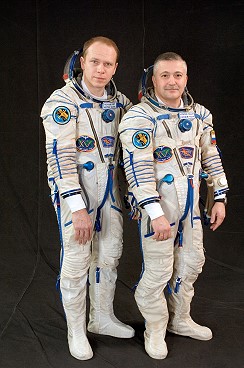
alternative crew photo |

|
|
|
 |
 |
alternative crew photo |
alternative crew photo |
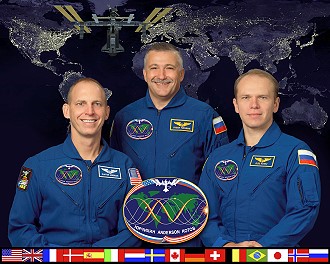
Crew, launch- and landing data
| No. | Nation | Surname | Given names | Position | Spacecraft (launch) |
Launch date |
Launch time |
Spacecraft (landing) |
Landing date |
Landing time |
Mission duration |
Orbits |
| 1 |  |
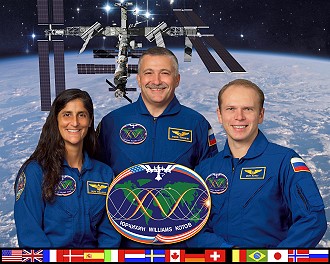
Yurchikhin | Fyodor Nikolayevich | ISS-CDR | Soyuz TMA-10 | 07.04.2007 | 17:31:14.194 UTC | Soyuz TMA-10 | 21.10.2007 | 10:35:49 UTC | 196d 17h 04m 35s | 3106 |
| 2 | |
Kotov | Oleg Valeriyevich | Flight Engineer-1 | Soyuz TMA-10 | 07.04.2007 | 17:31:14.194 UTC | Soyuz TMA-10 | 21.10.2007 | 10:35:49 UTC | 196d 17h 04m 35s | 3106 |
| 3 |  |
Williams | Sunita Lyn "Suni" | Flight Engineer-2 | STS-116 | 10.12.2006 | 01:47:35.009 UTC | STS-117 | 22.06.2007 | 19:49:36.152 UTC | 194d 18h 02m 01s | 3062 |
| 4 | |
Anderson | Clayton Conrad | Flight Engineer-2 | STS-117 | 08.06.2007 | 23:38:04.012 UTC | STS-120 | 07.11.2007 | 18:01:16 UTC | 151d 18h 23m 12s | 2389 |
Backup Crew
| No. | Nation | Surname | Given names | Position |
| 1 | |
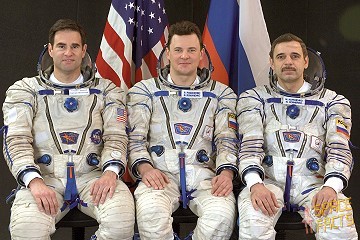
Romanenko | Roman Yuriyevich | ISS-CDR |
| 2 | |
Korniyenko | Mikhail Borisovich | Flight Engineer |
| 3 | |
Anderson | Clayton Conrad | Flight Engineer |
| 4 | |
Chamitoff | Gregory Errol | Flight Engineer |
 |
alternative crew photo |
 |
Expedition Report
| Launch from the Baikonur Cosmodrome (Fyodor
Yurchikhin and Oleg
Kotov). Clayton
Anderson arrived on June 10, 2007 with
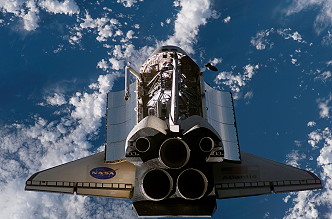
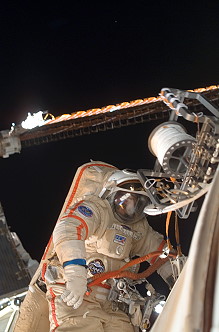
STS-117. The Expedition 15 officially began with undocking of Russian spacecraft Soyuz TMA-9 on April 21, 2007 at 09:11:39 UTC and Expedition 14 ended. Progress M-60 was launched at 03:25:36 UTC on May 12, 2007. The spacecraft docked with the Aft port of the Zvezda module at 05:10 UTC on May 15, 2007. Progress M-60 carried supplies to the International Space Station, including food, water and oxygen for the crew and equipment for conducting scientific research. The freighter remained docked for four months before undocking at 00:36:51 UTC on September 19, 2007. Following undocking it conducted research as part of the Plazma-Progress program for a week prior to being deorbited. It was deorbited at 19:01 UTC on September 25, 2007. The spacecraft burned up in the atmosphere over the Pacific Ocean, with any remaining debris landing in the ocean at around 19:47 UTC. The first station EVA by Fyodor Yurchikhin and Oleg Kotov occurred on May 30, 2007 (5h 25m) to install orbital debris protection panels on the Zvezda Service Module and replace experiments on the hull of Zvezda. Fyodor Yurchikhin and Oleg Kotov embarked on their first of two spacewalks aimed at armoring Zvezda with Service Module Debris Protection (SMDP). The cosmonauts exited the station through the Pirs airlock and split up. Oleg Kotov went to PMA-3 and Fyodor Yurchikhin headed to the Strela 2 on Pirs. Oleg Kotov guided Fyodor Yurchikhin to maneuver the crane to the SMDP stowage rack located on PMA -3.
The rack contained 17
SMDP panels in total and was nicknamed the "Christmas
Tree." Oleg
Kotov
attached the Christmas Tree to Strela 2 and Fyodor
Yurchikhin moved the Tree and Oleg
Kotov
back to a grapple fixture on
Zvezda.
Fyodor
Yurchikhin then joined Oleg
Kotov
on
Zvezda's
large diameter to reroute a
GPS cable to be used with the European
ATV scheduled for launch later in the year. The duo
turned their attention back to the Christmas Tree and opened one bundle of five
debris panels, which they affixed to the conical section between
Zvezda's
large and small diameters. The second EVA was again performed by Fyodor Yurchikhin and Oleg Kotov on June 06, 2007 (5h 38m). They installed a Russian scientific experiment on the outside of Pirs. Known as Biorisk, it analyzed how microorganisms affect structural materials in space. They then ran a reel of Ethernet cable along Zarya. It was the first of two strands of cable to be installed, and together, they were intended to increase the station's computing power. The two cosmonauts then returned to the Christmas Tree to gather the remaining 12 SMDP panels and secured them around Zvezda where they had attached five panels on May 30, 2007 On June 18, 2007 Space Shuttle STS-117 docked with the International Space Station. STS-117 (ISS-13A ITS-S3 / ITS-S4) delivered to the International Space Station (ISS) the second starboard truss segment (the S3/S4 Truss) and its associated energy systems, including a set of solar arrays. During the course of the mission the crew installed the new truss segment, retracted one set of solar arrays, and unfolded the new set on the starboard side of the station. After several months working aboard the station, NASA astronaut Sunita Williams will return to Earth aboard Atlantis. The flight will also carry her successor, astronaut Clayton Anderson, who arrived on Atlantis to begin his duty as an Expedition 15 Flight Engineer. The exchange of Clayton Anderson and Sunita Williams was originally planned for the STS-118 mission, for launch in August 2007. However, that flight, first set to fly in June, had to be postponed after an unexpected hail storm damaged Atlantis' external fuel tank and delayed STS-117. With the new plan, Sunita Williams' mission on the station had approximately the same length as originally anticipated. Sunita Williams launched to the station December 09, 2006, aboard the space shuttle Discovery as part of the STS-116 mission. The mission delivered and installed the 17.5-ton S3/S4 truss segment to the starboard side of the integrated truss system of the orbital outpost. The truss, part of the station's girder-like backbone, is a mirror image of the P3/P4 truss installed during STS-115 in September 2006. The new truss segment includes a set of photo-voltaic solar arrays. When unfurled, the 240-foot (73.2 meters) arrays provide additional power for the station in preparation for the delivery of international science modules during the next two years. Each of the 82 active array blankets that are grouped into 31.5 "bays" contains 16,400 silicon photovoltaic cells to convert sunlight into electricity. The truss also contains a Solar Alpha Rotary Joint (SARJ), which will rotate 360 degrees, clockwise or counterclockwise, to position the S4 and S6 solar arrays to track the sun. Processes to activate the SARJ were modified after STS-115. During that mission, difficulties were encountered with software associated with the gears within the joint, and spacewalking astronauts had trouble loosening bolts during its structural preparation. Software to control the SARJ was updated, and the spacewalkers now will carry another tool, called a torque multiplier, to help remove any balky launch restraints. The mission included the retraction of the starboard solar array, known as 2B, on the P6 truss atop the station, which would otherwise interfere with the rotation of the new starboard arrays. The retraction also prepared the P6 truss for its relocation to the outboard port side of the station later in 2007. Retraction began a day earlier than originally planned because of the tricky retraction of the P6 port side solar array during the STS-116 mission in December 2006. Atlantis' spacewalk teams were also prepared to assist the retraction. The Starboard Three (S3) and Starboard Four (S4) integrated truss segments are the primary payload delivered on the STS-117 mission and the heaviest space station payload to date. The principal functions of the S3 and S4 truss segments are to provide electrical power and data interfaces for future mission payloads and convert sunlight to electricity. The segments will include another set of Solar Array Wings (SAWs) and a second Solar Alpha Rotary Joint (SARJ). The integrated truss segments started with Starboard zero (S0) as the center assignment and were numbered in ascending order out-ward to the port and starboard sides. Starboard is the right side and port is the left side of the truss structure. Z is zenith and is up. From S0, the truss segments are P1, P3, P4, P5 and P6 and S1, S3, S4, S5 and S6. P6 is on orbit and attached to segment Z1 (zenith). The zenith is a spacer added to provide adequate space between the pressurized modules and P6. P6 eventually will be relocated and attached to P5. Plans for S2 and P2 segments were eliminated when the station design was scaled back. The S3 primary structure is made of a hexagonal-shaped aluminum structure and includes four bulkheads and six longerons, beams that connect the bulkheads. The secondary structure includes brackets, fittings, attach platforms, extravehicular activity equipment and miscellaneous mechanisms. The major S3 subsystems include the SARJ, Segment-to-Segment Attach System (SSAS) and Payload Attach System (PAS). The S3 truss segment will provide mechanical, power and data interfaces to payloads attached to the four PAS platforms; axial indexing for solar tracking via the SARJ; translation and work site accommodations for the Mobile Transporter; accommodations for ammonia servicing of the out-board PV modules and two Multiplexer/Demultiplexers (MDMs). The MDMs are basically computers that tell other electrical components when to turn on and off and monitor hardware. The S3 also provides a passive attachment point to the S1 segment via the SSAS and pass through of power and data to and from the outboard segments. The SARJ continuously rotates to keep the SAW on S4 and S6 (S6 launched on shuttle mission STS-119) oriented toward the sun as the station orbits the Earth. Each SAW is also oriented by the BGA, which can change the pitch of the wing. Each wing measures 115 feet (35.1 meters) by 38 feet (11.6 meters) and extends out to each side of the Integrated Equipment Assembly. There are two wings on S4. Major subsystems of the S4 truss are the port inboard Photovoltaic Module (PVM), the Photo-voltaic Radiator (PVR), the Alpha Joint Interface Structure (AJIS) and the Modified Rocketdyne Truss Attachment System (MRTAS). The S4 PVM includes all equipment outboard of the SARJ outboard bulkhead, namely the two Photovoltaic Array Assemblies (PVAAs) and the Integrated Equipment Assembly (IEA). The PVR provides thermal cooling for the IEA. The AJIS provides the structural transition between S3 and S4. Each PVAA consists of a SAW and BGA. S4 also contains the passive side of the MRTAS that will provide the structural attachment for the S5 truss. When Atlantis arrived at the station two days after launch, the Expedition 15 Commander Fyodor Yurchikhin and Flight Engineers Oleg Kotov and Sunita Williams greeted the six-person shuttle crew. Fyodor Yurchikhin and Oleg Kotov arrived at the complex April 09, 2007 following their April 07, 2007 launch on the Russian Soyuz TMA-10 from the Baikonur Cosmodrome in Kazakhstan. They returned to Earth in October 2007 after the arrival of the next station crew. Sunita Williams came to the station on Discovery's STS-116 flight in December 2006. She returned at the end of STS-117 onboard Atlantis. Following docking, Pilot Lee Archambault and Mission Specialist Patrick Forrester used the shuttle's Canadarm to grapple the S3/S4 truss, lift it from its berth in the payload bay, and maneuvered it for handover to the station's Canadarm2. After hatch opening, Sunita Williams used the Canadarm2 to take the truss from the shuttle's robotic arm. That task was completed at 00:28 UTC marking the completion of the handover. The truss remained grappled to the station's arm until next day's installation. The first EVA was performed by James Reilly and John Olivas on June 11, 2007 (6h 15m). After venturing out of the Quest airlock into space, Mission Specialists James Reilly and John Olivas released launch restraints on the four Solar Array Blanket Boxes, which house the folded solar arrays. They made final attachment of bolts, cables and connectors, and began preparations for the activation of the truss. The two spacewalkers rotated the array canisters into their normal position for deployment on the next day. The start of the spacewalk was delayed for about an hour after the station temporarily lost attitude control when the station's control moment gyroscopes (CMGs) went offline. The spacewalk started after station's gyroscopes were initialized by flight controllers. NASA's Mission Management Team also decided to extend Atlantis' mission by two days and to add a fourth spacewalk. John Shannon, the head of NASA's STS-117 Mission Management Team during the day's mission briefing told reporters that the extra time would give the crew to complete the ISS assembly tasks and allow ground engineers to draw up plans to repair the damaged blanket on the OMS pod of Atlantis. The successful deployment of the S3/S4 solar arrays was the highlight of the flight day 5, adding significantly to the ISS power generation capabilities. Prior to crew wake up, station controllers began unfurling the solar array attached to the S3/S4 truss segment. Shuttle crew then took over, unfolding one wing at a time in stages, pausing to let the sun warm the solar array panels which helped to prevent the thin individual panels from sticking together. The crew finished unfolding the first wing at 06:29 UTC and the second at 07:58 UTC. There were continuing problems with the station's electrically-driven gyroscopes, the preferred, non-propulsive, method for controlling the ISS due to a problem with a Russian navigation computer. The navigation computer problem started when flight controllers attempted to turn attitude control over to the ISS computers after letting shuttle computers handle it while the arrays were unfolded. The navigation computer would not allow them to do so, and forced a reboot of the main Russian command and control computer. The forced reboot triggered an alarm enunciating the problem to the crew and ground controllers. The issues appeared to have been resolved by the end of the day and the station's gyroscopes took over attitude control shortly after 11 UTC. That was followed by relocation of the Mobile Transporter in preparation ahead the next day's spacewalk. The crew or shuttle/station combined stack never was in danger throughout the troubleshooting efforts. The second EVA by Patrick Forrester and Steven Swanson occurred on June 13, 2007 (7h 16m). The main task of the spacewalk was to prepare the Solar Alpha Rotary Joint (SARJ) between the S3 and S4 Truss segments for rotation. After exiting Quest at 18:03 UTC the two spacewalkers moved up the P6 Truss to monitor the retraction of the 2B Solar Array and to assist if required. Patrick Forrester, was in a foot restraint on the station's Canadarm2, and Steven Swanson had specially-prepared tools to use to help the panels of photovoltaic cells fold properly. Flight controllers were able to get seven and a half of the 31.5 solar array bays folded. Then, Patrick Forrester and Steven Swanson were able to poke and prod another five and a half bays worth of panels into folding correctly (some 45 feet = 13.7 meters) before moving on to the SARJ. Patrick Forrester and Steven Swanson completed EVA 2 with mixed results. The duo removed all of the launch locks holding the SARJ in place. The spacewalkers had planned to remove the SARJ's launch restraints as well, but ran into problem when Patrick Forrester tried to install a drive-lock assembly. They discovered that the S3/S4 SARJ motor control circuits were wired in reverse. As such commands being sent to the drive-lock assembly were actually being received by a drive-lock assembly that was installed during EVA 1. So, one launch lock restraint was left in place to prevent the possibility of undesired rotation. After the end of the spacewalk problems became serious when navigation computers in the Russian segment did not operate. Over the next days, the computers were repaired. Meanwhile Mission Control had decided to extend the mission duration. On flight day 7 a computer malfunction on the Russian segments of the ISS occurred at 06:30 UTC and left the space station without orientation control. A successful restart of the computers resulted in a false fire alarm which awakened the crew at 11:43 UTC. Engineers theorized that the new S4 solar array, or components in the circuitry delivering that power to the Russian segment of the ISS, triggered some subtle change in the ISS electrical grid. The solar array blanket atop the P6 truss was furled to a little more than half its original length by the Atlantis and the station crews. Commander Frederick Sturckow, along with Pilot Lee Archambault, Mission Specialist Sunita Williams and Flight Engineer Clayton Anderson, meticulously retracted the solar array blanket another three bays worth of panels. The crew carefully sent commands to retract the array as much as possible ahead of EVA 3. By last count, 15 and a half of the 31 and half bays remained to be folded into a 20-inch-deep (51 centimeters) protective box. The third EVA by James Reilly and John Olivas was conducted on June 15, 2007 (7h 58m). While John Olivas anchored to the end of Atlantis' robot arm was repairing the OMS pod, James Reilly installed an external hydrogen vent for the oxygen generating system inside Destiny laboratory. By using his helmet camera, John Olivas beamed down close-up views of the torn insulation and surrounding blankets to help flight controllers assess the system's condition. John Olivas spent two hours stapling and pinning down a thermal blanket on the OMS pod. Flight controllers from Houston also radioed James Reilly that they had decided to have him disconnect the P-12 connector that was installed during EVA 1 since the Russian flight controllers were planning to make an attempt to restart the problematic computers in the ISS. Even though the connector was not in use at that time, engineers decided to have James Reilly disconnect it to make sure that it was not causing any electrical noise or grounding issues that might have played a role in the computer trouble. When those tasks were completed, the two astronauts along with their colleagues inside the shuttle and station and flight controllers in Houston completed the final retraction of the starboard P6 truss element. The retraction that required 28 commands was completed and latches closed. The successful folding paved the way to relocate the P6 truss to its permanent location during STS-120. All tasks were completed successfully. The fourth and unplanned spacewalk was performed by Patrick Forrester and Steven Swanson on June 17, 2007 (6h 29m) to activate the new solar array rotation mechanism SARJ and ready the lab complex for a critical sequence of upcoming construction flights; work included the removal of a keel pin and drag link from S3, the complete bolting down of a piece of debris shielding on the Destiny laboratory, the installation of a computer network cable on Unity, and the removal of a Global Positioning System antenna. Steven Swanson and Patrick Forrester retrieved a TV camera and its support structure from a stowage platform attached to the Quest Airlock and installed it on the S3 truss. They then verified the Drive Lock Assembly (DLA) 2 configuration and removed the last six SARJ launch restraints. The two astronauts cleared the path on the S3 truss for the Mobile Base System by removing temporary rail stops and hardware that had secured the S3/S4 truss segments in the shuttle's payload bay. The work completed the major tasks assigned for the STS-117 mission. The pair then began some of the get-ahead tasks mission managers had hoped to complete. The two spacewalkers installed a computer network cable on the Unity node that was to permit astronauts in the U.S. segment of the station to command systems in the Russian segment and opened the Hydrogen vent valve on the Destiny laboratory installed by Mission Specialist James Reilly during EVA 3. Steven Swanson and Patrick Forrester also attempted to bolt down two debris shield panels that could not be put back in place during an earlier spacewalk. Since the two were also not able to get it anchored, they tethered the panels on the space station's service module. Overnight, ground controllers planned to test the SARJ, ordering a small 5-degree rotation just to verify normal operations. Throughout flight day 10, the Russian central computer and terminal computers continued in stable operation. The astronauts hauled the last bits of cargo between the shuttle and the space station while flight controllers on Earth tested the station's resuscitated Russian control and navigation computers after they crashed last week. In the morning the shuttle maneuvered the Atlantis/ISS complex into position for a water and waste water dump and after it maneuvered back, attitude control was switched to and from Russian command successfully. On June 19, 2007 STS-117 undocked from the ISS and moved to a distance of about 450 feet (137.2 meters), where Lee Archambault began to fly around the station in its new configuration. Once Atlantis completed 1.5 revolutions of the complex, Lee Archambault fired Atlantis' jets to leave the area. The shuttle moved about 46 miles (74 km) from the station and remained there while ground teams analyzed data from the late inspection of the shuttle's heat shield. The distance was close enough to allow the shuttle to return to the station in the unlikely event that the heat shield is damaged, preventing the shuttle's re-entry. The third station EVA by Fyodor Yurchikhin and Clayton Anderson was conducted on July 23, 2007 (7h 41m) to replace a failed power controller on the station's truss, jettison a refrigerator sized ammonia reservoir tank and clean seals on a docking port on the Unity module. Exiting the ISS from the Quest airlock, Clayton Anderson and Fyodor Yurchikhin installed a TV camera stanchion on the S0-P1 truss. Clayton Anderson then reconfigured an S-Band Antenna Assembly power supply and mounted a foot restraint on the Canadarm2. Meanwhile, Fyodor Yurchikhin replaced a circuit breaker for the main truss's Mobile Transporter rail car. Afterward, Fyodor Yurchikhin and Clayton Anderson reconvened at the S0-P1 truss to remove some flight support equipment and a Flight Releasable Attachment Mechanism. Clayton Anderson, while attached to the newly installed foot restraint on Canadarm2, jettisoned them, and Fyodor Yurchikhin moved to Z1 where he began to disconnect the EAS. Both spacewalkers proceeded to the P6 truss to undo EAS's remaining connections to the Station. Once finished, Clayton Anderson grabbed the EAS and Oleg Kotov maneuvered him and the arm to the bottom of the main truss to jettison the unit by pushing it in the opposite direction of the Station's orbital path. After the jettison, Fyodor Yurchikhin and Clayton Anderson cleaned the CBM to prepare for the future relocation of the PMA-3 to that location, which itself was in preparation for the addition of the Harmony node. Ahead of schedule, the pair was also able to move an auxiliary equipment bag from P6 to Z1 and remove a GPS antenna and some bolts on two fluid trays on the S0 truss Progress M-61 was launched at 17:33:47 UTC on August 02, 2007. The spacecraft docked with the Pirs module at 18:40 UTC on August 05, 2007. Progress M-61 carried supplies to the International Space Station, including food, water and oxygen for the crew and equipment for conducting scientific research. The freighter remained docked for almost five months before undocking at 03:59 UTC on December 22, 2007. Following undocking it conducted technological experiments and research as part of the Plazma-Progress program for a month prior to being deorbited. It was deorbited at 19:06 UTC on January 22, 2008. The spacecraft burned up in the atmosphere over the Pacific Ocean, with any remaining debris landing in the ocean at around 19:51 UTC. STS-118 arrived on August 10, 2007 at the International Space Station. The STS-118 (ISS 13A.1 SH-LSM ITS-S5) mission delivered and assembled the starboard S5 truss segment of the International Space Station, as well as External Stowage Platform 3, (ESP-3) and a replacement Control Moment Gyroscope (CMG). The mission was also the final flight to include the Spacehab Logistics Single Module. S5 is part of the 11-segment integrated truss structure (ITS) and the third starboard truss element to be delivered. Without S5, one quarter of the space station's power cannot be realized. The ITS forms the station's backbone with mountings for unpressurized logistics carriers, radiators, solar arrays and various other elements. S5 was attached to the Starboard 4 (S4) truss element via the Modified Rocketdyne Truss Attachment System (MRTAS) interface. S5 is used primarily to connect power, cooling lines and serve as a spacer between the S4 photovoltaic module (PVM) and Starboard 6 (S6) PVM, which will be joined during a later assembly mission. S5 is very similar in construction to the long spacer located on S6. Without the S5 short spacer, the S4 and S6 solar arrays would not be able to connect due to the way the photovoltaic arrays (PVA) are deployed on-orbit. The girder-like structure is made of mostly aluminum and provides several extravehicular aids, robotic interfaces, ammonia servicing hardware (as part of the Station's External Active Thermal Control System that allows ammonia fluid to transfer from S4 to S6) and can also accommodate an external storage platform. The Enhanced Universal Trunnion Attachment System (EUTAS) allows platforms to be attached to S5 for the storage of additional science payloads or spare Orbital Replacement Units. S5 also has white thermal blankets on the structure, which help shade the S4 Solar Array Assembly ORUs. S5 was transferred using the shuttle arm from the payload bay to the Space Station Robotic Manipulator System (SSRMS) where it was placed into the install or soft-dock position. While being moved on the SSRMS, S5 will have about two inches of clearance as it passes the S4 Sequential Shunt Unit (SSU). The truss element is installed robotically with help from crew members. During the first spacewalk, astronauts will use the MRTAS to connect S5 to S4 by using their portable hand tools to drive in four 3/4-inch diameter primary bolts in each corner. If a primary bolt cannot be secured, two contingency bolts at each corner on S5 can be tightened into the nut assemblies on S4. Another unique feature of S5 is the Photovoltaic Radiator Grapple Feature (PVRGF). For launch, the PVRGF is stowed on top (zenith) of S5 and is used by the shuttle and station robotic arms to grab S5 and pull it out and attach it. After S5 is attached to S4, the PVRGF will be relocated to the keel during the first spacewalk by using four fasteners. The PVRGF also is used to grapple the station's photovoltaic radiators (PVR) located on P3/P4, S3/S4, P6 and S6. The PVRGF can be used to replace a PVR, should they malfunction or become damaged from debris while on orbit. ESP-3 is an external pallet that can securely hold up to seven critical spare parts, or Orbital Replacement Units (ORUs), for the station. ESP-3 is the third in a series of external storage pallets transported to the station and will be attached to the Port 3 truss element. ESP-1 was installed to the station's U.S. Destiny Lab on STS-102/ 5A.1 in March 2001. ESP-2 was installed to the U.S. Airlock on STS-114/LF1 in August 2005. ESP-3 has six Flight Releasable Attachment Mechanisms (FRAM) to secure or release the ORUs and other equipment stored on it and an Ammonia Tank Assembly (ATA) Flight Support Equipment (FSE) directly mounted to a seventh site. Like ESP-2, the platform is derived from an Integrated Cargo Carrier (ICC), an equipment carrier designed for use in the shuttle's payload, and adapted for deployment on the station by developing a device to attach it to ISS structure. Following a series of leak checks, the hatches were opened at 20:04 UTC, and the Expedition 15 crew welcomed the STS-118 crew aboard the station. Following Endeavour's docking to the station on flight day 3 and shortly after hatches were opened between the two vehicles, SSPTS was activated as two of the four OPCUs were turned on. The system was deactivated shortly before the first spacewalk on flight day 4 to enable the station's starboard solar arrays to be locked in place for the installation of the S5 truss. After that was completed, SSPTS was reactivated until Endeavour was ready to undock and the other two OPCUs were turned on and checked out. The Spacehab Logistics Single Module, a pressurized aluminum habitat that was carried inside the payload bay, had a capacity of 6,000 pounds (2,700 kg), and carried a variety of cargo and research projects, including supply materials for the ISS. It returned cargo, including the MISSE PEC 3 & 4, a Department of Defense payload that had been installed on the ISS. Launched in July 2006, the MISSE PEC-3 & 4 contained over 850 materials specimens that will be studied to determine the effects of long-term exposure to the environment of space. The first EVA by Richard Mastracchio and Dafydd Williams occurred on August 11, 2007 (6h 17m) to remove locks from the S5 that secure it during launch and lock it in place, relocate a radiator from its launch position to the bottom of the S5 to provide clearance for solar arrays to track the sun. During mission STS-120, the radiator will be relocated to its final position. While the EVA was underway, the primary command-and-control computer in the U.S. Destiny lab module unexpectedly shut down, but the two others worked on. The most important objective during EVA 1 was to install the S5 truss. One of the challenges that Charles Hobaugh faced was sliding the S5 spacer into its position using the station's robotic arm, known as the Space Station Remote Manipulator System. In a move similar to parallel parking in a snug space, the spacer came as close as 2.7 inches to the S4 truss. The two spacewalkers monitored structural clearances for the maneuver. Once the S5 was in position, Richard Mastracchio and Dafydd Williams removed the locks that secured it and S4 during launch. The truss was brought into "soft" capture position so that the crew could fasten the primary structural bolts. With the S5 secured, the two spacewalkers moved the Photovoltaic Radiator Grapple Fixture (PVRGF) from its launch location on top of S5 to the keel of the truss. The PVRGF is a handle that was used by the shuttle and station arms to move the truss. It was being relocated to provide enough clearance for the solar arrays to rotate and track the sun. The crew prepared the S5 for the future attachment of the S6 truss segment, connected six utility cables between S5 and S4, removed the S5 and S6 launch locks and opened the S5 capture latch assembly. Next, the two also monitored the retraction and cinching of the P6 photovoltaic radiator, readying it for the next shuttle mission. The retraction provided clearance for the robotic arm that was used when the S-band antenna sub-assembly (SASA) is moved during the third spacewalk. It was then decided to extend the mission for three days, because that for the first time used Station-to-Shuttle Power Transfer System (SSPTS) worked well. SSPTS transfers electrical power from the station to the shuttle, allowing the shuttle to conserve its own power generating resources. It was also reported, that foam hit Endeavour heat shield during launch. The thermal tile gouge almost reaches shuttle's skin. It was a small but deep, scooped-out pit in the heat shield. Another little damage was later found on the orbiters window. The second EVA was again performed by Richard Mastracchio and Dafydd Williams on August 13, 2007 (6h 28m) to move a failed control moment gyroscope (CMG-3) to an unpressurized platform that holds spare parts outside the station called External Stowage Platform-2 (ESP-2), a new platform, ESP-3, was added to the station (stored inside ESP-3 is a new gyro that the spacewalkers used to replace the failed one), disconnect ESP-3 power cables to prepare it for permanent relocation to the station. During the second spacewalk, Richard Mastracchio and Dafydd Williams removed and replaced a failed control moment gyroscope. The station's four CMGs provide primary attitude control for the station. CMG-3 suffered a mechanical failure in October 2006. The remaining gyroscopes have been providing attitude control since then, but all four CMGs will be needed as the station's integrated truss continues to expand. During the spacewalk, Richard Mastracchio and Dafydd Williams removed the failed CMG from the Zenith 1 (Z1) truss and temporarily stowed it on the truss. Then, the crew moved to the shuttle's payload bay and removed the new CMG from where it was stowed on external stowage platform-3 (ESP-3). The station's robotic arm was used to transfer the CMG to ESP-2, located on the starboard side of the Quest Airlock, to prepare it for installation on the Z1 truss. Once the new CMG was installed, the failed CMG was moved from the truss to ESP-2. The CMG was returned to Earth on a later mission. External stowage platforms are designed to hold Orbital Replacement Units, or ORUs, such as the CMGs. The two spacewalkers also installed the Z1 shroud, an embossed silver Teflon blanket that is used to protect the CMG from heat. The third EVA by Richard Mastracchio and ISS Expedition 15 crew member Clayton Anderson occurred on August 15, 2007 (5h 28m) to prepare the relocation of the P6 truss segment on the STS-120 mission, move two equipment carts from the right to left side of the station and relocate an antenna and upgrade avionics and communication systems. The primary purpose of the third spacewalk was to prepare for the relocation of the P6 truss, planned for the STS-120 mission. One of the primary tasks was to relocate two crew and equipment translation aid (CETA) carts from the port side of the station's Mobile Transporter to its starboard side. This allowed the Mobile Transporter to move to the proper worksite when the P6 truss is relocated. During the spacewalk, Richard Mastracchio and Clayton Anderson also upgraded the port S-band communications system. Using the station's robotic arm, Charles Hobaugh moved the S-band antenna sub-assembly, or SASA, from the P6 truss to the P1. The two astronauts then installed a new S-band transponder and baseband signal processor to P1 and activated it. Together with the relocated SASA antenna, the new transponder and processor provided upgraded voice communications for the station. Richard Mastracchio and Clayton Anderson also retrieved the P6 transponder so that it could be returned to Earth where it will be upgraded and available for a future mission. They engaged the Z1 SASA gimbal locks to prepare them for the next. This EVA had to be shortened because of a damage to the left thumb of Richard Mastracchio's spacesuit glove. At no time was Richard Mastracchio in any danger, NASA said, but flight rules required Richard Mastracchio to end his spacewalking task as a precaution. The fourth and final EVA by Dafydd Williams and ISS Expedition 15 crew member Clayton Anderson was conducted on August 18, 2007 (5h 02m) to install support equipment on the S1 truss that will allow for an addition to the inspection boom during the STS-123 mission, and to install a system to provide better wireless video coverage during future missions. Dafydd Williams and Clayton Anderson installed orbital support equipment for the Orbiter Boom Sensor System (OBSS) on the S1 truss. This installation allowed the addition of a 50-foot (15 meters) inspection boom assembly (IBA) during STS-123. The boom assembly was used for heat shield inspections during the STS-124 mission. The OBSS provides the capability to inspect the shuttle for thermal protection system (TPS) damage and, if needed, to provide a platform to perform TPS repair during a spacewalk. The IBA will consist of two laser sensors, a special black and white TV camera (ITVC), an integrated sensor inspection system (ISIS) digital camera, a pan and tilt unit, two grapple fixtures, and EVA hand-holds. The crew also installed the S3 Wireless Video System External Transceiver Assembly (WETA) on camera port 1 on the S3 truss to provide better wireless video coverage during future missions. On August 19, 2007 STS-118 undocked from the ISS and moved to a distance of about 450 feet (137.2 meters), where Charles Hobaugh began to fly around the station in its new configuration. Once Endeavour completed 1.5 revolutions of the complex, Charles Hobaugh fired Endeavour's jets to leave the area. The shuttle moved about 46 miles (74 km) from the station and remained there while ground teams analyzed data from the late inspection of the shuttle's heat shield. The distance was close enough to allow the shuttle to return to the station in the unlikely event that the heat shield is damaged, preventing the shuttle's re-entry. Anomalous Long-Term Effects in Astronauts' Central Nervous System (ALTEA): Astronauts in orbit are exposed to cosmic radiation that is of sufficient frequency and intensity to cause effects on the central nervous system, such as the perception of flashes of light. Anomalous Long-Term Effects in Astronauts' Central Nervous System (ALTEA) will measure details about the cosmic radiation passing through a crew member's head, while measuring the brain electrophysiological activity and the performance of the visual system. Analyzing Interferometer for Ambient Air (ANITA) will monitor 32 potentially gaseous contaminants - including formaldehyde, ammonia and carbon monoxide - in the atmosphere on the station. The experiment will test a technology novel to spaceflight for monitoring the atmosphere on the station. The ANITA flight experiment is a trace gas monitoring system based on Fourier Transform Infrared (FTIR) technology. The initial flight of ANITA will test the accuracy and reliability of the FTIR technology as a potential next generation atmosphere trace gas monitoring system for the space station. ANITA will analyze air samples from local and remote areas on the space station. Data will be down-linked daily to the ground team. The Binary Colloidal Alloy Test-3 (BCAT-3) is in reserve operations, awaiting crew time to homogenize and photograph the final samples. There are two types of samples. The first is an experiment of the long-duration phase separation of two mild solvents. The second category is an experiment studying how colloidal net-works form when the effect of gravity (sedimentation) is eliminated. Scientists will use this information to improve models for a wide range of everyday products including cosmetics, paints and fabric softener. For long-duration space-flight to the moon or Mars, NASA needs to understand the "shelf life" of polymers, sol-vents and colloids. Cardiovascular and Cerebrovascular Control on Return from ISS (CCISS) will study the effects of long-duration spaceflight on crew members' heart functions and their blood vessels that supply the brain. Learning more about the cardiovascular and cerebrovascular systems could lead to specific countermeasures that might protect future space travelers more effectively. For crew members' health, the need to maintain blood pressure immediately after returning to Earth is essential. To obtain information on the baroreflex stability (blood pressure regulation) of space station crews, an electrocardiogram and blood pressure data will be gathered before flight, in flight and after flight. The data gathered during this investigation will lead to countermeasures to help crew members maintain sufficient blood pressure after long-duration missions. This study will provide a basis for studies of individuals who are susceptible to fainting in the up-right posture. By allowing photographs to be taken from space, the Crew Earth Observations (CEO) experiment provides people on Earth with image data needed to understand our planet. The photographs - taken by crew members using handheld cameras - record observable Earth surface changes over a period of time, as well as more fleeting events such as storms, floods, fires and volcanic eruptions. International Polar Year (IPY) from the International Space Station: The IPY is an international effort to collect relevant scientific data of the Earth's polar regions from March 2007 to March 2009. Scientists will analyze IPY data to answer fundamental questions about the Earth's changing climate, the effects of space weather and Earth processes recorded from the far reaches of upper atmosphere to deep in polar ice cores. Today's IPY celebrates the 50th anniversary of the 1957-58 International Geophysical Year (IGY), the remarkable international collaboration that provided many new findings about the Earth system. Results from the IGY sparked the next 50 years of interdisciplinary studies in Earth science, geophysics, atmospheric science and oceanography. Building from IGY's successes, IPY's focused research of the Earth's polar regions is intended to provide a better understanding of how these hard-to-reach places of the Earth affect the global system. Commercial Generic Bioprocessing Apparatus Science Insert - 02 (CSI-02) is an educational payload designed to interest middle school students in science, technology, engineering and math by participating in near real-time research conducted on board the station. Students will observe three experiments through data and imagery down linked and distributed directly into the classroom via the internet. The first is a seed germination experiment, where students will learn how gravity affects plant development. Small seeds will be developed on orbit in a gar-den habitat. The second experiment will examine crystal growth formation using specific types of proteins and enzymes, and the third experiment will examine crystal formation using silicates - compounds containing silicon, oxygen and one or more metals. For the two crystal growth experiments, students will grow crystals in their class-rooms and analyze growth of those compared to the crystals grown in space. EarthKAM (Earth Knowledge Acquired by Middle school students) is a NASA education payload that enables students to photograph and examine Earth from a space crew's perspective. ELaboratore Immagini Televisive - Space 2 (ELITE-S2) studies the connection among the brain, visualization and motion in the absence of gravity. By recording and analyzing the three-dimensional motion of astronauts, this study will help engineers apply ergonomics into future spacecraft de-signs and determine the effects of weightlessness on breathing mechanisms for long-duration missions. This experiment is a cooperative effort with the Italian Space Agency, ASI. The Elastic Memory Composite Hinge (EMCH) experiment will study the performance of a new type of composite hinge and see if it is suitable for use in space. The EMCH investigations conducted aboard the space station are the first ever performed in space. Building new spacecraft structures in space necessitates deploying or "unfolding" items that have been launched from Earth. This experiment will use Elastic Memory Composite Hinges (EMCH) to move an attached mass at one end. The Air Force Research Laboratory developed the hinge from a resin and carbon fiber laminate. The study will measure the force and torque on the hinge and the accuracy of the deployment. New materials that are reliable, light and strong will be important building blocks of future exploration spacecraft. Education Payload Operations (EPO) refers to an education payload or activity designed to support the NASA mission to inspire the next generation of explorers. Generally, these payloads and activities focus on demonstrating science, mathematics, technology, engineering or geography principles. Video recording of the demonstrations and/or still photographic documentation of a crew member operating EPO hardware while on orbit will achieve EPO goals and objectives. The overall goal for every expedition is to facilitate education opportunities that use the unique environment of human spaceflight. Epstein-Barr Space Flight Induced Reactivation of Latent Epstein-Barr Virus: This experiment is designed to examine the mechanisms of spaceflight- induced alterations in human immune function and dormant virus reactivation. Specifically, this study will determine the magnitude of immunosuppression as a result of spaceflight by analyzing stress hormones, measuring the amount of EBV activity, and measuring white blood cells' virus-specific activity. Validation of Procedures for Monitoring Crew Member Immune Function (Integrated Immune) will assess the clinical risks resulting from the adverse effects of spaceflight on the human immune system. It will validate a flight-compatible immune monitoring strategy by monitoring changes in the immune system through analysis of blood, urine and saliva samples collected from crew members before, during and after spaceflight. Behavioral Issues Associated with Isolation and Confinement: Review and Analysis of ISS Crew Journals: The purpose of this experiment is to collect behavioral and human factors data for analysis, with the intention of furthering our understanding of life in isolation and confinement. The objective of the experiment is to identify equipment, habitat and procedural features that help humans adjust to isolation and confinement and remain effective and productive during long-duration space expeditions. The method used in the experiment is analyzing the content of journals the International Space Station crews maintain for this purpose. Latent Virus: Incidence of Latent Virus Shedding during Spaceflight: The objective of this experiment is to determine the frequencies of reactivation of latent viruses and clinical diseases after exposure to the physical, physiological, and psychological stressors associated with spaceflight. The Lab-on-a-Chip Application Development Portable Test System, or LOCAD-PTS, is a handheld diagnostic reader and set of instruments small enough to fit into a compact ice cooler. On the space station, crew members will test the hand-portable detection unit. They will conduct experiments, taking samples from their own environment, to determine the system's effectiveness at acquiring samples in a weight-less environment and to quantify levels of bacterial contamination. The results will help researchers refine the technology for future moon and Mars missions. Lab-on-a-chip technology allows chemical and biological processes - previously requiring large pieces of laboratory equipment - to be performed on small plates etched with fluid channels called capillaries. Using these channels, chemicals and fluid samples can be mixed, diluted, separated and controlled for study. Midodrine: Test of Midodrine as a Countermeasure Against Post-flight Orthostatic Hypotension: Many astronauts experience orthostatic hypotension (dizziness caused by a decrease in blood pressure) upon return to the Earth's gravity. This could be a problem for landing on other planets as well. This experiment measures the ability of the drug midodrine, when used as a countermeasure, to reduce the incidence and/or severity of orthostatic hypotension. On Earth, and in studies that simulate weightlessness, the drug midodrine has been used extensively to treat low blood pressure. This experiment was flown as a Detailed Supplementary Objective on STS-108 and aboard the space station during Expedition 5. The Materials on the International Space Station Experiment (MISSE) Project is a cooperative endeavor to fly materials and other types of space exposure experiments on the station and is managed by NASA Langley Research Center, Hampton, Va. The objective is to develop early, low-cost, non-intrusive opportunities to conduct critical space exposure tests of space materials and components planned for use on future spacecraft. Myofibers - Cell Culture Module (M-CCM): Exposure to microgravity has adverse effects on living systems. Muscle loss in astronauts is a major concern for future spaceflights to the moon and Mars. Myofibers - Cell Culture Module (M-CCM) investigates the effects of microgravity on muscle deterioration to develop a successful countermeasure for astronauts on long-duration missions. Myofibers are the primary cells in skeletal muscle mass. Studies have shown that astronauts experience significant loss of muscle mass during space exploration due to the stresses of microgravity on the physiology of living systems. Nutrition: Nutritional Status Assessment: The Nutrition protocol will help the Human Research Program gain a better under-standing of the time course of nutrition-related changes during flight and will help define the nutritional requirements for space travelers. This likely will impact food system development for future space exploration programs to the moon and Mars. This experiment also will help us under-stand the impact of countermeasures (for example, exercise or pharmaceuticals) on nutritional status. Ensuring that we send the right nutrient balance for long-duration missions is critical for crew health and mission success. Optimization of Root Zone Substrates (ORZS) was developed to provide direct measurements and models for plant rooting media that will be used in future Advanced Life Support (ALS) plant growth experiments. The goal of this investigation is to develop and optimize hardware and procedures to allow optimal plant growth to occur in microgravity. The Periodic Fitness Evaluation with Oxy-gen Uptake Measurement (PFE-OUM) will demonstrate the capability of crew members to perform periodic fitness evaluations (PFE) with continuous oxygen consumption measurements. The evaluation will take place within 14 days after arrival on the International Space Station and once a month during routine PFEs. When the capability of the pulmonary function system (PFS) to perform PFEs is verified, crew members will be able to integrate their monthly PFE with oxygen consumption measurements to fulfill the requirement for cardiovascular fitness evaluations during long-duration space-flight. Perceptual Motor Deficits in Space (PMDIS): This experiment will measure the decline in hand-eye coordination of shuttle astronauts while on orbit. These measurements will be used to make distinctions between three possible explanations for the decline. Bioavailability and Performance Effects of Promethazine During Spaceflight (PMZ): Promethazine (PMZ) is used to treat space motion sickness during shuttle missions. However, side effects associated with PMZ when used on Earth include dizziness, drowsiness, sedation and impaired psychomotor performance, which could impact crew performance or mission operations. Early anecdotal reports from crew members indicate that these central nervous system side effects of PMZ are absent or greatly attenuated in microgravity. Systematic evaluation of PMZ bioavailability, effects on performance, side effects and efficacy in the treatment of space motion sickness are essential for determining optimal dosage and route of administration of PMZ in flight. Space Acceleration Measurement System (SAMS) and the Microgravity Acceleration Measurement System (MAMS): The International Space Station microgravity acceleration environment consists of two regimes: the quasi-steady environment and the vibratory/transient environment; there-fore, the measurement of the microgravity acceleration environment is best accomplished by two accelerometer systems. In the U.S. Laboratory Module, the measurement of these two regimes is accomplished by the Space Acceleration Measurement System (SAMS) and the Microgravity Acceleration Measurement System (MAMS). It is necessary to measure the microgravity environment on board the station to provide this data to the scientists and researchers of the payload experiments. SAMS and MAMS provide acceleration data to fluid physics, material science and combustion experiments on board the station that study phenomena that are isolated by the micro-gravity environment. Acceleration data would be requested by the researcher of any experiment where the effects of gravity are important to the results of the research and affect the outcome of the scientific data. Streptococcus Pneumoniae Expression of Genes in Space (SPEGIS): S. pneumoniae is a respiratory microbe that is normally found in the upper respiratory tract of approximately 40% of the healthy human population. This experiment will lead to an increased understanding of S. pneumoniae, which is an opportunistic human pathogen. It is anticipated that the results from this study will advance our understanding of the virulence mechanism of these bacteria and how it adapts to different environments. The identification of specific S. pneumoniae virulence factors and cellular and molecular processes may aid scientists in furthering the understanding of how these bacteria causes infection. This data may aid in the design and development of new antimicrobial drugs. The Synchronized Position Hold, Engage, Reorient, Experimental Satellites (SPHERES) experiment will be used to develop the software needed to control multiple spacecraft flying close together and to test formation flying in microgravity. The experiment will serve as an International Space Station-based test bed for the development and testing of formation flying and other multi-spacecraft control algorithms. SPHERES consists of three self-contained, bowling ball-sized "satellites" or free-flyers, which perform the various algorithms. Each satellite is self-contained with power (AA batteries), propulsion (CO2 gas), computers and navigation equipment. As the satellites fly through the station, they will communicate with each other and an International Space Station laptop via a low-power, 900 MHz wireless link. A Comprehensive Characterization of Microorganisms and Allergens in Spacecraft (SWAB) will use advanced molecular techniques to evaluate microbes on board the space station, including pathogens (organisms that may cause disease). It also will track changes in the microbial community as spacecraft visit the station and new station modules are added. This study will allow an assessment of the risk of microbes to the crew and the spacecraft. Sleep-Wake Actigraphy and Light Exposure During Spaceflight-Long (Sleep-Long): Sleep-Long will examine the effects of spaceflight on the sleep-wake cycles of the crew during long-duration stays on the International Space Station. Previous research on space shuttle crew-members has shown that sleep-wake pat-terns are disrupted on orbit. This experiment will examine whether sleep-wake activity patterns are disrupted during long du-ration stays on the International Space Station. A wrist-worn Actiwatch will record the activity of the crewmembers when they sleep and the ambient light they experience. Results will be used to evaluate the crewmembers' subjective evaluation of the amount and quality of their sleep. This work will help in defining light requirements, sleep-shifting protocols and workload plans for future exploration missions and determine if further countermeasures to sleep disruption will need to be tested. Sleep-Wake Actigraphy and Light Exposure During Spaceflight-Short (Sleep-Short): Sleep-Short will examine the effects of spaceflight on the sleep-wake cycles of the astronauts during space shuttle missions. Advancing state-of-the-art technology for monitoring, diagnosing and assessing treatment of sleep patterns is vital to treating insomnia on Earth and in space. Previous research on space shuttle crew-members has shown that sleep-wake pat-terns are disrupted on orbit. A wrist-worn Actiwatch will record the activity of the crewmembers when they sleep and the ambient light they experience. Results will be used to evaluate the crewmembers' subjective evaluation of the amount and quality of their sleep. Stability of Pharmacotherapeutic and Nutritional Compounds (Stability): The radiation environment in space can have negative effects on many systems, not only the human body. Complex organic molecules could be affected by radiation, including vitamins and other compounds in food and pharmaceuticals (medications). Exposure to radiation may render these compounds ineffective. Determining the magnitude of these effects on the stability of medicines and food will help better plan for exploration missions, and may facilitate development of stable and reliable pharmaceutical and nutritional countermeasures suitable for future long-duration expeditions to the moon and Mars. This study will document the changes in pharmaceuticals and foods after these items are stored for long durations in space. Knowledge gained from this research project will direct future efforts for potent formulation development, packaging and/or shielding for medicines and foods to ensure efficacy (effectiveness) of medicines and quality nutritional value of food products used by crew throughout exploration missions. The Test of Reaction and Adaptation Capabilities (TRAC) investigation will test the theory of brain adaptation during spaceflight by testing hand-eye coordination before, during and after the mission. TRAC will investigate the theory that the decrease in motor skills, for example, hand-eye coordination, is a result of the brain's adaptation to being in space. By testing hand-eye coordination of the space station crew, scientists hope to confirm that while the brain is adapting to microgravity, it is unable to provide the resources necessary to perform normal motor skills. On October 12, 2007 Russian spacecraft Soyuz TMA-11 brought the two new crewmembers of Expedition 16 to the station. Finally, the station command changed from Russian cosmonaut Fyodor Yurchikhin to US astronaut Peggy Whitson. Expedition 15 officially ended with undocking of Soyuz TMA-10 on October 21, 2007 at 07:14:17 UTC. During the stay on board of the ISS the crew of Expedition 15 carried out the following scientific experiments: ALTCRISS (Alteino Long Term Cosmic Ray Measurements on board the International Space Station), ALTEA (Anomalous Long Term Effects in Astronauts' Central Nervous System), ANITA (Analyzing Interferometer for Ambient Air), Antigen (Optimization of Heterological Expresssion in Yeasts-True Yeasts in Microgravity for Example Synthesis of the HBS Antigen of the Virus Hepatitis B), ARISS (Amateur Radio on the International Space Station), BIMS (Assessment of the Efficiency of the Use of Telemedicine Technologies On-Board ISS), Biodegradation (Initial stage of Biodegradation and Biodeterioration in Space), Bioekologia (Generation of High Efficiency of Microorganisms for the Production of Preparations of Biodegradable Oil, Organophosphorus Material, Measures for the Protection of Plants, as well as, of Exopolysaddharides Uses in the Petroleum Industry), Bioemulsia (Research and Development of a Self-Contained Reactor of the Shielded Type For Production of Biomass of Microorganisms and Biologically Active Substances), Biorisk (Influence of Factors of the Space Environment on the Condition of the System of Microorganisms-Hosts Relating to the Problem of Environmental Safety of Flight Techniques and Planetary Quarantine), Biotrek (Influence of the Flow of Heavily Charged Particles of Space Radiation on Gentic Properties of Cell Production), BTN-M1 (Examination of the Flow of High Speed and Thermal Neutrons), Caf (Crystalization of th Protein Caf1M and its Combination with the Terminal Peptide Caf1 as the Elements for the Development of a New Generation of Antimicrobial Medicinal Preparations and Components of Vaccines from Yeasts), Cardio-ODNT (Dynamics of the Main Factors of Cardiac Function, of Central and Regional Circulation in Rest and During the Influence of Lower Body Negative Pressure), Cardiocog-2 (Cognitive Cardiovascular Experiment), CBTM-2 (Commercial Biomedical Test Module - 2), CCISS (Cardiovascular and Cerebrovascular Control on Return from ISS), CCM-Immune Response (Cell Culture Module - Immune Response of Human Monocytes in Microgravity), CCM-Wound Repair (Cell Culture Module - Effect of Microgravity on Wound Repair: In Vitro Model of New Blood Vessel Development), CEO (Crew Earth Observations), CEO-IPY (Crew Earth Observations - International Polar Year), CFE (Capillary Flow Experiment), Chromosome-2 (Cytogenetic Effects of Ionizing Radiation in Peripheral Lymphocytes of ISS Crewmembers), Conjugation (Development of Methods for Designing New Recombinants Producing Strains of Bacteria in Space Flight), CSI-01 (Commercial Generic Bioprocessing Apparatus Science Insert - 01: C. elgans and Seed Germination), CSI-02 (Commercial Generic Bioprocessing Apparatus Science Insert - 02: Silicate Garden, Seed Germination, Plant Cell Culture and Yeast), Diatomeya (Stability of Geographical Position and Configuration of Borders of Bioproductive Water Zones of the World Oceans, Observations by Orbition Station Crews), Dykhanie (Regulation and Biomechanics of Respiration in Space Flight), EarthKAM (Earth Knowledge Acquired by Middle School Students), EDOS (Early Detection of Osteoporosis in Space), Ekon (Experimental Survey on Evaluating the Possibility of Using th Russian Segment of ISS for Environmental Inspection of Work Areas of Various Facilities (Features)), EMCH (Elastic Memory Composite Hinge), Environmental Monitoring (Environmental Monitoring of the International Space Station), EPO-Demos (Education Payload Operation - Demonstrations), EPO-Educator (Education Payload Operations-Educator), EPO-Kit C (Education Payload Operations - Kit C: Plant Growth Chambers), Epstein-Barr (Space Flight Induced Reactivation of Latent Epstein-Barr Virus), Glidoproteid (Extraction and Investigation of surface glycoproteins E1-E2 Alphavirises on Earth and in Space), Identifikatsia (Identification of the Sources of Dynamic Loads on ISS), Immuno (Neuroendocrine and Immune Responses in Humans During and After Long Term Stay at ISS), Inflight Education Downlinks (International Space Station Inflight Education Downlinks), InfoTekh (S Band Radio Signal Passage Through ISS and Test of Data Downlink), Infrazvuk-M (Integrated Research of Electromagnetic and Acoustical Fields of Extremely Low Frequency Bands Inside the Russian Modules on ISS), Interleukin-K (Production of Hight Quality Crystals of Interleukin -1Alpha, -1Beta and Receptor of Antagonist of Interleukin-1), ISS Acoustics (International Space Station Acoustic Measurement Program), Izgib (Effect of Performance of Flight and Science Activities on the Function of On-Orbit Systems on ISS (Mathematical Model)), JAXA-GCF (Japan Aerospace and Exploration Agency - Granada Crystallization Facility High Quality Protein Crystallization Project), Journals (Behavioral Issues Associated with isolation and Confinement: Review and Analysis of Astronaut Journals), Kristallizator (Crystalization of Biological Macromolecules and Generation of Biocrystal Film in the Conditions of Microgravity), Latent Virus (Incidence of Latent Virus Shedding During Space Flight), LOCAD-PTS (Lab-on-a-Chip Application Development-Portable Test System), MAUI (Maui Analysis of Upper Atmospheric Injections), Midodrine-SDBI (Test of Midodrine as a Countermeasure Against Post-flight Orthostatic Hypotension - Short Duration Biological Investigation), Mimetik-K (Crystalization of antigen Binding Fragment of Monoclonalical Antibody to Glucosaminilmuramildepeptide), MISSE-3 and 4 (Materials International Space Station Experiment - 3 and 4), Multigen (Molecular and Plant Physiological Analyses of the Microgravity Effects on Multigeneration Studies of Arabidopsis thaliana), Muscle (Study of Low Back Pain in Crewmembers During Space Flight), Neocytolysis (Effects of Microgravity on the Haemopoietic System: A Study on Neocytolysis), NOA-1 (Exhaled Nitric Oxide-1), Nutrition (Nutritional Status Assessment), ORZS (The Optimization of Root Zone Substrates (ORZS) for Reduced Gravity Experiments Program), PFE-OUM (Periodic Fitness Evaluation with Oxygen Uptake Measurement), Pilot (Individual Characteristics of Psychophysiological Regulatory Status and Reliaility of Professional Activities of Cosmonauts in Long Duration Space Flight), Plasma-MKS (Plasma-ISS: Examination of Plasmic Environments on the External Surface of ISS Through the Characterization of Optical Radiance), Plasma-Progress (Observation of the Reflective Characteristics of the Spacecraft Plasma Environment from On-Board Thruster Activity Using Ground-Based Instruments), Plasma Crystal (Dusty and Liquid Plasma Crystals in Conditions of Microgravity), Plasma Interaction Model (Analysis of International Space Station Plasma Interaction), Plazmida (Transfer of Molecules of DNA by Conjugation in Space Flight), PMDIS (Perceptual Motor Deficits in Space), PMZ (Bioavailability and Performance Effects of Promethazine During Space Flight), Pneumocard (Examination of the Influencing Factors of Space Flight on Autonomic Regulation of Blood Circulation, Respiration and Cardiac Contractile Function in Long Duration Space Flight), Profilaktika (Mechanisms of Action and Influence, and Effectiveness of Various Methods of Phrophylaxis Directed Toward Prevention of Disturbances of the Human Locomotion System in Weightlessness), Prognoz (Development of a Method of Operational Prediction of Work Load on Crew Piloting Objectives), RAMBO (Ram Burn Observations), Regeneratsia (Effect of Weightlessness on Processes of Regeneration by Electrophysiological and Morphological Factors), Relaksatia (Processes of Relaxation in the Ultraviolet Band Spectrum by High Velocity Interaction of Exhaust Products on ISS), SAME (Smoke and Aerosol Measurement Experiment), Sleep-Long (Sleep-Wake Actigraphy and Light Exposure During Spaceflight-Long), Sleep-Short (Sleep-Wake Actigraphy and Light Exposure During Spaceflight-Short), SPEGIS (Streptococcus pneumoniae Expression of Genes in Space), SPHERES (Synchronized Position Hold, Engage, Reorient, Experimental Satellites), Sreda (Examination of the Features of IS as an Environment for Conducting Research), Stability (Stability of Pharmacotherapeutic and Nutritional Compounds), Statokonia (Growth Potency of Statoconia (Otoliths) in the Organ of Equilibrium of Gastropod Mollusks in Weightlessness), SWAB (Surface, Water and Air Biocharacterization - A Comprehensive Characterization of Microorganisms and Allergens in Spacecraft Environment), Ten'-Mayak (Study of Transmit/Receive Radio Signal Conditions in the Russian Segment of ISS Using the World-Wide Ham Radio Network), TRAC (Test of Reaction and Adaptation Capabilities), Uragan (Hurricane: Experimental Development of Groundbased System of Monitoring and Predicting the Progression of a Naturally Occurring Technogenic Catastrophe), Vaktsina-K (Structural Study of Protein Candidats in a Vaccine for AIDS on Earth and in Space), Vektor-T (Study of a High Precision System for Prediction Motion of ISS), ZPM (International Space Station Zero-Propellant Maneuver (ZPM) Demonstration). |
EVA data
| Name | Start | End | Duration | Mission | Airlock | Suit | |
| EVA | Kotov, Oleg | 30.05.2007, 19:05 UTC | 31.05.2007, 00:30 UTC | 5h 25m | ISS-15 | ISS - Pirs | Orlan-M No. 26 |
| EVA | Yurchikhin, Fyodor | 30.05.2007, 19:05 UTC | 31.05.2007, 00:30 UTC | 5h 25m | ISS-15 | ISS - Pirs | Orlan-M No. 25 |
| EVA | Kotov, Oleg | 06.06.2007, 14:23 UTC | 06.06.2007, 20:01 UTC | 5h 38m | ISS-15 | ISS - Pirs | Orlan-M No. 26 |
| EVA | Yurchikhin, Fyodor | 06.06.2007, 14:23 UTC | 06.06.2007, 20:01 UTC | 5h 38m | ISS-15 | ISS - Pirs | Orlan-M No. 25 |
| Name | Start | End | Duration | Mission | Airlock | Suit | |
| EVA | Reilly, James | 11.06.2007, 20:02 UTC | 12.06.2007, 02:17 UTC | 6h 15m | STS-117 | ISS - Quest | EMU No. 3010 |
| EVA | Olivas, John | 11.06.2007, 20:02 UTC | 12.06.2007, 02:17 UTC | 6h 15m | STS-117 | ISS - Quest | EMU No. 3004 |
| EVA | Forrester, Patrick | 13.06.2007, 18:28 UTC | 14.06.2007, 01:44 UTC | 7h 16m | STS-117 | ISS - Quest | EMU No. 3018 |
| EVA | Swanson, Steven | 13.06.2007, 18:28 UTC | 14.06.2007, 01:44 UTC | 7h 16m | STS-117 | ISS - Quest | EMU No. 3006 |
| EVA | Reilly, James | 15.06.2007, 17:24 UTC | 16.06.2007, 01:22 UTC | 7h 58m | STS-117 | ISS - Quest | EMU No. 3010 |
| EVA | Olivas, John | 15.06.2007, 17:24 UTC | 16.06.2007, 01:22 UTC | 7h 58m | STS-117 | ISS - Quest | EMU No. 3004 |
| EVA | Forrester, Patrick | 17.06.2007, 16:25 UTC | 17.06.2007, 22:54 UTC | 6h 29m | STS-117 | ISS - Quest | EMU No. 3018 |
| EVA | Swanson, Steven | 17.06.2007, 16:25 UTC | 17.06.2007, 22:54 UTC | 6h 29m | STS-117 | ISS - Quest | EMU No. 3006 |
| Name | Start | End | Duration | Mission | Airlock | Suit | |
| EVA | Anderson, Clayton | 23.07.2007, 10:24 UTC | 23.07.2007, 18:05 UTC | 7h 41m | ISS-15 | ISS - Quest | EMU No. 3008 |
| EVA | Yurchikhin, Fyodor | 23.07.2007, 10:24 UTC | 23.07.2007, 18:05 UTC | 7h 41m | ISS-15 | ISS - Quest | EMU No. 3006 |
| Name | Start | End | Duration | Mission | Airlock | Suit | |
| EVA | Mastracchio, Richard | 11.08.2007, 16:28 UTC | 11.08.2007, 22;45 UTC | 6h 17m | STS-118 | ISS - Quest | EMU No. 3015 |
| EVA | Williams, Dafydd | 11.08.2007, 16:28 UTC | 11.08.2007, 22:45 UTC | 6h 17m | STS-118 | ISS - Quest | EMU No. 3017 |
| EVA | Williams, Dafydd | 13.08.2007, 15:32 UTC | 13.08.2007, 22:00 UTC | 6h 28m | STS-118 | ISS - Quest | EMU No. 3017 |
| EVA | Mastracchio, Richard | 13.08.2007, 15:32 UTC | 13.08.2007, 22:00 UTC | 6h 28m | STS-118 | ISS - Quest | EMU No. 3015 |
| EVA | Mastracchio, Richard | 15.08.2007, 14:37 UTC | 15.08.2007, 20:05 UTC | 5h 28m | STS-118 | ISS - Quest | EMU No. 3015 |
| EVA | Anderson, Clayton | 15.08.2007, 14:37 UTC | 15.08.2007, 20:05 UTC | 5h 28m | STS-118 | ISS - Quest | EMU No. 3008 |
| EVA | Williams, Dafydd | 18.08.2007, 13:17 UTC | 18.08.2007, 18:19 UTC | 5h 02m | STS-118 | ISS - Quest | EMU No. 3017 |
| EVA | Anderson, Clayton | 18.08.2007, 13:17 UTC | 18.08.2007, 18:19 UTC | 5h 02m | STS-118 | ISS - Quest | EMU No. 3008 |
Relocations of Manned Spacecrafts
| Spacecraft | from | Undocking | Time UTC | to | Redocking | Time UTC |
| Soyuz TMA-10 | ISS - Zarya | 27.09.2007 | 19:20:14 | ISS - Zvezda | 27.09.2007 | 19:47:24 |
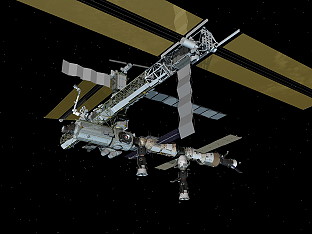
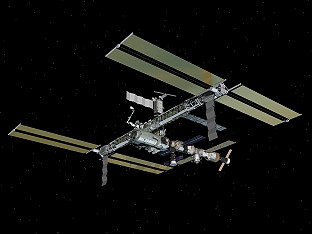
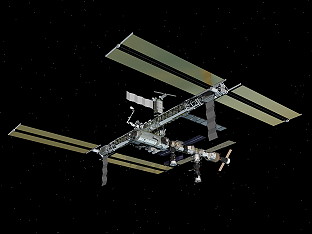
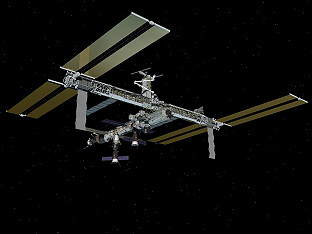
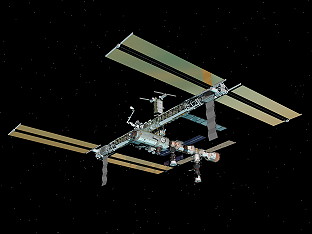
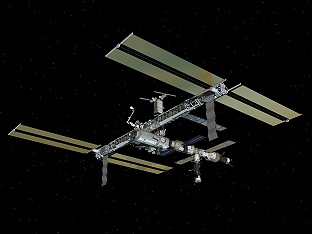
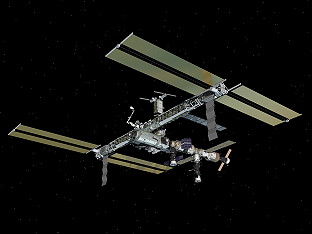
ISS Assembly
 |
 |
 |
 |
 |
 |
 |
 |
 |
 |
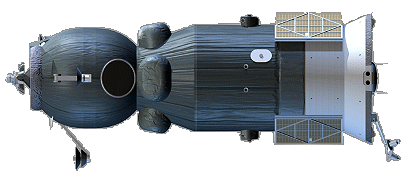
Photos / Graphics
 |
 |
 |
 |
 |
 |
 |
 |
 |
 |
 |
 |
 |
 |
more Earth observation photos |
|
more EVA photos |
|
more onboard photos |
|
| © |  |
Last update on December 14, 2020.  |
 |