Resident Crews of the International Space Station (ISS)

ISS: Expedition 16 |
 |
 |
 |
 |
 |
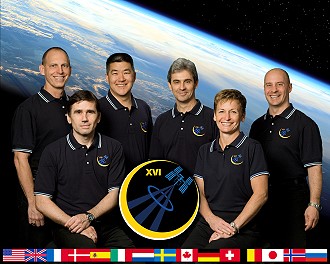 |
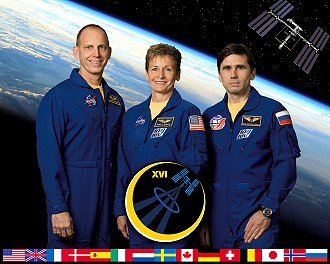 |
alternative crew photo |
|
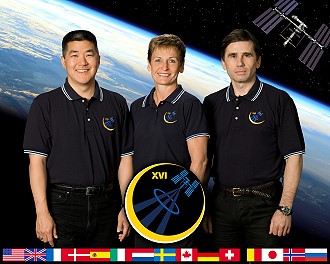 |
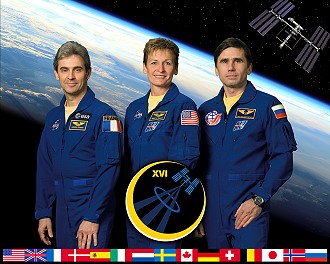 |
alternative crew photo |
alternative crew photo |
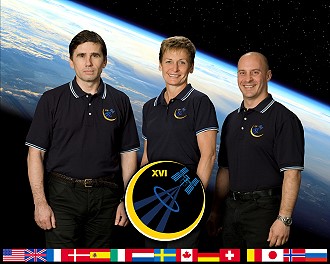 |
|
alternative crew photo |
Crew, launch- and landing data
| No. | Nation | Surname | Given names | Position | Spacecraft (launch) |
Launch date |
Launch time |
Spacecraft (landing) |
Landing date |
Landing time |
Mission duration |
Orbits |
| 1 |  |
Whitson | Peggy Annette | ISS-CDR | Soyuz TMA-11 | 10.10.2007 | 13:22:38.927 UTC | Soyuz TMA-11 | 19.04.2008 | 08:29:43.8 UTC | 191d 19h 07m 05s | 3028 |
| 2 |  |
Malenchenko | Yuri Ivanovich | Flight Engineer-1 | Soyuz TMA-11 | 10.10.2007 | 13:22:38.927 UTC | Soyuz TMA-11 | 19.04.2008 | 08:29:43.8 UTC | 191d 19h 07m 05s | 3028 |
| 3 | |
Anderson | Clayton Conrad | Flight Engineer-2 | STS-117 | 08.06.2007 | 23:38:04.012 UTC | STS-120 | 07.11.2007 | 18:01:16 UTC | 151d 18h 23m 12s | 2389 |
| 4 | |
Tani | Daniel Michio | Flight Engineer-2 | STS-120 | 23.10.2007 | 15:38:18.996 UTC | STS-122 | 20.02.2008 | 14:07:07.58 UTC | 119d 22h 28m 49s | 1888 |
| 5 |  |
Eyharts | Léopold Paul Pierre | Flight Engineer-2 | STS-122 | 07.02.2008 | 19:45:29.988 UTC | STS-123 | 27.03.2008 | 00:39:06 UTC | 48d 04h 53m 36s | 758 |
| 6 | |
Reisman | Garrett Erin "Big G" | Flight Engineer-2 | STS-123 | 11.03.2008 | 06:28:13.984 UTC | STS-124 | 14.06.2008 | 15:15:17.014 UTC | 95d 08h 47m 03s | 1501 |
Backup Crew
| No. | Nation | Surname | Given names | Position |
| 1 | |
Fincke | Edward Michael "Mike" | ISS-CDR |
| 2 | |
Sharipov | Salizhan Shakirovich | Flight Engineer |
| 3 | |
Chamitoff | Gregory Errol | Flight Engineer |
| 4 | |
Magnus | Sandra Hall | Flight Engineer |
| 5 |  |
De Winne | Frank Luc | Flight Engineer |
| 6 | |
Kopra | Timothy Lennart | Flight Engineer |
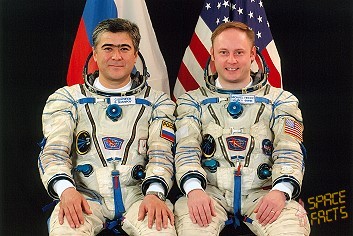 |
 |
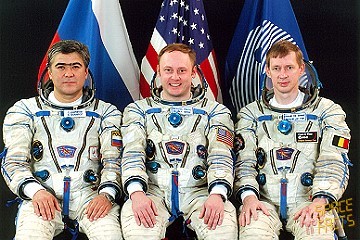 |
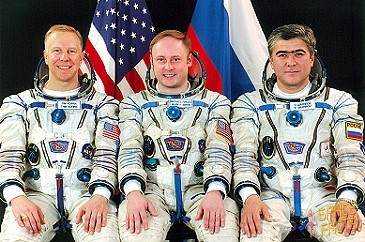 |
 |
Expedition Report
|
Launch from the Baikonur Cosmodrome. Daniel
Tani
arrived on October 25, 2007 with
STS-120 and
Clayton
Anderson returned to Earth with the same spacecraft.
Léopold
Eyharts arrived on February 09, 2008 with
STS-122. Garrett
Reisman arrived on March 13, 2008 with
STS-123. The Expedition 16 officially began with undocking of Russian spacecraft Soyuz TMA-10 on October 21, 2007 at 07:14:17 UTC and Expedition 15 ended. Yuri Malenchenko and Peggy Whitson, launched on October 10, 2007, aboard Soyuz TMA-11, and were joined by Spaceflight Participant Sheikh Muszaphar Shukor, the first Malaysian in space. Sheikh Muszaphar Shukor flew as a guest of the Russian government. Under this program, in exchange for the multi-billion purchase of fighter jets by Malaysia, the Russian Federation bore the cost of training two Malaysians for space travel and for sending one to the ISS. Sheikh Muszaphar Shukor's role aboard the Soyuz is referred to as a Spaceflight Participant in English-language Russian Federal Space Agency and NASA documents and press briefings. Space Shuttle STS-120 docked with the International Space Station on October, 25, 2007. STS-120 (ISS 10A / Node 2 "Harmony") delivered launch package 10A to the International Space Station (ISS). It consisted of the U.S. Harmony module (also known as Node 2), with four DC-to-DC Converter Unit (DDCU) racks and three Zero-g Storage Racks (ZSR) installed; a Power and Data Grapple Fixture (PDGF) for the station's robot arm, and a Shuttle Power Distribution Unit (SPDU). Harmony was built for NASA by Thales Alenia Space in Torino, Italy, as part of an agreement between NASA and the European Space Agency and was the first pressurized habitable module delivered to the station since the Pirs docking compartment was installed in August 2001. Expedition 16 Flight Engineer Daniel Tani served as a mission specialist aboard Discovery before rotating positions with station resident NASA astronaut Clayton Anderson after docking. Clayton Anderson arrived at the station aboard the space shuttle Atlantis during STS-117 in June 2007. Daniel Tani joined Expedition 16 Commander Peggy Whitson and Flight Engineer Yuri Malenchenko, who arrived at the station aboard the Russian Soyuz TMA-11 spacecraft October 12, 2007. Harmony, measuring 23.6 feet (7.2 meters) long, 14.5 feet (4.4 meters) wide and weighing 31,500 pounds (14,288 kg), is a utility hub, providing air, electrical power, water and other systems essential to support life on the station. It will distribute resources from the station's truss to the Destiny lab and to the European Space Agency's Columbus Research Laboratory and the Japanese Experiment Module (Kibo), when they are added to the station. The module will act as an internal connecting port and passageway to additional international science labs and cargo spacecraft. In addition to increasing the living and working space inside the station by more than 2,500 cubic feet (70.8 cubic meters), its exterior will serve as a work platform for the station's robotic arm, Canadarm2. Harmony is similar in shape to the Unity module, known also as Node 1, which was launched in 1998. Unity links the Destiny lab and the Russian Zarya Module. In addition to his tasks as an STS-120 mission specialist, European Space Agency (ESA) astronaut Paolo Nespoli had to undertake the European Esperia mission, during which he carried out a number of experiments on behalf of the European science community. Two of these experiments (Chromosome-2 and Neocytolysis) were sponsored by ESA. The other three experiments (HPA, FRTL-5 and SPORE) were sponsored by the Italian Space Agency, or ASI. Chromosome-2, Neocytolysis and HPA were experiments in the field of human physiology. FRTL-5 and SPORE were biology experiments. Paolo Nespoli also was conducting Educational Activities (see ARISS) coordinated by both ESA and ASI. Following docking, the joint crews conducted a station safety review, and Daniel Tani's custom Soyuz seatliner was transferred from Discovery to the Soyuz TMA-11, with Clayton Anderson's seat liner taken into Discovery. This marked the official end of Expedition 16 for Clayton Anderson, and the start of Daniel Tani's increment. Just before the two crews signed off to sleep, they were informed that after preliminary review of the RPM photography, focused inspection of the orbiter's heat shield would not be required. The first EVA was performed by Scott Parazynski and Douglas Wheelock on October 26, 2007 (6h 14m) to retrieve and stow S-band Antenna Support Assembly, detach Node 2 ("Harmony") heater cables and remove cover from Node 2 aft berthing mechanism, stow grapple fixture on Node 2, disconnect Z1/P6 truss fluid lines, install shrouds on P6 radiator and Sequential Shunt Unit, move and attach Node 2 to Node 1 left hand docking port with Station robotic arm, pressurize area between Node 1 and Node 2 hatches, perform leak check, open Node 1 hatch. Stephanie Wilson, Daniel Tani and Clayton Anderson positioned the station's robotic arm outside the Quest airlock. Douglas Wheelock had ride on the end of the arm for the S-band Antenna Structural Assembly removal and to carry it to Discovery's payload bay for return to Earth. Scott Parazynski had to "free float" (not attached to a foot restraint) to complete this task. Both crew members worked in Discovery's payload bay to prepare Harmony for removal. They secured a Payload and Data Grapple Fixture onto Harmony that could not be in place during launch, removed contamination covers and disconnected the power cables linking Harmony to Discovery. The station robotic arm operators then removed Harmony from the payload bay and began moving it toward its position on Node 1, also known as Unity. At 15:38 UTC, Harmony was officially mated to the space station. The station's new addition adds 2,666 cubic feet (75.5 m³) to the station's living volume, an increase of almost 20%, from 15,000 cubic feet (420 m³) to 17,666 cubic feet (500.2 m³). After Discovery left, the Expedition 16 crew used Canadarm2 to move PMA-2 to the forward port, onto one of the five active CMBs on Harmony. Then, the crew uses the arm to move and install Harmony to its permanent location at the end of Destiny. Moving on to prepare P6 for its relocation, Scott Parazynski disconnected four ammonia fluid umbilicals from P6 and mated them to Z1. Meanwhile, Douglas Wheelock prepared a shroud for the aft radiator of P6. Both crew members worked together to install that shroud and two more on electrical boxes, called sequential shunt units, on P6. The shrouds will keep the hardware warm during the truss' relocation. On flight day 5 the two crews worked to prepare Harmony for entry in the morning, connecting power and data cables, and at 12:24 UTC, the hatch was opened, and the crew was allowed to enter. Peggy Whitson, Yuri Malenchenko, and Paolo Nespoli entered first, wearing masks, and installed a temporary air duct to the node, to allow the air inside to circulate through the station's filters. Until the air is fully exchanged, occupancy of the node is limited to only a few crew members at a time, and they are not to remain inside for extended periods. Some of the work the crew has to do inside the node is to remove approximately 700 screws and bolts that are holding down equipment and panels, placed for security during launch, but not needed in space. After allowing the ventilation system work for several hours, the two crews participated in a press conference with CBS, Fox News, and WHAM-TV from inside Harmony. The second EVA by Scott Parazynski and Daniel Tani occurred on October 28, 2007 (6h 33m). Main tasks: Disconnect Z1 to P6 truss cables and unbolt P6; outfit outside Node 2 with handrails, worksite interface fixtures, gap spanners and install thermal covers, remote Node 2 berthing mechanism restraints; install grapple fixture on Node 2; configure squib firing unit on S1 truss for deploying radiators. Before the spacewalk began, Stephanie Wilson, Douglas Wheelock and Clayton Anderson grappled the P6 truss with the station robotic arm. At the beginning of the spacewalk, Scott Parazynski and Daniel Tani disconnected nine cables from P6 to remove it from Z1. Scott Parazynski also disconnected grounding straps and bolts that hold P6 in place. The robotic arm operators then removed P6 and began its relocation process. Daniel Tani worked on the starboard 1 (S1) truss to reconfigure connectors that allowed the radiator on S1 to be deployed from the ground later. He then worked inside the S0 truss to re-route electrical lines that will lead to the P6 truss once it is re-installed outboard on the truss structure. Daniel Tani completed the replacement of a remote power control module that is associated with the station's robotic arm and its use of a grapple fixture on Harmony as an operating base. Scott Parazynski worked on external outfitting of Harmony by installing 11 handrails, two gap spanners, three worksite interfaces, an electrical connector and five trunion and keel pin covers. Four pins were removed from the radial berthing mechanisms, and launch restraints were released on the zenith berthing petals and 16 caps under micrometeoroid debris covers. Daniel Tani assisted with the outfitting once his tasks on the truss are complete. Together, the spacewalkers also affixed the power and data grapple fixture that was temporarily put in place during the first spacewalk. On October 29, 2007 the two crews used the morning to move the P6 truss from its overnight position on the station's robotic arm, over to the shuttle's robotic arm. The crew then moved the station's arm along the mobile transporter to an outboard work site that allows attachment of the P6 truss to its new location on the P5 truss on Tuesday. The Mission Management Team discussed the SARJ issues with the ISS team, and decided to add an extra docked day to the mission, between flight days 11 and 12. The new plan changed the objectives of EVA four from the heat shield repair materials testing, to a more thorough inspection of the starboard SARJ. The third EVA by Scott Parazynski and Douglas Wheelock was conducted on October 30, 2007 (7h 08m). During this EVA the astronauts bolt P6 truss to P5 truss, attached P5 to P6 cabling, removed P6 radiator restraint and cover on Sequential Shunt unit and deploy radiator, configured squib firing unit on P1 truss, relocated main Bus Switching Unit from the Shuttle Cargo Bay to External Stowage Platform 2. Scott Parazynski and Douglas Wheelock work at the out-board end of the port truss to assist with the robotic arm attachment of P6 in its new location on P5. P6 was positioned 130 cm away and 2 cm forward of the truss. The spacewalk crew provided verbal cues to the robotic arm operators, Daniel Tani, Stephanie Wilson and Clayton Anderson, during the installation. Once P6 was in place, Douglas Wheelock closed the mechanical capture claw to secure it in place. They installed bolts on each corner for permanent attachment then released the capture latch. They mated four umbilicals from P5 to P6 to provide power. The spacewalkers then moved to the edge of P6 to remove the thermal shrouds from the electronic hardware, or sequential shunt units, which were installed during the first spacewalk to protect them. Scott Parazynski released cinches on a P6 radiator to allow its deployment from the ground later. He then moved to the S1 truss to reconfigure the electrical connectors that allowed the ground to deploy the S1 radiators by this point in the mission. Scott Parazynski then had time to complete various get-ahead tasks on the outside of the station. Meanwhile, Douglas Wheelock worked from the end of the shuttle robotic arm, operated by George Zamka and Stephanie Wilson, to install the main bus switching unit spare hardware. Douglas Wheelock got on the arm near the Destiny lab, rode it down to Discovery's cargo bay, retrieved the spare hardware and carried it up to an external storage platform. Scott Parazynski assisted with bolting it in place on External Stowage Platform-2. Once the P6 solar array was attached, the process of deploying the arrays began. The first set of arrays, 2B, was successfully deployed with no issues, but during the deployment of the 4B array, the crew halted when they noticed an abnormality. Initial images taken by the crew and station cameras showed what appeared to be a tear in a small portion of the array. During a press briefing, ISS Program Manager Mike Suffredini said the crew took high resolution images of the solar array, and the managers would analyze the images overnight to determine a course of action. Sufredini mentioned that with the array in the 90% unfurled position, it was still generating 97% of the expected power to the station, only slightly less than a fully unfurled array. Shortly after awakening in the morning on November 01, 2007, the crew was informed that the managers had chosen to take an extra day to evaluate and plan the fourth EVA. Managers initially planned for the EVA to be done on flight day 11, but would use an extra day to conduct further analysis and allow the crew to have extra time to make the tools and equipment needed, and to review and practice the procedures. The rest of the day was devoted to assembling and configuring the new equipment and tools that would be required for the solar array repair, including a tool termed a "cufflink". The tear in the array is located at one of the hinges, which carries the load of the array, so the cufflink will be a load-bearing strap to relieve the pressure from the snagged area, transferring the load from the hinge, to the cufflink. The cufflink is made up of two wires, with two tabs at the end that are threaded through existing reinforced aluminum holes in the solar array panels. The EVA plans call for the space station's robotic arm to grapple the shuttle's orbital inspection boom, with an extension on the end, to allow Scott Parazynski to reach the solar array while positioned on a foot restraint at the end of the system. Douglas Wheelock will be watching to let the team know the clearances, and to assist Scott Parazynski and the robotics team with positioning. The fourth and final EVA was again performed by Scott Parazynski and Douglas Wheelock on November 03, 2007 (7h 19m) to attach cufflink like clips across the 15-foot (4.6 meters) width of the torn P6-4B solar array blanket to provide the strength needed to permit its full extension. After translating out to the robotic arm, Scott Parazynski attached himself to the adjustable portable foot restraint (APFR), and was taken to the solar array worksite. Working slowly, with direction from Douglas Wheelock and the ground team, Scott Parazynski secured the five cufflinks to the array, and then backed away to observe the deploy action. Inside the station, the crew deployed the array a half a "bay" at a time, and the array was fully deployed at 15:23 UTC. After performing additional inspections of both the 2B, and 4B arrays, Scott Parazynski and Douglas Wheelock finished the EVA. During the EVA, a pair of needlenose pliers floated free of the equipment, and was observed floating nearby the window by the crew inside the station. The tool floated clear of the station, and was not a hazard. On November 05, 2007 STS-120 undocked from the ISS and moved to a distance of about 450 feet (137.2 meters), where George Zamka began to fly around the station in its new configuration. Once Discovery completed 1.5 revolutions of the complex, George Zamka fired Discovery's jets to leave the area. The shuttle moved about 46 miles (74 km) from the station and remained there while ground teams analyzed data from the late inspection of the shuttle's heat shield. The distance was close enough to allow the shuttle to return to the station in the unlikely event that the heat shield is damaged, preventing the shuttle's re-entry. The first station EVA was performed by Peggy Whitson and Yuri Malenchenko on November 09, 2007 (6h 55m). They disconnected and stowed cables from Destiny to PMA 2, removed cover on Node 2 (Harmony) forward docking mechanism, demated avionics cables and released fluid tray bolts. They performed also a temporary stow of CETA light on Destiny and configured cables for power transfer for S0 truss/Node1/Zvezda and PMA 1/Zarya. At least they retrieved the Baseband Signal Processor from Z1 truss and released bolts on P1 Nitrogen Tank Assembly. Originally it was the planned fifth EVA work of the STS-120 crew. For the primary objective of this spacewalk, Peggy Whitson and Yuri Malenchenko worked at the forward end of the Destiny lab. They cleared the area of cables and obstructions in preparation for the permanent installation of Harmony and its associated umbilical trays. They demated and stowed the Station to Shuttle Power Transfer cables and eight cables between the Pressurized Mating Adapter-2 and the Destiny lab. To make way for umbilical tray installation for Harmony, they demated connectors on each side of the lab, and Peggy Whitson removed a light and placed it in the airlock. Yuri Malenchenko then reconfigured connectors on P1 that allowed the outboard radiators to be deployed from the ground. The spacewalkers worked together to remove the active common berthing mechanism cover on Harmony to clear it for attachment to Destiny. They removed a strap around the circumference of the cover, folded it and took it to the airlock for disposal. Yuri Malenchenko worked behind the Z1 truss, near the Russian segment, to remove an electrical jumper for the power reconfigurations. Peggy Whitson configured a power cable on the starboard side of Z1. She retrieved hardware, called the base band single processor, and brought it inside for later return and upgrade on the ground. On November 12, 2007 the crew moved the Pressurized Mating Adapter-2 from the front of the U.S. laboratory Destiny to the Harmony node. Two days later the crew moved Harmony from its temporary location on the left side of the Unity node to its new home on the front of the U.S. laboratory Destiny. The second EVA by Peggy Whitson and Daniel Tani occurred on November 20, 2007 (7h 16m) to complete the exterior hookup of Harmony. Much of the spacewalk included the moving of a 300-pound (136 kg), 18.5-foot (5.6 meters) fluid tray from its temporary location at the center of the station's main truss to Harmony. Peggy Whitson and Daniel Tani set out on this EVA to begin moving the Harmony Node, which Peggy Whitson and Yuri Malenchenko did preparation work for in the spacewalk 11 days earlier. Peggy Whitson began by returning to the exterior of Destiny and removing venting and stowing an ammonia jumper near where she had previously removed a light. Daniel Tani retrieved the tool bag left by Yuri Malenchenko on the previous EVA and removed fluid caps on Destiny. Peggy Whitson and Daniel Tani's removal of different parts allowed for the installation of a permanent ammonia-cooling loop on a fluid tray on the lab's exterior. Daniel Tani then reconfigured a circuit on a squib-firing unit that was used to deploy a radiator on P1 on November 15, 2007. The duo then met at S0 to begin the move of the loop A fluid tray from there to the Harmony Node. The tray is 300 pounds (136.08 kilograms) and 18.5 feet (5.64 meters) long, and the two astronauts used a relay technique in moving it. One would move ahead, attaching tethers to make the tray ready for receiving, and the other would move farther ahead to be ready for the next handoff. After delivering the tray to Harmony, they bolted it down and connected its fluid lines, with two connecting to S0, two to the tray itself, and two in between them. Daniel Tani then mated 11 avionics lines on the port side of the Node. Peggy Whitson, meanwhile, configured the heater cables on Harmony and then performed the last scheduled task of the spacewalk, which was mating electrical umbilicals by hooking up four electrical harnesses linking PMA-2 at the end of Harmony to power from ISS. Daniel Tani then completed a get-ahead task of connecting five starboard avionics umbilicals to Harmony. Daniel Tani and Peggy Whitson also connected redundant umbilicals to PMA-2. They also began connecting cables at PMA-2 to transfer power from the Shuttle to the Station. Once the spacewalkers entered the airlock, they underwent precautionary decontamination procedures due to working on the ammonia lines. The third EVA by Peggy Whitson and Daniel Tani was conducted on November 24, 2007 (7h 04m) to complete the exterior hookup of Harmony. Much of the spacewalk included the moving of another 300-pound (136 kg), 18.5-foot (5.6 meters) fluid tray from its temporary location at the center of the station's main truss to Harmony. Peggy Whitson and Daniel Tani reunited to venture outside the Station and continue the work they started four days earlier. Again, they removed a temporary ammonia jumper and fluid caps, this time to allow for the transfer of the loop B fluid tray from S0 to the port avionics tray atop of Destiny. They again relayed the tray to each other to deliver to the installation point. Once there, they bolted it down and connected its six fluid lines and its two heater cables. Peggy Whitson then moved to the starboard side of Harmony to do work that would prepare for its attachment to the ESA laboratory, Columbus, during the STS-122 mission in the December 2007. She removed a thermal cover over the centerline berthing camera mechanism and eight launch restraints over latch petals from a common berthing mechanism. She then finished the SSPTS cable connection that she and Daniel Tani had started making on the previous EVA. Daniel Tani, meanwhile, removed one of the covers on the starboard SARJ on the right side of the Station's main truss. He took photographs and collected metallic shavings from the surface. Peggy Whitson then joined him at the starboard SARJ for analysis. They observed that some surfaces under the cover were abraded and that the joint showed unexpected vibration and increased power consumption. The photos and shavings would be brought back for further inspection, and they stowed the SARJ cover inside the airlock so they could observe the joint in rotation with Canadarm2's video camera. Peggy Whitson then reinstalled the light on Destiny, which she had removed on the spacewalk of November 09, 2007. The EVA concluded with Daniel Tani relocating a tool bag and an articulating portable foot restraint in preparation for future work on ISS. The fourth EVA was performed by Peggy Whitson and Daniel Tani on December 18, 2007 (6h 56m) to examinate of the starboard Solar Alpha Rotary Joint (SARJ) and return a trundle assembly to the station's interior. Daniel Tani and Peggy Whitson began this EVA with the inspection of Beta Gimbal Assembly 1A (BGA 1A) because its primary power was lost when three of its circuit breakers tripped. Upon initial inspection, they did not find any obvious damage, but they disconnected two cables to facilitate ground tests. With the cables disconnected, the circuits were still observed to be closed, ruling out the possibility that the cables were responsible for the power failure. Peggy Whitson later reconnected the cables. The astronauts then moved to the SARJ to remove two drive lock assembly covers and inspect race rings and bearings underneath them. They also looked underneath most of the 22 covers over SARJ, to make inspections similar to the one that Daniel Tani had done during the November 24, 2007 spacewalk. They found debris, dust, and contamination under most of the covers, just as they found before. They took more photographs and collected more debris samples to bring back to the Station for further analysis. Lastly, before returning to the airlock, they removed Trundle Bearing Assembly #5 to bring with them for assessment inside the Station. Progress M-62 was launched at 07:12:41 UTC on December 23, 2007. The spacecraft docked with the Pirs module at 08:14 UTC on December 26, 2007. The Pirs module had previously been occupied by Progress M-61, which undocked on December 22, 2007. Progress M-62 carried supplies to the International Space Station, including food, water and oxygen for the crew and equipment for conducting scientific research. The freighter carried over 862 kilograms (1,900 lb) of propellant, 46 kilograms (101 lb) of oxygen and 1,325 kilograms (2,921 lb) of dry cargo. The total mass of the cargo carried was 2,244 kilograms (4,947 lb). Progress M-62 remained docked for 40 days before undocking at 10:32 UTC on February 04, 2008. Following undocking it conducted Earth observation experiments for ten days prior to being deorbited. It was deorbited at 09:44 UTC on February 15, 2008. The spacecraft burned up in the atmosphere over the Pacific Ocean, with any remaining debris landing in the ocean at around 13:29 UTC. The fifth and final EVA by Peggy Whitson and Daniel Tani occurred on January 30, 2008 (7h 10m). Peggy Whitson and Daniel Tani replaced the BMRRM, also known as the "broom," which is the motor that rotates the Station's solar wings. The duo retrieved the new BMRRM from stowage in PMA-3. Once the astronauts installed the new motor, they observed as flight controllers rotated the solar wings a full 360 degrees. With the wings appearing to be working in perfect order with the replacement BMRRM, the spacewalkers returned to the starboard SARJ on the main truss. Daniel Tani and Peggy Whitson this time removed eight more covers on the joint to continue their inspection for contamination and debris. Progress M-63 was launched at 13:02 UTC on February 05, 2008. The spacecraft docked with the Pirs module at 14:38 UTC on February 07, 2008. Pirs had been vacated by the departure of Progress M-62 which had undocked on February 04, 2008. Progress M-63 successfully docked using the automated Kurs system, however cosmonaut Yuri Malenchenko was standing by to guide it in using the backup manual TORU system should it have been necessary. Progress M-63 carried supplies to the International Space Station, including food, water and oxygen for the crew and equipment for conducting scientific research. Its cargo consisted of over 528.5 kilograms (1,165 lb) of propellant, 46 kilograms (101 lb) of oxygen and air, approximately 419.5 kilograms (925 lb) of water and 1,326.6 kilograms (2,925 lb) of dry cargo. The total mass of its cargo was 2,326 kilograms (5,128 lb). Progress M-63 remained docked for two months before undocking at 08:49 UTC on April 07, 2008. The freighter was deorbited at 11:50 UTC on April 07, 2008. The spacecraft burned up in the atmosphere over the Pacific Ocean, with any remaining debris landing in the ocean at around 12:36 UTC. The next Space Shuttle arriving at the International Space Station was STS-122 on February 09, 2008. The primary objective of STS-122 (ISS 1 E Columbus) was to deliver the European Columbus science laboratory, built by the European Space Agency (ESA), to the station. STS-122 also carried the Solar Monitoring Observatory (SOLAR), the European Technology Exposure Facility (EuTEF), and a new Nitrogen Tank Assembly, mounted in the cargo bay of an ICC-Lite payload rack, as well as a spare Drive Lock Assembly (DLA) sent to orbit in support of possible repairs to the starboard Solar Alpha Rotary Joint (SARJ) which is malfunctioning. Several items were returned with Atlantis: A malfunctioning Control Moment Gyroscope (CMG) that was swapped out with a new one during STS-118, and the empty Nitrogen Tank Assembly will be placed in the orbiter's payload bay, along with a trundle bearing from the Starboard SARJ that was removed during an EVA performed by Expedition 16. Expedition 16 Flight Engineer Daniel Tani, who traveled to the space station on the STS-120 mission, returned home with the STS-122 crew. Léopold Eyharts joined the Expedition 16 crew, serving with Commander Peggy Whitson and Flight Engineer Yuri Malenchenko. The Columbus laboratory is the cornerstone of the European Space Agency's contribution to the International Space Station (ISS) and is the first European laboratory dedicated to long-term research in space. Named after the famous explorer from Genoa, the Columbus laboratory will give an enormous boost to current European experiment facilities in weightlessness and to the research capabilities of the ISS once it becomes an integral part of the space station. The 7-meter-long (23-foot-long) Columbus laboratory consists of a pressurized cylindrical hull 4.5 meters (14.7 feet) in diameter, closed with welded end cones. To reduce costs and maintain high reliability, the laboratory shares its basic structure and life-support systems with the European-built multi-purpose logistics modules (MPLMs): pressurized cargo containers, which travel in the space shuttle's cargo bay. The primary and internal secondary structures of Columbus are constructed from aluminum alloys. These layers are covered with a multi-layer insulation blanket for thermal stability and a further two tons of paneling constructed of an aluminium alloy together with a layer of Kevlar and Nextel to act as protection from space debris. The Columbus Laboratory has a mass of 10.3 tons and an internal volume of 75 cubic meters (98 cubic yards), which can accommodate 16 racks arranged around the circumference of the cylindrical section in four sets of four racks. These racks have standard dimensions with standard interfaces, used in all non-Russian modules, and can hold for example experimental facilities or subsystems. Ten of the 16 are International Standard Payload Racks fully outfitted with resources (such as power, cooling, video and data lines), to be able to accommodate an experiment facility with a mass of up to 700 kilograms (1,543 pounds). This extensive experiment capability of the Columbus laboratory has been achieved through a careful and strict optimization of the system configuration, making use of the end cones for housing subsystem equipment. The central area of the starboard cone carries system equipment such as video monitors and cameras, switching panels, audio terminals and fire extinguishers. Although it is the station's smallest laboratory module, the Columbus laboratory offers the same payload volume, power, and data retrieval, for example, as the station's other laboratories. A significant benefit of this cost-saving design is that Columbus will be launched already outfitted with 2,500 kilograms (5,511 pounds) of experiment facilities and additional hardware. After working through a variety of leak check procedures, the hatches were opened between the shuttle and station at 18:40 UTC, and the two crews exchanged greetings and conducted a mandatory safety briefing. After the briefing, they began the rest of the day's tasks, including moving the station's robotic arm to grapple the OBSS, and then hand it off to the shuttle's robotic arm in preparation for future activities. The official exchange of Expedition 16 crewmembers Daniel Tani and Léopold Eyharts was completed in the evening, when they exchanged their Soyuz custom made seat liners, and Daniel Tani became a member of the STS-122 crew, while Léopold Eyharts began his position as Flight Engineer for Expedition 16. The two crews spent their first joint mission day working through a focused inspection of the OMS pod blanket, reviewing the upcoming EVA procedures, and beginning the transfer of items from the shuttle to the station. Earlier in the day, ESA confirmed the crewmember with the medical condition was Hans Schlegel, but stated it was nothing serious and does not impact the health of any of the other crewmembers. Managers had decided to make a 24-hour delay to EVA-1, originally scheduled for Flight Day 4, and that Stanley Love would replace Hans Schlegel for EVA-1. The first EVA by Rex Walheim and Stanley Love occurred on February 11, 2008 (7h 58m) was delayed 24 hours. They prepared the Columbus module for installation on Harmony. Originally it was planned that Rex Walheim and Hans Schlegel had to do this EVA, but Hans Schlegel became ill (probably he suffered on the space adaption syndrome), so Stanley Love had to do the first EVA. They installed the Power Data Grapple Fixture on Columbus, which allowed the space station's robotic arm to grab the module and move it from the shuttle's payload bay to Harmony at the end of this spacewalk. Preparing work to remove the Nitrogen Tank Assembly, a part of the station's thermal control system, from the P1 truss was the next task. The tasks took more time than planned. At time they were one full hour behind the timeline. The main task was to prepare the Columbus module for installation on Harmony. They installed the Power Data Grapple Fixture on Columbus, which will allow the space station's robotic arm to grab the module and move it from the shuttle's payload bay to Harmony. The spacewalkers also began work to remove the Nitrogen Tank Assembly, a part of the station's thermal control system, from the P1 truss. The assembly needs to be replaced because the nitrogen is running low. Rex Walheim and Stanley Love completed the preparations for the unberthing of Columbus from the payload bay, and with Leland Melvin inside the space station working the robotic arm, the module was successfully lifted out of the payload bay. The first contact of Columbus with the station was at 21:29, and at 21:44, Léopold Eyharts announced that Columbus was officially installed on its new home in orbit. The two crews spent the flight day 6 working to activate and outfit the newest addition to the station, the Columbus module. After the ground conducted a variety of leak checks during the crew's sleep period the night before, the crew was given the go ahead to put the module into what is called "Berth Survival Mode", which is a "functional mode": A minimal healthy configuration that can be maintained for extended time periods, if required. This involved powering up basic computers, power distribution units, and heaters. The crew completed the Berth Survival Mode activation quickly, and moved on to final activation. Representing the European partners, Hans Schlegel and Léopold Eyharts were the first crewmembers to enter the module, performing a partial ingress at 14:08 UTC Léopold Eyharts told the team on the ground, "We have a special thought at this moment for all the people in Europe and the U.S. who have contributed to the make-up of Columbus. Especially to the space agencies, of course, the industry, but also all the citizens who are supporting space flight. This is a great moment, and Hans and I are very proud to be here and to ingress for the first time the Columbus module." The second EVA was performed by Rex Walheim and Hans Schlegel on February 13, 2008 (6h 45m) to remove the old NTA and temporarily store it on an equipment cart. They then installed the new one. The old NTA was transferred to the shuttle's payload bay for return home. The third and final EVA by Rex Walheim and Stanley Love was conducted on February 15, 2008 (7h 25m) to install two payloads on Columbus' exterior: SOLAR, an observatory to monitor the sun; and the European Technology Exposure Facility (EuTEF) that will carry eight different experiments requiring exposure to the space environment. Move of a failed control moment gyroscope from its storage location on the station to the shuttle's payload bay for return to Earth. On February 18, 2008 STS-122 undocked from the ISS and moved to a distance of about 450 feet (137.2 meters), where Alan Poindexter began to fly around the station in its new configuration. Once Atlantis completes 1.5 revolutions of the complex, Alan Poindexter fired Atlantis' jets to leave the area. The shuttle moved about 46 miles (74 km) from the station and remained there while ground teams analyzed data from the late inspection of the shuttle's heat shield. The distance was close enough to allow the shuttle to return to the station in the unlikely event that the heat shield is damaged, preventing the shuttle's re-entry. STS-123 docked with the International Space Station on March 13, 2008. STS-123 (ISS-1J/A JEM ELM PS / SLP-D1) delivered the first module of the Japanese laboratory, Japanese Experiment Module (Kibo), and the Canadian Special Purpose Dexterous Manipulator, (SPDM) Dextre robotics system to the station. The mission duration was 16 days and 14 hours, and it was the first mission to fully utilize the Station-to-Shuttle Power Transfer System (SSPTS), allowing space station power to augment the shuttle power systems. The mission set a record for a shuttle's longest stay at the ISS. Expedition 16 Flight Engineer Léopold Eyharts, who traveled to the space station on the STS-122 mission, returned home with the STS-123 crew. Garrett Reisman joined the Expedition 16 crew, serving with Commander Peggy Whitson and Flight Engineer Yuri Malenchenko. Garrett Reisman returned home with STS-124. The first component of the Japanese experiment module, Kibo, flew to the International Space Station (ISS) after 23 years of development efforts by the Japan Aerospace Exploration Agency - JAXA. Japan's role in the space station program is to develop and contribute the Japanese Experiment Module (JEM), logistics vehicles, and the H-II Transfer Vehicle (HTV), using accumulated Japanese technologies. Kibo's contributions are not strictly limited to space utilizations. The actual development and operation of Kibo has great significance in the continued expansion of Japan's accumulated technologies. Acquisition of advanced technologies required to support human life in space enhances both the level of Japan's scientific and technological skill, and contributes to other worldwide space development activities in the future exploration. Kibo means "hope". It is Japan's first human-rated space facility. Kibo will be the largest experiment module on the space station, accommodating 31 racks in its pressurized section, including experiment, stowage, and system racks. Kibo is equipped with external facilities that can accommodate 10 exposed experiment payloads. Kibo is a complex facility that enables several kinds of specialized functions. In total, Kibo consists of: Pressurized Module (JEM PM) and Exposed Facility (JEM EF), a logistics module attached to both the JEM PM and JEM EF and a Remote Manipulator System - Japanese Experiment Module Remote Manipulator System (JEM RMS). The Kibo elements will be delivered to the space station by three space shuttle flights. STS-123 will deliver the JEM ELM PS, STS-124 will deliver the JEM PM and JEM RMS, and STS-127 will deliver the JEM EF and the Experiment Logistics Module-Exposed Section (JEM ELM-ES). For each of the three missions, a JAXA astronaut will fly to the station to assist with the assembly, activation, and checkout of the Kibo component. Astronaut Takao Doi is assigned as a NASA mission specialist for the STS-123 mission, astronaut Akihiko Hoshide is assigned as a mission specialist for the STS-124 mission, and astronaut Koichi Wakata is assigned as a space station Flight Engineer for Expedition 18. Kibo's JEM ELM PS will be launched to the space station aboard the space shuttle Endeavour on the STS-123/1J/A mission, which is the first of the three Kibo-related ISS assembly flights. The JEM ELM PS is a Kibo storage facility that provides stowage space for experiment payloads, samples, and spare items. The pressurized interior of the JEM ELM PS is maintained at one atmosphere, thus providing a shirt-sleeve working environment. The crew will be able to freely move between the JEM ELM PS and the main experiment module, called the Pressurized Module. On the space station, Kibo is the only experiment facility with its own dedicated storage facility. When the JEM ELM PS is launched aboard the space shuttle, it will be used as a logistics module for transporting eight Kibo subsystems and experiment racks to the space station. Once the JEM ELM PS is on orbit, it will be used as a Kibo stowage compartment. Maintenance tools, experiment samples, and other spare items will all be stored inside the JEM ELM PS. The volume of the JEM ELM PS is less than that of the JEM PM, and up to eight racks can be housed in the JEM ELM PS. The JEM ELM PS will be attached to the zenith port on top of the Harmony Node 2 module on STS-123's fourth flight day. The JEM ELM PS will remain attached to the Harmony module until the Kibo JEM PM is delivered to the ISS on the following space shuttle mission, STS-124. The final location of the JEM ELM PS will be on the top port of the JEM PM. Dextre is the third and final component of the Mobile Servicing System developed by Canada for the ISS. The two-armed Special Purpose Dexterous Manipulator, known as "Dextre", complements the mobile base and the robotic arm Canadarm2 already installed and operating on the station. These make the MSS a vital tool for external station maintenance. With advanced stabilization and handling capabilities, Dextre can perform delicate human-scale tasks such as removing and replacing small exterior components. Operated by crew members inside the station or by flight controllers on the ground, it also is equipped with lights, video equipment, a stowage platform, and three robotic tools. Docking occurred at 03:49 UTC and the hatches between the two spacecraft were opened at 05:36 UTC on. Garrett Reisman became a station crew member with the exchange of his custom Soyuz seatliner with that of Léopold Eyharts, who joined the shuttle crew for his flight home. The first EVA by Richard Linnehan and Garrett Reisman occurred on March 14, 2008 (7h 01m) to prepare the JEM ELM PS for its removal from the shuttle's payload bay. Later that day, the Japanese facility was installed on top of the Harmony module. However, the Spacelab pallet carrying the SPDM would not power up. Engineers on the ground tried a software patch, though later suspected a design flaw in Dextre's temporary power cable caused the issue. Crew members on board Endeavour used a robotic arm to remove the Japanese Logistics Module - Pressurized Section (JLP) from Endeavour's cargo bay and attach it to the space station. The JLP was attached to its interim location on the Harmony module at 08:06 UTC. On March 15, 2008 the crew spent time outfitting the Japanese Logistics Module, transferring supplies and equipment into it from space shuttle Endeavour. The station's arm operators grappled the Canadian-built Dextre Friday at 01:59 UTC. Canadarm2 successfully powered up Dextre 11 minutes later. Mission Specialists Richard Linnehan and Michael Foreman spent the night in the station's Quest Airlock in preparation for the second spacewalk of the mission. The second EVA by Richard Linnehan and Michael Foreman was performed on March 16, 2008 (7h 09m) to assemble Special Purpose Dexterous Manipulator (SPDM), named Dextre by removing covers and installing arm components on its main body. The spacewalk focused on Dextre and included installation of its two arms. Robert Behnken provided intravehicular support while Gregory Johnson and Garrett Reisman operate Canadarm2. On flight day 7 the crews continued outfitting the Japanese Logistics Module - Pressurized Section, transferring supplies and equipment into it from Endeavour, as well as configuring racks inside the module. The crews tested the brakes in the robotic system's arms. One of the joints in the arm seemed to be operating right on the required margin. Engineers expressed confidence that this issue would be resolved. The third EVA was conducted by Richard Linnehan and Robert Behnken on March 17, 2008 (6h 53m) to complete Dextre assembly by installing a tool platform and tool holster assembly. Gregory Johnson and Garrett Reisman ran Canadarm2 to help the spacewalkers stow replacement gear and install a materials experiment and a Dextre platform for spare parts. On March 18, 2008 Dextre was attached to a power and data grapple fixture located on the U.S. laboratory Destiny. Canadarm2 grabbed the pallet that secured Dextre during its journey to the orbital outpost and returned the pallet to space shuttle Endeavour's payload bay for the trip back to Earth. The fourth EVA by Robert Behnken and Michael Foreman occurred on March 20, 2008 (6h 24m) to evaluate the Shuttle Tile Ablator-54, or STA-54, material and a tile repair ablator dispenser for use as a shuttle thermal protection system repair technique. The Tile Repair Ablator Dispenser, or T-RAD, is similar to a caulk gun. They used TRAD to mix and squirt out the STA-54 material into holes in several demonstration tiles. The repaired samples were returned to Earth for extensive testing. The fifth and final EVA was performed by Robert Behnken and Michael Foreman on March 22, 2008 (6h 02m) to move the Orbiter Boom Sensor System, the 50 ft. (15 meters) extension of the shuttle's robotic arm, to a temporary location on the station's main truss or backbone. The OBSS was left on the station because shuttle Discovery doesn't have enough room in its cargo bay to carry both the boom and the large Japanese pressurized module on the STS-124 mission. The spacewalkers also installed a new trundle bearing assembly in the starboard Solar Alpha Rotary Joint to allow the joint to rotate a little bit more if necessary. That SARJ has had limited ability for several months, and metallic debris has been found inside it. Additional spacewalk tasks included inspecting the SARJ and collecting debris samples. On March 25, 2008 STS-123 undocked from the ISS and moved away about 450 feet (137.2 meters). Then Gregory Johnson began to fly the shuttle around the station and its new laboratory. Once Endeavour completed 1.5 revolutions of the station, Gregory Johnson fired Endeavour's jets to leave the area. The arrival of the ESA built Automated Transfer Vehicle (ATV) "Jules Verne" was on April 03, 2008. Jules Verne was launched into low Earth orbit atop the maiden flight of the Ariane 5ES carrier rocket. Lift-off from ELA-3 at the Guiana Space Centre in Kourou, French Guiana, occurred at 04:03:04 UTC on March 09, 2008. Jules Verne's liquid tanks were connected to the ISS, and their contents were transferred to the station. The crew manually released air components directly into the ISS's atmosphere. The ISS crew gradually replaced the ATV's cargo with waste for disposal. In total, 270 kilograms (600 lb) of water, 21 kilograms (46 lb) of oxygen and 856 kilograms (1,887 lb) of propellant was transferred to the Zvezda module. On April 25, 2008, Jules Verne used its thrusters to reboost the station into a higher orbit. After spending just over five months docked at the station, Jules Verne undocked on September 05, 2008 and made a destructive re-entry over the Pacific Ocean on September 29, 2008. The ATV, which is equipped with its own propulsion and navigation systems, is a multi-functional spaceship. It is a fully automatic unmanned vehicle able to dock with the ISS in a manner consistent with human spacecraft safety requirements. To succeed in docking safely with the station, the 20-ton ATV must be a highly sophisticated, new generation spacecraft. The exterior is a cylinder, 10.3 meters long and 4.5 meters in diameter, about the size of a London double-decker bus. The ATV's structure is covered with an eggshell-colored insulating foil layer on top of meteorite protection panels. The metallic blue solar arrays extend in an X shape from the main body of the spacecraft. Inside, the ATV consists of two modules: the Avionics/Propulsion module, called the ATV service module and the Integrated Cargo Carrier, which docks with the ISS. Biolab: WAICO: This is the first experiment to be carried out in the Biolab facility within the European Columbus Laboratory. WAICO, which is the short name for Waving and Coiling of Ari-dopsis Roots, concerns the spiralling motion (circumnutation) of plant roots in weightlessness. By observing Aridopsis roots growth in space, one can predict that without the interference of gravity they would grow in spirals. Root samples from Aridopsis seedlings grown from seed for 10-15 days in space will be analyzed post-flight to identify the role of the cell wall structure in the different tissues for this kind of growth imbalance. EMCS: Multigen-1: The main goal of the Multigen experiment, which will take place in the European Modular Cultivation System (EMCS) will be to test how plants will behave at different developmental levels under weightless conditions. During this first part of the experiment, the plant (Arabidopsis thaliana) will be observed from seed to seed where the growth, development and production of flowers and new seeds are the ultimate goals. The first part of this experiment also will record circumnutations in the shoots, i.e., spiralling growth. Kubik Incubator Experiments: Three biology experiments will be carried out using two European incubators called Kubik, one of which is already on the station, the other of which will be uploaded to the station during the Soyuz flight in October 2007. As well as providing a thermally-controlled environment, each incubator has a centrifuge, which provides the ability to run 1g control experiments while on orbit. Fluid Science Laboratory: Geoflow: Geoflow is the first experiment to take place within the Fluid Science Laboratory inside the European Columbus Laboratory. The experiment will investigate the flow of an incompressible viscous fluid (silicon oil) held between two concentric spheres rotating about a common axis. A temperature gradient and voltage difference are maintained from the inside to the outside sphere. This geometrical configuration can be seen as a representation of a planet, with the electric field simulating its gravitational field. This research is of importance in such areas as flow in the atmosphere, the oceans, and in the liquid nucleus of planets on a global scale. Chromosome-2: During spaceflights, crew members are exposed to different types of ionizing radiation. To assess the genetic impact of these radiations, this experiment will study chromosome changes and sensitivity to radiation in lymphocytes (white blood cells) of ISS crew members. Early Detection of Osteoporosis in Space (EDOS) is a study into the mechanisms underlying the reduction in bone mass, which occurs in astronauts in weightlessness. The EDOS experiment will evaluate the structure of weight and non-weight bearing bones of cosmonauts/astronauts pre- and post-flight using the method of computed tomography (pQCT) together with an analysis of bone biochemical markers in blood samples. ETD: The working of our balance system and our eyes are strongly interconnected and understanding their adaptation to weightlessness can help with our understanding of the occurrence of space sickness. Our eyes can rotate around three axes whereas normally only two are used. The name of the coordinate framework which describes the movement of the eyes in the head is called Listing's plane. This experiment centers on the evaluation of Listing's plane under different gravity conditions using the Eye Tracking Device (ETD), which is able to record horizontal, vertical and rotational eye movements and measure head movement. Immuno: The aim of this experiment is to determine changes in stress and immune responses, during and after a stay on the ISS. This will include the sampling of saliva, blood and urine to check for hormones associated with stress response and for carrying out white blood cell analysis. There will also be a focus on the adaptation of cellular energy metabolism, which can affect immune response. Low Back Pain: The deep muscle corset plays an important role in posture when in the upright position. It is thought that this deep muscle corset atrophies during spaceflight leading to strain and hence pain in certain ligaments, in particular in the iliolumbar region in the back. The objective of this experiment is to assess the level of atrophy in response to exposure to weightlessness. MOP: When entering weightlessness, astronauts suffer from a phenomenon called space motion sickness, which has symptoms comparable to seasickness. This disturbance in the body's orientation and balance is similar to the disturbances experienced by subjects who have undergone rotation in a human centrifuge having experienced two to three times Earth's gravity for up to several hours. This experiment aims to obtain an insight into this process and could help in developing countermeasures to space motion sickness. Neocytolysis: This experiment covers the effects of weightlessness on the hemopoietic system: the system of the body responsible for the formation of blood cells. The experiment will study a process called neocytolysis, the selective destruction of young red blood cells. The experiment will analyze the physical and functional characteristics of young red blood cells taken from astronaut blood samples before and after spaceflight. Sample: This experiment will investigate what kind of microbial species are to be found on board of the International Space Station and how these adapt to conditions of spaceflight. The participant will take samples in certain areas of the station and from his own body. The samples will be obtained by rubbing swab sticks over surfaces, which are susceptible to having bacteria including switches, keyboards and personal hygiene equipment. Spin: This experiment is a comparison between preflight and post-flight testing of astronaut subjects using a centrifuge and a standardized tilt test. Orthostatic tolerance i.e. the ability to maintain an upright posture (with-out fainting) will be correlated with measures of otolith-ocular function, i.e., the body's mechanism linking the inner ear with the eyes that deals with maintaining balance. ZAG, which stands for Z-axis Aligned Gravito-inertial force is an investigation into the effect that weightlessness has on an astronaut's perception of motion and tilt as well as his level of performance during and after spaceflight. Different tests will take place pre and post flight including an analysis of the astronaut's motion perception and eye movements whilst using a track-and-tilt chair. ALTCRISS (Alteino Long Term monitoring of Cosmic Rays on the International Space Station) is an ESA experiment to study the effect of shielding on cosmic rays in two different and complementary ways. The detector of the Alteino device will monitor differences in the flow of cosmic rays with regard to the position and orientation of the Alteino device, with the focus being on radiation monitoring in the Pirs module in the station's Russian segment. The European Crew Personal Dosimeters (EuCPDs) will be worn by the ESA astronauts onboard the ISS to measure the radiation exposure during their flights. The dosimeters are worn around the waist and the left ankle for astronauts inside the station and at the same locations above the liquid cooling garment inside the spacesuit for astronauts doing spacewalks. Matroshka 2B: The ESA Matroshka facility has been an ongoing experiment on the ISS since February 2004 with the aim of studying radiation levels experienced by astronauts. It consists of a human shape (head and torso), called the Phantom, equipped with several active and passive radiation dosimeters. For the Matroshka 2B experiment, new passive radiation sensors uploaded during the Soyuz flight in October 2007 will be installed inside the Phantom. The active radiation dosimeters will be activated in December 2007. The Matroshka facility will be installed inside the station to take similar measurements related to the internal ISS radiation environment. The European Technology Exposure Facility (EuTEF) is one of the first two external facilities to be attached to the Columbus laboratory and houses the following experiments requiring either exposure to the open space environment or housing on the station's external surface: DEBIE, which stands for 'DEBris In orbit Evaluator' is designed to be a standard in-situ space debris and micrometeoroid monitoring instrument which requires low resources from the spacecraft. It measures sub-millimeter sized particles and has 3 sensors facing in different directions. The scientific results from several DEBIE instruments onboard different spacecraft will be compiled into a single database for comparison. Dostel (DOSimetric radiation TELescope) is a small radiation telescope that will measure the radiation environment outside the ISS. EXPOSE-E is a subsection of EuTEF and consists of five individual exobiology experiments: LIFE - This experiment will test the limits of survival of Lichens, Fungi and symbionts under simulated space conditions. ADAPT - This experiment concerns the molecular adaptation strategies of micro-organisms to different space and planetary UV climate conditions. PROCESS - The main goal of the PROCESS (PRebiotic Organic ChEmistry on Space Station) experiment is to improve our knowledge of the chemical nature and evolution of organic molecules involved in extraterrestrial environments. PROTECT - The aim of this experiment is to investigate the resistance of spores, attached to the outer surface of spacecraft, to the open space environment. Three aspects of resistance are of importance: the degree of resistance; the types of damage sustained; and the spores repair mechanisms. SEEDS - This experiment will test the plant seed as a terrestrial model for a panspermia vehicle i.e. a means of transporting life through the universe and as a source of universal UV screens. EuTEMP is an autonomous and battery-powered multi-input thermometer for measuring EuTEF temperatures during the unpowered transfer from the Shuttle Cargo Bay to the Columbus External Payload Facility to which EuTEF is attached. The Earth Viewing Camera (EVC) payload is a fixed-pointed Earth-observing camera. The main goal of the system is to capture color images of the Earth's surface, to be used as a tool to increase general public awareness of the ISS and promote the use of the ISS to the potential user community for observation purposes. FIPEX: It is important to understand varying atmospheric conditions in low earth orbit where orbiting spacecraft are still affected by atmospheric drag. The density of the atmosphere is the major factor affecting drag which is affected by solar radiation and the earth's magnetic and gravitational fields. The flux of atomic oxygen is important as it shows different interactions with spacecraft surfaces, e.g. surface erosion. The FIPEX micro-sensor system is intended to measure the atomic oxygen flux as well as the oxygen molecules in the surrounding area of the International Space Station. The Materials Exposure and Degradation Experiment (MEDET) aims to evaluate the effects of open space on materials currently being considered for utilization on space-craft in low earth orbit. It also will verify the validity of data from the space simulation currently used for materials evaluation and monitor solid particles impacting spacecraft in low earth orbit. The scientific objective of PLEGPAY (PLasma Electron Gun PAYload) is the study of the interactions between space-craft and the space environment in low earth orbit, with reference to electrostatic charging and discharging. Understanding these mechanisms is important as uncontrollable discharge events can adversely affecting the functioning of spacecraft electronic systems. The Radiation Risks Radiometer-Dosimeter (R3D) is an environmental monitor which records the irradiance of solar light in four different wavelength ranges (UV-A, UV-B, UV-C and photosynthetic active light) as well as the dose and flux of heavy cosmic particles. Tribolab: This series of experiment covers research in tribology, i.e., the science of friction and lubrication thereof. This is of major importance for spacecraft systems. The Tribolab experiments will cover both experiments in liquid and solid lubrication such as the evaluation of fluid losses from surfaces and the evaluation of wear of polymer and metallic cages weightlessness. The SOLAR facility, will study the Sun with unprecedented accuracy across most of its spectral range. This study is currently scheduled to last for two years. SOLAR is expected to contribute to the knowledge of the interaction between the solar energy flux and the Earth's atmosphere chemistry and climatology. This will be important for Earth observation predictions. The payload consists of 3 instruments complementing each other, which are: The goal of the Solar Auto-Calibrating Extreme UV-Spectrometer (SOL-ACES) is to measure the solar spectral irradiance of the full disk from 17 to 220 nm (?) at 0.5 to 2 nm (?) spectral resolution. By an auto-calibration capability, it is expected to gain long term spectral data with a high absolute resolution. In its center, it contains 4 Extreme Ultra-Violet spectrometers. The purpose of SOLSPEC (SOLar SPECctral irradiance measurements) is to measure the solar spectum irradiance from 180 nm to 3,000 nm. The aims of this investigation are the study of solar variability at short and long term and the achievement of absolute measurements (2% in UV and 1% above). The SOLSPEC instrument is fully refurbished and improved with respect to the experience gained in the previous missions (Spacelab-1, ATLAS-1, ATLAS-2, ATLAS-3, EURECA). The Solar Variability and Irradiance Monitor (SOVIM) is a re-flight of the SOVA experiment on-board EURECA-1. The investigation will observe and study the irradiance of the Sun, with high precision and high stability. The total irradiance will be observed with active cavity radiometers and the spectral irradiance measurement will be carried out by one type of sun-photometer. On April 10, 2008 Russian spacecraft Soyuz TMA-12 brought the two new crewmembers of Expedition 17 to the station. Finally, the station command changed from US astronaut Peggy Whitson to Russian cosmonaut Sergei Volkov. Expedition 16 officially ended with undocking of Soyuz TMA-11 on April 19, 2008 at 05:06:27 UTC. During the stay on board of the ISS the crew of Expedition 16 carried out the following scientific experiments: Akvarium (Study of the Stability of a Model of Self-Contained (Closed) Ecological System and Elements, Included in the Model in Microgravity), ALTCRISS (Alteino Long Term Cosmic Ray Measurements on board the International Space Station), ANITA (Analyzing Interferometer for Ambient Air), Antigen (Optimization of Heterological Expresssion in Yeasts-True Yeasts in Microgravity for Example Synthesis of the HBS Antigen of the Virus Hepatitis B), ARISS (Amateur Radio on the International Space Station), Aryl (Influencing Factors of Space Flight on Expression of Strains of Interleukin), Astrovakcina (Cultivation in Weightless of E.coli- Producer of the Caf1 Protein), AT-Space (Arabidopsis Thaliana in Space: Perception of Gravity, Signal Transduction and Graviresponse in Higher Plants), Bar (Choice and Development of Methods and Instruments to Detect the Location of a Loss of Pressurization of a Module on ISS), BCAT-3-4-CP (Binary Colloidal Alloy Test - 3 and 4: Critical Point), BCAT-4-Poly (Binodal Colloidal Aggregation Test - 4: Polydispersion), BIMS (Assessment of the Efficiency of the Use of Telemedicine Technologies On-Board ISS), Biodegradation (Initial stage of Biodegradation and Biodeterioration in Space), Bioekologia (Generation of High Efficiency of Microorganisms for the Production of Preparations of Biodegradable Oil, Organophosphorus Material, Measures for the Protection of Plants, as well as, of Exopolysaddharides Uses in the Petroleum Industry), Bioemulsia (Research and Development of a Self-Contained Reactor of the Shielded Type For Production of Biomass of Microorganisms and Biologically Active Substances), Biokin-4 (Microbial Growth Kinetics Under Conditions of Microgravity), Biorisk (Influence of Factors of the Space Environment on the Condition of the System of Microorganisms-Hosts Relating to the Problem of Environmental Safety of Flight Techniques and Planetary Quarantine), Braslet (Validation of On-Orbit Methodology for the Assessment of Cardiac Function and Changes in the Circulating Volume Using Ultrasound and Braslet-M Occlusion Cuffs, SDTO 17011 U/R), BTN-M1 (Examination of the Flow of High Speed and Thermal Neutrons), Caf (Crystalization of th Protein Caf1M and its Combination with the Terminal Peptide Caf1 as the Elements for the Development of a New Generation of Antimicrobial Medicinal Preparations and Components of Vaccines from Yeasts), Cardio-ODNT (Dynamics of the Main Factors of Cardiac Function, of Central and Regional Circulation in Rest and During the Influence of Lower Body Negative Pressure), CCISS (Cardiovascular and Cerebrovascular Control on Return from ISS), Cell Wall (Reverse Genetic Approach to Exploring Genes Responsible for Cell Wall Dynamics in Supporting Tissues of Arabidopsis Under Microgravity Conditions), CEO (Crew Earth Observations), CEO-IPY (Crew Earth Observations - International Polar Year), CFE (Capillary Flow Experiment), Chromosome-2 (Cytogenetic Effects of Ionizing Radiation in Peripheral Lymphocytes of ISS Crewmembers), CIS (Effect of Microgravity and Radiation on Eukaryotic, Endothelial and Osteoblasts), Conjugation (Development of Methods for Designing New Recombinants Producing Strains of Bacteria in Space Flight), CSI-02 (Commercial Generic Bioprocessing Apparatus Science Insert - 02: Silicate Garden, Seed Germination, Plant Cell Culture and Yeast), CSLM-2 (Coarsening in Solid Liquid Mixtures-2), Diatomeya (Stability of Geographical Position and Configuration of Borders of Bioproductive Water Zones of the World Oceans, Observations by Orbition Station Crews), DOSTEL (DOSimetry TELescopes), Dykhanie (Regulation and Biomechanics of Respiration in Space Flight), EarthKAM (Earth Knowledge Acquired by Middle School Students), EDOS (Early Detection of Osteoporosis in Space), Ekon (Experimental Survey on Evaluating the Possibility of Using th Russian Segment of ISS for Environmental Inspection of Work Areas of Various Facilities (Features)), ELITE-S2 (ELaboratore Immagini TElevisive - Space 2), Environmental Monitoring (Environmental Monitoring of the International Space Station), EPO-Demos (Education Payload Operation - Demonstrations), Epstein-Barr (Space Flight Induced Reactivation of Latent Epstein-Barr Virus), ETD (Eye Tracking Device, FIS (Sensory (Taste) Evaluation of Malaysian Food on Earth and in Space), Glidoproteid (Extraction and Investigation of surface glycoproteins E1-E2 Alphavirises on Earth and in Space), HPA (Hand Posture Analyzer), Identifikatsia (Identification of the Sources of Dynamic Loads on ISS), Immuno (Neuroendocrine and Immune Responses in Humans During and After Long Term Stay at ISS), Inflight Education Downlinks (International Space Station Inflight Education Downlinks), InSPACE-2 (Investigating the Structure of Paramagnetic Aggregates from Colloidal Emulsions - 2), Integrated Immune (Validation of Procedures for Monitoring Crewmember Immune Function), Integrated Immune-SDBI (Validation of Procedures for Monitoring Crewmember Immune Function - Short Duration Biological Investigation), Interleukin-K (Production of Hight Quality Crystals of Interleukin -1Alpha, -1Beta and Receptor of Antagonist of Interleukin-1), ISS Acoustics (International Space Station Acoustic Measurement Program), Izgib (Effect of Performance of Flight and Science Activities on the Function of On-Orbit Systems on ISS (Mathematical Model)), JAXA-GCF (Japan Aerospace and Exploration Agency - Granada Crystallization Facility High Quality Protein Crystallization Project), Journals (Behavioral Issues Associated with isolation and Confinement: Review and Analysis of Astronaut Journals), Kristallizator (Crystalization of Biological Macromolecules and Generation of Biocrystal Film in the Conditions of Microgravity), Lactolen (Influence of Factors of Space Flight on Lactolen Producer Strains), LOCAD-PTS (Lab-on-a-Chip Application Development-Portable Test System), MAUI (Maui Analysis of Upper Atmospheric Injections), MDRV (Microbial Drug Resistance and Virulence), Midodrine-Long (Test of Midodrine as a Countermeasure Against Post-flight Orthostatic Hypotension - Long), Midodrine-SDBI (Test of Midodrine as a Countermeasure Against Post-flight Orthostatic Hypotension - Short Duration Biological Investigation), Mimetik-K (Crystalization of antigen Binding Fragment of Monoclonalical Antibody to Glucosaminilmuramildepeptide), MIS (Microbes In Space: Effects of Microgravity and Space Radiation on Growth Kinetics and Mutation Processes in E. Cloacae and Acinetobacer Baumanii Cells), MISSE-6A and 6B (Materials International Space Station Experiment - 6A and 6B), MOP (Motion Perception: Vestibular Adaptation to G-Transitions), Multigen (Molecular and Plant Physiological Analyses of the Microgravity Effects on Multigeneration Studies of Arabidopsis thaliana), Muscle (Study of Low Back Pain in Crewmembers During Space Flight), Neocytolysis (Effects of Microgravity on the Haemopoietic System: A Study on Neocytolysis), NLP-Vaccine (National Laboratory Pathfinder - Vaccine), NLP-Vaccine-Salmonella (National Laboratory Pathfinder - Vaccine - Salmonella), Nutrition (Nutritional Status Assessment), OChB (Influence of Factors of Space Flight on Superoxide Strain Producer), ORZS (The Optimization of Root Zone Substrates (ORZS) for Reduced Gravity Experiments Program), Particle_Flux (Particle Flux Demonstrator), PCS (Protein Crystallization in Space: Characterization of the Effect of Microgravity on the Crystal Growth Behavior of Lipases), PFE-OUM (Periodic Fitness Evaluation with Oxygen Uptake Measurement), Pilot (Individual Characteristics of Psychophysiological Regulatory Status and Reliaility of Professional Activities of Cosmonauts in Long Duration Space Flight), PKinase (Mechanisms and Functional Consequences of Protein Kinase C Isoform Translocation in Monocytes Exposed to Microgravity), Plasma-MKS (Plasma-ISS: Examination of Plasmic Environments on the External Surface of ISS Through the Characterization of Optical Radiance), Plasma-Progress (Observation of the Reflective Characteristics of the Spacecraft Plasma Environment from On-Board Thruster Activity Using Ground-Based Instruments), Plasma Crystal (Dusty and Liquid Plasma Crystals in Conditions of Microgravity), Plasma Interaction Model (Analysis of International Space Station Plasma Interaction), PMZ (Bioavailability and Performance Effects of Promethazine During Space Flight), Pneumocard (Examination of the Influencing Factors of Space Flight on Autonomic Regulation of Blood Circulation, Respiration and Cardiac Contractile Function in Long Duration Space Flight), Profilaktika (Mechanisms of Action and Influence, and Effectiveness of Various Methods of Phrophylaxis Directed Toward Prevention of Disturbances of the Human Locomotion System in Weightlessness), Prognoz (Development of a Method of Operational Prediction of Work Load on Crew Piloting Objectives), RAMBO (Ram Burn Observations), Rastenia (Growth and Development of Higher Plants through Multiple Generations), Relaksatia (Processes of Relaxation in the Ultraviolet Band Spectrum by High Velocity Interaction of Exhaust Products on ISS), Repository (National Aeronautics and Space Administration Biological Specimen Repository), Resist Wall (Role of Microtubule-Membrane-Cell Wall Continuum in Gravity Resistance in Plants), RIGEX (Rigidizable Inflatable Get-Away-Special Experiment), ROKVISS (Robotic Component Verification on the ISS: Verification of Lightweight Robotic Hinge Elements in Space), Sleep-Long (Sleep-Wake Actigraphy and Light Exposure During Spaceflight-Long), Sleep-Short (Sleep-Wake Actigraphy and Light Exposure During Spaceflight-Short), Sonokard (Physiological Functions (cardio-respiratory) of Humans Using Contactless Methods During Sleep in Long Duration Space Flight), SPHERES (Synchronized Position Hold, Engage, Reorient, Experimental Satellites), Spin (Validation of Centrifugation as a Countermeasure for Otolith Deconditioning During Spaceflight), Spore (Study of Space Environment Effects on PY17 Bacterial Spores onboard Space Shuttle), Sreda (Examination of the Features of IS as an Environment for Conducting Research), Stability (Stability of Pharmacotherapeutic and Nutritional Compounds), SVS (CBC: Self-Propogating Hyperthermal Synthesis in Space), SWAB (Surface, Water and Air Biocharacterization - A Comprehensive Characterization of Microorganisms and Allergens in Spacecraft Environment), Ten'-Mayak (Study of Transmit/Receive Radio Signal Conditions in the Russian Segment of ISS Using the World-Wide Ham Radio Network), Top (Educational Demonstration of Top Spinning Motions in Space), Uragan (Hurricane: Experimental Development of Groundbased System of Monitoring and Predicting the Progression of a Naturally Occurring Technogenic Catastrophe), Vaktsina-K (Structural Study of Protein Candidats in a Vaccine for AIDS on Earth and in Space), Vektor-T (Study of a High Precision System for Prediction Motion of ISS), Zag (Ambiguous Tilt and Translation Motion Cues After Space Flight), Zhenshen-2 (Study of the Development of Cell Cultures to Evaluate the Possibily of Increasing Biological Activity). |
EVA data
| Name | Start | End | Duration | Mission | Airlock | Suit | |
| EVA | Parazynski, Scott | 26.10.2007, 10:02 UTC | 26.10.2007, 16:16 UTC | 6h 14m | STS-120 | ISS - Quest | EMU No. 3004 |
| EVA | Wheelock, Douglas | 26.10.2007, 10:02 UTC | 26.10.2007, 16:16 UTC | 6h 14m | STS-120 | ISS - Quest | EMU No. 3003 |
| EVA | Tani, Daniel | 28.10.2007, 09:32 UTC | 28.10.2007, 16:05 UTC | 6h 33m | STS-120 | ISS - Quest | EMU No. 3018 |
| EVA | Parazynski, Scott | 28.10.2007, 09:32 UTC | 28.10.2007, 16:05 UTC | 6h 33m | STS-120 | ISS - Quest | EMU No. 3004 |
| EVA | Wheelock, Douglas | 30.10.2007, 08:45 UTC | 30.10.2007, 15:53 UTC | 7h 08m | STS-120 | ISS - Quest | EMU No. 3003 |
| EVA | Parazynski, Scott | 30.10.2007, 08:45 UTC | 30.10.2007, 15:53 UTC | 7h 08m | STS-120 | ISS - Quest | EMU No. 3004 |
| EVA | Parazynski, Scott | 03.11.2007, 10:03 UTC | 03.11.2007, 17:22 UTC | 7h 19m | STS-120 | ISS - Quest | EMU No. 3006 |
| EVA | Wheelock, Douglas | 03.11.2007, 10:03 UTC | 03.11.2007, 17:22 UTC | 7h 19m | STS-120 | ISS - Quest | EMU No. 3003 |
| Name | Start | End | Duration | Mission | Airlock | Suit | |
| EVA | Whitson, Peggy | 09.11.2007, 09:54 UTC | 09.11.2007, 16:49 UTC | 6h 55m | ISS-16 | ISS - Quest | EMU No. 3018 |
| EVA | Malenchenko, Yuri | 09.11.2007, 09:54 UTC | 09.11.2007, 16:49 UTC | 6h 55m | ISS-16 | ISS - Quest | EMU No. 3006 |
| EVA | Whitson, Peggy | 20.11.2007, 10:10 UTC | 20.11.2007, 17:26 UTC | 7h 16m | ISS-16 | ISS - Quest | EMU No. 3018 |
| EVA | Tani, Daniel | 20.11.2007, 10:10 UTC | 20.11.2007, 17:26 UTC | 7h 16m | ISS-16 | ISS - Quest | EMU No. 3006 |
| EVA | Whitson, Peggy | 24.11.2007, 09:50 UTC | 24.11.2007, 16:54 UTC | 7h 04m | ISS-16 | ISS - Quest | EMU No. 3018 |
| EVA | Tani, Daniel | 24.11.2007, 09:50 UTC | 24.11.2007, 16:54 UTC | 7h 04m | ISS-16 | ISS - Quest | EMU No. 3006 |
| EVA | Tani, Daniel | 18.12.2007, 09:50 UTC | 18.12.2007, 16:46 UTC | 6h 24m | ISS-16 | ISS - Quest | EMU No. 3006 |
| EVA | Whitson, Peggy | 18.12.2007, 09:50 UTC | 18.12.2007, 16:46 UTC | 6h 24m | ISS-16 | ISS - Quest | EMU No. 3018 |
| EVA | Whitson, Peggy | 30.01.2008, 09:56 UTC | 30.01.2008, 17:06 UTC | 7h 10m | ISS-16 | ISS - Quest | EMU No. 3018 |
| EVA | Tani, Daniel | 30.01.2008, 09:56 UTC | 30.01.2008, 17:06 UTC | 7h 10m | ISS-16 | ISS - Quest | EMU No. 3006 |
| Name | Start | End | Duration | Mission | Airlock | Suit | |
| EVA | Walheim, Rex | 11.02.2008, 14:13 UTC | 11.02.2008, 22:11 UTC | 7h 58m | STS-122 | ISS - Quest | EMU No. 3017 |
| EVA | Love, Stanley | 11.02.2008, 14:13 UTC | 11.02.2008, 22:11 UTC | 7h 58m | STS-122 | ISS - Quest | EMU No. 3018 |
| EVA | Walheim, Rex | 13.02.2008, 14:27 UTC | 13.02.2008, 21:12 UTC | 6h 45m | STS-122 | ISS - Quest | EMU No. 3017 |
| EVA | Schlegel, Hans | 13.02.2008, 14:27 UTC | 13.02.2008, 21:12 UTC | 6h 45m | STS-122 | ISS - Quest | EMU No. 3015 |
| EVA | Walheim, Rex | 15.02.2008, 13:07 UTC | 15.02.2008, 20:32 UTC | 7h 25m | STS-122 | ISS - Quest | EMU No. 3017 |
| EVA | Love, Stanley | 15.02.2008, 13:07 UTC | 15.02.2008, 20:32 UTC | 7h 25m | STS-122 | ISS - Quest | EMU No. 3018 |
| Name | Start | End | Duration | Mission | Airlock | Suit | |
| EVA | Linnehan, Richard | 14.03.2008, 01:18 UTC | 14.03.2008, 08:19 UTC | 7h 01m | STS-123 | ISS - Quest | EMU No. 3004 |
| EVA | Reisman, Garrett | 14.03.2008, 01:18 UTC | 14.03.2008, 08:19 UTC | 7h 01m | STS-123 | ISS - Quest | EMU No. 3006 |
| EVA | Linnehan, Richard | 15.03.2008, 23:4? UTC | 16.03.2008, 06:5? UTC | 7h 09m | STS-123 | ISS - Quest | EMU No. 3004 |
| EVA | Foreman, Michael | 15.03.2008, 23:4? UTC | 16.03.2008, 06:5? UTC | 7h 09m | STS-123 | ISS - Quest | EMU No. 3003 |
| EVA | Behnken, Robert | 17.03.2008, 22:51 UTC | 18.03.2008, 05:44 UTC | 6h 53m | STS-123 | ISS - Quest | EMU No. 3008 |
| EVA | Linnehan, Richard | 17.03.2008, 22:51 UTC | 18.03.2008, 05:44 UTC | 6h 53m | STS-123 | ISS - Quest | EMU No. 3004 |
| EVA | Behnken, Robert | 20.03.2008, 22:04 UTC | 21.03.2008, 04:28 UTC | 6h 24m | STS-123 | ISS - Quest | EMU No. 3003 |
| EVA | Foreman, Michael | 20.03.2008, 22:04 UTC | 21.03.2008, 04:28 UTC | 6h 24m | STS-123 | ISS - Quest | EMU No. 3008 |
| EVA | Foreman, Michael | 22.03.2008, 20:34 UTC | 23.03.2008, 02:36 UTC | 6h 02m | STS-123 | ISS - Quest | EMU No. 3008 |
| EVA | Behnken, Robert | 22.03.2008, 20:34 UTC | 23.03.2008, 02:36 UTC | 6h 02m | STS-123 | ISS - Quest | EMU No. 3003 |
ISS Assembly
 |
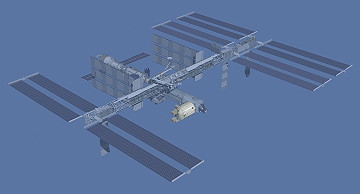 |
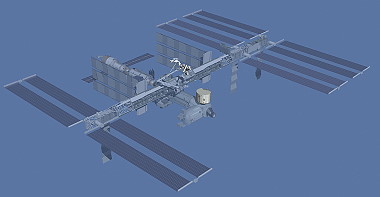 |
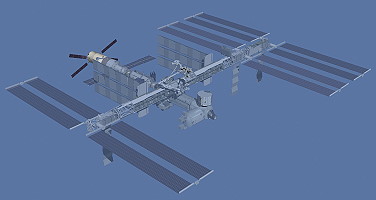 |
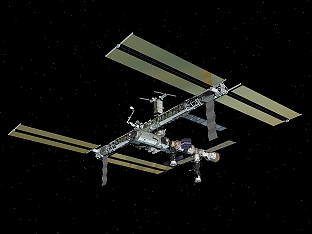 |
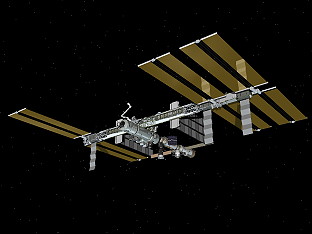 |
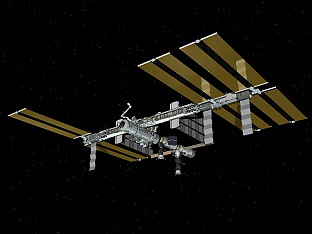 |
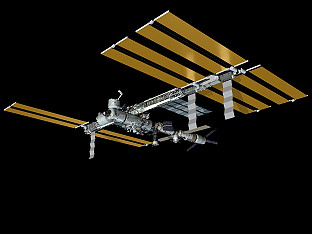 |
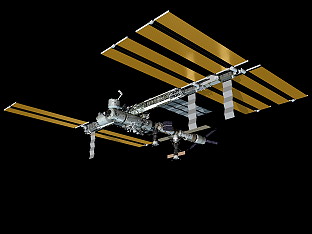 |
|
Photos / Graphics
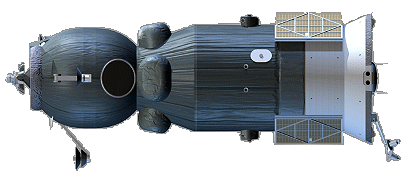 |
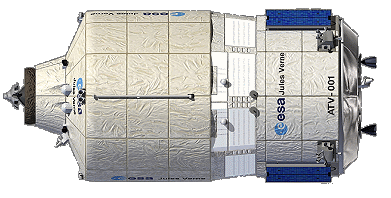 |
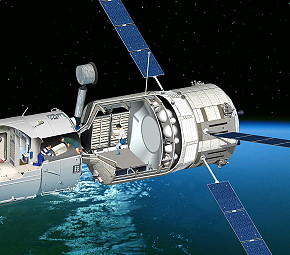 |
 |
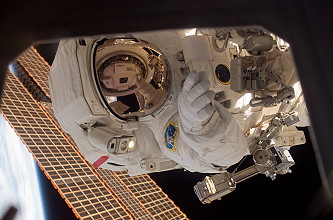 |
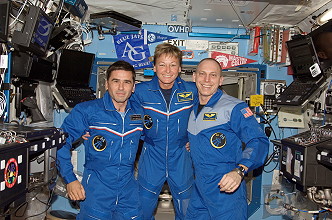 |
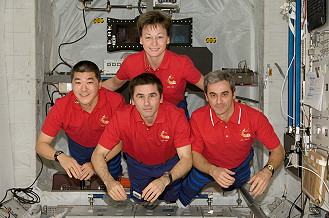 |
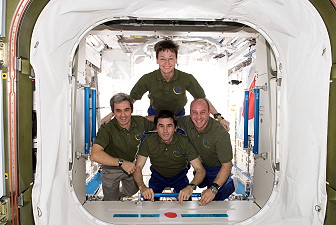 |
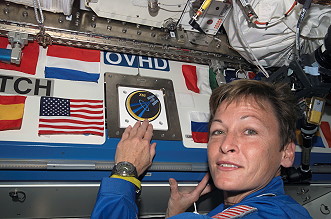 |
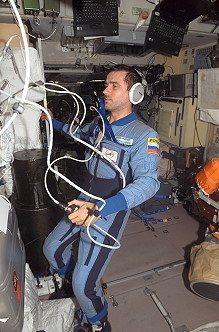 |
 |
 |
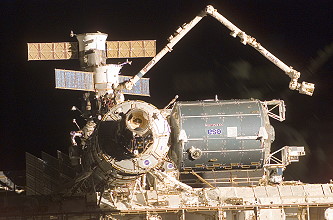 |
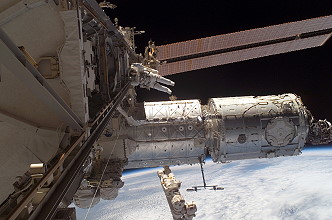 |
more Earth observation photos |
|
more EVA photos |
|
more onboard photos |
|
| © |  |
Last update on December 14, 2020.  |
 |