Resident Crews of the International Space Station (ISS)

ISS: Expedition 14 |
 |
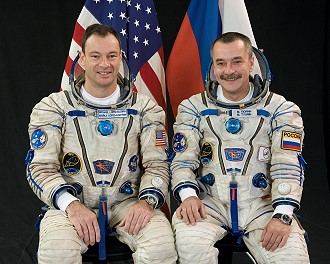
alternative crew photo |
|
|
 |
 |
|
alternative crew photo |
alternative crew photo |
|
alternative crew photo |
alternative crew photo |
|
Crew, launch- and landing data
| No. | Nation | Surname | Given names | Position | Spacecraft (launch) |
Launch date |
Launch time |
Spacecraft (landing) |
Landing date |
Landing time |
Mission duration |
Orbits |
| 1 |  |
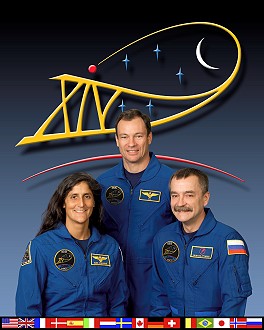
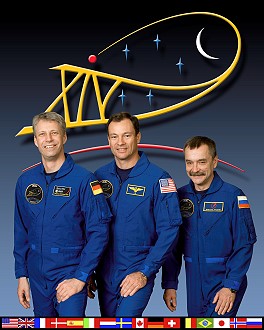
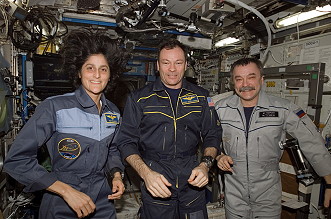
López-Alegria | Michael Eladio "LA" | ISS-CDR | Soyuz TMA-9 | 18.09.2006 | 04:08:42.133 UTC | Soyuz TMA-9 | 21.04.2007 | 12:31:04.1 UTC | 215d 08h 22m 22s | 3401 |
| 2 |  |
Tyurin | Mikhail Vladislavovich | Flight Engineer-1 | Soyuz TMA-9 | 18.09.2006 | 04:08:42.133 UTC | Soyuz TMA-9 | 21.04.2007 | 12:31:04.1 UTC | 215d 08h 22m 22s | 3401 |
| 3 |  |
Reiter | Thomas Arthur | Flight Engineer-2 | STS-121 | 04.07.2006 | 18:37:54.987 UTC | STS-116 | 22.12.2006 | 22:31:58 UTC | 171d 03h 54m 03s | 2692 |
| 4 | |
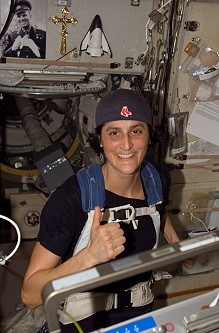
Williams | Sunita Lyn "Suni" | Flight Engineer-2 | STS-116 | 10.12.2006 | 01:47:35.009 UTC | STS-117 | 22.06.2007 | 19:49:36.152 UTC | 194d 18h 02m 01s | 3062 |
Backup Crew
| No. | Nation | Surname | Given names | Position |
| 1 | |
Whitson | Peggy Annette | ISS-CDR |
| 2 | |
Malenchenko | Yuri Ivanovich | Flight Engineer |
| 3 |  |
Eyharts | Léopold Paul Pierre | Flight Engineer |
| 4 | |
Anderson | Clayton Conrad | Flight Engineer |
 |
Expedition Report
|
Launch from the Baikonur Cosmodrome (Michael
López-Alegria and Mikhail
Tyurin); Sunita
Williams arrived on December 11, 2006 with
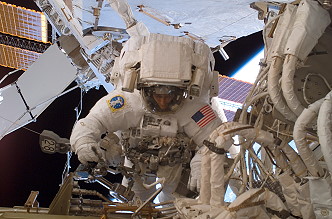
STS-116. The Expedition 14 officially began with undocking of Russian spacecraft Soyuz TMA-8 on September 28, 2006 at 21:53:09 UTC and Expedition 13 ended. The crew of Expedition 14 launched, alongside Spaceflight Participant Anousheh Ansari, in Soyuz TMA-9, from Baikonur Cosmodrome in Kazakhstan aboard a Soyuz Rocket at 04:08:42.133 UTC on September 18, 2006. Mission objectives: - to continue assembly of the International Space Station with three assembly spacewalks and a Space Shuttle mission: STS-116 - to relocate Soyuz TMA-9 from the aft port of the Zvezda module to nadir port of the Zarya module - to service three Progress visits to the ISS, filled with food, fuel, water and supplies to augment supplies delivered by the visiting Space Shuttles - reconfigure power from solar arrays and cooling system - remove and jettison shrouds covering the truss system. Progress M-58 was launched at 13:40:36 UTC on October 23, 2006. The spacecraft docked with the Aft port of the Zvezda module at 14:28:46 UTC on October 26, 2006. During docking a problem with the spacecraft's telemetry system produced a false reading that an antenna associated with its Kurs docking system had failed to retract, complicating the docking procedure. Progress M-58 carried supplies to the International Space Station, including food, water and oxygen for the crew and equipment for conducting scientific research. The freighter remained docked for five months before undocking at 18:11 UTC on March 27, 2007. It was deorbited at 22:44:30 UTC on March 27, 2007. The spacecraft burned up in the atmosphere over the Pacific Ocean, with any remaining debris landing in the ocean at around 23:30:22 UTC. The first EVA was performed by Mikhail Tyurin and Michael López-Alegria on November 23, 2006 (5h 38m) to retrieve equipment and photograph the station's Russian Zvezda Service Module's docking port. Mikhail Tyurin also hit a golf ball from a specially designed tee mounted on the Pirs airlock as part of a Russian commercial activity. During the spacewalk, Mikhail Tyurin hit a golf ball from the exterior of the Pirs airlock. This "experiment" was sponsored by a Toronto based commercial company, Element 21, which manufactures golf clubs made of scandium. The ball weighs just 3 grams, compared with 48 grams for a standard golf ball. At that weight, it was unlikely to damage any station components which might accidentally have been hit. There were three balls allowing two options for repeating the shot if required, but only one shot was actually taken. Taken with a one-handed grip by Mikhail Tyurin (with Michael López-Alegria stabilizing Mikhail Tyurin by holding his legs), the shot was a substantial slice, with the ball flying off to the right of the station instead of the rear. In 2006, there were plans for the video from the shot to be used in a TV commercial. The progress of the ball, which contains tracking equipment, could be followed on E21's Track the Ball in Space web site which was set up in 2006. Although, the site simply calculates an assumed distance of the ball based on a constant speed and does not perform any real tracking of the ball. The stunt was carried out around 35 years after Alan Shepard hit two golf balls on the moon during Apollo 14. Inspection of a Kurs antenna on the Progress M-58 unpiloted cargo carrier that docked at the aft end of the station's Zvezda Service Module on October 26, 2006 was the next task. Final latching of the spacecraft to the station during the docking procedure was delayed by more than three hours because Mission Control Moscow was not sure the antenna was completely retracted. Mikhail Tyurin and Michael López-Alegria moved to the rear of Zvezda and photographed the antenna. It was still fully extended, so Mikhail Tyurin used a screwdriver to release a latch and tried to retract the antenna. Russian flight controllers also tried to retract it by activating a motor. Neither succeeded, and the task was abandoned. Next, they relocated a WAL antenna, which was later used to guide the unpiloted European cargo carrier, the Automated Transfer Vehicle, when it docked with the station. Then the two installed a BTN neutron experiment, which characterizes charged and neutral particles in low Earth orbit. Atop Zvezda, its readings during solar bursts continue to be of special interest to scientists as of 2010. Two thermal covers from the BTN were jettisoned. Space Shuttle STS-116 docked with the International Space Station on December 11, 2006.The main goals of the mission STS-116 (ISS-20-12A.1 SH-LSM ITS-P5) were delivery and attachment of the International Space Station's P5 truss segment, a major rewiring of the station's power system. The shuttle also carried a Spacehab Logistics Module to resupply the ISS, and an Integrated Cargo Carrier with four sub-satellites, which were deployed after undocking from the ISS: the ANDE technology demonstrator, developed by the Naval Research Laboratory, and three CubeSats (RAFT-1 and MARScom for the United States Naval Academy, and MEPSI 2A/2B for DARPA). It was the first Shuttle mission to deploy satellites since STS-113 in 2002. As one of the main goals of STS-116 was to exchange ISS Expedition 14 crew members, the crew of STS-116 changed mid-flight. ISS Flight Engineer Sunita "Suni" Williams was part of the STS-116 crew for the first portion of the mission. She then replaced ISS Flight Engineer Thomas Reiter on the Expedition 14 crew and Thomas Reiter joined the STS-116 crew for the return to Earth. ESA astronaut Christer Fuglesang performed a scientific program as part of the mission Celsius. The primary assembly hardware Discovery will deliver to the space station is the $11-million Integrated Truss Segment P5, which measures 11 feet long by 15 feet wide by 14 feet high (3.3 x 4.5 x 3.2 meters). It will serve as a spacer and be mated to the P4 truss that was attached in September during the STS-115 mission of Atlantis. Attachment of the 4,000-pound (1,800-kilogram) P5 sets the stage for the relocation to its final assembly position of the P6 truss and the pair of solar arrays that have been located temporarily atop the station's Unity module for six years. P5 is part of the 11-segment integrated truss structure and the sixth truss element to be delivered. The truss structure forms the backbone of the International Space Station with mountings for unpressurized logistics carriers, radiators, solar arrays, other hardware and the various elements. P5 is used primarily to connect power and cooling lines and serve as a spacer between the P4 photovoltaic module (PVM), or solar battery, and P6 PVM, which will be joined during a later assembly mission. P5 is very similar in construction to the long spacer located on P6. Without the P5 short spacer, the P4 and P6 solar arrays would not be able to connect due to the way the photovoltaic arrays (PVA) are deployed on orbit. The girder-like structure is made of mostly aluminum and provides several extravehicular aids, robotic interfaces, ammonia servicing hardware (as part of the station's External Active Thermal Control System that allows ammonia fluid to transfer from P4 to P6) and can also accommodate an external storage platform. The Enhanced Universal Trunnion Attachment System (EUTAS) allows platforms to be attached to P5 for the storage of additional science payloads or spare Orbital Replacement Units. P5 also has white thermal blankets on the structure, which help shade the P4 Solar Array Assembly ORUs. The International Space Station (ISS) electrical power system consists of power generation, energy storage, power management, and distribution (PMAD) equipment. Electricity is generated in a system of solar arrays. Besides the solar arrays on the Russian element, the station currently has two photovoltaic modules, a term that refers to a set of solar arrays, batteries and the associated electronics, on orbit, with two more scheduled for delivery. The Electric Power System (EPS) provides all user loads and housekeeping electrical power and is capable of expansion as the station is assembled and grows. Eight independent power channels for high overall reliability supply the electric power. A photovoltaic (PV) electric power generation subsystem was selected for the space station. A PV system uses solar arrays for power generation and chemical energy storage (Nickel-hydrogen) batteries to store excess solar array energy during periods of sunlight and provide power during periods when the station is in Earth's shadow (eclipse). The station orbits the earth every 90 minutes and for about 35 minutes, the station must run on batteries while the station is in eclipse. Flexible, deployable solar array wings that are covered with solar cells provide power for the ISS. Each PV module contains two wings, and each wing consists of two blanket assemblies. The solar array wings are tightly folded inside a blanket for launch. They are deployed in orbit and supported by an extendable mast. Nominal electrical output of each power channel is about 11 kilowatts (kW), or 20.9 kW per PV module. Four PV modules will supply approximately 83.6 kW. The primary purpose of the Energy Storage Subsystem (ESS) is to provide electrical power during periods when power from the solar arrays is not enough to support channel loads. The ESS stores energy during periods when solar arrays can generate more power than necessary to support loads. The system consists of three nickel-hydrogen (Ni-H2) batteries per power channel and each battery consists of two battery Orbital Replacement Units (ORUs). Each battery also has a charge/discharge unit (BCDU). The Ni/H2 battery design was chosen because of its high energy density light weight and proven heritage in space applications since the late 1970s to early 1980s. The entire EPS may be divided into two power subsystems. The primary power subsystem operates at a voltage range of 137 to 173 volts direct current (Vdc) and consists of power generation, storage and primary power distribution. The secondary power subsystem operates at a voltage range of 123 to 126 Vdc and is used to supply power to user loads. Direct Current-to-Direct Current Converter Units (DDCUs) are used to convert primary power to secondary power. The U.S. power system is also integrated with Russian power sources, so that power from the American power bus can be transferred to the Russian power bus and vice versa. The Russian power system operates at a nominal voltage of 28 Vdc. American to Russian Converter Units (ARCUs) and Russian to American Converter Units (RACUs) are used to convert power from the American secondary power bus to the Russian power bus and vice versa. The most powerful solar arrays ever to orbit Earth capture solar energy to convert it into electric power for the ISS. Eight solar array wings supply power at an unprecedented voltage level of 137 to 173 Vdc that is converted to a nominal 124 Vdc to operate equipment on the ISS. The Space Shuttle and most other spacecraft operate at nominal 28 Vdc, as does the Russian ISS segment. The higher voltage meets the higher overall ISS power requirements while permitting use of lighter-weight power lines. The higher voltage reduces ohmic power losses through the wires. Some eight miles of wire distribute power throughout the station. Each PV module contains two solar array wings. An individual wing is 110-feet (33.5 meters) long by 38-feet (11.6 meters) wide. Each wing consists of two array blankets that are covered with solar cells. The blankets can be extended or retracted by a telescopic mast which is located between the two blankets. Each solar array wing is connected to the ISS's 310-foot (94.5 meters) long truss and extend outward at right angles to it (P4 and P6 are currently on orbit). A series of 400 solar cells, called a string, generates electricity at high primary voltage levels while 82 strings are connected in parallel to generate adequate power to meet the power requirement for each power channel. There are a total of 32,800 cells per power channel or 65,600 solar cells on each PV module. A solar cell assembly is about three inches square. The cells are made of silicon and have a nominal 14.5 percent efficiency for sunlight-to-electricity conversion. Cells are welded on to a flexible printed circuit laminate that connects cells electrically. The sun-facing surface of the cell is protected by a thin cover glass. Each group of eight cells, connected in series, is protected by a bypass diode to minimize performance impact of fractured or open cells on a string. Solar arrays are designed for an operating life of 15 years. Two mutually perpendicular axes of rotation are used to point solar arrays towards the Sun. Each solar array wing is connected to one Beta Gimbal Assembly (BGA), located on each PV module that is used to rotate that solar array wing. Another rotary joint, called Solar Alpha Rotary Joint (SARJ), is mounted on the truss and rotates the four solar array wings together. When the station is complete, there will be eight BGAs and two SARJs. These rotary joints are computer controlled and ensure full sun-tracking capability as the ISS goes around the earth under a wide range of orbits and ISS orientations. The docking set the stage for the opening of the hatches and the start of joint operations, including the transition of Sunita Williams to the Expedition 14. After docking, the first priority was to transfer form-fitting seat liners in the Soyuz spacecraft making Sunita Williams an official member of the Expedition 14 crew along with Commander Michael López-Alegria and Flight Engineer Mikhail Tyurin. Thomas Reiter then became a member of the shuttle crew with which he returned home after a six-month stay on the station. On flight day 3, Nicholas Patrick carefully lifted the P5 spacer with the shuttle RMS and handed it to the waiting station arm. Joan Higginbotham and Sunita Williams controlled the station arm at the station's robotic work station in the Destiny Laboratory. The spacer remained on the station's arm overnight in preparation for installation the next day during the first of three planned spacewalks. The first EVA by Robert Curbeam and Christer Fuglesang occurred on December 12, 2006 (6h 36m) to align and connect the P5 truss segment to P4. They also replaced a faulty video camera attached to the S1 truss. Since they worked ahead of the time-line, the two astronauts were also able to complete some get-ahead tasks. On flight day 4, the station's arm - the Space Station Remote Manipulator System or SSRMS - was used to move the P5 spacer to a pre-installation position on the left, or port, side of P4. Once the P5 is in position, Robert Curbeam and Christer Fuglesang removed the locks that secured the spacer's hardware during its launch on the shuttle. Robert Curbeam removed the P5 launch locks from corners 3 and 1. Christer Fuglesang removed locks from corners 2 and 4. Once the locks were removed, the two provided verbally guide Sunita Williams as she maneuvered the station arm to align P5 to P4. The installation was completed by mating six utility cables. Before the P5 was locked in place, Mission Control had to take several measures to ensure nothing disturbs the operation. The station's thrusters were turned off and the control moment gyroscopes were in a mode that creates as little disturbance as possible until the crew had tightened three of the four Modified Rocketdyne Truss Attachment System (MRTAS) bolts. Mission Control configured the Solar Alpha Rotary Joint and Beta Gimbal Assemblies - used to swivel the solar arrays to allow them to track the sun - into the proper positions for P5 installation. All of the joints were locked to ensure there is no unexpected motion. After the P5 launch locks were removed, the station robotic arm guided P5 into the soft capture position, with Robert Curbeam and Christer Fuglesang assisting by monitoring structural clearances. Once the P5 coarse alignment cone had captured the P4 soft capture pin, the spacewalkers used a pistol grip tool - similar to a portable hand drill - to tighten the attachment bolts. First the bolts on corner 1 (forward/zenith) and 2 (forward/nadir) were tightened, in that order, to an initial torque. Next, bolts on corners 3 (aft/zenith) and 4 (aft/nadir) were driven to final torque. Finally, bolts 1 and 2 were tightened to their final torque. After the bolts were driven, the crew attached grounding straps on each corner and removed the soft capture pins. Next, the crew moved the Photovoltaic Radiator Grapple Fixture (PVRGF) from the P5 to a place on the station's Mobile Base System. The grapple fixture was temporarily stored there until it could be moved to the P6 aft radiator on a later spacewalk. The PVRGF is a handle that was installed on the top, or zenith, side of the P5 spacer and used by the shuttle and station arms to move the truss. It is being removed to provide enough clearance for the solar arrays to rotate and track the sun. To accomplish this, Robert Curbeam and Christer Fuglesang moved to the grapple fixture, where Robert Curbeam used the pistol grip tool to begin removing fasteners. Meanwhile, Christer Fuglesang moved a foot restraint to a new worksite interface. Once the foot restraint was in place, Christer Fuglesang began removing grapple fixture fasteners. Once all the fasteners were removed, Christer Fuglesang and Robert Curbeam performed an almost acrobatic transfer of the tethered grapple fixture from one to the other as they moved to the station's keel. The final task for this spacewalk was the removal and replacement of a camera located at port 3 of the station's starboard 1 (S1) truss. The camera is needed to view clearances during future installations and deployments. Robert Curbeam set up the worksite while Christer Fuglesang retrieved the replacement camera from the airlock. Both worked to remove the failed camera and installed the new one. On December 13, 2006, the crew attempted retraction of the P6 port-side solar array. Problems with the array folding due to 'kinks' and 'billows' led the controllers to redeploy the array (from about 40% retracted). There then followed a series of more than 40 commands to furl and unfurl the arrays in an effort to get them properly aligned and folded. The retraction efforts were abandoned for the day. The second EVA was performed by Robert Curbeam and Christer Fuglesang on December 14, 2006 (5h 00m) to reconfigure power on channels 2 and 3 of the station's electrical system. First, Robert Curbeam and Christer Fuglesang reconfigured power on the Channel 2/3 side of the station's Electrical Power System to route it through the Main Bus Switching Units. The power reconfiguration required that all power was shut down from Channel 2/3. To accomplish this, a lengthy set of power down procedures were executed from the ground while the crew prepared for the spacewalk. During the spacewalk, primary power from channels 2A and 2B were connected to the main bus switching unit 2. The work was done at the Starboard 0 (S0) truss segment near the forward S0-Lab struts. Robert Curbeam translated to the S0 to disconnect the lab's secondary power, installed a cable to route power from the S0 truss to the P1 truss, and reconfigured the S0-2B dc converter unit, the bypass jumper on the main bus switching, and the P1-3A dc converter. The S0 truss segment sits in the middle position on the truss structure on top of the U.S. Destiny Laboratory, flanked by the S1 and P1 truss elements. That truss, along with the S1 and P1 trusses, contain the major electrical components of the permanent electrical system, including the main bus switching units and the DC-to-DC converter units. The power produced by the station's solar arrays is routed to batteries for storage and then to the main bus switching units. The main buses route power to DC-to-DC converter units (DDCUs) which then adjust the primary, 160-volt dc electricity it receives from the main buses to about 125 volts of power. The dc converters feed the station through the Remote Power Controller Modules (RPCMs). A simplified comparison is that the main buses are similar to a power substation, the dc converters are like transformers, and the controller modules are like the electrical switches inside a home. While Robert Curbeam was configuring power to the Unit 2 main bus, Christer Fuglesang were removing Circuit Interrupt Devices (CIDS) 3, 4, and 5. Once the main bus is operating, the circuit interrupt devices won't be needed. The circuit interrupts served as early "circuit breakers" for the crew. They were returned to Earth. All three circuit interrupters are located at the lab's aft end cone panel, in an area known as "the rat's nest". Because the main bus switching unit generates heat once it is activated, a pump module must also be activated to enable ammonia to flow through large cold plate loops that cool the bus. Prior to both the second and the third spacewalks, the station's External Thermal Control System (ETCS) ammonia loops were filled so they are ready when the buses are activated. Once the EVA crewmembers had finished the Channel 2/3 power reconfiguration, they began other tasks while Mission Control powered up the station. Robert Curbeam and Christer Fuglesang relocated two crew and equipment translation aid (CETA) carts from their current locations on the S1 truss to the S0 truss to clear the way for Discovery' astronauts to install the S3 and S4 truss segments on the STS-117 mission. The crew also installed a thermal cover on the force moment sensors on the latching end effector on the station's robotic arm and reconfigured power to the Z1 truss electrical patch panel 6, which provides power to the Z1 truss as well as the Russian segment. The electrical panel task must be conducted separately from the main power down because the S-band communication antennas powered by Channel 2/3 are sensitive to cold and should not be shut down for a protracted period of time. While Robert Curbeam was busy with this reconfiguration, Christer Fuglesang retrieved the starboard and port quick disconnect bags - stowage bags filled with maintenance hardware and tools - from the airlock and installed the bags on top, or the zenith side, of the airlock. The third EVA by Robert Curbeam and Sunita Williams was conducted on December 16, 2006 (7h 31m) to reconfigure power on channels 1 and 4 of the station's electrical system. The third spacewalk on flight day 8 was basically a repeat of the flight day 6 power reconfiguration activities. During EVA 3, the Channel 1/4 side of the station's Electrical Power System was reconfigured to route primary power through the Main Bus Switching Units. As on flight day 6, this spacewalk required that all power be shut down - this time from Channel 1/4. Again, a lengthy set of power down procedures were executed from the ground while the crew prepared for the walk. The work again was at the Starboard 0 (S0) truss segment. Robert Curbeam reconfigured the S0 forward starboard avionics and the S1-4B and S0-1A dc converters, disconnected the secondary power Lab 4A dc converters, routed the S0/N1 power cable, and reconfigured the bus bypass jumper. While he was disconnecting and connecting cables, Sunita Williams removed the 1 and 2 circuit interrupt devices and reconfigured the other half of the Z1 truss electrical patch panel 5. The circuit interrupters were returned on the shuttle. Also, during the Z1 patch panel task, the crew ventured out to the Russian segment interface at Node 1 and reconfigured the Russian power feeds from the U.S. segment. This reconfiguration allowed the Russians to draw additional power from the U.S. segment by moving some of their power feeds to larger switches, capable of transferring more current, should that be needed. As Robert Curbeam and Sunita Williams reconfigured external power connectors, the crew inside reconfigured an electrical patch panel in the Destiny lab. This new configuration will provide twice as much power for payload use. Once power was reconfigured for Channel 1/4, Robert Curbeam and Sunita Williams moved to the shuttle's payload bay to attach three Service Module Debris Panel bundles (SMDPs) on to an adapter. The three bundles and adapter were launched on the Integrated Cargo Carrier (ICC), a pallet located at the rear of the payload bay. Once the bundles were attached to the adapter, the assembly is referred to as "the Christmas tree". Sunita Williams worked from the shuttle arm to move the "Christmas tree" to stow it on the grapple fixture located on the aft side of the Pressurized Mating Adapter 3. The bundles are composed of individual panels that were installed on the Service Module to provide additional micrometeroid debris protection. While Sunita Williams completed clean-up of the task, Robert Curbeam moved to reconfigure power to the Z1 truss electrical patch panel 1. During the third spacewalk, Robert Curbeam and Sunita Williams also transferred the Adjustable Grapple Bar (AGB) - a portable handle that can be installed on objects to make it easier for the crew to move them around during spacewalks - to the Flex Hose Rotary Coupler (FHRC) on the airlock's External Stowage Platform-2, where it was stowed for future use. As an "add-on task" to the EVA, astronauts Robert Curbeam and Sunita Williams also continued work on the retraction of a sticking solar array, enabling the retraction of another six sections of the P6 array. At the end of the EVA there were another 11 "bays", or 35% left to retract. The fourth and unplanned EVA by Robert Curbeam and Christer Fuglesang was performed on December 18, 2006 (6h 38m) to try to fully close the last eleven bays of the balky P6-port Solar Array Wing. The rapidly planned EVA was successfully completed. On December 19, 2006 STS-116 undocked and backed away from the ISS to a distance of about 450 feet (137.2 meters), where William Oefelein guided the shuttle in a circular flyaround of the station. Once Discovery completed 1.5 revolutions of the complex, William Oefelein fired Discovery's jets to depart the station's vicinity for the final time. Discovery separated to a distance of about 40 nautical miles (74 km) and remained there to protect for a return to the complex in the unlikely event the late inspection reveals any damage to the shuttle's thermal heat shield. Progress M-59 was launched at 02:12:13 UTC on January 18, 2007. The spacecraft docked with the Pirs module at 01:59 UTC on January 20, 2007. Progress M-59 carried supplies to the International Space Station, including food, water and oxygen for the crew and equipment for conducting scientific research. Its cargo included components for the Space Station's life support system. The freighter remained docked for five months before undocking at 14:07 UTC on August 01, 2007. It was deorbited at 18:42 UTC the same day. The spacecraft burned up in the atmosphere over the Pacific Ocean, with any remaining debris landing in the ocean at around 19:26 UTC. The second station EVA by Michael López-Alegria and Sunita Williams occurred on January 31, 2007 (7h 55m) to complete the activation of the lab complex's permanent ammonia cooling system. They made several of electrical and fluid line connections to tie the heat exchangers into coolant loop A; most of the work was carried out in the so called "rat's nest", a confined area between the Destiny laboratory module, the Unity connecting module and the Z1 truss that extends upward and supports the P6 solar array that provided the station's interim power. The third EVA was conducted by Michael López-Alegria and Sunita Williams on February 04, 2007 (7h 11m) to reconfigure the second of two cooling loops for the Destiny module, securing the aft radiator of the P6 truss after retraction and preparing the obsolete Early Ammonia Servicer for removal this summer; several of the tasks were similar to those of the second spacewalk. First, the pair returned to the "rats' nest" and retrieved the second of two cooling loops on Destiny. The first was removed during the previous spacewalk. They then installed the second set of two winch bars and six cable cinches. Michael López-Alegria and Sunita Williams mounted the first set during the previous EVA. In addition, by rewiring the Destiny lab, the astronauts finalized work with the EAS. With the permanent cooling system fully functioning, the early servicer only functioned as an emergency ammonia supply. Furthermore, the pair photographed the P6 solar wing, relocated spacewalk tools and equipment to the front of the Destiny lab, and continued rerouting the SSPTS cables. Time permitted the team to remove a thermal shade from a data transmitter called the multiplexer-demultiplexer. The fourth EVA by Michael López-Alegria and Sunita Williams was performed on February 08, 2007 (6h 40m) to remove shrouds, which provide thermal shading and which are larger than king size bed sheets; they also made groundwork for attachment of a cargo carrier and preparing work for the relocation of the P6 Truss. During the last of three EVAs from the Quest Airlock, Michael López-Alegria and Sunita Williams completed all scheduled tasks and an additional assignment for a future EVA. They first used the CETA carts to transfer equipment to the P3 truss, and then detached two thermal shrouds from the Rotary Joint Motor Controllers and jettisoned them into space. They remained in the P6 truss worksite and detached two large thermal shades from bays 18 and 20. With the orientation of the Station, too much heat would be trapped under the shrouds. The spacewalkers compressed both shades into the size of an outdoor garbage can and jettisoned them. Next, Michael López-Alegria deployed an Unpressurized Cargo Carrier Attachment System (UCCAS) on the P3 truss, to prepare for the scheduled attachment of a cargo carrier. Meanwhile, Sunita Williams prepared for the attachment of the P6 truss by detaching the two remaining launch locks off the P5 truss. The spacewalkers then collaborated on the final task and connected four cables between the PMA-2 and the SSPTS. The latter transferred energy from the Station to docked Shuttles, allowing the visiting vehicles to stay longer. Additionally, Michael López-Alegria was able to photograph communication cables between the Station and the Shuttle. This EVA finalized the record-breaking use of the Quest Airlock. The crew exited the hatch for three spacewalks, the most by any crew thus far. The fifth and final spacewalk by Michael López-Alegria and Mikhail Tyurin occurred on February 22, 2007 (6h 18m). Early in the final EVA, a faulty cooling system in Mikhail Tyurin's suit caused his visor to fog up. The spacewalkers, however, continued investigating a malfunctioning navigational antenna on a Progress vehicle. The antenna, designed to guide the cargo carrier during docking, refused to withdraw during the October 26, 2006, docking. Mikhail Tyurin and Michael López-Alegria unsuccessfully attempted to release the jammed antenna with a punch and hammer. They then severed the antenna's supportive struts and partially retracted the antenna. Wire ties secured the protruding parts. Also, the pair assessed and photographed an ATV antenna, a German experiment, various hardware connectors, and retention devices. They then bolted hinges on the Strela crane and, finally, mounted two foot restraints on the ladder by Pirs. CARD: It has been demonstrated that salt intake can increase certain cardiovascular measurements such as cardiac output, i.e., the total volume of blood pumped from the heart over a given time period. This experiment aims at assessing the effects of increased blood volume, induced by increased salt intake, on blood pressure, heart rate, cardiac output and the neuroendocrine system. This experiment is planned to be carried out over multiple Expedition crews requiring six subjects and use of the ESA/NASA-developed Pulmonary Function System and the European-developed Minus-Eighty (Degree) Laboratory Freezer for ISS (MELFI) freezer. This experiment can also help provide insight into the mechanisms behind certain cardiovascular problems on Earth, such as heart failure. The Cardiocog-2 experiment studies the consequences of weightlessness on the cardiovascular system, as well as stress, cognitive and physiological reactions of an astronaut during their space mission. Chromosome-2: During spaceflights, crew members are exposed to different types of ionizing radiation. To assess the genetic impact of these radiations, this experiment will study chromosome changes and sensitivity to radiation in lymphocytes (white blood cells) of ISS crew members. The Chromosome-2 experiment is planned to be carried out using eight subjects: four subjects from short-duration flights and four Expedition crew members. CULT: This experiment is a study of cultural aspects and leadership styles of ISS crews. Data from crew member questionnaires will be analyzed to observe the dynamics of the response as a function of the duration of the flight. ETD: This experiment centers on the evaluation of Listing's plane under different gravity conditions using the Eye Tracking Device (ETD), which is able to record horizontal, vertical and rotational eye movements and measure head movement. This experiment requires eight subjects from long-duration missions and eight from short-duration missions. The experiment started during the European DELTA mission with ESA astronaut André Kuipers in April 2004. Immuno: The aim of this experiment is to determine changes in stress and immune responses, during and after a stay on the ISS. This will include the sampling of saliva, blood and urine to check for hormones associated with stress response and for carrying out white blood cell analysis. There will also be a focus on the adaptation of energy metabolism, which can affect immune response. Neocytolysis: This experiment covers the effects of weightlessness on the hemopoietic system: the system of the body responsible for the formation of blood cells. The experiment will study a process called neocytolysis, the selective destruction of young red blood cells. The experiment will analyze the physical and functional characteristics of young red blood cells taken from astronaut blood samples before and after spaceflight. It will be carried out with three subjects from short-term missions. In the BASE (Bacterial Adaptation to Space Environments) experiment, the science team will study how bacteria cope with and adapt to the different spaceflight environmental parameters (e.g., weightlessness, cosmic radiation, space electromagnetism, space vibrations). Based on these results, scientists will try to assess how such adaptations might influence their potential to contaminate and biodeteriorate the space habitat, their potential to endanger crew health, or their function in waste recycling or food production systems. YING: This experiment will study the influence of weightlessness on "Flo processes", cell-surface interaction on solid and cell-cell interaction in liquid media in yeast cells (Saccharomyces cerevisiae). Weightlessness will have a direct impact on the yeast cell physiology due to a changed gravitational micro-environment and in the case of yeast cell cultivation in liquid media, also the changed shear environment in microgravity will have an effect. Sample: This experiment will investigate what kind of microbial species are to be found on board the International Space Station and how these adapt to conditions of spaceflight. The participant will take samples in certain areas of the space station and from his own body. The samples will be taken at places by rubbing swab sticks over surfaces, which are susceptible to having bacteria, including switches, keyboards and personal hygiene equipment. Matroshka 2: The ESA Matroshka facility was installed on the external surface of the ISS on February 27, 2004, with the aim of studying radiation levels experienced by astronauts during spacewalk activities. It consists of a human shape (head and torso) called the Phantom equipped with several active and passive radiation dosimeters. This is mounted inside an outer container of carbon fibre and reinforced plastic to simulate a spacesuit. The facility was brought back inside the ISS on August 18. 2005, as part of Expedition 11 EVA activities. Passive radiation sensors were removed and returned to Earth with the Expedition 11 crew. New passive sensors were installed and the Matroshka facility is currently stored inside the ISS to take similar measurements related to the radiation environment inside the ISS. In December 2006, active sensors will be flown to the ISS for installation and activation to take time dependent readings. ERB: The main objectives of the experiment are to test a 3D video camera (the Erasmus Recording Binocular) in weightlessness on the ISS as well as accurately mapping the interior of the ISS in its current configuration. To achieve this, images from three cameras will be used: the ERB 3D video camera, a Sony PD-150 video camera and a Nikon 3D still camera. SkinCare is a human physiology experiment, which aims at characterizing different parameters of human skin (i.e., hydration grade, transepi-dermal water loss, skin surface video imaging) in weightlessness and inside the International Space Station. With regard to already known effects on skin of a long-duration stay on the ISS and the physiological effects of weightlessness, the investigators will test the applicability of the space environment as a model of the aging skin. Non-invasive medical equipment will be used in flight to support this experiment. ARISS is an international association of national amateur radio societies of the countries participating in the ISS program. For this mission, the specific objectives of ARISS are to provide real-time radio transmissions from the ISS, during which pupils in selected German and Swiss primary schools will ask the ESA astronaut questions, and to build, develop and maintain the amateur radio activities on board the ISS. Among the children chosen are the winners of national space-oriented competitions set up by ESA's ISS Education Office. The ground stations will be provided by local amateur radio clubs. Anomalous Long-Term Effects in Astronauts' Central Nervous System (ALTEA): Astronauts in orbit are exposed to cosmic radiation that is of sufficient frequency and intensity to cause effects on the central nervous system, such as the perception of flashes of light. Anomalous Long-Term Effects in Astronauts' Central Nervous System (ALTEA) will measure details about the cosmic radiation passing through a crew member's head, while measuring the brain electrophysiological activity and the performance of the visual system. By allowing photographs to be taken from space, the Crew Earth Observations (CEO) experiment provides people on Earth with image data needed to better understand our planet. The photographs - taken by crewmembers using handheld cameras - record observable Earth surface changes over a period of time, as well as more fleeting events such as storms, floods, fires and volcanic eruptions. Commercial Generic Bioprocessing Apparatus (CGBI) Science Insert-01 (CSI-01) is comprised of two educational experiments that will be used by middle school students. One experiment will examine seed germination in microgravity including gravitropism and phototropism. The second experiment will examine how microgravity affects the model organism called Caenorhabditis elegans, which is a small nematode or worm. EarthKAM (Earth Knowledge Acquired by Middle school students) is a NASA education payload that enables students to photograph and examine Earth from a space crew's perspective. Using the Internet, working through the EarthKAM Mission Operations Center located at the University of California at San Diego (UCSD), middle school students can actually control a camera mounted at the science-grade window in the station's Destiny science module to capture high-resolution digital images of features around the globe. Students use these images to enhance their study of geography, geology, botany, history, earth science, and to identify changes occurring on the Earth's surface, all from the unique vantage point of space. Using the high-speed digital communications capabilities of the ISS, the images are downlinked in near real-time and posted on the EarthKAM web site for the public and participating classrooms around the world to view. Education Payload Operations (EPO) is an education payload or activity designed to support the NASA Mission to inspire the next generation of explorers. Generally, these payloads and activities focus on demonstrating science, mathematics, technology, engineering or geography principles. Video recording of the demonstrations and/or still photographic documentation of a crewmember operating EPO hardware while on orbit will achieve EPO goals and objectives. Overall goal for every expedition is to facilitate education opportunities that use the unique environment of human spaceflight. The Elastic Memory Composite Hinge (EMCH) experiment will study the performance of a new type of composite hinge and see if it is suitable for use in space. Epstein-Barr: Space Flight Induced Reactivation of Latent Epstein-Barr Virus: This experiment is designed to examine the mechanisms of space flight induced alterations in human immune function and dormant virus reactivation. Specifically, this study will determine the magnitude of immunosuppression as a result of space flight by analyzing stress hormones, measuring the amount of EBV activity, and measuring white blood cells' virus-specific activity. Decreased immune system response has been observed in space flight. This experiment determines how space flight reactivates EBV (virus that causes Mononucleosis) from latency, which results in increased viral replication. This investigation provides insight into the magnitude of human immunosuppression as a result of space flight. The effects of stress and other acute or chronic events on EBV replication are evaluated. Threshold Acceleration for Gravisensing: This experiment will grow lentil seedling roots in centrifugal artificial gravity to determine the amount of acceleration force sufficient to stimulate the direction of root growth. This investigation will also study the movement of gravisensors and the variation of cystolic calcium within gravisensing cells. This work is relevant to growing sufficient edible crops on future long duration space missions. Behavioral Issues Associated with Isolation and Confinement: Review and Analysis of ISS Crew Journals: The purpose of this experiment is to collect behavioral and human factors data for analysis, with the intention of furthering our understanding of life in isolation and confinement. The objective of the experiment is to identify equipment, habitat and procedural features that help humans adjust to isolation and confinement and remain effective and productive during future long-duration space expeditions. The method used in the experiment is analyzing the content of journals maintained by International Space Station crews for this purpose. In-flight journals maintained by crewmembers are studied to gain an understanding of factors that may play a role in the stress felt by crews during long-duration spaceflight. Conclusions will be used for interplanetary mission planning (e.g., Mars missions) and selection and training of astronaut crews for these missions. Lab-on-a-Chip Application Development-Portable Test System (LOCAD-PTS) is a handheld device for rapid detection of biological and chemical substances onboard the International Space Station. Astronauts will swab surfaces within the cabin, add swab material to the LOCAD-PTS and obtain results on a display screen within 15 minutes. Latent Virus Incidence of Latent Virus Shedding During Space Flight: The objective of this experiment is to determine the frequencies of reactivation of latent viruses and clinical diseases after exposure to the physical, physiological, and psychological stressors associated with space flight. Risks associated with most bacterial, fungal, viral, and parasitic pathogens can be reduced by a suitable quarantine period before the flight and by appropriate medical care. However, latent viruses (viruses that lie dormant in cells, such as herpes viruses that cause cold sores) already inside the cells of crewmembers are unaffected by such actions and pose an important infectious disease risk to crewmembers involved in space flight and space habitation. Weakening of the immune system of astronauts that may occur in the space environment could allow increased reactivation of the latent viruses and increase the incidence and duration of viral shedding. Such a result may increase the concentration of herpes and other viruses in the spacecraft. Effects of Spaceflight on Microbial Gene Expression and Virulence (Microbe): Harmful microbes carried to spacecraft on the human body, or in water or food, could cause crewmembers to become sick and put a long-duration mission at risk. The combination of radiation and microgravity in the space environment may impact the growth and mutation of microbes and increase their virulence. The Microbe experiment will study three prevalent microbes (Salmonella typhimurium, Pseudomonas aeruginosa, and Candida albicans) that have been identified previously in the spacecraft environment in human flora, water and food. Data on their growth and mutation will identify whether risks of microbial contamination are increased for lunar and Martian missions compared to conditions on Earth. The three microbes, Salmonella typhimurium, Pseudomonas aeruginosa, and Candida albicans, will be activated, grown for 24 hours and terminated. Once the samples have been recovered, the live cells and stabilized cells will be examined. Test of Midodrine as a Countermeasure Against Post-flight Orthostatic Hypotension (Midodrine): Many astronauts experience orthostatic hypotension (dizziness caused by a decrease in blood pressure) upon return to the Earth's gravity. This can be a problem for landing on other planets as well. This experiment measures the ability of the drug midodrine, when used as a countermeasure, to reduce the incidence and/or severity of orthostatic hypotension. The Materials on the International Space Station Experiment (MISSE) Project is a NASA/Langley Research Center-managed cooperative endeavor to fly materials and other types of space exposure experiments on the space station. The objective is to develop early, low-cost, non-intrusive opportunities to conduct critical space exposure tests of space materials and components planned for use on future spacecraft. Nutritional Status Assessment (Nutrition): The Nutrition protocol will help the science program gain a better understanding of the time course of nutrition-related changes during flight, and will impact the definition of nutritional requirements, which will impact food system development for future space exploration programs to the Moon and Mars. This experiment will also help us understand the impact of countermeasures (exercise and pharmaceuticals) on nutritional status, and again - on nutrient requirements. Ensuring that we send the right nutrient balance for long duration missions is critical for crew health and mission success. Perceptual Motor Deficits in Space (PMDIS): This experiment will measure the decline in hand-eye coordination of shuttle astronauts while on orbit. These measurements will be used to make distinction between three possible explanations for the decline. Perceptual-Motor Deficits in Space (PMDIS) monitors the hand-eye coordination of astronauts in microgravity. PMDIS will measure the Shuttle astronaut's hand-eye coordination prior to docking with ISS (transition from 1-g to zero-g). Passive Observatories for Experimental Microbial Systems in Microgravity (POEMS): This experiment will evaluate the effect of stress in the space environment on the generation of genetic variation within model microbial cells. This experiment uses a new system for microbial cultivation in the spaceflight environment to observe the generation and maintenance of genetic variation within microbial populations in microgravity. POEMS will contain experiments studying the growth, ecology and performance of diverse assemblages of microorganisms in space. Understanding microbial growth and ecology in a space environment is important for maintaining human health and bioregenerative life support functions in support of NASA Exploration Systems requiring Advanced Life Support. Renal Stone Risk During Spaceflight: Assessment and Countermeasure Validation: This experiment examines the risk of renal (kidney) stone formation in crewmembers during the pre-flight, in-flight and post-flight timeframes. Potassium citrate (K-cit) is a proven ground-based treatment for patients suffering from renal stones. In this study, K-cit tablets will be administered to astronauts and multiple urine samples will be taken before, during and after spaceflight to evaluate the risk of renal stone formation. From the results, K-cit will be evaluated as a potential countermeasure to alter the urinary biochemistry and lower the risk for potential development of renal stones in microgravity. This study will also examine the influence of dietary factors on the urinary biochemistry, investigate the effect flight duration on renal stone formation and determine how long after spaceflight the risk exists. Acquisition & Analysis of Medical & Environment Data Aboard the International Space Station: The Space Acceleration Measurement System II (SAMS-II) measures accelerations caused by vehicle, crew and equipment disturbances. To complement the SAMS-II measurements, the Microgravity Acceleration Measurement System (MAMS) records accelerations caused by the aerodynamic drag created as the Station moves through space. It also measures accelerations created as the vehicle rotates and vents water. These small, quasi-steady accelerations occur in the frequency range below 1 Hertz. The Space Experiment Module (SEM) provides student opportunity to conduct research on the effects of microgravity, radiation and spaceflight on various materials. Research objectives for each experiment are determined by the students, but generally include hypothesis on changes in the selected materials due to the space environment. This is done by providing students space capsules to contain passive test articles for flight. These capsules are clear, sealable polycarbonate vials, one inch in diameter and three inches in depth. The vials are packed in satchels (20 per satchel) which contain specially formed foam layers for flight. Sleep-Wake Actigraphy and Light Exposure During Spaceflight-Long (Sleep-Long): Sleep-Long will examine the effects of spaceflight on the sleep-wake cycles of the crew during long-duration stays on the International Space Station. Previous research on space shuttle crewmembers has shown that sleep-wake patterns are disrupted on orbit. This experiment will examine whether sleep-wake activity patterns are disrupted during long duration stays on the International Space Station. A wrist-worn Actiwatch will record the activity of the crewmembers, when they are sleeping, and the ambient light they experience. Results will be also be used to evaluate the crewmembers' subjective evaluation of the amount and quality of their sleep. This work will help in defining light requirements, sleep-shifting protocols, and workload plans for future explorations missions, and determine if further countermeasures to sleep disruption will need to be tested. Sleep-Wake Actigraphy and Light Exposure During Spaceflight-Short (Sleep-Short): The success and effectiveness of manned spaceflight depends on the ability of crewmembers to maintain a high level of cognitive performance and vigilance while operating and monitoring sophisticated instrumentation. Astronauts during short space flights, however, commonly experience sleep disruption and may experience misalignment of circadian phase during spaceflight. Both of these conditions are associated with insomnia, and impairment of alertness and cognitive performance. Relatively little is known of the prevalence or cause of spaceflight induced insomnia in short duration missions. This experiment will use state of the art ambulatory technology to monitor sleep-wake activity patterns and light exposure in crewmembers aboard the space shuttle. Subjects will wear a small, light-weight activity and light recording device (Actiwatch) for the entire duration of their mission. The sleep-wake activity and light exposure patterns obtained in-flight will be compared with baseline data collected on Earth before and after spaceflight. These data should help us better understand the effects of spaceflight on sleep as well as aid in the development of effective countermeasures for short duration spaceflight. Space Test Program-H2-Atmospheric Neutral Density Experiment (STP-H2-ANDE): Two microsatellites launched from the Shuttle payload bay will measure the density and composition of the Low Earth Orbit atmosphere while being tracked from the ground. The data will be used to better predict the movement of objects in orbit. Space Test Program-H2-Microelectromechanical System-Based (MEMS) PICOSAT Inspector (STP-H2-MEPSI): This experiment will demonstrate the use of tiny (the size of a coffee cup) low-power inspection satellites that can be sent out to observe larger spacecraft. The small (1 kg) inspection satellites are enabled by microelectromechanical systems (MEMS), and will test the functioning of small camera systems and gyros. Space Test Program-H2-Radar Fence Transponder (STP-H2-RAFT): The RAFT mission is a student experiment from the United Sates Naval Academy that uses picosatellites to test the Space Surveillance Radar Fence and experimental communications transponders. The Synchronized Position Hold, Engage, Reorient, Experimental Satellites (SPHERES) experiment will be used to develop the software needed to control multiple spacecraft flying close together and to test formation flying in microgravity. The experiment will serve as an International Space Station-based test bed for the development and testing of formation flying and other multi-spacecraft control algorithms. SPHERES consists of three self-contained, bowling ball-sized "satellites" or free-flyers, which perform the various algorithms. Each satellite is self-contained with power (AA batteries), propulsion (CO2 gas), computers and navigation equipment. As the satellites fly through the station, they will communicate with each other and an ISS laptop via a low-power, 900 MHz wireless link. Stability of Pharmacotherapeutic and Nutritional Compounds (Stability): This study will document the changes in pharmaceuticals and foods after these items are stored for long durations in space. Knowledge gained from this research project will direct future efforts for potent formulation development, packaging and/or shielding for medicines and foods to ensure efficacy (effectiveness) of medicines and quality nutritional value of food products used by crew throughout exploration missions. Surface, Water and Air Biocharacterization (SWAB): Previous microbial analysis of spacecraft only identifies microorganisms that will grow in culture, omitting more than 90 percent of all microorganisms including pathogens such as Legionella (the bacterium which causes Legionnaires' disease) and Cryptosporidium (a parasite common in contaminated water). The incidence of potent allergens, such as dust mites, has never been systematically studied in spacecraft environments and microbial toxins have not been previously monitored. This study will use modern molecular techniques to identify microorganisms and allergens. Direct sampling of the station allows identification of the microbial communities present, and determination of whether these change over time. Test of Reaction and Adaptation Capabilities (TRAC): TRAC will investigate the theory that the decrease in motor skills, for example, hand-eye coordination, is a result of the brain's adaptation to being in space. By testing hand-eye coordination of the ISS crew, scientists hope to confirm that while the brain is adapting to microgravity, it is unable to provide the resources necessary to perform normal motor skills. Analysis of a Novel Sensory Mechanism in Root Phototropism (Tropi): Plants sprouted from seeds will be videotaped and samples collected to be analyzed at a molecular level to determine what genes are responsible for successful plant growth in microgravity. Insights gained from Tropi can lead to sustainable agriculture for future long-term space missions. Tropi is a plant growth experiment that will investigate how plant roots respond to varying levels of both light and gravity (using a rotating centrifuge). This experiment will help gain insight into how plants grow in space to help create sustainable life support systems for long-term space travel. Plant growth under various gravity conditions (0 G to 1 G) is achieved using a rotating centrifuge. On April 09, 2007 Russian spacecraft Soyuz TMA-10 brought the two new crewmembers of Expedition 15 to the station. Finally, the station command changed from US astronaut Michael López-Alegria to Russian cosmonaut Fyodor Yurchikhin. Expedition 14 officially ended with undocking of Soyuz TMA-9 on April 21, 2007 at 09:11:39 UTC. During the stay on board of the ISS the crew of Expedition 14 carried out the following scientific experiments: Akvarium (Study of the Stability of a Model of Self-Contained (Closed) Ecological System and Elements, Included in the Model in Microgravity), ALTCRISS (Alteino Long Term Cosmic Ray Measurements on board the International Space Station), ALTEA (Anomalous Long Term Effects in Astronauts' Central Nervous System), Antigen (Optimization of Heterological Expresssion in Yeasts-True Yeasts in Microgravity for Example Synthesis of the HBS Antigen of the Virus Hepatitis B), ARISS (Amateur Radio on the International Space Station), BASE-A (Bacterial Acclimation and Adaptation to the Space Environment Conditions-A), Biodegradation (Initial stage of Biodegradation and Biodeterioration in Space), Bioekologia (Generation of High Efficiency of Microorganisms for the Production of Preparations of Biodegradable Oil, Organophosphorus Material, Measures for the Protection of Plants, as well as, of Exopolysaddharides Uses in the Petroleum Industry), Bioemulsia (Research and Development of a Self-Contained Reactor of the Shielded Type For Production of Biomass of Microorganisms and Biologically Active Substances), Biorisk (Influence of Factors of the Space Environment on the Condition of the System of Microorganisms-Hosts Relating to the Problem of Environmental Safety of Flight Techniques and Planetary Quarantine), Biotrek (Influence of the Flow of Heavily Charged Particles of Space Radiation on Gentic Properties of Cell Production), BTN-M1 (Examination of the Flow of High Speed and Thermal Neutrons), Caf (Crystalization of th Protein Caf1M and its Combination with the Terminal Peptide Caf1 as the Elements for the Development of a New Generation of Antimicrobial Medicinal Preparations and Components of Vaccines from Yeasts), Card (Long Term Microgravity: A Model for Investigating Mechanisms of Heart Disease with New Portable Equipment), Cardio-ODNT (Dynamics of the Main Factors of Cardiac Function, of Central and Regional Circulation in Rest and During the Influence of Lower Body Negative Pressure), Cardiocog-2 (Cognitive Cardiovascular Experiment), CASPER (Cardiac Adapted Sleep Parameter Electrocardiogram Recorder), CEO (Crew Earth Observations), CEO-IPY (Crew Earth Observations - International Polar Year), CFE (Capillary Flow Experiment), Chromosome-2 (Cytogenetic Effects of Ionizing Radiation in Peripheral Lymphocytes of ISS Crewmembers), Clinical Nutrition Assessment (Clinical Nutrition Assessment of ISS Astronauts, SMO-016E), Conjugation (Development of Methods for Designing New Recombinants Producing Strains of Bacteria in Space Flight), CSI-01 (Commercial Generic Bioprocessing Apparatus Science Insert - 01: C. elgans and Seed Germination), Cult (Cultural Determinations of Co-working, Performance and Error Management in Space Operations), Diatomeya (Stability of Geographical Position and Configuration of Borders of Bioproductive Water Zones of the World Oceans, Observations by Orbition Station Crews), E-Learning (Electronic - Learning), EarthKAM (Earth Knowledge Acquired by Middle School Students), Ekon (Experimental Survey on Evaluating the Possibility of Using th Russian Segment of ISS for Environmental Inspection of Work Areas of Various Facilities (Features)), Environmental Monitoring (Environmental Monitoring of the International Space Station), EPO-Demos (Education Payload Operation - Demonstrations), Epstein-Barr (Space Flight Induced Reactivation of Latent Epstein-Barr Virus), ERB (Erasmus Recording Binocular), ETD (Eye Tracking Device), Glidoproteid (Extraction and Investigation of surface glycoproteins E1-E2 Alphavirises on Earth and in Space), GolfSat (Photo and Video Filming Onboard the Russian Segment of ISS), Identifikatsia (Identification of the Sources of Dynamic Loads on ISS), Immuno (Neuroendocrine and Immune Responses in Humans During and After Long Term Stay at ISS), Inflight Education Downlinks (International Space Station Inflight Education Downlinks), Interleukin-K (Production of Hight Quality Crystals of Interleukin -1Alpha, -1Beta and Receptor of Antagonist of Interleukin-1), ISS Acoustics (International Space Station Acoustic Measurement Program), Izgib (Effect of Performance of Flight and Science Activities on the Function of On-Orbit Systems on ISS (Mathematical Model)), JAXA-GCF (Japan Aerospace and Exploration Agency - Granada Crystallization Facility High Quality Protein Crystallization Project), Journals (Behavioral Issues Associated with isolation and Confinement: Review and Analysis of Astronaut Journals), Kristallizator (Crystalization of Biological Macromolecules and Generation of Biocrystal Film in the Conditions of Microgravity), Latent Virus (Incidence of Latent Virus Shedding During Space Flight), LOCAD-PTS (Lab-on-a-Chip Application Development-Portable Test System), MAUI (Maui Analysis of Upper Atmospheric Injections), Midodrine-SDBI (Test of Midodrine as a Countermeasure Against Post-flight Orthostatic Hypotension - Short Duration Biological Investigation), Mimetik-K (Crystalization of antigen Binding Fragment of Monoclonalical Antibody to Glucosaminilmuramildepeptide), MISSE-3 and 4 (Materials International Space Station Experiment - 3 and 4), Muscle (Study of Low Back Pain in Crewmembers During Space Flight), Neocytolysis (Effects of Microgravity on the Haemopoietic System: A Study on Neocytolysis), NOA-1 (Exhaled Nitric Oxide-1), Nutrition (Nutritional Status Assessment), OEE (Oil Emulsion Experiment), ORZS (The Optimization of Root Zone Substrates (ORZS) for Reduced Gravity Experiments Program), PFE-OUM (Periodic Fitness Evaluation with Oxygen Uptake Measurement), Pilot (Individual Characteristics of Psychophysiological Regulatory Status and Reliaility of Professional Activities of Cosmonauts in Long Duration Space Flight), PK-3 Plus (PK-3 Plus: Plasma Crystal Research on the ISS), Plasma-MKS (Plasma-ISS: Examination of Plasmic Environments on the External Surface of ISS Through the Characterization of Optical Radiance), Plasma Crystal (Dusty and Liquid Plasma Crystals in Conditions of Microgravity), Plasma Interaction Model (Analysis of International Space Station Plasma Interaction), PMDIS (Perceptual Motor Deficits in Space), Pneumocard (Examination of the Influencing Factors of Space Flight on Autonomic Regulation of Blood Circulation, Respiration and Cardiac Contractile Function in Long Duration Space Flight), POEMS (Passive Observatories for Experimental Microbial Systems), Prognoz (Development of a Method of Operational Prediction of Work Load on Crew Piloting Objectives), Pulse (Vegatative (Autonomic) Regulation of the Cardio-Respiratory System of Humans in Conditions of Weightlessness), RAMBO (Ram Burn Observations), Rastenia (Growth and Development of Higher Plants through Multiple Generations), Regeneratsia (Effect of Weightlessness on Processes of Regeneration by Electrophysiological and Morphological Factors), Renal Stone (Renal Stone Risk During Spaceflight: Assessment and Countermeasure Validation), ROKVISS (Robotic Component Verification on the ISS: Verification of Lightweight Robotic Hinge Elements in Space), Sample (Study of Microbial Communities Exposed to Weightlessness), SEM (Space Experiment Module), SkinCare (SkinCare), Sleep-Long (Sleep-Wake Actigraphy and Light Exposure During Spaceflight-Long), Sleep-Short (Sleep-Wake Actigraphy and Light Exposure During Spaceflight-Short), SoRGE (Soldering in Reduced Gravity Experiment, SDTO 17003-U), Special Event Meals (Special Event Meals), SPHERES (Synchronized Position Hold, Engage, Reorient, Experimental Satellites), Sreda (Examination of the Features of IS as an Environment for Conducting Research), Stability (Stability of Pharmacotherapeutic and Nutritional Compounds), Statokonia (Growth Potency of Statoconia (Otoliths) in the Organ of Equilibrium of Gastropod Mollusks in Weightlessness), STP-H2-ANDE (Space Test Program-H2-Atmospheric Neutral Density Experiment), STP-H2-MEPSI (Space Test Program-H2-Microelectromechanical System-Based (MEMS) PICOSAT Inspector), STP-H2-RAFT (Space Test Program-H2-Radar Fence Transponder), SVS (CBC: Self-Propogating Hyperthermal Synthesis in Space), SWAB (Surface, Water and Air Biocharacterization - A Comprehensive Characterization of Microorganisms and Allergens in Spacecraft Environment), TRAC (Test of Reaction and Adaptation Capabilities), Uragan (Hurricane: Experimental Development of Groundbased System of Monitoring and Predicting the Progression of a Naturally Occurring Technogenic Catastrophe), UTBI (Under The Background Influence), Vaktsina-K (Structural Study of Protein Candidats in a Vaccine for AIDS on Earth and in Space), Vektor-T (Study of a High Precision System for Prediction Motion of ISS), Vsplesk (Burst: Monitoring of Seismic Effects - Bursts of High Energy Particles in Low Earth Space Region (Orbit)), ZPM (International Space Station Zero-Propellant Maneuver (ZPM) Demonstration). |
EVA data
| Name | Start | End | Duration | Mission | Airlock | Suit | Stripes | |
| EVA | López-Alegria, Michael | 23.11.2006, 00:17 UTC | 23.11.2006, 05:55 UTC | 5h 38m | ISS-14 | ISS - Pirs | Orlan-M No. 25 | red |
| EVA | Tyurin, Mikhail | 23.11.2006, 00:17 UTC | 23.11.2006, 05:55 UTC | 5h 38m | ISS-14 | ISS - Pirs | Orlan-M No. 27 | red |
| Name | Start | End | Duration | Mission | Airlock | Suit | Stripes | |
| EVA | Curbeam, Robert | 12.12.2006, 20:31 UTC | 13.12.2006, 03:07 UTC | 6h 36m | STS-116 | ISS - Quest | EMU No. 3003 | red |
| EVA | Fuglesang, Christer | 12.12.2006, 20:31 UTC | 13.12.2006, 03:07 UTC | 6h 36m | STS-116 | ISS - Quest | EMU No. 3018 | without |
| EVA | Fuglesang, Christer | 14.12.2006, 19:41 UTC | 15.12.2006, 00:41 UTC | 5h 00m | STS-116 | ISS - Quest | EMU No. 3018 | without |
| EVA | Curbeam, Robert | 14.12.2006, 19:41 UTC | 15.12.2006, 00:41 UTC | 5h 00m | STS-116 | ISS - Quest | EMU No. 3003 | red |
| EVA | Curbeam, Robert | 16.12.2006, 19:25 UTC | 17.12.2006, 02:56 UTC | 7h 31m | STS-116 | ISS - Quest | EMU No. 3003 | red |
| EVA | Williams, Sunita | 16.12.2006, 19:25 UTC | 17.12.2006, 02:56 UTC | 7h 31m | STS-116 | ISS - Quest | EMU No. 3018 | red-white linear |
| EVA | Curbeam, Robert | 18.12.2006, 19:00 UTC | 18.12.2006, 01:38 UTC | 6h 38m | STS-116 | ISS - Quest | EMU No. 3003 | red |
| EVA | Fuglesang, Christer | 18.12.2006, 19:00 UTC | 18.12.2006, 01:38 UTC | 6h 38m | STS-116 | ISS - Quest | EMU No. 3015 | without |
| Name | Start | End | Duration | Mission | Airlock | Suit | Stripes | |
| EVA | López-Alegria, Michael | 31.01.2007, 15:14 UTC | 31.01.2007, 23:09 UTC | 7h 55m | ISS-14 | ISS - Quest | EMU No. 3008 | unknown |
| EVA | Williams, Sunita | 31.01.2007, 15:14 UTC | 31.01.2007, 23:09 UTC | 7h 55m | ISS-14 | ISS - Quest | EMU No. 3018 | red-white linear |
| EVA | López-Alegria, Michael | 04.02.2007, 13:38 UTC | 04.02.2007, 20:49 UTC | 7h 11m | ISS-14 | ISS - Quest | EMU No. 3008 | unknown |
| EVA | Williams, Sunita | 04.02.2007, 13:38 UTC | 04.02.2007, 20:49 UTC | 7h 11m | ISS-14 | ISS - Quest | EMU No. 3018 | red-white linear |
| EVA | Williams, Sunita | 08.02.2007, 13:26 UTC | 08.02.2007, 20:06 UTC | 6h 40m | ISS-14 | ISS - Quest | EMU No. 3008 | red-white linear |
| EVA | López-Alegria, Michael | 08.02.2007, 13:26 UTC | 08.02.2007, 20:06 UTC | 6h 40m | ISS-14 | ISS - Quest | EMU No. 3018 | unknown |
| EVA | López-Alegria, Michael | 22.02.2007, 10:27 UTC | 22.02.2007, 16:45 UTC | 6h 18m | ISS-14 | ISS - Pirs | Orlan-M No. 25 | red |
| EVA | Tyurin, Mikhail | 22.02.2007, 10:27 UTC | 22.02.2007, 16:45 UTC | 6h 18m | ISS-14 | ISS - Pirs | Orlan-M No. 27 | red |
Relocations of Manned Spacecrafts
| Spacecraft | from | Undocking | Time UTC | to | Redocking | Time UTC |
| Soyuz TMA-9 | ISS - Zvezda | 10.10.2006 | 19:13:54 | ISS - Zarya | 10.10.2006 | 19:34:04 |
| Soyuz TMA-9 | ISS - Zarya | 29.03.2007 | 22:30:09 | ISS - Zvezda | 29.03.2007 | 22:54:40 |
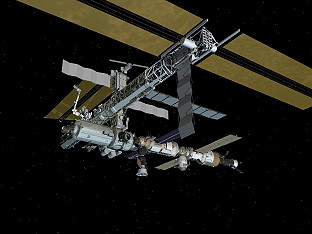
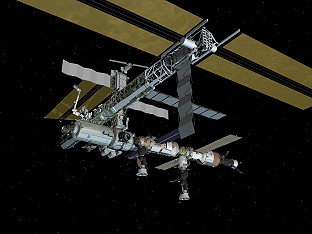
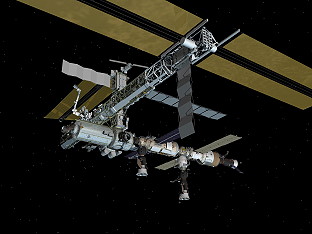
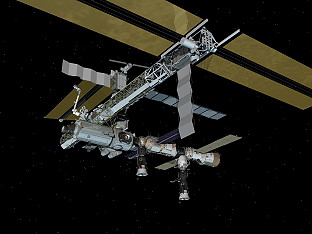
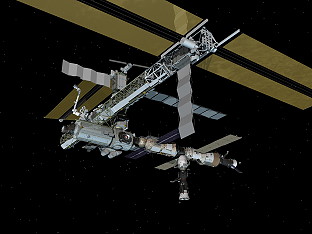
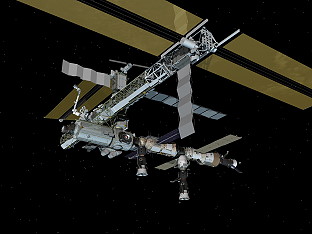
ISS Assembly
 |
 |
 |
 |
 |
 |
 |
 |
 |
 |
Photos / Graphics
 |
 |
|
source of all photos is Roscosmos / NASA |
|
 |
 |
 |
 |
 |
 |
more Earth observation photos |
|
more EVA photos |
|
more onboard photos |
|
| © |  |
Last update on December 14, 2020.  |
 |