Besatzungen der ISS

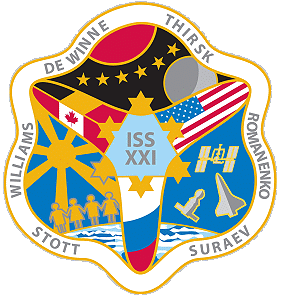
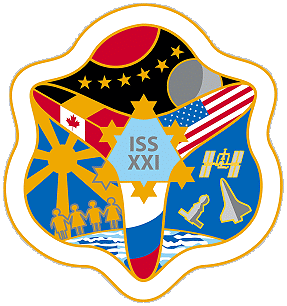
ISS: Expedition 21 |
 |
 |
 |
 |
 |
alternatives Crewfoto |
alternatives Crewfoto |
 |
 |
alternatives Crewfoto |
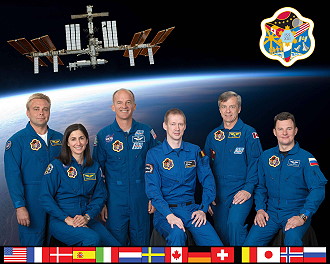
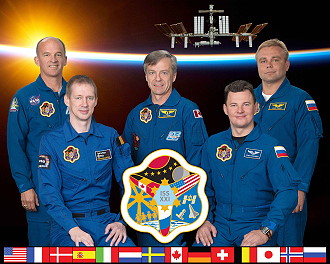
Besatzung, Start- und Landedaten
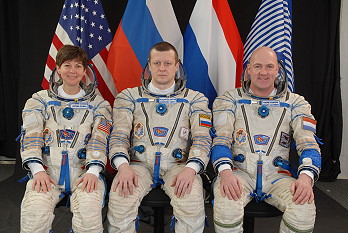
| Nr. | Nation | Name | Vorname | Position | Raumschiff (Start) |
Startdatum | Startzeit | Raumschiff (Landung) |
Landedatum | Landezeit | Flugdauer | Erdorbits |
| 1 |  |
De Winne | Frank Luc | ISS-CDR | Sojus TMA-15 | 27.05.2009 | 10:34:53,043 UTC | Sojus TMA-15 | 01.12.2009 | 07:16:30,6 UTC | 187d 20h 41m 38s | 2961 |
| 2 |  |
Surajew | Maxim Wiktorowitsch | Bordingenieur-1 | Sojus TMA-16 | 30.09.2009 | 07:14:44,923 UTC | Sojus TMA-16 | 18.03.2010 | 11:24:03,5 UTC | 169d 04h 09m 19s | 2669 |
| 3 |  |
Stott | Nicole Marie Passonno | Flugingenieurin-2 | STS-128 | 29.08.2009 | 03:59:36,994 UTC | STS-129 | 27.11.2009 | 14:44:20,46 UTC | 90d 10h 44m 43s | 1423 |
| 4 | |
Romanenko | Roman Jurjewitsch | Bordingenieur-3 | Sojus TMA-15 | 27.05.2009 | 10:34:53,043 UTC | Sojus TMA-15 | 01.12.2009 | 07:16:30,6 UTC | 187d 20h 41m 38s | 2961 |
| 5 |  |
Thirsk | Robert Brent | Flugingenieur-4 | Sojus TMA-15 | 27.05.2009 | 10:34:53,043 UTC | Sojus TMA-15 | 01.12.2009 | 07:16:30,6 UTC | 187d 20h 41m 38s | 2961 |
| 6 | |
Williams | Jeffrey Nels | Flugingenieur-5 | Sojus TMA-16 | 30.09.2009 | 07:14:44,923 UTC | Sojus TMA-16 | 18.03.2010 | 11:24:03,5 UTC | 169d 04h 09m 19s | 2669 |
inoffizielle Ersatzmannschaft
| Nr. | Nation | Name | Vorname | Position |
| 1 |  |
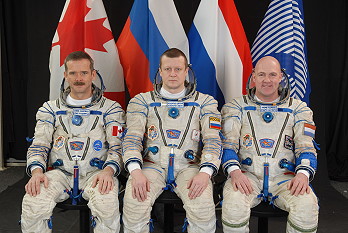
Kuipers | André | ISS-CDR |
| 2 | |
Skworzow | Alexander Alexandrowitsch Jr. | Bordingenieur |
| 3 | |
Coleman | Catherine Grace "Cady" | Flugingenieurin |
| 4 | |
Kondratjew | Dmitri Jurjewitsch | Bordingenieur |
| 5 | |
Hadfield | Chris Austin | Flugingenieur |
| 6 | |
Walker | Shannon | Flugingenieurin |
 |
 |
 |
Expeditionsverlauf
|
Start vom Kosmodrom Baikonur (Jeffrey
Williams und Maxim
Surajew mit
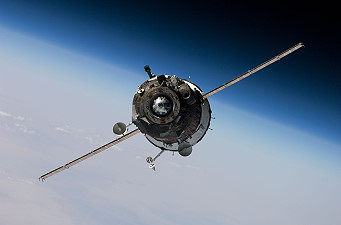
Sojus
TMA-16). Nicole
Stott
war seit dem 31. August 2009 an Bord der
ISS (Ankunft mit
STS-128). Frank
De
Winne, Roman
Romanenko und Robert
Thirsk erreichten die
ISS am 29. Mai 2009 mit
Sojus TMA-15.
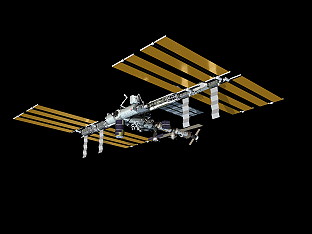
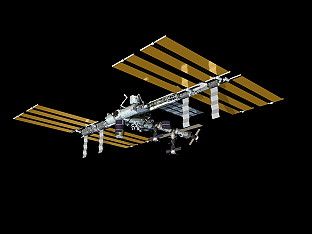
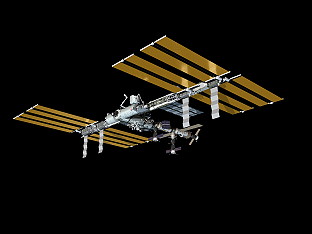
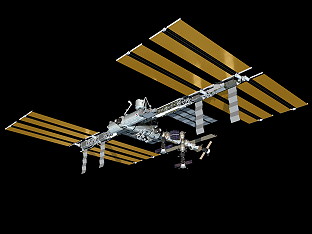
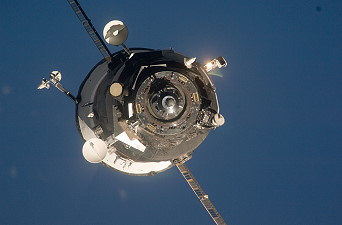
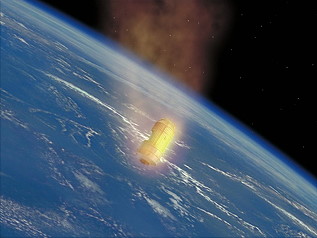
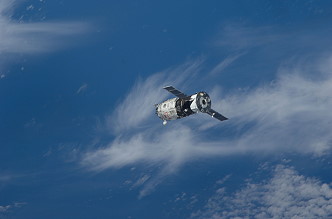
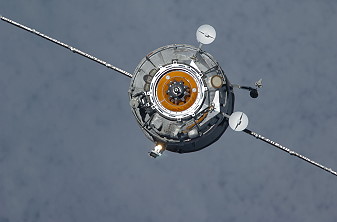
Offiziell begann die Expedition 21 mit der Abkopplung des russischen Raumschiffs Sojus TMA-14 am 10. Oktober 2009 um 01:07:16 UTC. Gleichzeitig war damit die Expedition 20 beendet. Der unbemannte russische Frachter Progress M-03M legte am 18. Oktober 2009 um 01:40 UTC an der Internationalen Raumstation an. Er war am 15. Oktober 2009 um 01:14 UTC vom Kosmodrom Baikonur gestartet. Das Transport-Raumschiff brachte 790 Kilogramm Lebensmittel, Kleidung, Bücher, 870 Kilogramm Treibstoffe und 420 Kilogramm Wasser zur Stammbesatzung. Am 22. April 2010 koppelte Progress M-03M wieder ab und wurde danach noch einige Tage für wissenschaftliche Experimente verwendet. Der Frachter wurde kontrolliert zum Absturz gebracht und verglühte am 27. April 2010 über dem Pazifischen Ozean. Poisk wurde am 10. November 2009 um 14:22 UTC gestartet und hat am 12. November um 15:41 UTC am Modul Swesda angedockt. Am 08. Dezember 2009 um 00:16 UTC wurde das nicht länger benötigte Servicemodul von Poisk abgetrennt und daraufhin kontrolliert zum Absturz gebracht. Damit standen erstmals vier russische Kopplungsadapter auf der ISS zur Verfügung. Poisk (russisch für Suche) früher Mini-Research Module 2 oder MRM-2, Miniforschungsmodul 2) ist ein Modul der Internationalen Raumstation. Es ist im Prinzip das vorher abgesagte russische Docking Compartment 2 (DC2) und am Zenitport von Swesda angekoppelt. Der Start erfolgte als Teil eines modifizierten Progress-Transporters mit einer Sojus-Rakete. Poisk dient als Koppelmodul für Sojus- und Progress-Raumschiffe und als Luftschleuse für Ausstiege. Es wird aber auch für externe wissenschaftliche Experimente verwendet, daher der ursprüngliche Name. Durch den Ausbau der Station war der Einsatz als Kopplungsadapter notwendig geworden, da sich durch die Verdopplung der ISS-Besatzung seit Mai 2009 immer zwei Sojus-Raumschiffe an der ISS befinden. Das Modul ist der Ersatz für Pirs (DC1), das bisher noch in Betrieb ist. Poisk basiert auf dem Progress-M Raumtransporter, auf dessen Antriebsblock bzw. Servicemodul das eigentliche Modul aufgesetzt ist, welches dem Modul Pirs ähnelt. Es ist 4,91 Meter lang, hat einen maximalen Durchmesser von 2,55 m, ein Innenvolumen von 12,5 Kubikmeter und wiegt etwa drei Tonnen. Es brachte 750 kg Nachschub zur ISS und besitzt zwei nach innen öffnenden Luken mit einem Durchmesser von einem Meter, die als Verschluss der Luftschleuse dienen. Gegenwärtig verfügt das Modul mit Strela-1 über einen eigenen Kranarm zur Unterstützung von Forschungs- und Reparaturmaßnahmen. Space Shuttle STS-129 koppelte am 16. November 2009 an die Internationale Raumstation an. Die Mission STS-129 (ISS ULF-3 ELC-1 ELC-2) brachte Versorgungsgüter, Ersatzteile und Experimente mit Hilfe der EXPRESS Logistics Carrier (ELC) 1 und 2 zur Internationalen Raumstation. Im Verlauf ihres Einsatzes montierten die Astronauten die beiden ELCs und verrichteten bei drei Außenbordeinsätzen anstehende Wartungsarbeiten an der Station. Nicole Stott wurde als letztes Besatzungsmitglied mit dem Space Shuttle von der ISS zur Erde zurückgebracht. Die EXPRESS Logistics Carriers (ELC) (EXpedite the PRocessing of Experiments to the Space Station) sind externe Transport- und Trägerplattformen für Experimente und Ersatzteile, so genannte ORUs, auf der Internationalen Raumstation ISS. Ein ELC besteht jeweils aus einer grauen, quaderförmigen Gitterstruktur, auf der sich gewünschte Elemente positionieren lassen, wobei auf jeder Gitterfläche in etwa ein halbes Dutzend Bauteile Platz findet. Außerdem sind zur Montage der Plattform und anderen Arbeiten Haltepunkte für den Greifarm angebracht. Die ersten beiden, ELC-1 und ELC-2, wurden am 18. November 2009 mit der Space-Shuttle-Mission STS-129 zur ISS transportiert. ELC-4 folgte am 26. Februar 2011 mit STS-133. ELC-3 wurde am 18. Mai 2011 während der Shuttle-Mission STS-134 an der ISS montiert. Während ELC-1 unten (Nadir) und ELC-3 oben (Zenit) am P3-Element der Integrated Truss Structure montiert wurde, befestigte man ELC-2 oben und ELC-4 unten am gegenüberliegenden S3-Truss. Die ELCs sind 1,6 Tonnen schwer, 4 mal 5 Meter groß, besitzen viereinhalb Tonnen Nutzlastkapazität und 30 Kubikmeter Stauraum. In der Nähe der Station führte Charles Hobaugh ein spektakuläres 360°-Manöver - das Rendezvous Pitch Maneuver (RPM) - durch, wobei er die Raumfähre innerhalb weniger Minuten um ihre Querachse drehen ließ. Die Besatzung der Raumstation fertigte währenddessen hochauflösende Aufnahmen des Shuttle-Hitzeschildes an. Die Aufnahmen wurden später zur Erde übertragen und von Fachleuten ausgewertet. Mit einer direkt vor der ISS reduzierten Annäherungsgeschwindigkeit auf zuletzt nur noch 3 Zentimeter pro Sekunde flog der Orbiter auf den Ankopplungsstutzen der Internationalen Raumstation zu. Wie die Kommandanten bei allen Kopplungsmissionen steuerte er den Raumgleiter von der hinteren Konsole im Flugdeck aus, weil er von dort freie Sicht auf die Raumstation hatte. Ohne Probleme konnte er sein Raumschiff an die ISS ankoppeln. Um 18:28 UTC wurden die Luken zwischen den beiden Raumfahrzeugen geöffnet und die Besatzungen begrüßten einander. Mit dem Öffnen der Luken wurde Nicole Stott offiziell Teil der Atlantis-Besatzung. Am dritten Flugtag und wenige Stunden nach der Ankopplung transportierten Leland Melvin und Randolph Bresnik den Express Logistics Carrier 1 (ELC-1) mit Hilfe des Shuttle-Greifarms von der Ladebucht der Atlantis zum Greifarm der ISS, der von Barry Wilmore und Jeffrey Williams gesteuert wurde. Damit installierten sie die Plattform am Port 3 Truss der Internationalen Raumstation. Sie begannen ebenfalls mit dem Transfer von Ausrüstungsgegenständen für die geplanten Außenbordeinsätze. Um die in ihren Körpern gelösten Gase (speziell Stickstoff) zu reduzieren, begaben sich Michael Foreman und Robert Satcher in die Luftschleuse Quest und verbrachten die Nachtruhe dort, wobei sie unter reduziertem Luftdruck reinen Sauerstoff atmeten. Dieser Vorgang, Campout genannt, wird vor jedem Ausstieg durchgeführt. Die erste EVA durch Michael Foreman und Robert Satcher wurde am 19. November 2009 (6h 37m) unternommen. Michael Foreman und Robert Satcher arbeiteten zunächst daran, eine Reserve-S-Band-Antenne am Z1 Element anzubringen. Sie beendeten diese Aufgabe eine Stunde vor der geplanten Zeit und teilten sich dann auf. Michael Foreman installierte eine Funkantenne am Destiny-Modul bevor er zum Unity-Modul wechselte, wo er einen Handlauf gegen eine Klammer für eine Ammoniakleitung zum zukünftigen Tranquility-Knoten tauschte. Robert Satcher schmierte die Kopplungspunkte für den Stationsarm am Mobile Base System und für den Kibo-Arm ein. Nach diesen Aufgaben hatten sie zwei Stunden Zeit für weitere Aufgaben zur Verfügung. Man entschied sich, zusätzlich die Halterung für externe Nutzlasten (PAS) an der erdzugewandten Seite des Steuerbordauslegers S3 der Station auszubringen, anstatt dies erst während des zweiten Ausstiegs durchzuführen. Während des Ausstiegs wurde im Unity-Modul damit begonnen, die für Februar 2010 geplante Ankunft des Tranquility-Moduls vorzubereiten. Die Expedition-21-Mitglieder Frank De Winne und Jeffrey Williams legten in diesem Zusammenhang Leitungen für Ventilation, Strom, Daten und zur Kühlung. Vor dem zweiten Weltraumspaziergang hoben die beiden Operatoren des Roboterarms der Atlantis Leland Melvin und Robert Satcher den Express Logistics Carrier 2 (ELC-2) aus der Ladebucht des Space Shuttles. Der Arm des Shuttle übergab den ELC-2 dem Greifarm der Internationalen Raumstation, mit dem der ELC-2 an das Starboard 3 Segment der Station anfügt wurde. Die fast 6.500 Kilogramm schwere Plattform enthält Ausrüstungsgegenstände zur Verlängerung der Betriebszeit der ISS. Die zweite EVA durch Michael Foreman und Randolph Bresnik erfolgte am 21. November 2009 (6h 08m). Michael Foremans und Randolph Bresniks erste Aufgabe bestand in der Installation einer als GATOR bezeichneten Antenne, die anfliegende Raumfahrzeuge identifizieren und Funkkontakt mit ihnen ermöglichen soll. Sie konnten die Aufgabe mit einer Zeitersparnis von 40 Minuten abschließen, begaben sich danach zum P1-Segment und veränderten die Position einer Messeinheit für das elektrische Potential der Station, sodass der für 2010 zur Montage vorgesehene Alpha-Magnet-Spektrometer dort angebracht werden kann. Die beiden Astronauten begaben sich anschließend zum S1-Segment und entfalteten eine weitere Halterung für externe Nutzlasten (PAS), bevor sie am S3-Segment einen Empfänger für die Signale der drahtlosen Helmkameras anbrachten. Da auch bei dieser Aufgabe Zeit gewonnen werden konnte, wurde den Astronauten aufgetragen, ein weiteres PAS an S3 zu öffnen. Sie arbeiteten danach an einigen Antennenkabeln, welche während der vorhergehenden Shuttle-Mission STS-128 nicht verbunden werden konnten. Eine Verbindung gelang zwar, jedoch waren die Signale der Antennen nicht wie erwartet. Nach einigen weiteren Aufgaben am PMA-1-Modul beendeten die Astronauten den Ausstieg. Die dritte und letzte EVA durch Robert Satcher und Randolph Bresnik wurde am 23. November 2009 (5h 42m) ausgeführt. Die Astronauten installierten einen Sauerstofftank, welcher auf ELC-2 geliefert wurde, an der Quest-Luftschleuse und brachten das MISSE-7-Paket auf ELC-2 an. Sie entfernten einige Mikrometeoritenschilde von Quest und sicherten sie an der externen Lagerplattform ESP-2. Robert Satcher arbeitete danach an einem Ammoniaktank, welchen er zur Vorbereitung auf die bei STS-131 vorgesehene Installation des Tranquility-Knotens an Unitys Backbord-Seite teilweise löste und installierte einige Hitzeschutzmatten an den Kameras des Mobile Servicing Systems und am Greifmechanismus des Stationsroboterarms. Randolph Bresnik arbeitete an der Elektronik der Station. Der achte Flugtag diente den Vorbereitungen auf die Abkopplung der Atlantis. Außerdem übertrug Frank De Winne das Kommando über die Station an Jeffrey Williams. Dies war das erste Mal, dass dies im Beisein einer Gastbesatzung durchgeführt wurde. Die Luken wurden schließlich um 18:12 UTC geschlossen. Am 25. November 2009 koppelte die Atlantis-Besatzung mittels Federkraft wieder von der ISS ab. Dadurch wurden Beschädigungen oder Verunreinigungen der Station vermieden. Erst danach wurden die Steuerungstriebwerke aktiviert und die Raumfähre entfernte sich von ihr bis zu einer Distanz von etwa 150 Meter. Von dort aus umflog Barry Wilmore die Orbitalstation eineinhalb Mal, ehe die Triebwerke der Atlantis erneut gezündet wurden und der Raumgleiter seine Distanz vergrößerte. Der Orbiter stoppte dann in einer Entfernung von etwa 75 Kilometer. Mit Hilfe des OBSS wurde eine letzte Überprüfung des Hitzeschutzschildes vorgenommen. Im Notfall hätte das Space Shuttle zur Internationalen Raumstation zurückkehren können. Am 22. Dezember 2009 brachte das russische Raumschiff Sojus TMA-17 drei neue Crewmitglieder der Expedition 22 zur ISS. Gegen Ende der Mission übertrug der belgische Astronaut Frank De Winne das Kommando über die Station an den amerikanischen Astronauten Jeffrey Williams. Mit der Abkopplung von Sojus TMA-15 am 01. Dezember 2009 um 03:55:59 UTC endete offiziell die Expedition 21 und die ISS Expedition 22 begann. Während ihres Aufenthaltes an Bord der ISS führten die Crews der Expeditionen 21 / 22 folgende wissenschaftliche Experimente durch (vollständige Auflistung): 3D-Space (Mental Representation of Spatial Cues During Space Flight), AgCam (Agricultural Camera - AgCam name used historically from 2005-2010, later version known as ISAAC), ALTEA-Dosi (Anomalous Long Term Effects in Astronauts' - Dosimetry), ARISS (Amateur Radio on the International Space Station), Aryl (Influencing Factors of Space Flight on Expression of Strains of Interleukin), Astrovakcina (Cultivation in Weightless of E.coli- Producer of the Caf1 Protein), Avatar Explore (Avatar Explore: Autonomous Robotic Operations Performed from the ISS), Bacteriophage (Investigation of the Effects of Space Flight Factors on Bacteriophages), Bar (Choice and Development of Methods and Instruments to Detect the Location of a Loss of Pressurization of a Module on ISS), BCAT-5-3D-Melt (Binary Colloidal Alloy Test - 5: Three-Dimensional Melt), BCAT-5-Compete (Binary Colloidal Alloy Test - 5: Compete), BCAT-5-PhaseSep (Binary Colloidal Alloy Test-5: Phase Separation), BCAT-5-Seeded_Growth (Binary Colloidal Alloy Test - 5: Seeded Growth), Bif (Investigation of the Effects of Space Flight Factors on the Technological and Biomedical Characteristics of Bifidobacterium), BIMS (Assessment of the Efficiency of the Use of Telemedicine Technologies On-Board ISS), Biodegradation (Initial stage of Biodegradation and Biodeterioration in Space), Bioemulsia (Research and Development of a Self-Contained Reactor of the Shielded Type For Production of Biomass of Microorganisms and Biologically Active Substances), Biological Rhythms (The Effect of Long-term Microgravity Exposure on Cardiac Autonomic Function by Analyzing 24-hours Electrocardiogram), Biorisk (Influence of Factors of the Space Environment on the Condition of the System of Microorganisms-Hosts Relating to the Problem of Environmental Safety of Flight Techniques and Planetary Quarantine), BISE (Bodies In the Space Environment: Relative Contributions of Internal and External Cues to Self - Orientation, During and After Zero Gravity Exposure), Bisphosphonates (Bisphosphonates as a Countermeasure to Space Flight Induced Bone Loss), BTN-M1 (Examination of the Flow of High Speed and Thermal Neutrons), Cambium (Cambium), Card (Long Term Microgravity: A Model for Investigating Mechanisms of Heart Disease with New Portable Equipment), CCISS (Cardiovascular and Cerebrovascular Control on Return from ISS), CEO (Crew Earth Observations), CERISE (RNA Interference and Protein Phosphorylation in Space Environment Using the Nematode Caenorhabditis elegans), Conjugation (Development of Methods for Designing New Recombinants Producing Strains of Bacteria in Space Flight), CSI-03 (Commercial Generic Bioprocessing Apparatus Science Insert - 03: Spiders and Butterflies), DECLIC-DSI (DEvice for the study of Critical LIquids and Crystallization - Directional Solidification Insert), DECLIC-HTI (DEvice for the study of Critical LIquids and Crystallization - High Temperature Insert), DOSIS-DOBIES (Dose Distribution Inside ISS - Dosimetry for Biological Experiments in Space), DTN (Disruption Tolerant Networking for Space Operations), Dykhanie (Regulation and Biomechanics of Respiration in Space Flight), EarthKAM (Earth Knowledge Acquired by Middle School Students), EDOS (Early Detection of Osteoporosis in Space), EKE (Assessment of Endurance Capacity by Gas Exchange and Heart Rate Kinetics During Physical Training), Ekon (Experimental Survey on Evaluating the Possibility of Using th Russian Segment of ISS for Environmental Inspection of Work Areas of Various Facilities (Features)), Environmental Monitoring (Environmental Monitoring of the International Space Station), EPO-Demos (Education Payload Operation - Demonstrations), Expert (Investigation of Early Symptoms of Microdestruction of Structures and Instrument Modules in the Russian Segment of ISS), FLEX-2 (Flame Extinguishment Experiment - 2), Foam-Stability (Foam Optics And Mechanics - Stability), FOCUS (Foam Casting and Utilization in Space), Functional Task Test (Physiological Factors Contributing to Changes in Postflight Functional Performance), Get Fit for Space (Get Fit for Space Challenge with Robert Thirsk), Hair (Biomedical Analyses of Human Hair Exposed to a Long-term Space Flight), HREP-HICO (HICO and RAIDS Experiment Payload - Hyperspectral Imager for the Coastal Ocean), HREP-RAIDS (HICO and RAIDS Experiment Payload - Remote Atmospheric and Ionospheric Detection System (RAIDS)), Impuls (Impulse), Inflight Education Downlinks (International Space Station Inflight Education Downlinks), Integrated Cardiovascular (Cardiac Atrophy and Diastolic Dysfunction During and After Long Duration Spaceflight: Functional Consequences for Orthostatic Intolerance, Exercise Capability and Risk for Cardiac Arrhythmias), Integrated Immune (Validation of Procedures for Monitoring Crewmember Immune Function), Integrated Immune-SDBI (Validation of Procedures for Monitoring Crewmember Immune Function - Short Duration Biological Investigation), ISS Acoustics (International Space Station Acoustic Measurement Program), Izgib (Effect of Performance of Flight and Science Activities on the Function of On-Orbit Systems on ISS (Mathematical Model)), JAXA EPO 1 (Japan Aerospace Exploration Agency Education Payload Observation 1), JAXA EPO 2 (Japan Aerospace Exploration Agency Education Payload Observation 2), JAXA EPO 3 (Japan Aerospace Exploration Agency Education Payload Observation 3), JAXA EPO 4 (Japan Aerospace Exploration Agency Education Payload Observation 4), JAXA PCG (Japan Aerospace Exploration Agency Protein Crystal Growth), Kristallizator (Crystalization of Biological Macromolecules and Generation of Biocrystal Film in the Conditions of Microgravity), Lactolen (Influence of Factors of Space Flight on Lactolen Producer Strains), Lada-VPU-P3R (Validating Vegetable Production Unit (VPU) Plants, Protocols, Procedures and Requirements (P3R) Using Currently Existing Flight Resources), MAI-75 (Space Devices and Modern Technology for Personal Communication), MAUI (Maui Analysis of Upper Atmospheric Injections), MAXI (Monitor of All-sky X-ray Image), MDS (Mice Drawer System), MISSE-7 (Materials International Space Station Experiment - 7), MSL-CETSOL and MICAST (Materials Science Laboratory - Columnar-to-Equiaxed Transition in Solidification Processing and Microstructure Formation in Casting of Technical Alloys under Diffusive and Magnetically Controlled Convective Conditions), Myco (Mycological Evaluation of Crew Exposure to ISS Ambient Air), Nanoskeleton (Production of High Performance Nanomaterials in Microgravity), NLP-Cells-3 (National Laboratory Pathfinder - Cells - 3: Jatropha Biofuels), NLP-Vaccine-MRSA (National Laboratory Pathfinder - Vaccine - Methicillin-resistant Staphylococcus aureus), Nutrition (Nutritional Status Assessment), OChB (Influence of Factors of Space Flight on Superoxide Strain Producer), Otolith (Otolith Assessment During Postflight Re-adaptation), Passages (Scaling Body-Related Actions in the Absence of Gravity), Pilot (Individual Characteristics of Psychophysiological Regulatory Status and Reliaility of Professional Activities of Cosmonauts in Long Duration Space Flight), Plasma-MKS (Plasma-ISS: Examination of Plasmic Environments on the External Surface of ISS Through the Characterization of Optical Radiance), Plasma-Progress (Observation of the Reflective Characteristics of the Spacecraft Plasma Environment from On-Board Thruster Activity Using Ground-Based Instruments), Plasma Crystal (Dusty and Liquid Plasma Crystals in Conditions of Microgravity), PMT (Photocatalyst Material Test), Pneumocard (Examination of the Influencing Factors of Space Flight on Autonomic Regulation of Blood Circulation, Respiration and Cardiac Contractile Function in Long Duration Space Flight), Poligen (Revealing Genotypical Characteristics, Defining Individual Differences in Resistance of Biological Oranisms to Factors of Long Duration Space Flight), Pro K (Dietary Intake Can Predict and Protect Against Changes in Bone Metabolism during Spaceflight and Recovery), RaDI-N (RaDI-N), RadSilk (Integrated Assessment of Long-term Cosmic Radiation Through Biological Responses of the Silkworm, Bombyx mori, in Space), Reaction Self Test (Psychomotor Vigilance Self Test on the International Space Station), Relaksatia (Processes of Relaxation in the Ultraviolet Band Spectrum by High Velocity Interaction of Exhaust Products on ISS), Repository (National Aeronautics and Space Administration Biological Specimen Repository), Rusalka (Development of Methods to Determine the Carbon Dioxide and Methane (Greehouse Gases) Content in the Earths Atmosphere from On-Board ISS), SEDA-AP (Space Environment Data Acquisition Equipment - Attached Payload), SEITE (Shuttle Exhaust Ion Turbulence Experiments), SIMPLEX (Shuttle Ionospheric Modification with Pulsed Localized Exhaust Experiments), Sleep-Long (Sleep-Wake Actigraphy and Light Exposure During Spaceflight-Long), Sleep-Short (Sleep-Wake Actigraphy and Light Exposure During Spaceflight-Short), SMILES (Superconducting Submillimeter-Wave Limb-Emission Sounder), SNFM (Serial Network Flow Monitor), SOLO (SOdium LOading in Microgravity), Sonokard (Physiological Functions (cardio-respiratory) of Humans Using Contactless Methods During Sleep in Long Duration Space Flight), SpaceDRUMS (Space Dynamically Responding Ultrasonic Matrix System), SpaceSeed (Life Cycles of Higher Plants Under Microgravity Conditions), SPHERES (Synchronized Position Hold, Engage, Reorient, Experimental Satellites), SPHERES-Zero-Robotics (Synchronized Position Hold, Engage, Reorient, Experimental Satellites-Zero-Robotics), Spin (Validation of Centrifugation as a Countermeasure for Otolith Deconditioning During Spaceflight), Spinal Elongation (Spinal Elongation and its Effects on Seated Height in a Microgravity Environment), Sreda (Examination of the Features of IS as an Environment for Conducting Research), SVS (CBC: Self-Propogating Hyperthermal Synthesis in Space), SWAB (Surface, Water and Air Biocharacterization - A Comprehensive Characterization of Microorganisms and Allergens in Spacecraft Environment), TAGES (Transgenic Arabidopsis Gene Expression System), Thermolab (Thermoregulation in Humans During Long-Term Spaceflight), Tipologia (Study of the Typological Characteristis of ISS Crew Operators Activity at the Stages of Long Term Space Flight), Tropi (Analysis of a Novel Sensory Mechanism in Root Phototropism), Try Zero-G (Try Zero-Gravity), Uragan (Hurricane: Experimental Development of Groundbased System of Monitoring and Predicting the Progression of a Naturally Occurring Technogenic Catastrophe), Vascular (Cardiovascular Health Consequences of Long-Duration Space Flight), Vektor-T (Study of a High Precision System for Prediction Motion of ISS), VO2max (Evaluation of Maximal Oxygen Uptake and Submaximal Estimates of VO2max Before, During, and After Long Duration International Space Station Missions), Vsplesk (Burst: Monitoring of Seismic Effects - Bursts of High Energy Particles in Low Earth Space Region (Orbit)), Vzaimodeystviye (Interactions: Monitoring of Space Crew Interactions During Extended Space Flight), Zag (Ambiguous Tilt and Translation Motion Cues After Space Flight). |
EVA-Daten
| Name | Beginn | Ende | Dauer | Mission | Schleuse | Anzug | |
| EVA | Foreman, Michael | 19.11.2009, 14:24 UTC | 19.11.2009, 21:01 UTC | 6h 37m | STS-129 | ISS - Quest | EMU Nr. 3018 |
| EVA | Satcher, Robert | 19.11.2009, 14:24 UTC | 19.11.2009, 21:01 UTC | 6h 37m | STS-129 | ISS - Quest | EMU Nr. 3010 |
| EVA | Bresnik, Randolph | 21.11.2009, 14:31 UTC | 21.11.2009, 20:39 UTC | 6h 08m | STS-129 | ISS - Quest | EMU Nr. 3006 |
| EVA | Foreman, Michael | 21.11.2009, 14:31 UTC | 21.11.2009, 20:39 UTC | 6h 08m | STS-129 | ISS - Quest | EMU Nr. 3018 |
| EVA | Satcher, Robert | 23.11.2009, 13:24 UTC | 23.11.2009, 19:06 UTC | 5h 42m | STS-129 | ISS - Quest | EMU Nr. 3010 |
| EVA | Bresnik, Randolph | 23.11.2009, 13:24 UTC | 23.11.2009, 19:06 UTC | 5h 42m | STS-129 | ISS - Quest | EMU Nr. 3006 |
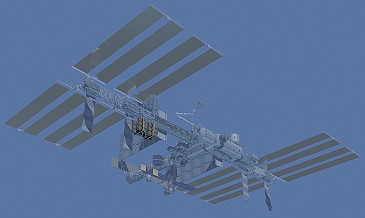
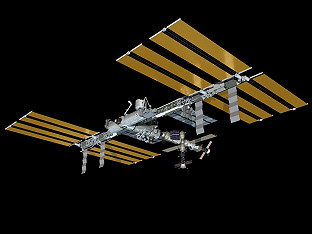
Aufbau der ISS
 |
 |
 |
 |
 |
 |
Fotos
 |
 |
 |
 |
 |
 |
 |
 |
 |
 |
 |
|
mehr Fotos von Bord der ISS |
|
| © |  |
Letztes Update am 10. November 2023.  |
 |