Resident Crews of the International Space Station (ISS)

ISS: Expedition 20 |
 |
 |
 |
 |
 |
 |
 |
alternative crew photo |
|
 |
 |
 |
 |
alternative crew photo |
|
 |
 |
alternative crew photo |
Crew, launch- and landing data
| No. | Nation | Surname | Given names | Position | Spacecraft (launch) |
Launch date |
Launch time |
Spacecraft (landing) |
Landing date |
Landing time |
Mission duration |
Orbits |
| 1 |  |
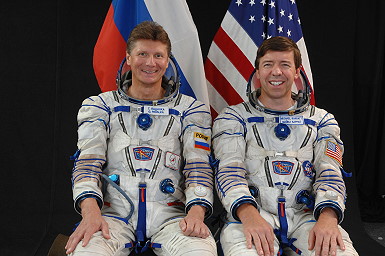
Padalka | Gennadi Ivanovich | ISS-CDR | Soyuz TMA-14 | 26.03.2009 | 11:49:18.120 UTC | Soyuz TMA-14 | 11.10.2009 | 04:31:43.1 UTC | 198d 16h 42m 25s | 3130 |
| 2 |  |
Barratt | Michael Reed | Flight Engineer-1 | Soyuz TMA-14 | 26.03.2009 | 11:49:18.120 UTC | Soyuz TMA-14 | 11.10.2009 | 04:31:43.1 UTC | 198d 16h 42m 25s | 3130 |
| 3 |  |
Wakata | Koichi | Flight Engineer-2 | STS-119 | 15.03.2009 | 23:43:44.019 UTC | STS-127 | 31.07.2009 | 14:48:07 UTC | 137d 15h 04m 23s | 2166 |
| 4 | |
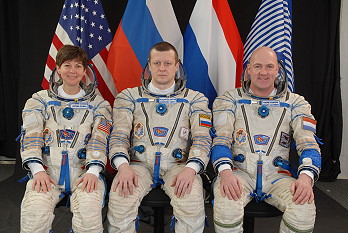
Romanenko | Roman Yuriyevich | Flight Engineer-3 | Soyuz TMA-15 | 27.05.2009 | 10:34:53.043 UTC | Soyuz TMA-15 | 01.12.2009 | 07:16:30.6 UTC | 187d 20h 41m 38s | 2961 |
| 5 |  |
Thirsk | Robert Brent | Flight Engineer-4 | Soyuz TMA-15 | 27.05.2009 | 10:34:53.043 UTC | Soyuz TMA-15 | 01.12.2009 | 07:16:30.6 UTC | 187d 20h 41m 38s | 2961 |
| 6 |  |
De Winne | Frank Luc | Flight Engineer-5 | Soyuz TMA-15 | 27.05.2009 | 10:34:53.043 UTC | Soyuz TMA-15 | 01.12.2009 | 07:16:30.6 UTC | 187d 20h 41m 38s | 2961 |
| 7 | |
Kopra | Timothy Lennart | Flight Engineer | STS-127 | 15.07.2009 | 22:03:09.984 UTC | STS-128 | 12.09.2009 | 00:53:20 UTC | 58d 02h 50m 10s | 920 |
| 8 | |
Stott | Nicole Marie Passonno | Flight Engineer | STS-128 | 29.08.2009 | 03:59:36.994 UTC | STS-129 | 27.11.2009 | 14:44:20.46 UTC | 90d 10h 44m 43s | 1423 |
unofficial Backup Crew
| No. | Nation | Surname | Given names | Position |
| 1 | |
Surayev | Maksim Viktorovich | ISS-CDR |
| 2 | |
Williams | Jeffrey Nels | Flight Engineer |
| 3 | |
Noguchi | Soichi | Flight Engineer |
| 4 | |
Kondratiyev | Dmitri Yuriyevich | Flight Engineer |
| 5 | |
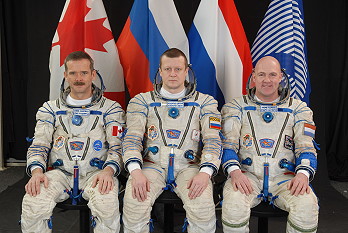
Hadfield | Chris Austin | Flight Engineer |
| 6 |  |
Kuipers | André | Flight Engineer |
| 7 | |
Creamer | Timothy John "TJ" | Flight Engineer |
| 8 | |
Coleman | Catherine Grace "Cady" | Flight Engineer |
 |
 |
 |
Expedition Report
|
Launch from the Baikonur Cosmodrome (Gennadi
Padalka and Michael
Barratt with
Soyuz
TMA-14). Koichi
Wakata was on-board the
ISS since March 17, 2008 (arrival with
STS-119). He was
replaced by Nicole
Stott (arrival with
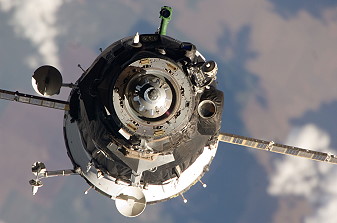
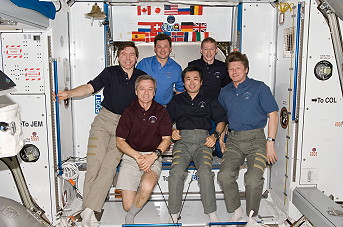
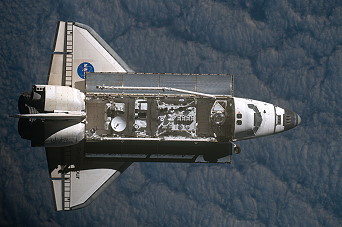
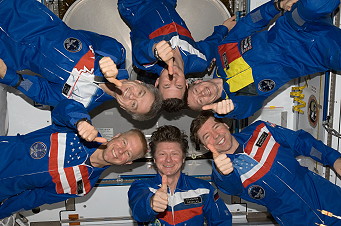
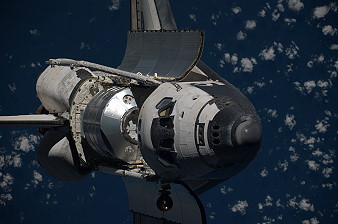
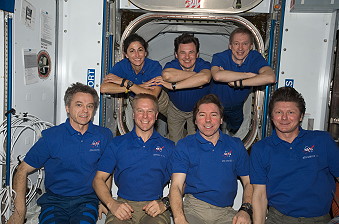
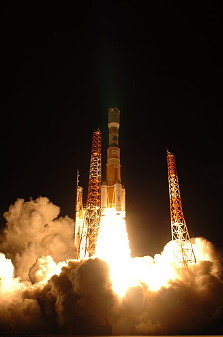
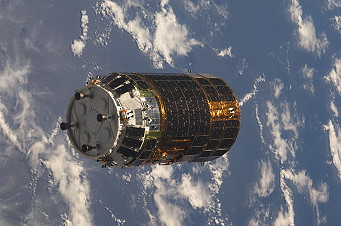
STS-128). Roman Romanenko, Frank De Winne and Robert Thirsk arrived with Soyuz TMA-15 on May 29, 2009. For the first time the resident crew of the ISS consists of six persons. With docking at 12:34:16 UTC Expedition 20 began and Expedition 19 ended. The only EVA in this Expedition was performed by Gennadi Padalka and Michael Barratt on June 05, 2009 (4h 54m) to prepare Pirs for the arrival of a new Russian module called the Mini-Research Module 2, or MRM2. Gennadi Padalka and Michael Barratt teamed up to work on the Zvezda module in preparation for the addition of the new Russian Mini-Research Module-2 (MRM2), which would be installed later in 2009, and would dock on the Zvezda's zenith port and become an additional port for the docking of Russian vehicles. On Zvezda, Gennadi Padalka and Michael Barratt installed docking antennas, a docking target, and electrical connectors specifically for the Kurs automated docking equipment. Once they completed the installation of the new equipment, Michael Barratt rode the Strela crane, from which he photographed the new antennas. An IVA by Gennadi Padalka and Michael Barratt occurred on June 10, 2009 (0h 12m). At only 12 minutes, this was the shortest spacewalk ever performed. Taking place entirely inside the Zvezda Service Module, with the spacewalkers' suits still attached to umbilicals, it has been called an "internal" spacewalk, but is nonetheless considered a spacewalk because Michael Barratt and Gennadi Padalka worked in a depressurized space. The EVA crew replaced a hatch with a docking point. With Michael Barratt and Gennadi Padalka quickly completing the task, Zvezda became ready for the docking of MRM2. STS-127 docked with the International Space Station on July 17, 2009. The main goal of STS-127 (ISS-2J/A JEM EF, JEM ELM-ES) was to deliver and install the third and the last piece the Japanese Exposed Facility (JEM EF) to Kibo and the Kibo Japanese Experiment Logistics Module - Exposed Section (JEM ELM-ES). The exposed facility (a kind of "porch") is a part of Kibo that will allow astronauts to perform science experiments that are exposed to the vacuum of space. The exposed section is similar to the logistics module on the Kibo laboratory, but is not pressurized. Once its payloads are transferred to the JEM EF, the JEM ELM-ES will be returned to the payload bay. Also, inside the payload bay was an Integrated Cargo Carrier-Vertical Light Deployable (ICC-VLD), containing a variety of equipment and spare components for the station. The carrier contained six new batteries for installation on the P6 truss, that was installed during two of the mission's spacewalks, as well as a spare space-to-ground antenna and a spare linear drive unit and pump module which was stored on an external stowage platform on the station's truss during one of the spacewalks. The shuttle also delivered a new Flight Engineer - Timothy Kopra - to join the Expedition 20 crew, and return Expedition 20 Flight Engineer Koichi Wakata of the Japan Aerospace Exploration Agency to Earth. The final components of Kibo will flew to the space station on STS-127. The STS-127 (2J/A) mission concluded the Kibo assembly, paving the way for the full utilization stage of Kibo. On this third and last Kibo-designated assembly mission, Kibo's final components, the Exposed Facility (JEM EF) and the Experiment Logistics Module - Exposed Section (JEM ELM-ES), was delivered to the International Space Station. Installation of these components concluded assembly of the Japanese complex facility on the station. The JEM EF is a multipurpose experiment platform on which various scientific experiments can be performed using the microgravity and vacuum environment of space. The JEM ELM-ES is a logistics carrier which was launched and returned on the STS-127 mission. On this flight, the JEM ELM-ES carried three JEM EF payloads to the station. The JEM EF became operational during the STS-127 mission. Kibo's scientific capability was doubled when the platform for space-exposed experiment activities was ready. A few hours after Endeavour's docking on the third day of the flight, Timothy Kopra and Koichi Wakata exchanged custom-made Russian Soyuz spacecraft seat liners. With that exchange, Koichi Wakata became part of Endeavour's crew. Timothy Kopra, meanwhile, joined the Expedition 20 crew - the first space station crew with a full complement of six astronauts. The Commander, Russian cosmonaut Gennadi Padalka, and NASA Flight Engineer Michael Barratt launched to the station in the Russian Soyuz TMA-14 in March 2009. The second half of the crew - European Space Agency astronaut Frank De Winne, Russian cosmonaut Roman Romanenko, and Canadian Space Agency astronaut Robert Thirsk - took Soyuz TMA-15 to the station in May 2009. Koichi Wakata arrived aboard space shuttle Discovery during the STS-119 mission in March 2009. In September 2009, Timothy Kopra returned to Earth on shuttle mission STS-128, and Nicole Stott took his place. A set of experiments to be deployed on the ISS were carried by STS-127, namely Dosimetry for Biological Experiments in Space (ESA), Validation of Procedures for Monitoring Crew Member Immune Function, the student-made Image Reversal in Space (CSA/ISU), Nutritional Status Assessment (NASA), NASA Biological Specimen Repository and Tomatosphere-II (CSA). The first EVA by David Wolf and Timothy Kopra occurred on July 18, 2009 (5h 32m) to prepare connecting mechanisms for Kibo and the exposed facility, which the station's robotic arm installed later in the day. They also released bolts on an ammonia tank assembly as get-ahead work for the next shuttle mission, STS-128. Then, both worked to deploy the unpressurized cargo carrier attachment system (UCCAS) on the Port 3 truss that was jammed and couldn't be done on STS-119. The UCCAS will be used in the future to store equipment and supplies on the outside of the station. Although the actual installation of Kibo's exposed facility was done robotically, David Wolf and Timothy Kopra began the first spacewalk by making preparations for that installation at both ends. David Wolf made his way to the laboratory to remove some insulation currently covering its berthing mechanism that the exposed facility was attached to. To do so, he released four fasteners and jettisoned the insulation. While he was in the area, he also tucked two grounding tabs on the Japanese robotic arm out of the way of the arm's camera - they're currently interfering with the view. At the same time, Timothy Kopra was working inside the shuttle's cargo bay on the exposed facility end of that preparation. He started by removing insulation from its berthing mechanism where it will attach to the Kibo laboratory, by releasing four fasteners and storing the insulation. He then disconnected the power cable that keeps the exposed facility running while it's in the cargo bay. The shuttle's robotic arm had already latched onto the exposed facility before the spacewalk started, and after the power cable was disconnected, the spacewalkers had done their part in the preparations for its installation. Afterward, the station robotic arm maneuvered into place, and the shuttle robotic arm picked up the facility from the shuttle's cargo bay and handed it off to the station robotic arm. The station arm then flew it to the Kibo laboratory for installation. Meanwhile, David Wolf and Timothy Kopra continued on with their spacewalk activities. Already in the shuttle's cargo bay, Timothy Kopra went ahead and disconnected the power cables providing electricity to the integrated cargo carrier to which the spare station equipment that Endeavour is carrying are attached. And he removed a contamination cover on one of the experiments the exposed facility's experiment carrier is carrying - MAXI, or Monitor of All-sky X-ray Image. After that, Timothy Kopra moved to the top of the Harmony node to secure a cover on its common berthing mechanism. He moved farther aft on station to pick up some tools on the station's zenith truss segment, and then to the left side of the Unity node to open another cover on its common berthing mechanism. David Wolf moved from the Kibo laboratory to the station's port, or left, truss. He paused at the innermost section of the truss to loosen four bolts on the grapple bar of an ammonia tank assembly to speed up another task during the second spacewalk, then continued on to the port crew equipment and translation aid, or CETA, cart. There he was moving and restraining a foot restraint and brake handles out of the way to prevent them from interfering with the rotating solar alpha rotary joint. For the rest of the spacewalk, David Wolf and Timothy Kopra worked together to set up two systems for attaching cargo to the station's truss - an unpressurized cargo carrier attachment system, or UCCAS, and a payload attachment system, or PAS. Though they have different names, the two systems are almost identical. During the last shuttle mission to the space station, spacewalkers ran into problems when they tried to set up the UCCAS on the port 3, or P3, segment of the station's truss. A jammed detent pin kept it from unfolding as it was supposed to. So, David Wolf and Timothy Kopra came back for another try during their spacewalk. They used a specially built detent release tool to help clear the jam and allow them to fully install the UCCAS. After getting the UCCAS into place, David Wolf and Timothy Kopra moved to the starboard side of the truss to set up a PAS on the S3 truss segment. The spacewalkers first removed brackets and pins holding the latch in place, moved the latch into position and then reinstalled the brackets and pins. On July 19, 2009 a malfunction in a new toilet in the Destiny laboratory caused the crew to use the one in the Russian segment while attempts were made to identify the fault. Meanwhile the shuttle was cleared for reentry. The second EVA was performed by David Wolf and Thomas Marshburn on July 20, 2009 (6h 53m) to transport of spare parts from a cargo carrier to a stowage platform on the station's truss. These parts include: an antenna, a pump module and a rail mechanism that allows a transporter to move up and down the truss. They also relocated a grapple bar onto an ammonia tank assembly as a get-ahead for the STS-129 mission, targeted for November 2009. A planned installation of a camera on the Japanese Experiment Facility was postponed to a future EVA for want of time. The second spacewalk focused primarily on transferring the spare equipment brought up by the shuttle to a storage location on the station's truss segment. Between the first and second spacewalk, Mark Polansky and Douglas Hurley used the shuttle robotic arm to unpack the integrated cargo carrier that held all the spare equipment the shuttle was delivering to the space station. On flight day 6, before the second spacewalk started, Julie Payette and Koichi Wakata took over using the station robotic arm and maneuvered the carrier to be installed temporarily on the truss. This had to be done before the spacewalk started, because David Wolf's first task was to climb into a foot restraint on the station's robotic arm so that he could transfer the equipment from the carrier to an external stowage platform. Together, David Wolf and Thomas Marshburn detached first the spare space-to-ground antenna from the cargo carrier. David Wolf then carried it via the robotic arm to the stowage platform, where he and Thomas Marshburn installed it. They then repeated the process with the spare pump module and the spare linear drive unit. They spent their remaining time outside adding vision equipment on the newly installed exposed facility, which helped with the installation of the exposed facility's experiment carrier the following day. For launch, it was locked into a temporary spot on the exposed facility, and David Wolf and Thomas Marshburn needed to release six bolts, removed some insulation and disconnected a power cable to retrieve it. To install it in its permanent location on the forward end of the exposed facility, they used two bolts to secure it and then reconnect its power cable. The third EVA by David Wolf and Christopher Cassidy was conducted on July 22, 2009 (5h 59m) to prepare the exposed facility for experiment transfers and replace two out of the six batteries (four were planned) on the port side truss where they are housed to provide power for the truss. This EVA was shortened by NASA managers when astronaut Christopher Cassidy's carbon dioxide levels showed an upward trend due to a problem with his spacesuit's CO2 removal system. The calling off the spacewalk was simply a precaution. David Wolf relocated a worksite interface and a handrail from their current location on the Harmony node to a new site on the Columbus laboratory. Christopher Cassidy, meanwhile, prepared the experiments and equipment brought up inside the exposed facility's experiment carrier to be transferred to the exposed facility itself by removing insulation. The carrier will have been installed on flight day 7 by Mark Polansky and Julie Payette at the shuttle's robotic arm and Douglas Hurley and Koichi Wakata at the station's. Christopher Cassidy started with the interorbit communication system, which had two covers for Christopher Cassidy to remove and jettison and one to bring back inside. He also needed to release the equipment's antenna holding mechanism, which required removing two bolts. Christopher Cassidy then moved on to the space environment data acquisition equipment - attached payload. From there, both spacewalkers moved to the end of the port side of the station's truss for the battery work. Before the spacewalk started, Douglas Hurley and Julie Payette used the station's robotic arm to maneuver the integrated cargo carrier, to which the new batteries for the P6 solar array were attached, as close to David Wolf and Christopher Cassidy's worksite as possible - almost as far out as the arm can reach. David Wolf and Christopher Cassidy replaced two of the six batteries during this spacewalk. The new batteries were designated by letters A through F, and the old batteries numbered one through six. Christopher Cassidy removed an old battery from the solar array's integrated electrical assembly by installing two "scoops" that was used by the spacewalkers to maneuver the batteries, and then removing two bolts. He then handed it off, got out of the foot restraint he was working in, moved closer to David Wolf and took hold of the battery. David Wolf released the battery, moved slightly further down the truss and positioned himself to take hold of the battery. Christopher Cassidy handed the battery to David Wolf and then moved himself closer to once again take hold and control the battery. The process was called "shepherding", and might appear as "inch-worming" the battery along except that one person is always holding a 367-pound (166.5 kg) battery. To install the battery in a temporary storage location on the integrated electrical assembly, David Wolf used one of the scoops to attach it to a multi-use tether, or ball-stack, and end effectors. The spacewalkers then removed battery A from the integrated cargo carrier and shepherd it back to the integrated electrical assembly for installation in slot 1. The next step was to remove battery 4, shepherd it to the cargo carrier to be installed in slot A, and remove battery B to be installed in slot 4. The process continued until two batteries were installed, then the first battery was removed from its temporary storage location and installed in the vacant spot on the cargo carrier. The fourth EVA was performed by Thomas Marshburn and Christopher Cassidy on July 24, 2009 (7h 12m) to replace the final four batteries on the port truss. Thomas Marshburn and Christopher Cassidy spent the first half of spacewalk four finishing up the battery swap work that David Wolf and Christopher Cassidy started. They used the same procedure. The spacewalkers wrapped up their work by installing the exposed facility's aft vision equipment, in a process similar to that performed by Thomas Marshburn and David Wolf during the second spacewalk. The fifth and final EVA by Thomas Marshburn and Christopher Cassidy occurred on July 27, 2009 (4h 54m) to remove covers from the Dextre robotic arm, reconfigure cables on a panel for some circuit breakers and deploy two additional payload attachment systems. They also installed a second camera that will provide video of experiments on the aft end of the exposed facility, a work, which was originally scheduled for EVA 4. Finally, they replaced an aging camera system on the starboard truss. Instead some get ahead tasks were completed which included installation of handrails and a portable foot restraint. The last spacewalk of the mission was devoted primarily to get-ahead tasks that were not able to be finished during the last shuttle mission to the space station. Thomas Marshburn's first job took him to the station's special purpose dexterous manipulator - also known as Dextre - on the exterior of the Destiny laboratory. He was resecuring two thermal covers on Dextre's orbital replacement unit tool changeout mechanisms - in other words, one of the robot's wrist joints. While he did so, Christopher Cassidy swapped two connectors on a patch panel on the station's zenith truss segment. The two then worked together to first set up two more payload attachment systems - on the inboard and outboard sides of the nadir portion of the S3 truss - following the procedure that David Wolf and Timothy Kopra used during the first spacewalk, and installed a wireless video system external transceiver assembly, or WETA, on the same segment. WETAs support the transmission of video from spacewalkers' helmet cameras. To do so, Thomas Marshburn removed a dummy box currently in the location, and then attached the WETA to a stanchion. Christopher Cassidy connected three cables to the assembly. On July 28, 2009 STS-127 undocked from the ISS and moved to a distance of about 450 feet (137.2 meters), where Douglas Hurley began to fly around the station. Once Endeavour completed 1.5 revolutions of the complex, Douglas Hurley fired Endeavour's jets to leave the area. The shuttle moved about 46 miles (74 km) from the station and remained there while ground teams analyzed data from the late inspection of the shuttle's heat shield. The distance was close enough to allow the shuttle to return to the station in the unlikely event that the heat shield is damaged, preventing the shuttle's safe re-entry. Progress M-67 was successfully launched at 10:56:56 UTC on July 24, 2009. It was originally scheduled to dock with the ISS on July 26, 2009, two days after launch, but following delays to the launch of Space Shuttle Endeavour on mission STS-127, it was decided before launch to extend the free flight period to allow the Shuttle to remain docked for the full duration of its mission. Although the Shuttle and Progress spacecraft do not use the same docking port on the ISS, a Progress cannot dock or undock whilst a Shuttle is docked to the station. Following Endeavour's departure on July 28, 2009, Progress M-67 docked to the aft docking port of the Zvezda module on July 29, 2009 at 11:12 UTC after five days of free flight. During rendezvous, the Progress approached the station in an incorrect orientation, before the automated Kurs system was deactivated, and cosmonaut Gennadi Padalka took over using the manual TORU system. The spacecraft delivered 50 kg of oxygen, 210 kg of water, about 830 kg of propellant and more than 1,200 kg of dry cargo to the ISS. Progress M-67 undocked from the ISS on September 21, 2009 at 07:25 UTC, in order to free up the aft docking port on Zvezda for the arrival of Soyuz TMA-16. Progress M-67 was successfully deorbited and burned up upon atmospheric reentry on September 27, 2009. The next Space Shuttle docking to the International Space Station was STS-128. The docking occurred on August 31, 2009. The primary payload of STS-128 (ISS-17A MPLM Leonardo, LMC) was the Multi-Purpose Logistics Module Leonardo to assist with establishing a six-man crew capacity by bringing extra supplies and equipment to the station. The Multi-Purpose Logistics Module contained three racks for life support, a crew quarter to be installed in Kibo, a new treadmill (COLBERT) that will temporarily be placed in Node 2 and later in Node 3, and an Air Revitalization System (ARS) that will temporarily be placed in Kibo and later in Node 3. Three spacewalks were planned during the mission, which removed and replaced a materials processing experiment outside ESAs Columbus module, and to return an empty ammonia tank assembly. The mission of Christer Fuglesang was named Alissé by the European Space Agency. The name was proposed by Jürgen Modlich from Baierbrunn, Germany. The name refers to the 15th-century explorers who used the trade winds to follow Christopher Columbus across the oceans to the New World. Nicole Stott replaced NASA astronaut Timothy Kopra as a long-duration crew member on the space station and a member of the Expedition 20 and 21 crews. Nicole Stott spent three months on the complex while Timothy Kopra returned home aboard Discovery. Nicole Stott returned in November 2009 on the shuttle Atlantis as part of the STS-129 crew. Nicole Stott was originally scheduled to return aboard Soyuz TMA-15, but a change in the flight plan was made due to the possible flight delays in future shuttle missions, which may extend Canadian astronaut Robert Thirsk's mission beyond the six-month duration preferred for station crew members. Less than two hours after the docking, hatches were opened between the two spacecraft to begin almost nine days of work between the two crews. Discovery's arrival at the station two days after launch again placed 13 crew members on the complex. The shuttle crew joined Gennadi Padalka of Russia, and Flight Engineers Michael Barratt and Timothy Kopra of NASA, Roman Romanenko of Russia, Robert Thirsk of the Canadian Space Agency and Frank De Winne of the European Space Agency. Nicole Stott and Timothy Kopra exchanged Soyuz seatliners. With this procedure Nicole Stott joined Expedition 20 and Timothy Kopra joined the STS-128 crew. During flight day 4, the MPLM Leonardo was berthed to the Nadir or earth facing port on Harmony using the Space Station Remote Manipulator System (SSRMS). Once it was berthed, the crews activated it and opened the hatch for ingress. Some more items were transferred from the shuttle mid-deck including the MDS experiment. Housed for the ride to the station in the Leonardo Multi-Purpose Logistics Module in Discovery's payload bay were the Materials Science Research Rack (MSRR-1), the Minus Eighty Degree Laboratory Freezer for ISS (MELFI) and the Fluids Integration Rack (FIR). MSRR-1 was used for basic materials research related to metals, alloys, polymers, semiconductors, ceramics, crystals and glasses in the microgravity environment. MELFI was used for long-term storage of experiment samples that are to be returned to Earth for detailed analysis. The FIR is a fluid physics research facility designed to host investigations in areas such as colloids, gels, bubbles, wetting and capillary action, and phase changes, including boiling and cooling. Leonardo, which served as a large moving van for supplies and equipment back and forth from the station, also was carrying a new crew quarters to provide more sleeping space for the expanded station crew members and a new exercise device called the Combined Operational Load Bearing External Resistance Treadmill, or COLBERT, coined after late-night cable entertainment personality Stephen Colbert. COLBERT was transferred to a temporary location in the Harmony node, but will ultimately reside in the new Node 3 module - Tranquility - that will be launched to the station in 2010 as a final connecting point for other modules on the U.S. segment of the complex, including the Cupola, a multi-windowed module to provide a vista-like view of the universe. COLBERT will not be checked out and activated until later in 2009. In addition to the new treadmill, also referred to as "T2", the crew transferred a new Air Revitalization System (ARS) rack to the station for use in Tranquility to maintain a pristine environment for the expanded six-person crew on the outpost. The system includes another carbon dioxide removal system bed similar to the Carbon Dioxide Removal Assembly (CDRA) that resides in the U.S. Destiny laboratory. The rack was temporarily stowed in the Japanese segment of the station until Tranquility is in place to accept it on a permanent basis. The first EVA by John Olivas and Nicole Stott occurred on September 01, 2009 (6h 35m) to prepare for the replacement of an empty ammonia tank on the station's port truss, or backbone, by releasing its bolts. They also retrieved a materials processing experiment (MISSE) and a European science experiment (EuTEF) mounted outside the Columbus laboratory and stowed them in Discovery's cargo bay for their return to Earth. The work to replace the ammonia tank assembly on the first port segment of the station's truss - P1 - began on the first spacewalk of the mission. John Olivas and Nicole Stott removed the depleted tank from the truss, so that it was picked up by the station's robotic arm for storage until after the second spacewalk. To remove it from the station's truss, John Olivas and Nicole Stott disconnected two lines used to transfer its ammonia, two lines which provide nitrogen for pressurization, and two electrical connections and released four bolts. They then worked together to lift the tank away from the truss and maneuvered it into position for the robotic arm to latch onto. While the arm was still holding the tank assembly, Nicole Stott installed a foot restraint on it as well, which she then climbed into for the removal of the European Technology Exposure Facility, or MISSE. While Nicole Stott got into place, John Olivas documented the experiment's condition by taking some photographs. John Olivas then detached the experiment by releasing one bolt, and Nicole Stott lifted it away from its place on the Columbus laboratory. From there, Kevin Ford and Robert Thirsk drove her via the robotic arm to the shuttle's cargo bay, where she worked with John Olivas to store it on a cargo carrier for transport back to Earth. One bolt was used to attach it to the carrier. The spacewalkers' final task was the removal of the sixth Materials International Space Station Experiment - or MISSE. Nicole Stott climbed out of the robotic arm's foot restraint and met John Olivas back at Columbus. (Although MISSE is a NASA experiment, it is located on the exterior of the Columbus laboratory.) While he waited for Nicole Stott to arrive, John Olivas closed the passive experiment containers in which the two parts of the MISSE experiment were housed, and disconnected two cables. John Olivas then removed the first of the containers and passed it on to Nicole Stott for installation in a storage location. The second was removed and stowed by John Olivas. While the spacewalk was going on crew members inside were transferring the Crew Quarters, C.O.L.B.E.R.T treadmill and the Node 3 Air Revitalization System rack (ARS). The treadmill and ARS were temporarily stowed, while the crew Quarters was installed in the Kibo Module where setup and activation was begun. During flight day 6 the joint crews continued the activation of the new crew quarters. The last of the major transfer items, the Fluids Integrated Rack (FIR), Materials Science Research Rack and the Minus Eighty Laboratory Freezer ISS 2 (MELFI-2) were transferred from the Multi-Purpose Logistics Module (MPLM) Leonardo. The second EVA was performed by John Olivas and Christer Fuglesang on September 03, 2009 (6h 39m) to remove the new ammonia tank from the shuttle's payload bay and replacing it with the used tank on the station. The new tank, weighing about 1,800 pounds (816.5 kg), was the most mass ever moved around by spacewalking astronauts. After the new tank was installed, the old one was stowed in the shuttle for its return to Earth. On Earth the tank will be refueled and delivered again to the ISS during the mission of STS-131. The entire second spacewalk of the mission focused on completing the ammonia tank assembly swap. John Olivas began by removing insulation on the new ammonia tank while Christer Fuglesang got into position in the robotic arm's foot restraint. He and John Olivas then worked together to release the four bolts securing the assembly to the cargo carrier inside the shuttle's cargo bay. Kevin Ford and Nicole Stott then drove the robotic arm - carrying Christer Fuglesang and both ammonia tanks - to the installation site on the P1 truss segment. John Olivas met Christer Fuglesang there, and together they drove the four bolts that held it in place. John Olivas then connected two electrical cables and four fluid lines. With the new tank assembly installed, John Olivas and Christer Fuglesang prepared for the storage of the old tank assembly, still latched to the robotic arm. John Olivas tethered the old tank assembly to himself and then gave Kevin Ford and Nicole Stott the OK to command the robotic arm to release it. Then Christer Fuglesang attached his tether to the assembly and John Olivas removed his tether, allowing Christer Fuglesang and the old tank to make their way back to the shuttle's cargo bay via robotic arm. Once there, John Olivas and Christer Fuglesang installed it on the cargo carrier with four bolts. On flight day 8 more transfer was completed by both crews. The space station crew calibrated the Oxygen Generation System (OGS) H2 sensor. Timothy Kopra and Nicole Stott continued their hand over activities, helping Nicole Stott who was taking over from Timothy Kopra. The third and final EVA by John Olivas and Christer Fuglesang was conducted on September 05, 2009 (7h 01m) to prepare for the arrival of the Tranquility node by attaching two 18m long cables between the starboard truss and the Unity node, the area where Tranquility will be installed. Tranquility is targeted to arrive to the station on STS-130 in February 2010. The spacewalkers also replaced a communications sensor device, installed two new GPS antennas and a new circuit breaker. The first tasks of the final spacewalk of the mission were finish work left by the previous space shuttle mission. The STS-127 spacewalkers completed the deployment of the one cargo attachment system on the P1 truss segment, but had to leave the setup of similar systems on S3 for future missions. On STS-119 a jammed detent pin on the first of the systems prevented them from deploying the P1 system. A special tool was built to assist with the deployment. The STS-127 spacewalkers were successful in clearing the jam. John Olivas and Christer Fuglesang had the same tool on hand for use if needed. If the detent pin did not jam, however, the cargo attachment system was set up by removing brackets and pins holding it in place, moving it into its correct position and then reinstalling the brackets and pins. Once that was complete, John Olivas and Christer Fuglesang worked together to remove and replace a failed rate gyro assembly in the center of the station's truss. To remove the failed assembly, John Olivas disconnected two cables and removed two bolts. Christer Fuglesang removed the final two holding the assembly in place, and then John Olivas removed it and temporarily stored it nearby. To install the new one, John Olivas and Christer Fuglesang each had to drive four bolts, and John Olivas then connected its two cables before moving on to the next task. At this point in the spacewalk, John Olivas and Christer Fuglesang split up. John Olivas set up heater cables that will be used to keep the PMA 3 berthing port between the Unity and the coming Tranquility node warm so it can be pressurized. This will allow the station crew to prepare the vestibule for Tranquility node's arrival. That involved disconnecting four cables and wire-tying them into place along the handrails on the Unity node. One of them was connected to an outlet on Unity, the rest had caps installed on them. Meanwhile, Christer Fuglesang replaced a failed remote power control module on the center segment of the station's truss. To remove the failed module, he simply released one bolt. To install the new unit, he slided it into place on a guide rail and then secured it using one bolt. He followed that up by installing an insulation sleeve on a cable inside the truss. With those tasks done, Christer Fuglesang and John Olivas came together again in the center of the truss to route avionics systems cables. They were using wire ties to secure two cable bundles to handrails along the truss system and the Unity node, and then a panel on the truss. John Olivas wrapped up the spacewalk by removing a damaged slidewire from a stanchion on Unity, while Christer Fuglesang installed a lens cover on a camera and light assembly on the space station's robotic arm. Flight day 10 saw the joint crews transfer samples from the space station to the shuttle freezer known as Glacier. The samples will be returned to earth for examination by scientists who will develop ways to prevent bone and muscle loss in space as well as cures for other illnesses on earth. The crews also completed some close outs of the Multi-Purpose Logistics Module Leonardo. The last portion of the crew day was spent off duty. On flight day 11 the joint ISS/shuttle crews completed transfers and closed the hatches with the MPLM. Once the hatches were closed, the MPLM was deactivated, demated and berthed back in the payload bay of the space shuttle. During this process José Hernández and Nicole Stott took part in a PAO event. The end of the crews work days saw the two crews say goodbye in a farewell ceremony and close the hatches between the shuttle and ISS. Once the hatches were closed, the Pressurized Mating Adapter 2 was depressurized, in advance of undocking. The shuttle crew setup and checked out the rendezvous tools before going to bed. On September 08, 2009 STS-128 undocked from the ISS and moved to a distance of about 450 feet (137.2 meters), where Kevin Ford began to fly around the station. Kevin Ford circled the shuttle around the station at a distance of 600-700 feet (182-213 meters). Once the shuttle completed 1.5 revolutions of the complex, Kevin Ford fired Discovery's maneuvering thrusters to leave the area. The shuttle began to increase its distance from the station with each trip around the Earth, while ground teams analyzed data from the late inspection of the shuttle's heat shield. However, the distance was close enough to allow the shuttle to return to the station in the unlikely event that the heat shield is damaged, preventing the shuttle's safe re-entry. The Japanese freighter HTV arrived on September 17, 2009. HTV-1 was successfully launched at 17:01:46 UTC on September 10, 2009, to the initial orbit of 299.9 km apogee / 199.8 km perigee / 51.69° inclination (planned 300.0 ±2 km / 200.0 ±10 km / 51.67 ±0.15°). The launch took place from the Yoshinobu Launch Complex at the Tanegashima Space Centre, and was the first to use the second pad of the complex. It arrived at the Approach Initiation Point, 5 kilometers behind the space station at 13:59 UTC, and began its final approach sequence at 15:31. It approached to within 10 meters (33 ft) of the station, from where it was grappled using the Canadarm2 robotic arm of the space station, operated by Nicole Stott. Initial capture occurred at 19:47 UTC, with the procedure being completed at 19:51. Robert Thirsk then used Canadarm2 to move it to a "ready-to-latch" position over the nadir CBM port of the Harmony module. It arrived at this position at 22:08 UTC, and by 22:12 four latches had engaged to hold it in place. Sixteen bolts were subsequently driven in to achieve a hard mate. It remained berthed at the station until October 30, 2009. HTV-1 carried four and a half tons of payload, lower than the six-ton maximum payload of the HTV in order to allow the spacecraft to carry additional propellant and batteries for the in-orbit verification phase of the flight. In the Unpressurised Logistics Carrier, the HTV-1 carried SMILES (Superconducting Submillimeter-Wave Limb Emission Sounder) and HREP (HICO-RAIDS Experiment Payload), which both were installed in the JEM Exposed Facility on the ISS. The Pressurized Logistics Carrier carried 3.6 tons of supplies for the International Space Station. It consisted of food (33% of weight), laboratory experiment materials (20%), robot arm and other hardware for JEM (18%), crew supplies including garments, toiletries, personal mail and photographs, fluorescent lights, waste buckets (10%), and packing materials (19%). HTV departed the ISS on October 31, 2009 after being released by the station's robotic arm. The spacecraft re-entered the Earth's atmosphere on November 02, 2009 and disintegrated on re-entry as planned. HTV-1 was loaded with 199 items of discarded equipment & waste of 727.7 kg, as well as 896 kg empty racks, totaling 1,624 kg. Koichi Wakata performed an experiment where he did not change his underpants in order to test a specially designed underwear which he wore for 1 month without washing or changing and did not develop body odor. Expeditions 19 / 20 included operating 98 experiments in human research, technology development; observing the Earth; and performing educational activities and biological and physical sciences aboard the International Space Station. The experiments have been prioritized based on fundamental and applied research needs established by NASA and the international partners - the Canadian Space Agency (CSA), the European Space Agency (ESA), and the Japan Aerospace Exploration Agency (JAXA). Russia manages its experiments and requirements separately. Bisphosphonates as a Countermeasure to Space Flight Induced Bone Loss (Bisphosphonates) will determine whether antiresorptive agents - those that help reduce bone loss on Earth - in conjunction with the routine in-flight exercise program, will protect station crew members from bone loss, which has been observed and documented on previous missions. Cardiac Atrophy and Diastolic Dysfunction During and After Long Duration Spaceflight: Functional Consequences for Orthostatic Intolerance, Exercise Capability and Risk for Cardiac Arrhythmias (Integrated Cardiovascular) will determine how much cardiac atrophy, or a decrease in the size of the heart muscle, occurs during spaceflight. It will study how fast atrophy occurs and whether it causes problems with the heart's pumping or electrical function. Validation of Procedures for Monitoring Crew member Immune Function (Integrated Immune) will assess the clinical risks resulting from the adverse effects of spaceflight on the human immune system. The study will validate a flight-compatible immune monitoring strategy by collecting and analyzing blood, urine and saliva samples from crew members before, during and after spaceflight to monitor changes in the immune system. Nutritional Status Assessment (Nutrition) studies human physiological changes during long-duration spaceflight. Results will impact both the definition of nutritional requirements and development of food systems for future space exploration missions to the moon and beyond. This experiment also will help researchers understand the impact of countermeasures - exercise and pharmaceuticals - on nutritional status and nutrient requirements for astronauts. The National Aeronautics and Space Administration Biological Specimen Repository (Repository) is a storage bank used to maintain biological specimens over extended periods of time and under well-controlled conditions. Samples from crew members on the station - including blood and urine - will be collected, processed and archived during the pre-flight, in-flight and postflight phases of the missions. This investigation has been developed to archive biological samples for use as a resource for future spaceflight research. Sleep-Wake Actigraphy and Light Exposure during Spaceflight-Long (Sleep-Long) examines the effects of spaceflight and ambient light exposure on the sleep-wake cycles of the crew members during long-duration stays on the space station. Results are vital to treating insomnia in space. A Comprehensive Characterization of Microorganisms and Allergens in Spacecraft (SWAB) will comprehensively evaluate microbes aboard the space station, including pathogens - organisms that may cause disease. This study will allow an assessment of the risk of microbes to the crew and the spacecraft. Evaluation of Maximal Oxygen Uptake and Submaximal Estimates of VO2max Before, During, and After Long Duration International Space Station Missions (VO2max) will document changes in aerobic capacity for crew members on long-duration missions, greater than 90 days. VO2max is the standard measure of aerobic capacity, and is directly related to the physical working capacity of an individual. By understanding the changes in VO2max in spaceflight, necessary adjustments can be made to exercise regimes for future crews that may help combat any negative effects. JPL Electronic Nose (ENose) is a full-time, incident monitor designed to detect air contamination from spills and leaks inside the station. It is envisioned to be one part of a distributed system for automated monitoring and control of the breathing atmosphere in inhabited spacecraft in microgravity. Multi-User Droplet Combustion Apparatus - Flame Extinguishment Experiment (MCDA-FLEX) will assess the effectiveness of fire suppressants in microgravity and quantify the effect of different atmospheres on fire suppression. This will provide definition and direction for large-scale fire suppression tests and selection of the fire suppressant for next-generation crew exploration vehicles. Materials on the International Space Station Experiment 6 A and B (MISSE-6A and 6B) is a test bed for materials and coatings attached to the outside of the space station that are being evaluated for the effects of atomic oxygen, direct sunlight, radiation and extremes of heat and cold. This experiment allows the development and testing of new materials to better withstand the rigors of space environments. Results will provide a better understanding of the durability of various materials in space. Serial Network Flow Monitor (SNFM) will study the function of the computer network aboard the station. This information will allow monitoring and improvement in the data transfer capabilities of in-orbit computer networks. Space-Dynamically Responding Ultrasonic Matrix System (SpaceDRUMS) is a suite of hardware to facilitate containerless advanced materials science. Inside SpaceDRUMS, samples of experimental materials, such as porous ceramics, can be processed without ever touching a container wall. Results will help scientists on Earth determine methods to make better materials for use on Earth and in space. Synchronized Position Hold, Engage, Reorient, Experimental Satellites (SPHERES) are bowling-ball-sized spherical satellites. They will be used inside the space station to test a set of well-defined instructions for spacecraft performing autonomous rendezvous and docking maneuvers. Three free-flying spheres will fly inside the station, performing flight formations. Each satellite is self-contained with power, propulsion, computers and navigation equipment. The results are important for satellite servicing, vehicle assembly and formation-flying spacecraft configurations. Vehicle Cabin Atmosphere Monitor (VCAM) will test the air, water and surface of the station interior for contaminants. The station environment can be contaminated by off-gassing of vapors from items such as plastics and tapes, as well as bacteria and fungi. Results of monitoring the station will provide a new understanding of the closed environment that can be applied to future spacecraft. Transgenic Arabidopsis Gene Expression System (TAGES) uses Arabidopsis thaliana, commonly known as thale cress, to determine how plants perceive stresses such as drought, inadequate light, or varying temperatures in space. Investigating the Structure of Paramagnetic Aggregates from Colloidal Emulsions - 2 (InSPACE-2) will obtain data on magnetorheological fluids - fluids that change properties in response to magnetic fields - that can be used to improve or develop new brake systems for vehicles, and robotics. Validating Vegetable Production Unit (VPU) Plants, Protocols, Procedures and Requirements (P3R) Using Currently Existing Flight Resources (Lada-VPU-P3R) is a study to advance the technology required for plant growth in microgravity and to research related food safety issues. It also investigates the non-nutritional value to the flight crew of developing plants in orbit. Agricultural Camera (AgCam) takes frequent images, in visible and infrared light, of vegetated areas on Earth, such as farmland, rangeland, grasslands, forests and wetlands in the northern Great Plains and Rocky Mountain regions of the United States. Images will be delivered within two days directly to requesting farmers, ranchers, foresters, natural resource managers and tribal officials to help improve environmental stewardship. Crew Earth Observations (CEO) takes advantage of the crew in space to observe and photograph natural and human-made changes on Earth. The photographs record the Earth's surface changes over time, along with dynamic events such as storms, floods, fires and volcanic eruptions. These images provide researchers on Earth with key data to better understand the planet. Earth Knowledge Acquired by Middle School Students (EarthKAM), an education experiment, allows middle school students to program a digital camera aboard the station to photograph a variety of geographical targets for study in the classroom. Photos are made available on the Web for viewing and study by participating schools around the world. Educators use the images for projects involving Earth science, geography, physics and technology. Education Payload Operations - Kit D (EPO - Kit D) is part of NASA's continuing effort to use space as a unique educational tool for K-12 students. Everyday items, such as toys and tools, are given a new twist by combining them with the allure of the unusual space environment to produce educational materials that inspire interest in science, technology, engineering and mathematics. HICO and RAIDS Experiment Payload - Hyperspectral Imager for the Coastal Ocean (HREP-HICO) will operate a visible and near-infrared (VNIR) Maritime Hyperspectral Imaging (MHSI) system, to detect, identify and quantify coastal geophysical features from the space station. HICO and RAIDS Experiment Payload - Remote Atmospheric and Ionospheric Detection System (HREP-RAIDS) will provide atmospheric scientists with a complete description of the major constituents of the thermosphere, the fourth layer of the Earth's atmosphere where the space shuttle and space station orbit, and ionosphere, the uppermost layer of the Earth's atmosphere, and provide global electron density profiles at altitudes between 100 - 350 kilometers. Many other experiments were performed during the space shuttle missions that are part of Expeditions 19 / 20. These experiments include: Atmospheric Neutral Density Experiment - 2 (ANDE-2) will measure the density and composition of the low Earth orbit atmosphere while tracking from the ground two microsatellites launched from the shuttle payload bay. The data will be used to better predict the movement of objects in orbit. Dual RF Astrodynamic GPS Orbital Navigator Satellite (DRAGONSat) is designed to prove that autonomous rendezvous and docking of two spacecraft can be performed in low Earth orbit. The project also will gather flight data with a global positioning system receiver to demonstrate precision navigation. Maui Analysis of Upper Atmospheric Injections (MAUI) observes the space shuttle engine exhaust plumes from the Maui Space Surveillance Site in Hawaii. The observations will occur when the shuttle fires its engines at night or twilight. A telescope and all-sky imagers will collect images and data while the shuttle flies over the Maui site. The images will be analyzed to better understand the interaction between the spacecraft plume and the upper atmosphere. National Lab Pathfinder - Vaccine - 4 and National Lab Pathfinder - Vaccine - 5 (NLPVaccine- 4 and NLP-Vaccine-5) is a suite of investigations serving as a pathfinder for the use of the space station as a National Laboratory after station assembly is complete. It contains several different pathogenic, or disease causing, organisms. This research is investigating the use of spaceflight to develop potential vaccines for the prevention of different infections caused by these pathogens on Earth and in microgravity. Shuttle Exhaust Ion Turbulence Experiments (SEITE) will use space-based sensors to detect turbulence inferred from the radar observations from a previous Space Shuttle Orbital Maneuvering System (OMS) burn experiment using ground-based radar. The research will enhance detection, tracking and timely surveillance of high-interest objects in space. Spinal Elongation and its Effects on Seated Height in a Microgravity Environment (Spinal Elongation) study will provide quantitative data as to the amount of change that occurs in the seated height due to spinal elongation in microgravity. Validation of Procedures for Monitoring Crew Member Immune Function - Short Duration Biological Investigation (Integrated Immune - SDBI) will assess the clinical risks resulting from the adverse effects of spaceflight on the human immune system for space shuttle crew members. The study will validate a flight-compatible immune monitoring strategy by collecting and analyzing blood, urine and saliva samples from crew members before, during and after spaceflight to monitor changes in the immune system. Shuttle Ionospheric Modification with Pulsed Localized Exhaust Experiments (SIMPLEX) will use ground-based radars to investigate plasma turbulence driven by rocket exhaust in the ionosphere - four layers of the Earth's upper atmosphere where space radiation can create an area that reflects radio signals. Results will help in the interpretation of spacecraft engine plumes when they are observed from Earth. Sleep-Wake Actigraphy and Light Exposure During Spaceflight - Short (Sleep-Short) examines the effects of spaceflight on the sleep-wake cycles of the astronauts during space shuttle missions. Advancing state-of-the-art technology for monitoring, diagnosing and assessing treatment of sleep patterns is vital to treating sleep disorders on Earth and in space. Human Factors Assessment of Vibration Effects on Visual Performance During Launch (Visual Performance) will determine visual performance limits during operational vibration and g-loads - the standard forces experienced by astronauts during space shuttle launches - on the space shuttle, specifically through the determination of minimum readable font size during ascent using planned Orion crew capsule display formats. On October 02, 2009 Russian spacecraft Soyuz TMA-16 brought the two new crewmembers of Expedition 21 to the station. Finally, the station command changed from Russian cosmonaut Gennadi Padalka to Frank De Winne from Belgium. Expedition 20 officially ended with undocking of Soyuz TMA-14 on October 11, 2009 at 01:07:16 UTC. During the stay on board of the ISS the crews of Expeditions 19 / 20 carried out the following scientific experiments: 3D-Space (Mental Representation of Spatial Cues During Space Flight), AgCam (Agricultural Camera - AgCam name used historically from 2005-2010, later version known as ISAAC), ALTEA-Dosi (Anomalous Long Term Effects in Astronauts' - Dosimetry), ANDE-2 (Atmospheric Neutral Density Experiment - 2), ARISS (Amateur Radio on the International Space Station), Aryl (Influencing Factors of Space Flight on Expression of Strains of Interleukin), Astrovakcina (Cultivation in Weightless of E.coli- Producer of the Caf1 Protein), Avatar Explore (Avatar Explore: Autonomous Robotic Operations Performed from the ISS), Bacteriophage (Investigation of the Effects of Space Flight Factors on Bacteriophages), Bar (Choice and Development of Methods and Instruments to Detect the Location of a Loss of Pressurization of a Module on ISS), BCAT-3-4-CP (Binary Colloidal Alloy Test - 3 and 4: Critical Point), BCAT-4-Poly (Binodal Colloidal Aggregation Test - 4: Polydispersion), BCAT-5-3D-Melt (Binary Colloidal Alloy Test - 5: Three-Dimensional Melt), BCAT-5-Compete (Binary Colloidal Alloy Test - 5: Compete), BCAT-5-PhaseSep (Binary Colloidal Alloy Test-5: Phase Separation), BCAT-5-Seeded_Growth (Binary Colloidal Alloy Test - 5: Seeded Growth), Bif (Investigation of the Effects of Space Flight Factors on the Technological and Biomedical Characteristics of Bifidobacterium), Biodegradation (Initial stage of Biodegradation and Biodeterioration in Space), Bioemulsia (Research and Development of a Self-Contained Reactor of the Shielded Type For Production of Biomass of Microorganisms and Biologically Active Substances), Biological Rhythms (The Effect of Long-term Microgravity Exposure on Cardiac Autonomic Function by Analyzing 24-hours Electrocardiogram), Biorisk (Influence of Factors of the Space Environment on the Condition of the System of Microorganisms-Hosts Relating to the Problem of Environmental Safety of Flight Techniques and Planetary Quarantine), Biotrek (Influence of the Flow of Heavily Charged Particles of Space Radiation on Gentic Properties of Cell Production), BISE (Bodies In the Space Environment: Relative Contributions of Internal and External Cues to Self - Orientation, During and After Zero Gravity Exposure), Bisphosphonates (Bisphosphonates as a Countermeasure to Space Flight Induced Bone Loss), BLT (Boundary Layer Transition, Detailed Test Objective 854), BTN-M1 (Examination of the Flow of High Speed and Thermal Neutrons), Card (Long Term Microgravity: A Model for Investigating Mechanisms of Heart Disease with New Portable Equipment), CCISS (Cardiovascular and Cerebrovascular Control on Return from ISS), CEO (Crew Earth Observations), Conjugation (Development of Methods for Designing New Recombinants Producing Strains of Bacteria in Space Flight), DOSIS-DOBIES (Dose Distribution Inside ISS - Dosimetry for Biological Experiments in Space), DOSTEL (DOSimetry TELescopes), DRAGONSat (Dual RF Astrodynamic GPS Orbital Navigator Satellite), DTN (Disruption Tolerant Networking for Space Operations), Dykhanie (Regulation and Biomechanics of Respiration in Space Flight), EarthKAM (Earth Knowledge Acquired by Middle School Students), EDOS (Early Detection of Osteoporosis in Space), EKE (Assessment of Endurance Capacity by Gas Exchange and Heart Rate Kinetics During Physical Training), Ekon (Experimental Survey on Evaluating the Possibility of Using th Russian Segment of ISS for Environmental Inspection of Work Areas of Various Facilities (Features)), ENose (JPL Electronic Nose), Environmental Monitoring (Environmental Monitoring of the International Space Station), EPO-Demos (Education Payload Operation - Demonstrations), EPO-Kit D (Education Payload Operation - Kit D), Expert (Investigation of Early Symptoms of Microdestruction of Structures and Instrument Modules in the Russian Segment of ISS), Fizika-Obrazovanie (Educational Demonstration of Basic Physics Laws of Motion), FLEX (Flame Extinguishment Experiment), Foam-Stability (Foam Optics And Mechanics - Stability), Get Fit for Space (Get Fit for Space Challenge with Robert Thirsk), HMD (Demonstration of Head Mounted Display (HMD) System for Crew), Holter ECG (Digital Holter ECG), HREP-HICO (HICO and RAIDS Experiment Payload - Hyperspectral Imager for the Coastal Ocean), HREP-RAIDS (HICO and RAIDS Experiment Payload - Remote Atmospheric and Ionospheric Detection System (RAIDS)), HTV-Environmental Monitoring (Transport Environment Monitoring Package at HTV Cargo Transfer Bag), Identifikatsia (Identification of the Sources of Dynamic Loads on ISS), Impuls (Impulse), Inflight Education Downlinks (International Space Station Inflight Education Downlinks), InSPACE-2 (Investigating the Structure of Paramagnetic Aggregates from Colloidal Emulsions - 2), Integrated Cardiovascular (Cardiac Atrophy and Diastolic Dysfunction During and After Long Duration Spaceflight: Functional Consequences for Orthostatic Intolerance, Exercise Capability and Risk for Cardiac Arrhythmias), Integrated Immune (Validation of Procedures for Monitoring Crewmember Immune Function), Integrated Immune-SDBI (Validation of Procedures for Monitoring Crewmember Immune Function - Short Duration Biological Investigation), Iris (Image Reversal In Space), ISS Acoustics (International Space Station Acoustic Measurement Program), Izgib (Effect of Performance of Flight and Science Activities on the Function of On-Orbit Systems on ISS (Mathematical Model)), JAXA-HDTV (Activation and Test Downlink of HDTV System), JAXA EPO 1 (Japan Aerospace Exploration Agency Education Payload Observation 1), JAXA EPO,2 (Japan Aerospace Exploration Agency Education Payload Observation 2), JAXA EPO 3 (Japan Aerospace Exploration Agency Education Payload Observation 3), JAXA PCG (Japan Aerospace Exploration Agency Protein Crystal Growth), Kaskad (Investigation of the Processes of Cultivation of Different Types of Cells), Kibo Kids Tour (Kibo Kids Tour), Kontur (Development of a System of Supervisory Control Over the Internet of the Robotic Manipulator in the Russian Segment of ISS), Lactolen (Influence of Factors of Space Flight on Lactolen Producer Strains), Lada-VPU-P3R (Validating Vegetable Production Unit (VPU) Plants, Protocols, Procedures and Requirements (P3R) Using Currently Existing Flight Resources), LOCAD-PTS (Lab-on-a-Chip Application Development-Portable Test System), MAI-75 (Space Devices and Modern Technology for Personal Communication), Marangoni-Exp (Chaos, Turbulence and its Transition Process in Marangoni Convection-Exp), MAXI (Monitor of All-sky X-ray Image), MDS (Mice Drawer System), Microbe-I (Microbial Dynamics in International Space Station - I), MISSE-6A and 6B (Materials International Space Station Experiment - 6A and 6B), MOP (Motion Perception: Vestibular Adaptation to G-Transitions), Muscle (Study of Low Back Pain in Crewmembers During Space Flight), Neurospat (Effect of Gravitational Context on EEG Dynamics: A Study of Spatial Cognition, Novelty Processing and Sensorimotor Integration), NLP-Vaccine-MRSA (National Laboratory Pathfinder - Vaccine - Methicillin-resistant Staphylococcus aureus), NLP-Vaccine-Salmonella (National Laboratory Pathfinder - Vaccine - Salmonella), NLP-Vaccine-Survey (National Laboratory Pathfinder - Vaccine - Survey), Nutrition (Nutritional Status Assessment), OChB (Influence of Factors of Space Flight on Superoxide Strain Producer), Otolith (Otolith Assessment During Postflight Re-adaptation), Photosynth (Photosynth™ Three-Dimensional Modeling of ISS Interior and Exterior), Pilot (Individual Characteristics of Psychophysiological Regulatory Status and Reliaility of Professional Activities of Cosmonauts in Long Duration Space Flight), Plasma-MKS (Plasma-ISS: Examination of Plasmic Environments on the External Surface of ISS Through the Characterization of Optical Radiance), Plasma-Progress (Observation of the Reflective Characteristics of the Spacecraft Plasma Environment from On-Board Thruster Activity Using Ground-Based Instruments), Plasma Crystal (Dusty and Liquid Plasma Crystals in Conditions of Microgravity), Plazmida (Transfer of Molecules of DNA by Conjugation in Space Flight), PMT (Photocatalyst Material Test), Pneumocard (Examination of the Influencing Factors of Space Flight on Autonomic Regulation of Blood Circulation, Respiration and Cardiac Contractile Function in Long Duration Space Flight), Poligen (Revealing Genotypical Characteristics, Defining Individual Differences in Resistance of Biological Oranisms to Factors of Long Duration Space Flight), RaDI-N (RaDI-N), Rastenia (Growth and Development of Higher Plants through Multiple Generations), Relaksatia (Processes of Relaxation in the Ultraviolet Band Spectrum by High Velocity Interaction of Exhaust Products on ISS), Repository (National Aeronautics and Space Administration Biological Specimen Repository), Rusalka (Development of Methods to Determine the Carbon Dioxide and Methane (Greehouse Gases) Content in the Earths Atmosphere from On-Board ISS), SEDA-AP (Space Environment Data Acquisition Equipment - Attached Payload), Seiner (Development of Procedures of Interactions of the Crew in the Russian Segment of ISS and the State Fishery Committee During the Process of Searching and Exploring Productive Fishing Regions in World Oceans), SEITE (Shuttle Exhaust Ion Turbulence Experiments), SIMPLEX (Shuttle Ionospheric Modification with Pulsed Localized Exhaust Experiments), Sleep-Long (Sleep-Wake Actigraphy and Light Exposure During Spaceflight-Long), Sleep-Short (Sleep-Wake Actigraphy and Light Exposure During Spaceflight-Short), SMILES (Superconducting Submillimeter-Wave Limb-Emission Sounder), SNFM (Serial Network Flow Monitor), SOLO (SOdium LOading in Microgravity), Sonokard (Physiological Functions (cardio-respiratory) of Humans Using Contactless Methods During Sleep in Long Duration Space Flight), SpaceSeed (Life Cycles of Higher Plants Under Microgravity Conditions), SPHERES (Synchronized Position Hold, Engage, Reorient, Experimental Satellites), SPICE (Smoke Point In Co-flow Experiment), Spin (Validation of Centrifugation as a Countermeasure for Otolith Deconditioning During Spaceflight), Spinal Elongation (Spinal Elongation and its Effects on Seated Height in a Microgravity Environment), Sreda (Examination of the Features of IS as an Environment for Conducting Research), SVS (CBC: Self-Propogating Hyperthermal Synthesis in Space), SWAB (Surface, Water and Air Biocharacterization - A Comprehensive Characterization of Microorganisms and Allergens in Spacecraft Environment), Tipologia (Study of the Typological Characteristis of ISS Crew Operators Activity at the Stages of Long Term Space Flight), Tomatosphere-III (Tomatosphere-III), Try Zero-G (Try Zero-Gravity), Uragan (Hurricane: Experimental Development of Groundbased System of Monitoring and Predicting the Progression of a Naturally Occurring Technogenic Catastrophe), VCAM (Vehicle Cabin Atmosphere Monitor), Vektor-T (Study of a High Precision System for Prediction Motion of ISS), Visual Performance (Human Factors Assessment of Vibration Effects on Visual Performance During Launch), VO2max (Evaluation of Maximal Oxygen Uptake and Submaximal Estimates of VO2max Before, During, and After Long Duration International Space Station Missions), Vsplesk (Burst: Monitoring of Seismic Effects - Bursts of High Energy Particles in Low Earth Space Region (Orbit)), Vzaimodeystviye (Interactions: Monitoring of Space Crew Interactions During Extended Space Flight), Zag (Ambiguous Tilt and Translation Motion Cues After Space Flight), Zhenshen-2 (Study of the Development of Cell Cultures to Evaluate the Possibily of Increasing Biological Activity). |
EVA data
| Name | Start | End | Duration | Mission | Airlock | Suit | Stripes | |
| EVA | Barratt, Michael | 05.06.2009, 07:52 UTC | 05.06.2009, 12:46 UTC | 4h 54m | ISS-20 | ISS - Pirs | Orlan-MK No. 6 | blue |
| EVA | Padalka, Gennadi | 05.06.2009, 07:52 UTC | 05.06.2009, 12:46 UTC | 4h 54m | ISS-20 | ISS - Pirs | Orlan-MK No. 5 | red |
| IVA | Padalka, Gennadi | 10.06.2009, 06:55 UTC | 10.06.2009, 07:07 UTC | 0h 12m | ISS-20 | ISS - Zvezda | Orlan-MK No. 5 | red |
| IVA | Barratt, Michael | 10.06.2009, 06:55 UTC | 10.06.2009, 07:07 UTC | 0h 12m | ISS-20 | ISS - Zvezda | Orlan-MK No. 6 | blue |
| Name | Start | End | Duration | Mission | Airlock | Suit | Stripes | |
| EVA | Kopra, Timothy | 18.07.2009, 16:19 UTC | 18.07.2009, 21:51 UTC | 5h 32m | STS-127 | ISS - Quest | EMU No. 3005 | red |
| EVA | Wolf, David | 18.07.2009, 16:19 UTC | 18.07.2009, 21:51 UTC | 5h 32m | STS-127 | ISS - Quest | EMU No. 3003 | without |
| EVA | Marshburn, Thomas | 20.07.2009, 15:27 UTC | 20.07.2009, 22:20 UTC | 6h 53m | STS-127 | ISS - Quest | EMU No. 3005 | red-white linear |
| EVA | Wolf, David | 20.07.2009, 15:27 UTC | 20.07.2009, 22:20 UTC | 6h 53m | STS-127 | ISS - Quest | EMU No. 3003 | without |
| EVA | Cassidy, Christopher | 22.07.2009, 14:32 UTC | 22.07.2009, 20:31 UTC | 5h 59m | STS-127 | ISS - Quest | EMU No. 3018 | red-white diagonal |
| EVA | Wolf, David | 22.07.2009, 14:32 UTC | 22.07.2009, 20:31 UTC | 5h 59m | STS-127 | ISS - Quest | EMU No. 3003 | without |
| EVA | Marshburn, Thomas | 24.07.2009, 13:54 UTC | 24.07.2009, 21:06 UTC | 7h 12m | STS-127 | ISS - Quest | EMU No. 3005 | red-white linear |
| EVA | Cassidy, Christopher | 24.07.2009, 13:54 UTC | 24.07.2009, 21:06 UTC | 7h 12m | STS-127 | ISS - Quest | EMU No. 3018 | red-white diagonal |
| EVA | Cassidy, Christopher | 27.07.2009, 11:33 UTC | 27.07.2009, 16:27 UTC | 4h 54m | STS-127 | ISS - Quest | EMU No. 3018 | red-white diagonal |
| EVA | Marshburn, Thomas | 27.07.2009, 11:33 UTC | 27.07.2009, 16:27 UTC | 4h 54m | STS-127 | ISS - Quest | EMU No. 3005 | red-white linear |
| Name | Start | End | Duration | Mission | Airlock | Suit | Stripes | |
| EVA | Olivas, John | 01.09.2009, 21:49 UTC | 02.09.2009, 04:24 UTC | 6h 35m | STS-128 | ISS - Quest | EMU No. 3015 | red |
| EVA | Stott, Nicole | 01.09.2009, 21:49 UTC | 02.09.2009, 04:24 UTC | 6h 35m | STS-128 | ISS - Quest | EMU No. 3005 | red-white linear |
| EVA | Olivas, John | 03.09.2009, 22:12 UTC | 04.09.2009, 04:51 UTC | 6h 39m | STS-128 | ISS - Quest | EMU No. 3015 | red |
| EVA | Fuglesang, Christer | 03.09.2009, 22:12 UTC | 04.09.2009, 04:51 UTC | 6h 39m | STS-128 | ISS - Quest | EMU No. 3009 | without |
| EVA | Olivas, John | 05.09.2009, 20:39 UTC | 06.09.2009, 03:40 UTC | 7h 01m | STS-128 | ISS - Quest | EMU No. 3015 | red |
| EVA | Fuglesang, Christer | 05.09.2009, 20:39 UTC | 06.09.2009, 03:40 UTC | 7h 01m | STS-128 | ISS - Quest | EMU No. 3009 | without |
Relocations of Manned Spacecrafts
| Spacecraft | from | Undocking | Time UTC | to | Redocking | Time UTC |
| Soyuz TMA-14 | ISS - Zvezda | 02.07.2009 | 21:29:09 | ISS - Pirs | 02.07.2009 | 21:54:55 |
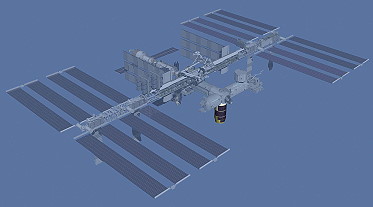
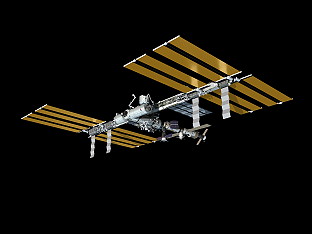
ISS Assembly
 |
 |
 |
 |
 |
 |
 |
 |
Graphics / Photos
 |
 |
 |
 |
 |
 |
 |
 |
 |
 |
 |
 |
 |
 |
 |
 |
 |
 |
more onboard photos |
|
| © |  |
Last update on December 14, 2020.  |
 |