Besatzungen der ISS

ISS: Expedition 28 |
 |
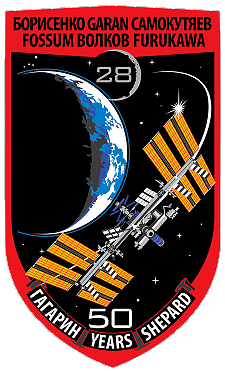 |
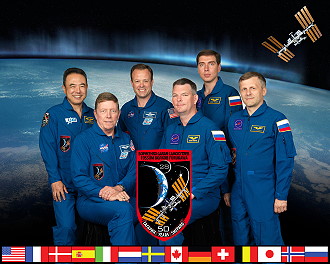 |
alternatives Crewfoto |
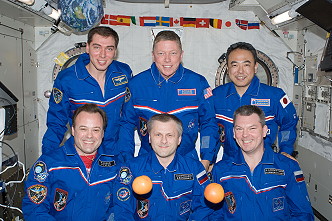
Besatzung, Start- und Landedaten
| Nr. | Nation | Name | Vorname | Position | Raumschiff (Start) |
Startdatum | Startzeit | Raumschiff (Landung) |
Landedatum | Landezeit | Flugdauer | Erdorbits |
| 1 |  |
Borissenko | Andrej Iwanowitsch | ISS-CDR | Sojus TMA-21 | 04.04.2011 | 22:18:20,115 UTC | Sojus TMA-21 | 16.09.2011 | 03:59:43,8 UTC | 164d 05h 41m 24s | 2576 |
| 2 | |
Samokutjajew | Alexander Michailowitsch | Bordingenieur-1 | Sojus TMA-21 | 04.04.2011 | 22:18:20,115 UTC | Sojus TMA-21 | 16.09.2011 | 03:59:43,8 UTC | 164d 05h 41m 24s | 2576 |
| 3 |  |
Garan | Ronald John, Jr. | Flugingenieur-3 | Sojus TMA-21 | 04.04.2011 | 22:18:20,115 UTC | Sojus TMA-21 | 16.09.2011 | 03:59:43,8 UTC | 164d 05h 41m 24s | 2576 |
| 4 | |
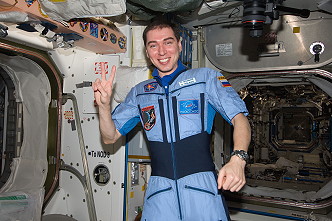
Wolkow | Sergej Alexandrowitsch | Bordingenieur-4 | Sojus TMA-02M | 07.06.2011 | 20:12:44,924 UTC | Sojus TMA-02M | 22.11.2011 | 02:24:50 UTC | 167d 06h 12m 05s | 2614 |
| 5 |  |
Furukawa | Satoshi | Flugingenieur-5 | Sojus TMA-02M | 07.06.2011 | 20:12:44,924 UTC | Sojus TMA-02M | 22.11.2011 | 02:24:50 UTC | 167d 06h 12m 05s | 2614 |
| 6 | |
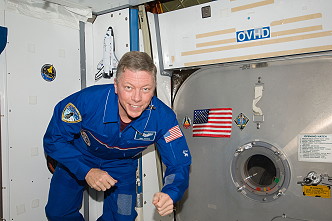
Fossum | Michael Edward | Flugingenieur-6 | Sojus TMA-02M | 07.06.2011 | 20:12:44,924 UTC | Sojus TMA-02M | 22.11.2011 | 02:24:50 UTC | 167d 06h 12m 05s | 2614 |
inoffizielle Ersatzmannschaft bzw. Double Crew
| Nr. | Nation | Name | Vorname | Position |
| 1 | |
Schkaplerow | Anton Nikolajewitsch | ISS-CDR |
| 2 | |
Iwanischin | Anatoli Alexejewitsch | Bordingenieur |
| 3 | |
Burbank | Daniel Christopher | Flugingenieur |
| 4 | |
Kononenko | Oleg Dmitrijewitsch | Bordingenieur |
| 5 | |
Pettit | Donald Roy | Flugingenieur |
| 6 |  |
Kuipers | André | Flugingenieur |
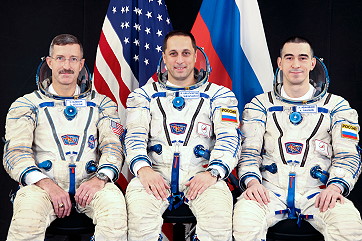 |
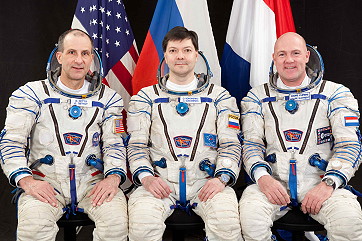 |
 |
Expeditionsverlauf
|
Start vom Kosmodrom Baikonur (Sergej
Wolkow, Michael
Fossum und Satoshi
Furukawa mit
Sojus
TMA-02M). Alexander
Samokutjajew, Andrej
Borissenko und Ronald
Garan
waren seit dem 06. April 2011 an Bord der Raumstation (Ankunft mit
Sojus
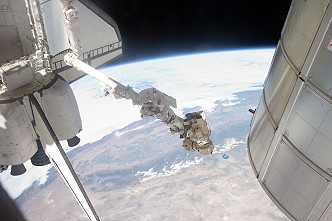
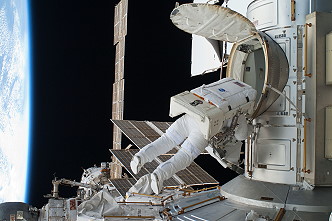
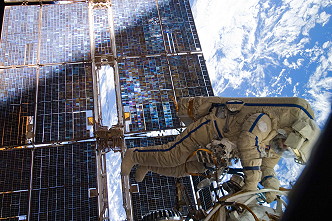
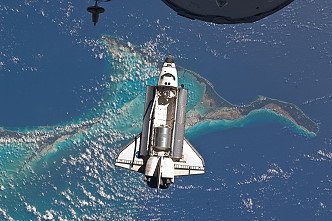
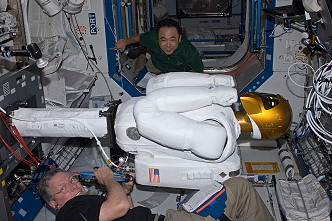
TMA-21). Die ISS Expedition 28 begann mit der Abkopplung des russischen Raumschiffs Sojus TMA-20 am 23. Mai 2011 um 21:35:17 UTC, das die vorhergehende Stationsbesatzung (Dmitri Kondratjew, Paolo Nespoli und Catherine Coleman) zurück zur Erde brachte. Am 09. Juni 2011 wurde die Besatzung der ISS mit der Ankunft von Sojus TMA-02M wieder auf sechs Personen aufgestockt. Zur Besatzung gehörten der Russe Sergej Wolkow, der Japaner Satoshi Furukawa sowie der amerikanische Astronaut Michael Fossum. Der unbemannte russische Frachter Progress M-11M legte am 23. Juni 2011 um 16:37 UTC an der Internationalen Raumstation an. Er war am 21. Juni 2011 um 14:38 UTC vom Kosmodrom Baikonur gestartet. Das Transport-Raumschiff brachte 2,5 Tonnen Fracht, darunter Lebensmittel, Kleidung, Treibstoff, Sauerstoff und persönliche Dinge zur Stammbesatzung. Am 23. August 2011 um 09:37 UTC koppelte Progress M-11M wieder ab. Der Frachter wurde kontrolliert zum Absturz gebracht und verglühte am 01. September 2011 über dem Pazifischen Ozean. Am 28. Juni 2011 entdeckte die Bodenstation ein bisher unbekanntes Stück Weltraumschrott, das der ISS gefährlich nahekam. Da die Vorwarnzeit zu kurz war, um wie üblich die Bahn der ISS zu korrigieren, begaben sich die sechs Raumfahrer zu ihrer Sicherheit in die beiden Sojus-Raumschiffe. Zuvor hatten sie die Luken zwischen den ISS-Modulen geschlossen und die ISS auf unbemannten Betrieb umgeschaltet. Nachdem das Trümmerstück in 250 Meter Entfernung an der Raumstation vorbeigezogen war, konnte die Besatzung wieder an Bord der ISS gehen. Als letztes Space Shuttle koppelte am 10. Juli 2011 STS-135 an die Internationale Raumstation an. Zu den wesentlichen Aufgaben des Fluges (ISS ULF-7 MPLM Raffaello) gehörten: Anlieferung des Raffaello Multi Purpose Logistics Module (MPLM), das mit Ausrüstungsgegenständen und Ersatzteilen zum Betrieb der Raumstation nach den Shuttle-Missionen gefüllt war; Transport des Robotic Refueling Mission (RRM), einem speziell entwickelten Experiment zum Nachbetanken von Satelliten im Orbit, selbst wenn diese dafür nicht konstruiert waren; Rücktransport einer ausgefallenen Ammoniak-Pumpe, damit die Ingenieure die Ursachen für den Ausfall ergründen können. Dies war die letzte Mission der Atlantis und des gesamten Space-Shuttle-Programms. Die Mannschaft von nur vier Personen war die kleinste seit April 1983 (STS-6). Das Multi-Purpose Logistics Module (MPLM) Raffaello, (Deutsch Mehrzwecklogistikmodul), wurde verwendet, um bei Space-Shuttle-Missionen Frachten zu und von der Internationalen Raumstation (ISS) in einem unter Luftdruck stehenden Raum zu transportieren. Das Modul wurde während des Transportes mit dem Shuttle in dessen Ladebucht befestigt. Nach dem Andocken an die ISS wurde das MPLM mit Hilfe des Roboterarmes Canadarm2 aus der Ladebucht gehoben und am Harmony-Modul angekoppelt. Anschließend wurde die Luke des Moduls geöffnet und die Astronauten erhielten Zugang zum MPLM, um es zu entladen sowie mit den zur Erde zu bringenden Frachten zu beladen. Bevor das Shuttle von der Station ablegte, wurde das Modul wieder in der Ladebucht befestigt und kehrte anschließend zusammen mit der Raumfähre zur Erde zurück. Der wesentliche Vorteil dieses Verfahrens lag darin, dass Transportgüter, insbesondere die sogenannten International Standard Payload Racks, direkt vom MPLM in den amerikanischen Teil der Station verladen werden konnten. Kopplungsadapter vom APAS-Typ russischer Bauart, die auch zum Andocken des Space Shuttles benutzt werden, haben einen wesentlich geringeren Durchmesser und lassen kein Verladen sperriger Gegenstände zu. Weiterhin ermöglichte der Einsatz des MPLM, nicht mehr benötigte Ausrüstung und beendete Experimente zurück zur Erde zu transportieren. Andere Transportschiffe wie die unbemannten Progress- und ATV-Frachter verglühen beim Wiedereintritt und transportieren daher ausschließlich Müll von der Station ab. In der Nähe der Station führte Christopher Ferguson ein spektakuläres 360°-Manöver - das Rendezvous Pitch Maneuver (RPM) - durch, wobei er die Raumfähre innerhalb weniger Minuten um ihre Querachse drehen ließ. Die Besatzung der Raumstation fertigte währenddessen hochauflösende Aufnahmen des Shuttle-Hitzeschildes an. Die Aufnahmen wurden später zur Erde übertragen und von Fachleuten ausgewertet. Mit einer direkt vor der ISS reduzierten Annäherungsgeschwindigkeit auf zuletzt nur noch 3 Zentimeter pro Sekunde flog der Orbiter auf den Ankopplungsstutzen der Internationalen Raumstation zu. Wie die Kommandanten bei allen Kopplungsmissionen steuerte er den Raumgleiter von der hinteren Konsole im Flugdeck aus, weil er von dort freie Sicht auf die Raumstation hatte. Ohne Probleme konnte er sein Raumschiff an die ISS ankoppeln. Nach den üblichen Dichtigkeitsprüfungen konnten die Luken zwischen den beiden Raumschiffen geöffnet werden und die Mannschaften von STS-135 und der ISS Expedition 28 hatten Gelegenheit für eine kurze Begrüßungszeremonie. Am vierten Flugtag holten Pilot Douglas Hurley und Missionsspezialistin Sandra Magnus von der Cupola der Internationalen Raumstation mit Hilfe des Greifarms Canadarm2 das Raffaello Multi-Purpose Logistics Module aus der Ladebucht der Atlantis. Sie befestigten es auf der erdzugewandten Seite des Harmony-Moduls der Raumstation. Das 6,4 Meter lange und 4,6 Meter im Durchmesser betragende Raffaello war vollgepackt mit 4.265 kg Ersatzteilen und Ausrüstungsgegenständen - einschließlich 1.214 kg Lebensmittel. Damit war der weitere Betrieb der Raumstation für ein Jahr gesichert. Raffaello transportierte acht Resupply Stowage Platforms (RSPs), zwei Intermediate Stowage Platforms (ISPs), sechs Resupply Stowage Racks (RSRs) und ein Zero Stowage Rack. Während der Kopplung von STS-135 mit der ISS unternahmen die Crewmitglieder der ISS Expedition 28, Michael Fossum und Ronald Garan, am 12. Juli 2011 (6h 31m) einen Außenbordeinsatz. Dabei erfolgte der Transport einer defekten Ammoniak-Pumpe in die Ladebucht des Space Shuttle, der Transfer des Experimentes Robotic Refueling Mission (RRM) zur Raumstation und die Befestigung an der Plattform ELC-2 für Langzeit-Untersuchungen. Am 19. Juli 2011 koppelte die Atlantis-Besatzung mittels Federkraft wieder von der ISS ab. Dadurch werden Beschädigungen oder Verunreinigungen der Station vermieden. Erst danach wurden die Steuerungstriebwerke aktiviert und die Raumfähre entfernte sich von ihr bis zu einer Distanz von etwa 150 Meter. Von dort aus umflog Douglas Hurley die Orbitalstation eineinhalb Mal, ehe die Triebwerke der Atlantis erneut gezündet wurden und der Raumgleiter seine Distanz vergrößerte. Der Orbiter stoppte dann in einer Entfernung von etwa 75 Kilometer. Mit Hilfe des OBSS wurde eine letzte Überprüfung des Hitzeschutzschildes vorgenommen. Im Notfall hätte das Space Shuttle zur Internationalen Raumstation zurückkehren können. Im Gegensatz zu anderen Shuttle-Flügen wurde bei dieser Mission keine weitere Raumfähre für einen möglichen Rettungsflug bereitgehalten. Für den Fall, dass eine Havarie der Atlantis eine sichere Rückkehr zur Erde unmöglich gemacht hätte, wäre die Besatzung der STS-135 vorläufig an Bord der ISS geblieben und im Laufe der folgenden Monate mit Sojus-Raumschiffen zur Erde zurückgebracht worden. Für die Auswahl der Atlantis-Besatzung bedeutete dies, dass sie auch die strengeren Anforderungen für Sojus-TMA-Missionen erfüllen musste, so wurden für sie Sokol-Raumanzüge und Sojus-Konturensitze maßgefertigt. In der Folge wären zwei Sojus-Raumschiffe mit jeweils einem, sowie eins mit zwei freien Plätzen zur ISS gestartet. Die Besatzung von STS-135 wäre dann mit Sojus TMA-21 (Rex Walheim), Sojus TMA-02M (Christopher Ferguson), Sojus TMA-03M (Sandra Magnus) und Sojus TMA-04M (Douglas Hurley) zur Erde zurückgekehrt, sodass die vollständige Rückkehr der Besatzung bis Juni 2012 gedauert hätte. Eine zweite EVA durch Sergej Wolkow und Alexander Samokutajew erfolgte am 03. August 2011 (6h 23m). Dabei wurde ein kleiner Transportkran versetzt. Außerdem standen die Installation eines Kommunikationsterminals und der Abbau sowie die Inspektion von Antennen auf dem Plan. Zu den weiteren Aufgaben gehörte die Installation eines materialwissenschaftlichen Experiments und das Aussetzen eines Mikro-Satelliten. Für den 26. August 2011 war die Ankunft des unbemannten russischen Frachters Progress M-12M vorgesehen. Progress M-12M hatte 2.670 Kilogramm Fracht für die Internationale Raumstation geladen. Darunter befanden sich 420 Kilogramm Wasser, 50 Kilogramm Sauerstoff und 996 Kilogramm Treibstoff. Etwa 325 Sekunden nach dem Start am 24. August 2011 um 13:00:11 UTC trat in einem der Triebwerke der Sojus-U-Rakete eine Fehlfunktion auf. Der Onboard-Computer brach den weiteren Flug ab und die Rakete mit dem Frachter stürzte in der Altai-Region ab. Es war der erste Fehlstart eines Progress-Frachters seit dem Erstflug im Jahr 1978. Nach der Übergabe des Kommandos über die Internationale Raumstation von dem russischen Kosmonauten Andrej Borissenko an den amerikanischen Astronauten Michael Fossum legte das Raumschiff Sojus TMA-21 am 16. September 2011 um 00:38:12 UTC mit Alexander Samokutjajew, Andrej Borissenko und Ronald Garan an Bord von der Station ab. Die Expedition 28 der ISS war damit beendet und es begann die ISS Expedition 29. Während ihres Aufenthaltes an Bord der ISS führten die Crews der Expeditionen 27 / 28 folgende wissenschaftliche Experimente durch (vollständige Auflistung): 3D-Space (Mental Representation of Spatial Cues During Space Flight), ALTEA-Dosi (Anomalous Long Term Effects in Astronauts' - Dosimetry), ALTEA-Shield (Anomalous Long Term Effects in Astronauts' Central Nervous System - Shield), AMS-02 (Alpha Magnetic Spectrometer - 02), BCAT-3-4-CP (Binary Colloidal Alloy Test - 3 and 4: Critical Point), BCAT-5-3D-Melt (Binary Colloidal Alloy Test - 5: Three-Dimensional Melt), BCAT-5-PhaseSep (Binary Colloidal Alloy Test-5: Phase Separation), BCAT-5-Seeded Growth (Binary Colloidal Alloy Test - 5: Seeded Growth), BCAT-6-Colloidal Disks (Binary Colloidal Alloy Test - 6 - Colloidal Disks), BCAT-6-Phase Separation (Binary Colloidal Alloy Test - 6 - Phase Separation), BCAT-6-PS-DNA (Binary Colloidal Alloy Test - 6: Polystyrene - Deoxyribonucleic Acid), BCAT-6-Seeded Growth (Binary Colloidal Alloy Test - 6: Seeded Growth), BIOKIS (BIOKon In Space), Biological Rhythms (The Effect of Long-term Microgravity Exposure on Cardiac Autonomic Function by Analyzing 24-hours Electrocardiogram), Biorisk (Influence of Factors of the Space Environment on the Condition of the System of Microorganisms-Hosts Relating to the Problem of Environmental Safety of Flight Techniques and Planetary Quarantine), Bisphosphonates (Bisphosphonates as a Countermeasure to Space Flight Induced Bone Loss), BRIC-SyNRGE (Biological Research in Canisters Symbiotic Nodulation in a Reduced Gravity Environment), Card (Long Term Microgravity: A Model for Investigating Mechanisms of Heart Disease with New Portable Equipment), CBTM-3-Sclerostin Antibody (Commercial Biomedical Testing Module-3: Assessment of sclerostin antibody as a novel bone forming agent for prevention of spaceflight-induced skeletal fragility in mice), CBTM-3-Vascular Atrophy (Commercial Biomedical Testing Module-3: STS-135 space flight's affects on vascular atrophy in the hind limbs of mice), CCF (Capillary Channel Flow), CEO (Crew Earth Observations), CFE-2 (Capillary Flow Experiment - 2), CFS-A (Growth and Survival of Colored Fungi in Space), CSA Comm and Outreach (Canadian Space Agency Communication and Outreach), CSI-05 (Commercial Generic Bioprocessing Apparatus Science Insert - 05: Spiders, Fruit Flies and Directional Plant Growth), CsPINs (Dynamism of Auxin Efflux Facilitators, CsPINs, Responsible for Gravity-regulated Growth and Development in Cucumber), CVB (Constrained Vapor Bubble), DECLIC-ALI (DEvice for the study of Critical LIquids and Crystallization - Alice Like Insert), DECLIC-DSI (DEvice for the study of Critical LIquids and Crystallization - Directional Solidification Insert), DOSIS-DOBIES (Dose Distribution Inside ISS - Dosimetry for Biological Experiments in Space), DTN (Disruption Tolerant Networking for Space Operations), EarthKAM (Earth Knowledge Acquired by Middle School Students), EKE (Assessment of Endurance Capacity by Gas Exchange and Heart Rate Kinetics During Physical Training), Ekon (Experimental Survey on Evaluating the Possibility of Using th Russian Segment of ISS for Environmental Inspection of Work Areas of Various Facilities (Features)), EPO-Demos (Education Payload Operation - Demonstrations), ERB-2 (Erasmus Recording Binocular - 2), ESA-EPO (European Space Agency - Education Payload Operations), FLEX-2 (Flame Extinguishment Experiment - 2), FOB (Forward Osmosis Bag), Functional Task Test (Physiological Factors Contributing to Changes in Postflight Functional Performance), Geoflow-2 (Simulation of Geophysical Fluid Flow Under Microgravity - 2), Hair (Biomedical Analyses of Human Hair Exposed to a Long-term Space Flight), HiMassSEE (Spacecraft Single Event Environments at High Shielding Mass), HREP-HICO (HICO and RAIDS Experiment Payload - Hyperspectral Imager for the Coastal Ocean), HREP-RAIDS (HICO and RAIDS Experiment Payload - Remote Atmospheric and Ionospheric Detection System (RAIDS)), Hypersole (Cutaneous Hypersensitivity and Balance Control in Humans), I-APE (Italian-Astronaut Personal Eye), I-ENOS (Italian-Electronic NOse for Space exploration), I-FOAM (Italian-Foam), Immuno (Neuroendocrine and Immune Responses in Humans During and After Long Term Stay at ISS), InSPACE-3 (Investigating the Structure of Paramagnetic Aggregates from Colloidal Emulsions - 3), Integrated Cardiovascular (Cardiac Atrophy and Diastolic Dysfunction During and After Long Duration Spaceflight: Functional Consequences for Orthostatic Intolerance, Exercise Capability and Risk for Cardiac Arrhythmias), Integrated mmune (Validation of Procedures for Monitoring Crewmember Immune Function), Integrated Immune-SDBI (Validation of Procedures for Monitoring Crewmember Immune Function - Short Duration Biological Investigation), ISSAC (International Space Station Agricultural Camera), ISS Ham Radio (International Space Station Ham Radio), JAXA EPO 6 (Japan Aerospace Exploration Agency Education Payload Observation 6), JAXA EPO 7 (Japan Aerospace Exploration Agency Education Payload Observation 7), JAXA PCG (Japan Aerospace Exploration Agency Protein Crystal Growth), Kids In Micro-g-2 (Kids In Microgravity-2 (2010-2011)), Kristallizator (Crystalization of Biological Macromolecules and Generation of Biocrystal Film in the Conditions of Microgravity), Lactolen (Influence of Factors of Space Flight on Lactolen Producer Strains), LEGO Bricks (LEGO® Bricks, formerly known as NLO-Education-2), Marangoni-Exp (Chaos, Turbulence and its Transition Process in Marangoni Convection-Exp), MAUI (Maui Analysis of Upper Atmospheric Injections), MAXI (Monitor of All-sky X-ray Image), Micro-2A (Microbial biofilm formation during space flight), Micro-4 (Genotypic and Phenotypic Changes in Yeast Related to Selective Growth Pressures Unique to Microgravity), MISSE-7 (Materials International Space Station Experiment - 7), MISSE-8 (Materials International Space Station Experiment - 8), MSL-CETSOL and MICAST (Materials Science Laboratory - Columnar-to-Equiaxed Transition in Solidification Processing and Microstructure Formation in Casting of Technical Alloys under Diffusive and Magnetically Controlled Convective Conditions), NanoRacks-CubeLabs Module-7 (NanoRacks-CubeLabs Module-7), NanoRacks-CubeLabs Module-8 (NanoRacks-CubeLabs_Module-8), NanoRacks-NCESSE-2 (NanoRacks-National Center for Earth and Space Science Education -2), Night Vision (Eyespots and Macular Pigments Extracted from Algal Organisms Immobilized in Organic Matrix with the Purpose to Protect Astronaut's Retina), NLP-Cells-6 (National Laboratory Pathfinder - Cells - 6: Jatropha - 3), NLP-Vaccine-Salmonella (National Laboratory Pathfinder - Vaccine - Salmonella), Nutrition (Nutritional Status Assessment), OChB (Influence of Factors of Space Flight on Superoxide Strain Producer), Otolith (Otolith Assessment During Postflight Re-adaptation), PACE-2 (Preliminary Advanced Colloids Experiment - 2: 3D Particle Test), PACE-LMM-Bio (Preliminary Advanced Colloids Experiment - Light Microscopy Module: Biological Samples), Passages (Scaling Body-Related Actions in the Absence of Gravity), Photosynth (Photosynth™ Three-Dimensional Modeling of ISS Interior and Exterior), Plant Signaling (Plant Signaling (formerly known as Seed Growth-1)), Plasma Crystal (Dusty and Liquid Plasma Crystals in Conditions of Microgravity), Pneumocard (Examination of the Influencing Factors of Space Flight on Autonomic Regulation of Blood Circulation, Respiration and Cardiac Contractile Function in Long Duration Space Flight), Poligen (Revealing Genotypical Characteristics, Defining Individual Differences in Resistance of Biological Oranisms to Factors of Long Duration Space Flight), Pro K (Dietary Intake Can Predict and Protect Against Changes in Bone Metabolism during Spaceflight and Recovery, PSSC (Pico-Satellite Solar Cell Experiment), RAMBO-2 (Ram Burn Observations - 2), Rastenia (Growth and Development of Higher Plants through Multiple Generations), RASV (Recombinant Attenuated Salmonella Vaccine), Reaction Self Test (Psychomotor Vigilance Self Test on the International Space Station), REBR (ReEntry Breakup Recorder), Relaksatia (Processes of Relaxation in the Ultraviolet Band Spectrum by High Velocity Interaction of Exhaust Products on ISS), Repository (National Aeronautics and Space Administration Biological Specimen Repository), Robonaut (Robonaut), RRM (Robotic Refueling Mission), Rusalka (Development of Methods to Determine the Carbon Dioxide and Methane (Greehouse Gases) Content in the Earths Atmosphere from On-Board ISS), SEDA-AP (Space Environment Data Acquisition Equipment - Attached Payload), SEITE (Shuttle Exhaust Ion Turbulence Experiments), SIMPLEX (Shuttle Ionospheric Modification with Pulsed Localized Exhaust Experiments), Sleep-Short (Sleep-Wake Actigraphy and Light Exposure During Spaceflight-Short), SLICE (Structure and Liftoff In Combustion Experiment), SMILES (Superconducting Submillimeter-Wave Limb-Emission Sounder), SNFM (Serial Network Flow Monitor), Solar-SOLACES (Sun Monitoring on the External Payload Facility of Columbus - SOLar Auto-Calibrating EUV/UV Spectrophotometers), Solar-SOLSPEC (Sun Monitoring on the External Payload Facility of Columbus -Sun Monitoring on the External Payload Facility of Columbus -SOLar SPECtral Irradiance Measurements), SOLO (SOdium LOading in Microgravity), SpaceDRUMS (Space Dynamically Responding Ultrasonic Matrix System), SPHERES (Synchronized Position Hold, Engage, Reorient, Experimental Satellites), Spinal Elongation (Spinal Elongation and its Effects on Seated Height in a Microgravity Environment), Sprint (Integrated Resistance and Aerobic Training Study), STL-MRMC (High Throughput Pan-omic Approaches to Study the Effect of Microgravity on Responses of Skin Endothelial Cells to Insult ), STL-Regeneration-Keratinocytes (Space Tissue Loss - The Effects Microgravity on Stem Cell-Based Tissue Regeneration: Keratinocyte Differentiation in Wound Healing), STL-TATRC2 (Examination of the effects of microgravity on the trophic capability of stromal vascular fraction cells from lipoaspirated human adipose tissue ), STP-H3-Canary (Space Test Program - Houston 3 - Canary), STP-H3-DISC (Space Test Program - Houston 3 - Digital Imaging Star Camera), STP-H3-MHTEX (Space Test Program - Houston 3 - Massive Heat Transfer Experiment), STP-H3-VADER (Space Test Program - Houston 3 - Variable emissivity radiator Aerogel insulation blanket Dual zone thermal control Experiment suite for Responsive space), Thermolab (Thermoregulation in Humans During Long-Term Spaceflight), Tipologia (Study of the Typological Characteristis of ISS Crew Operators Activity at the Stages of Long Term Space Flight), Tomatosphere-III (Tomatosphere-III), Treadmill Kinematics (Biomechanical Analysis of Treadmill Exercise on the International Space Station), Tropi (Analysis of a Novel Sensory Mechanism in Root Phototropism), Uragan (Hurricane: Experimental Development of Groundbased System of Monitoring and Predicting the Progression of a Naturally Occurring Technogenic Catastrophe), Vascular (Cardiovascular Health Consequences of Long-Duration Space Flight), VCAM (Vehicle Cabin Atmosphere Monitor), Vessel ID System (Vessel ID System), VIABLE ISS (eValuatIon And monitoring of microBiofiLms insidE International Space Station), VO2max (Evaluation of Maximal Oxygen Uptake and Submaximal Estimates of VO2max Before, During, and After Long Duration International Space Station Missions), Vsplesk (Burst: Monitoring of Seismic Effects - Bursts of High Energy Particles in Low Earth Space Region (Orbit)), Vzaimodeystviye (Interactions: Monitoring of Space Crew Interactions During Extended Space Flight), Zag (Ambiguous Tilt and Translation Motion Cues After Space Flight), Zhenshen-2 (Study of the Development of Cell Cultures to Evaluate the Possibily of Increasing Biological Activity). |
EVA-Daten
| Name | Beginn | Ende | Dauer | Mission | Schleuse | Anzug | Streifen | |
| EVA | Fossum, Michael | 12.07.2011, 13:22 UTC | 12.07.2011, 19:53 UTC | 6h 31m | STS-135 | ISS - Quest | EMU Nr. 3010 | rot |
| EVA | Garan, Ronald | 12.07.2011, 13:22 UTC | 12.07.2011, 19:53 UTC | 6h 31m | STS-135 | ISS - Quest | EMU Nr. 3009 | ohne |
| EVA | Samokutjajew, Alexander | 03.08.2011, 14:5? UTC | 03.08.2011, 21:1? UTC | 6h 23m | ISS-28 | ISS - Pirs | Orlan-MK Nr. 6 | blau |
| EVA | Wolkow, Sergej | 03.08.2011, 14:5? UTC | 03.08.2011, 21:1? UTC | 6h 23m | ISS-28 | ISS - Pirs | Orlan-MK Nr. 4 | blau |
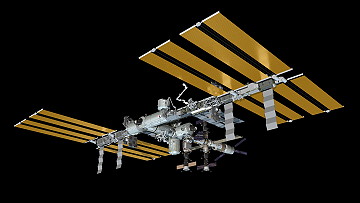
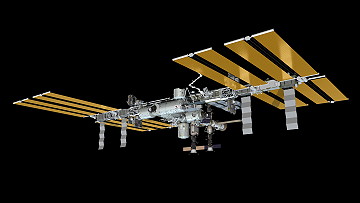
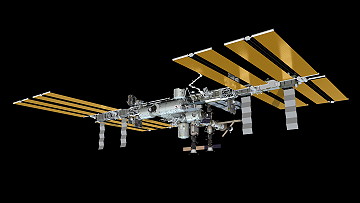
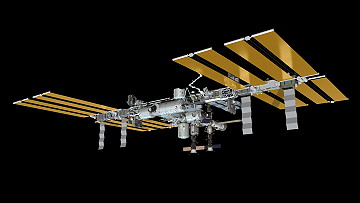
Aufbau der ISS
 |
 |
 |
 |
Fotos
 |
 |
 |
 |
 |
 |
 |
 |
 |
 |
 |
 |
mehr Fotos Erdbeobachtung |
|
mehr EVA-Fotos |
|
mehr Fotos von Bord der ISS |
|
| © |  |
Letztes Update am 10. November 2023.  |
 |