Human Orbital Spaceflights

International Flight No. 168STS-65Columbia (17)63rd Space Shuttle missionUSA |
 |
 |
 |
 |
|
 |
||
Launch, orbit and landing data
walkout photo |
 |
||||||||||||||||||||||||||||
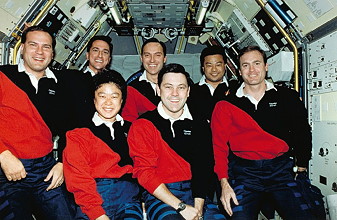
alternative crew photo |
Crew
| No. | Surname | Given names | Position | Flight No. | Duration | Orbits | |
| 1 |  |
Cabana | Robert Donald | CDR | 3 | 14d 17h 54m 59s | 235 |
| 2 | |
Halsell | James Donald, Jr. | PLT | 1 | 14d 17h 54m 59s | 235 |
| 3 | |
Hieb | Richard James | MS-1, PLC | 3 | 14d 17h 54m 59s | 235 |
| 4 | |
Walz | Carl Erwin | MS-2, IV-1, FE | 2 | 14d 17h 54m 59s | 235 |
| 5 | |
Chiao | Leroy | MS-3, EV-1 | 1 | 14d 17h 54m 59s | 235 |
| 6 | |
Thomas | Donald Alan | MS-4, EV-2 | 1 | 14d 17h 54m 59s | 235 |
| 7 |  |
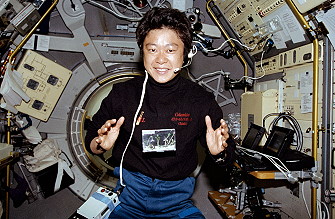
Mukai | Chiaki | PS-1 | 1 | 14d 17h 54m 59s | 235 |
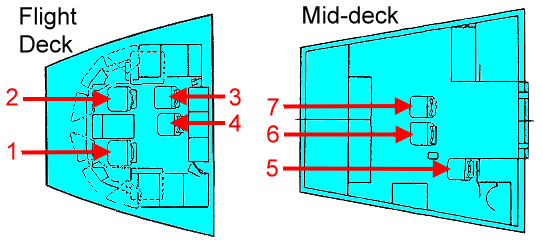
Crew seating arrangement
|
 |
|
||||||||||||||||||||||||||||||||
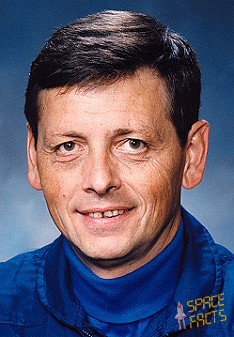
Backup Crew
|
 |
||||||||||

Hardware
| Orbiter : | OV-102 (17.) |
| SSME (1 / 2 / 3): | 2019 (14.) / 2030 (9.) / 2017 (10.) |
| SRB: | BI-066 / RSRM 39KM |
| ET: | ET-64 (LWT-57) |
| OMS Pod: | Left Pod 05 (6.) / Right Pod 05 (6.) |
| FWD RCS Pod: | FRC 2 (17.) |
| RMS: | - |
| EMU: | EMU No. 2026 (PLSS No. 1013) / EMU No. 2033 (PLSS No. 1005) |
Flight
|
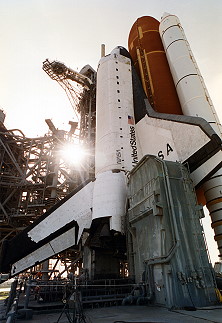
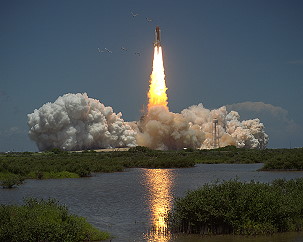
Launch from Cape Canaveral (KSC) and
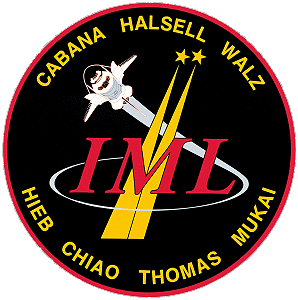
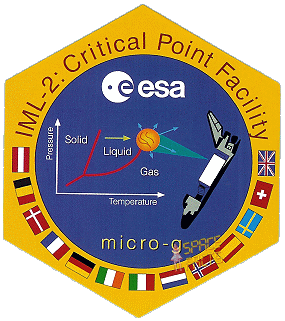
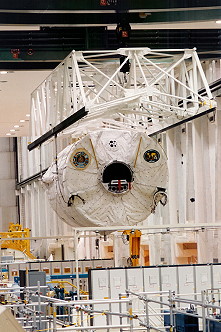
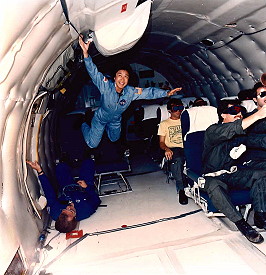
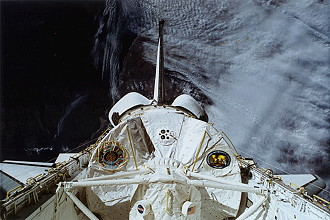
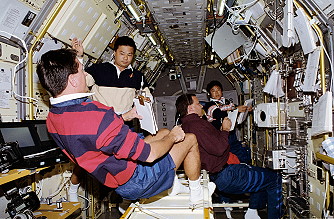
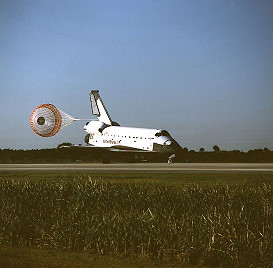
landing on Cape Canaveral (KSC), Runway 33. STS-65 carried the mission "International Microgravity Laboratory" (IML-2) into orbit. IML-2 was an international mission. Scientists from the European Space Agency (ESA), Canada, France, Germany and Japan were all collaborating with NASA on the IML-2 mission to provide the worldwide science community with a variety of complementary facilities and experiments. These facilities and experiments were mounted in twenty 19" racks in the IML 2 Module. Research on IML-2 was dedicated to microgravity and life sciences. Microgravity science covers a broad range of activities from understanding the fundamental physics involved in material behavior to using those effects to generate materials that cannot otherwise be made in the gravitational environment of the Earth. In life sciences research, a reduction of gravitation's effect allows certain characteristics of cells and organisms to be studied in isolation. These reduced gravitational effects also pose poorly understood occupational health problems for space crews ranging from space adaptation syndrome to long-term hormonal changes. On IML-2, the microgravity science and life sciences experiments were complementary in their use of SL resources. Microgravity science tends to draw heavily on spacecraft power while life sciences places the greatest demand on crew time. The crew was divided in two 12-hour-shifts. The Red Shift consisted of Robert Cabana, James Halsell, Richard Hieb and Chiaki Mukai. Members of the Blue Shift were Leroy Chiao, Donald Thomas and Carl Walz. The IML-2 payload consisted of more than 80 experiments in microgravity and life sciences, including five life science experiments developed by American researchers. Of these, Ames Research Center sponsored two experiments using newts and jellyfish. At least two of the four adult newts died on the voyage. Kennedy Space Center (KSC) sponsored the PEMBSIS experiment, designed to study plant embryogenesis in microgravity. An international crew conducted these experiments inside Spacelab, a versatile research laboratory which fitted in the Space Shuttle cargo bay. It was an appropriate place for multi-national research, since Spacelab was developed by the ESA in the late 1970s and early 1980s as its contribution to the American Space Shuttle Program. IML-2 used the pressurized Spacelab module. With its extra work area, power supplies, data management capability and versatile equipment racks, scientists in space can work much as they would in their laboratories on Earth. MATERIALS SCIENCE: NASDA's Large Isothermal Furnace melts and uniformly mixes compounds, then cools them to produce a solid sample. The Electromagnetic Containerless Processing Facility from Germany positions metal alloys so they do not touch container walls and melts them in an ultra-pure environment. The facility records information on the alloys as they solidify. FLUID SCIENCE: The European Space Agency's Bubble, Drop and Particle Unit contains special optical diagnostics, cameras and sensors for studying fluid behavior in microgravity. Their Critical Point Facility, which flew on IML-1, investigates fluids as they undergo critical phase transitions from liquids to gases. MICROGRAVITY ENVIRONMENT AND COUNTERMEASURE: NASA's Space Acceleration Measurement System, on its tenth flight, will be joined on IML-2 by the German Space Agency's Quasi-Steady Acceleration Measurement experiment. Together, they will give scientists the most complete picture yet of the subtle motions which can disturb sensitive microgravity experiments. Japan's Vibration Isolation Box Experiment System will test a special material designed to reduce the effect of those accelerations. BIOPROCESSING: ESA's Advanced Protein Crystallization Facility will provide a versatile environment for growing a variety of protein crystals using three different techniques. A video recording device will allow scientists to study the crystal growth process after the mission. Two experiment facilities, Applied Research on Separation Methods Using Space Electrophoresis from France and the Free Flow Electrophoresis Unit from Japan, will use electric fields to separate biological materials into their individual components. The process is widely used on Earth to produce ultra-pure products for pharmaceutical drugs. SPACE BIOLOGY: Two space biology facilities from the 1992 Japanese Spacelab-J mission will fly on IML-2. Scientists will study the spawning, fertilization, embryology and behavior of newts and fish housed in the Aquatic Animal Experiment Unit. The Thermoelectric Incubator/Cell Culture Kit will accommodate the study of plant and animal cells. IML-2 will be the third flight for the European Space Agency's Biorack, which supports investigations into the effects of microgravity and cosmic radiation on cells, tissues, plants, bacteria, small animals and other biological samples. The Slow Rotating Centrifuge Microscope from Germany contains equipment for observing the movement and behavior of one-celled and multi-cellular organisms at various gravity levels. Materials scientists will take advantage of its capabilities to observe the solidification of a transparent model alloy as well. HUMAN PHYSIOLOGY: Canada's Spinal Changes in Microgravity experiment, an expanded version of an IML-1 investigation, will use stereophotographs and special ultrasound and monitoring equipment to record changes in crew members' spinal and neurosensory systems. NASA's Extended Duration Orbiter Medical Project will continue investigations designed to maintain and evaluate crew health and safety on long-duration Shuttle flights. The crew will use the Performance Assessment Workstation, a laptop computer, to help determine their mental ability to perform operational tasks during long-duration missions. RADIATION BIOLOGY: Germany's Biostack, a veteran of three Spacelab missions, sandwiches biological specimens between radiation detectors in a sealed container to determine how cosmic radiation affects them. Japan's Real-Time Radiation Monitoring Device will test methods which may be used for space radiation forecasting aboard future spacecraft. The Large Isothermal Furnace uniformly heated large materials samples in a vacuum, then cooled them rapidly to determine the relationships between the structure, processing and properties of materials. On IML-2, scientists solidified five samples under various temperature conditions, studying ceramic/metallic composites, semiconductor alloys, and liquid phase sintering. Sintering is a process for combining dissimilar metals, using heat and pressure to join them without reaching the melting point of one or both metals. In order to create lighter, stronger or more temperature-resistant materials, metallurgists often combine two or more different metals into an alloy which has more desirable qualities than each of its ingredients. Or they may combine dissimilar substances such as metals and ceramics to produce structural materials that are stronger and lighter than conventional metals. The facility was a resistance-heated vacuum furnace designed to uniformly heat large samples. It had a maximum operating temperature of about 2,900 degrees Fahrenheit (1,600 °C) and could rapidly cool a sample by admitting helium gas into the heating chamber. The furnace consisted of a sample container and heating element, surrounded by a vacuum chamber. A crew member inserted a sample cartridge through an access port in the front of the facility. A screw-type connector secured the sample in the furnace. Air within the chamber was evacuated through the Spacelab vent system. Tiegelfreies Elektromagnetisches Prozessieren UnterSchwerelosigkeit (TEMPUS): To study the solidification of materials from the liquid state, a subject of immense scientific and practical interest. Not only are solidification phenomena important to science, but many industrial processes involving solidification. On Earth, liquids generally must be held in containers, which can affect the liquid's properties. For example, a container determines a liquid's shape, and contact with the container walls can diminish the purity of the metal sample. In microgravity, samples can be processed in a containerless facility, which avoids contact with any surface. The Electromagnetic Containerless Processing Facility, known as TEMPUS, was a levitation melting facility for containerless processing of metallic samples in an ultraclean microgravity environment. It was developed by the German Space Agency. In the absence of a container, most pure molten metals can be cooled to below their solidification point and still remain fluid. Crystalline solidification begins when small, isolated clusters of atoms arrange in a regular, repeating form. This process is known as nucleation, and the clusters are called nuclei. Atoms fall into place on these clusters causing the sites to grow until the entire mass becomes solid. The Free-Flow Electrophoresis Unit was being used to study whether space-based electrophoresis will improve the purity of certain biological materials which are normally difficult to separate on Earth. Electrophoresis is a process that separates biological materials into individual components using electric fields. The method is widely used with gel matrix in the DNA sequence analysis and clinical diagnosis. Widely used Earth-based electrophoresis is run in a gel matrix providing better separation, but limited for only small molecules. Matrix free free-flow electrophoresis, however, tends to remix the components during separation. Gravity-induced fluid movements such as convection (fluid flows caused by density differences) and sedimentation (settling of heavier components) tend to remix the components during separation. This prevents the production of suitable quantities of very pure substances. In space, however, with gravity no longer a dominant factor, these effects are minimal. In space, other physical processes affecting the separation of molecules, which are masked by gravity on Earth, become more apparent. Scientists are interested in how these effects might influence future space-based electrophoresis. They also can use what they learn to better understand electrophoresis processes on Earth. The Free Flow Electrophoresis Unit separated and analyzed the distribution of materials in a solution, using a method called continuous-flow electrophoresis. In this method, material to be separated was placed into a moving stream of buffer solution. As the material passed through an electric field, the components separated into individual streams within the solution. The constant flow of material allowed processing of large quantities of product. Aquatic Animal Experiment Unit (AAEU): The facility provided an environment supporting studies of live fish and small amphibians under microgravity conditions. It permits observations of spawning, fertilization, embryonic stages, vestibular functioning and behavior in microgravity. This aquarium consisted of two independent life-support systems, called fish and aquarium packages. Small fish and amphibians, such as newts, live in four cassette-type aquariums, and there is a larger tank designed for fish. A special life-support system supplies oxygen, removes carbon dioxide and waste (such as ammonia and organic substances), and regulates the temperature as desired, between 59 and 77 degrees Fahrenheit (15 to 25 degrees C). The crew can view the animals through a window and access them by means of a port in each enclosure. The AAEU was flown successfully on the Spacelab-J mission (STS-47), in a slightly different configuration. It was referred to as the vestibular function unit, and supported studies with carp. Applied Research on Separation Methods Using Space Electrophoresis Recherche Appliquee sur les Methodes de Separation en Electrophorese Spatiale (RAMSES): Scientists conducted experiments using RAMSES to better understand the basic mechanisms that govern electrophoresis and assess gravity's impact on the process. Separating and collecting ultra-pure components of biological substances is an area of research with great importance to the pharmaceutical industry. Electrophoresis is a process for separating biological materials into individual components using an electrical field. These purified materials can then be used for other processes, such as growing crystals. This technology has been adapted for use in microgravity in the RAMSES electrophoresis unit. RAMSES is the French acronym for Applied Research on Separation Methods using Space Electrophoresis. This multi-user facility was developed by the French Space Agency in conjunction with European industrial partners. RAMSES was a continuous flow electrophoresis unit, meaning the biological sample to be purified is continuously injected into a carrier solution flowing up the length of a transparent separation chamber. An adjustable electric field is applied across the flow, causing the differently charged components to diverge into a wide beam consisting of separate streams. The separated streams of molecules pass through 40 outlets into collection tubes. A light absorption instrument, called a photometer, monitors the process. When it detects a significant concentration of biological material in the outlet flow, crew members will recover those collection tubes which, after storage in a refrigerator, will be returned for analysis. Otherwise the flow is diverted to a waste tank. Advanced Protein Crystallization Facility (APCF) research had two objectives: to provide difficult-to-produce, biologically important protein crystals for analysis, and to determine the physical mechanisms that govern protein crystal growth. It is the first space facility ever designed to use three different protein crystal growth techniques. Subtle aspects of fluid physics, normally hidden by the effects of Earth's gravity, were investigated in microgravity with the Bubble, Drop and Particle Unit, developed by the European Space Agency. Researchers studied fluid behaviors and interactions such as bubble growth, evaporation, condensation, thermocapillary flows (fluid motions generated by temperature differences along the surfaces of liquids). Such phenomena are difficult to observe on Earth because their effects are masked by gravity-induced fluid movements. Our intuitive expectations of how fluids (liquids or gases) normally behave are based on their actions under the influence of gravity. For example, hot air rises because it is less dense than cooler air, and gravity's pull similarly induces convection - flows within a fluid caused by density differences. Muddy water will clear when left standing because gravity also causes sedimentation (the separation and settling of heavier elements from lighter ones) of soil particles suspended within the water. In a microgravity environment, such gravity-driven convective flows are minimized, and other more subtle fluid movements, such as thermocapillary flows, can be observed. The flows become the main mechanism of heat transfer within fluids. Suspended particles, bubbles and liquid drops behave differently in microgravity. For example, drops of liquid become spherical, instead of teardrop, as their shape becomes dominated by surface tension effects instead of gravity. Several experiments were able to measure and visually record special fluid properties at their "critical point" with the Critical Point Facility, developed by the European Space Agency. At the critical point, a fluid is neither a gas nor a liquid, it is both; more precisely, the material fluctuates back and forth in small volumes from one state to another so that the state of the total volume is indistinguishable. Scientists have been unable to study this interesting behavior closely in normal gravity. In Earth's gravity, critical point experiments are difficult to perform due to the fluid being very compressible. Most of the sample cannot be maintained at the critical density because the fluid's own weight compresses part of the sample to a density greater than the critical density. The most critical region literally collapses under the weight of the fluid. The facility was a multi-user system capable of accommodating the experiments of several researchers sequentially in any one mission. Interchangeable thermostats for controlling the temperature of an experimental sample were inserted in the facility, where they were surrounded by an optical diagnostics system to monitor the phenomena of interest. The Vibration Isolation Box Experiment investigated the effects of so-called "g-jitter", disturbances caused by crew movement and experiment equipment operations in space laboratories such as Spacelab. The information will be useful for experiment systems sensitive to the quality of the microgravity environment. The experiment tested the effectiveness of a box designed to isolate sensitive experiments from vibrations caused by g-jitter. The Vibration Isolation Box Experiment System supported two experiments to study how g-jitter affects natural fluid flows, diffusion and thermally driven fluid flows under microgravity. Both experiments were performed with and without a damping system, to see how well the isolation box counteracts the effects of g-jitter on sensitive microgravity experiments. The Space Acceleration Measurement System (SAMS) instrument monitored and recorded higher-frequency onboard accelerations and vibrations experienced in the Spacelab module during flight. After the mission, scientists for IML-2 microgravity investigations compared these records with their own data to identify accelerations which may have influenced their experiments. Three remote sensor heads, each measuring motion in three dimensions, were located near selected experiments within the Spacelab module. They measured accelerations as small as one-millionth of Earth's gravity. The signals were transmitted via cable links to a central control unit in the center aisle of the module, where they were amplified, filtered and converted to digital data for storage on optical disks. Each disk could store up to 400 million bytes of data. The Quasi-Steady Acceleration Measurement (QSAM) experiment was primarily designed to detect steady, very low-frequency, residual accelerations between 0 and 0.02 Hertz. These disturbances to the Spacelab microgravity environment include tidal accelerations caused by variations in Earth's gravitational field, atmospheric drag, and the slow rotation of the orbiter necessary to maintain its orientation toward the Earth. This experiment, along with the Space Acceleration Measurement System, provided the IML-2 mission with the most effective acceleration measurement systems. Biostack was part of a multinational program to determine the impact of high atomic number, high-energy cosmic radiation particles on life in space. It used radiation detectors enclosed between a variety of biological specimens to monitor particles entering the Spacelab module. The specimens were studied post flight to locate the path and entry point of each heavy ion in the biological layer, and determine the extent of any changes or damage it may have caused to the organism. Three sealed aluminum Biostack containers were mounted in a Spacelab rack. Inside the containers, layers of different biological specimens were placed between different types of detectors to measure incoming radiation. When cosmic particles pass through the Biostack, they deposit their high energies in the layers of radiation detectors and specimens. This allowed scientists to locate the trajectory of each heavy ion in the biological layer and to identify the site of penetration inside the biological subject. The experiment used two different strains of shrimp eggs and salad seeds. After the mission, scientists compared any damage to the specimens with cosmic particle penetrations identified by the detectors. This helped them assess how specific amounts of radiation affect different types of life. The Extended Duration Orbiter Medical Project was designed to protect the health and safety of the crew during 12- to 17-day missions aboard the Space Shuttle. The series of investigations was designed to assess the medical status of the crew members and the environment in which they work. The project was an umbrella designation for various activities designed to assess or protect crew health during long missions. Though elements of the project were included on earlier missions, it flew as a separate payload aboard the USML-1 Spacelab (STS-50) in 1992. IML-2 was its second flight as a Spacelab payload. For IML-2, the Extended Duration Orbiter Medical Project included two experiments. The Lower Body Negative Pressure apparatus continued evaluation of a treatment to counteract orthostatic intolerance, the dizziness astronauts can experience as blood pools in their legs on return to gravity. The Microbial Air Sample tests air in the Spacelab and crew cabin for accumulations of airborne bacteria and fungi which may cause human illnesses. The Slow Rotating Centrifuge Microscope, NIZEMI, facility provided scientists with the capability to observe both living and non-living matter exposed to levels of gravity ranging from 10-3 g (one thousandth of Earth's gravity) to 1.5 g. Free from Earth's gravitational pull, investigators were able to see how organisms react to different gravity levels, and learn more about their gravity-sensing mechanisms. Some plants and animals have specialized cells or organs that are responsible for perceiving gravity. Gravity-sensing mechanisms work, along with light and chemical substances, to keep the living organisms oriented. In order to provide an ecologically sound environment for extended stays in space, scientists must know more about the effects of microgravity on both living and non-living matter. The NIZEMI facility consisted of three 19-inch (48 cm) modules. The NIZEMI Experiment Module contained a support module and the rotating centrifuge. The support module included a halogen lamp to illuminate the samples as they react to the gravity variations, an electric motor drive for the centrifuge and special locking devices for the centrifuge during launch and landing. A front panel of the control unit displayed the status of NIZEMI and the required crew activities. The centrifuge module contained two observation units, a microscope and a macroscope. The microscope had magnification powers of 32x, 20x, 10x, 5x and 2.5x. The effect of microgravity and cosmic radiation on isolated cells, tissues, bacteria, small animals and plants were studied using the Biorack facility. A multi-user facility, Biorack was developed by the European Space Agency to permit scientists to conduct life sciences experiments in space. For IML-2, Biorack accommodated 19 experiments from seven European countries. While the hardware used in each study was unique, all experiment specimens fitted into containers stored within Biorack. About 200 experiment containers carried chemicals and biological materials ranging from bacteria, mammalian and human cells, isolated tissues and eggs to sea urchin larvae, fruit flies and plant seedlings. The Biorack configuration was smaller than for the previous missions. It was a single lab rack consisting of a glovebox, two incubators, two centrifuges, two stowage containers and a cooler. The thermo-electric cooler, which was connected to the Spacelab cooling water loop, was recently developed for the IML-2 mission. Molecular Biological Investigations of Animal Multi-Cell Aggregates Reconstituted under Microgravity (Aggregate): This experiment evaluated whether organized tissues can be reassembled from single primary cells in microgravity. If the cells reassemble, or aggregate, to form organized, tissue-like cell layers, microgravity could be the key to learning how cells recognize one another and interact to form specific patterns. Real-Time Radiation Monitoring Device (RRMD): This device was actively measuring the high-energy cosmic radiation which enters the Spacelab in orbit, then transmit those measurements to the science team at the Payload Operations Control Center in Huntsville. The signals also were transmitted to remote centers where they were compared with other current radiation information, such as optical and X-ray observations. The Real-time Radiation Monitoring Device consisted of a detector unit, a control unit, and passive track dosimeters. The detector rapidly collected data necessary to analyze the influences of radiation on the crew, the payload and biological specimens. During the flight, each time a cosmic ray particle enters the Spacelab, a spectroscope sensor measures the energy and direction of the particle. The electronic control unit records signals from the detector and transmits them to the ground. Also, the radiation-sensitive bacteria are sandwiched between solid-state nuclear track detectors in a container on top of the spectrometer. Six computerized cognitive performance tests called the Performance Assessment Workstation (PAWS) were used during the flight. The crew had to undergo performance tests using a laptop computer. The Performance Assessment Workstation tests were based on current theoretical models of human performance. They were selected by analyzing tasks involved in space missions that might be sensitive to microgravity. Subjective questions also were included in PAWS for interpreting fatigue and mood states. Spinal Changes in Microgravity: The objective of this IML-2 experiment was to determine whether the lengthening of the spinal column can be associated with changes in the function of the spinal cord or spinal nerve roots which branch off the spinal cord. It will investigate the effects of nerves that are stretched close to their limits by the lengthened spinal column, as well as the changes in body function controlled by the central nervous system. In addition, the study determined for the first time if the lengthening of the spinal column causes changes in the cardiovascular and bladder functions. Thermoelectric Incubator (TEI) and Cell Culture Kits (CCK): The Thermoelectric Incubator was a general-purpose incubator used in the Spacelab module to maintain biological specimens at a constant temperature, humidity and carbon-dioxide concentration. It provided a growth environment for both animal and plant cells. The Cell Culture Kits was used to culture slime mold and plant and animal cells in microgravity. The kits allowed observation of cell growth, the extraction of materials produced by these cells, and the fixation of the cells for inspection after return to Earth. The Orbital Acceleration Research Experiment (OARE) made extremely accurate measurements of the variations and other disturbances with a sensor called an accelerometer and recorded them for later analysis. By analyzing these and other types of microgravity disturbances, researchers could assess the influence of Shuttle accelerations on scientific experiments carried onboard. The OARE was an instrument that monitored and recorded extremely small accelerations (changes in velocity) and vibrations experienced during Space Shuttle on-orbit operations. The OARE has already flown successfully on a number of Space Shuttle missions as part of the Orbiter Experiment Program (OEX). These previous missions had two objectives: to provide scientists with important information regarding aerodynamic drag (friction with the atmosphere) and upper atmosphere density (thickness of the air at high altitudes) that is impossible to obtain on Earth, and to study the high velocity, low density flight environment known as rarefied flow aerodynamics. This basic research has helped scientists better understand the upper atmosphere and aerodynamic behavior in it. Commercial Protein Crystal Growth: This was the fifth flight (CPCG-05) of the protein crystal growth secondary payloads using the Commercial Refrigerator/Incubator Module (CRIM) in the Shuttle middeck. This complement of experiments contained 60 different samples focusing on six proteins in various formulations to enhance the probabilities for successful results. The crystals were grown using the CMC Vapor Diffusion Apparatus (VDA) which allowed proteins to be processed at a temperature of four degrees C rather than the normal 22 degrees C. The lower temperature required a longer processing time which was satisfied by the STS-65 14-day mission duration. The Air Force Maui Optical Site (AMOS) tests allowed ground- based electro-optical sensors located on Mt. Haleakala, Maui, Hawaii, to collect imagery and signature data of the orbiter during cooperative overflights. The scientific observations made of the orbiter, while performing reaction control system thruster firings, water dumps or payload bay light activation or the phenomena of "Shuttle glow," a well-documented fluorescent effect created as the Shuttle interacts with atomic oxygen in Earth orbit, and were used to support the calibration of the AMOS sensors and the validation of spacecraft contamination models. The AMOS tests had no payload unique flight hardware and only required that the orbiter be in predefined attitude operations and lighting conditions. The Office of Naval Research (ONR) was sponsoring the Military Applications of Ship Tracks (MAST) experiment on STS-65. MAST was part of a five-year research program developed by ONR to examine the effects of ships on the marine environment. The Naval Postgraduate School, Monterey, Calif., conducted the experiment at JSC during the mission. The objective of MAST was to determine how pollutants generated by ships modify the reflective properties of clouds. Ship tracks were observed in satellite imagery as long, narrow, curvilinear cloud features that have greater brightness than the surrounding clouds. The STS-65 crew photographed ship tracks using handheld cameras. These high-resolution photographs provided insight into the processes of ship track production on a global scale. MAST helped in understanding the effects of man-made aerosols on clouds and the resulting impact on the climate system. MAST was a Department of Defense payload and was being flown under the direction of the DOD Space Test Program. As part of the Shuttle Amateur Radio Experiment (SAREX) students in the United States and other countries had a chance to speak via amateur radio with astronauts aboard the Space Shuttle Endeavour during STS-65. Ground-based amateur radio operators ("hams") were able to contact the Shuttle through automated computer-to-computer amateur (packet) radio links. There also were voice contacts with the general ham community as time permitted. Shuttle mission specialists Donald Thomas (call sign KC5FVF) and Robert Cabana talked with students in 13 schools in the U.S., Germany and Japan using "ham radio". It was the longest Shuttle mission to date. |
Photos / Graphics
 |
 |
|
source of all photos is NASA |
|
 |
 |
 |
 |
 |
 |
 |
 |
 |
 |
 |
 |
| © |  |
Last update on June 19, 2023.  |
 |