Human Orbital Spaceflights

International Flight No. 156STS-56Discovery (16)54th Space Shuttle missionUSA |
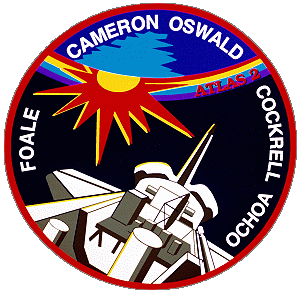 |
 |
 |
||
Launch, orbit and landing data
walkout photo |
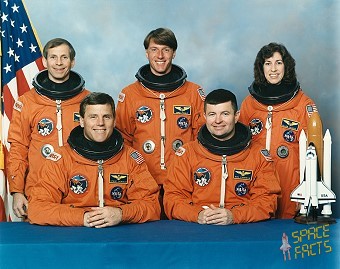 |
||||||||||||||||||||||||||||
alternative crew photo |
Crew
| No. | Surname | Given names | Position | Flight No. | Duration | Orbits | |
| 1 |  |
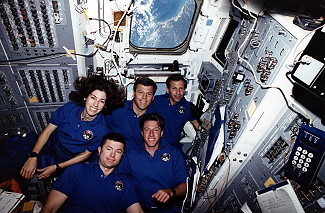
Cameron | Kenneth Donald | CDR | 2 | 9d 06h 08m 19s | 148 |
| 2 | |
Oswald | Stephen Scot | PLT | 2 | 9d 06h 08m 19s | 148 |
| 3 | |
Foale | Colin Michael | MS-1, PLC, EV-1 | 2 | 9d 06h 08m 19s | 148 |
| 4 | |
Cockrell | Kenneth Dale "Taco" | MS-2, FE, EV-2 | 1 | 9d 06h 08m 19s | 148 |
| 5 | |
Ochoa | Ellen Lauri | MS-3, RMS | 1 | 9d 06h 08m 19s | 148 |
Crew seating arrangement
|
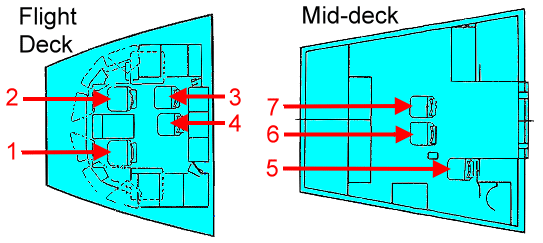 |
|
||||||||||||||||||||||||
Hardware
| Orbiter : | OV-103 (16.) |
| SSME (1 / 2 / 3): | 2024 (6.) / 2033 (3.) / 2018 (10.) |
| SRB: | BI-058 / RSRM 31KM |
| ET: | ET-54 (LWT-47) |
| OMS Pod: | Left Pod 01 (19.) / Right Pod 03 (17.) |
| FWD RCS Pod: | FRC 3 (16.) |
| RMS: | 201 (10.) |
| EMU: | EMU No. 2014 (PLSS No. 1008) / EMU No. 2022 (PLSS No. 1009) |
Flight
|
Launch from Cape Canaveral (KSC) and
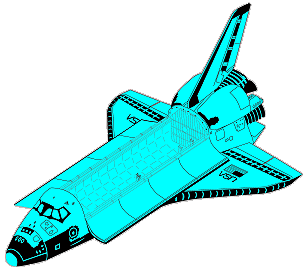
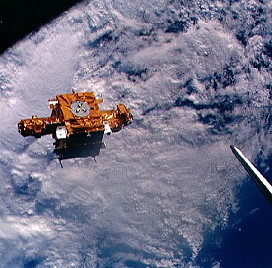
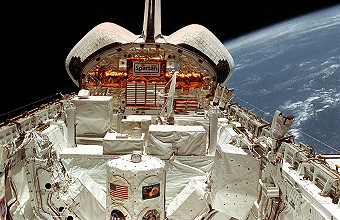
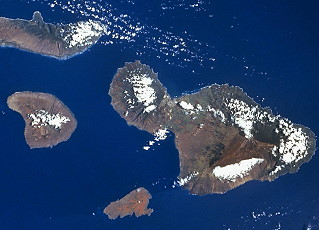
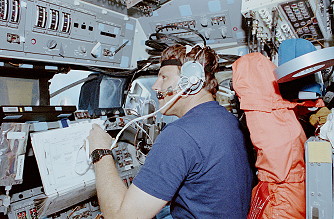
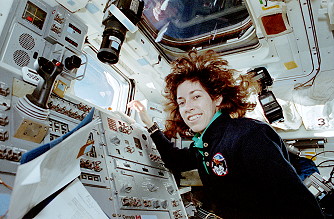
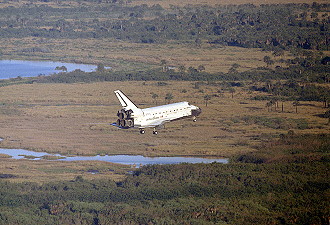
landing on Cape Canaveral (KSC), Runway 33. The primary payload of the flight was the Atmospheric Laboratory for Applications and Science-2 (ATLAS-2), designed to collect data on the relationship between the sun's energy output and Earth's middle atmosphere and how these factors affect the ozone layer. It included six instruments mounted on a Spacelab pallet in the cargo bay, with the seventh mounted on the wall of the bay in two Get Away Special canisters. Atmospheric instruments included the Atmospheric Trace Molecule Spectroscopy (ATMOS) experiment, the Millimeter Wave Atmospheric Sounder (MAS), and the Shuttle Solar Backscatter Ultraviolet/A (SSBUV/A) spectrometer (on the cargo bay wall). Solar science instruments were the Solar Spectrum Measurement (SOLSPEC) instrument, the Solar Ultraviolet Irradiance Monitor (SUSIM), and the Active Cavity Radiometer (ACR) and Solar Constant (SOLCON) experiments. ATLAS-2 is one element of NASA's Mission to Planet Earth program. All seven ATLAS-2 instruments first flew on ATLAS-1 during STS-45, and flew a third time in late 1994 on STS-66. ATLAS 2, the second in NASA's series of Atmospheric Laboratory for Applications and Science Spacelab missions, was the primary payload for the STS-56 flight. The Space Shuttle-borne remote sensing laboratory studied the sun's energy output and Earth's middle-atmosphere chemical makeup, and how these factors affect levels of ozone, which prevents much of the sun's harmful ultraviolet radiation from reaching the Earth's surface. Ozone depletion has been a serious environmental concern since the 1970s. In the mid-1980s, British scientists observed significant ozone depletion of the Antarctic. Visual images of the concentrated, well-defined areas of depletion gave rise to the term "ozone hole", which has appeared over the Antarctic since at least 1979. Satellite observations since then have shown long-term ozone depletion occurring in the Southern and Northern Hemispheres. Concerns over the possible effects of ozone depletion, increased in cataracts and skin cancer and possible damage to food crops, led to an international treaty to phase out the use of ozone-depleting chemicals. However, many questions about the exact mechanisms of ozone depletion remain unanswered. To help answer those questions, the ATLAS missions should gather data on atmospheric chemistry and on the sun's energy - key ingredients in the ozone cycle. Ozone is created and destroyed by complex reactions involving ultraviolet radiation from the sun and gases in the middle atmosphere, between 10 and 50 miles (15 and 80 kilometers) above the Earth's surface. ATLAS 1 (STS-45), which flew in March 1992, established a voluminous baseline of atmospheric and solar data against which to measure future global change. ATLAS 2 tracked subtle, year-to-year variations in solar activity and in atmospheric composition. ATLAS instruments were precisely calibrated before and after flight, so they also provide a valuable cross-check for data being gathered on a continuous basis by similar instruments aboard free-flying satellites. The open, U-shaped pallet was reusable Spacelab equipment provided by the European Space Agency in 1981 as its contribution to the Space Shuttle program. The instruments' power supply, command and datahandling system and temperature control system were housed in a pressurized container called an igloo (also standard Spacelab equipment) located in front of the pallet. These seven instruments form the core ATLAS payload which will fly aboard ATLAS 2 as well as ATLAS 3 (STS-66) scheduled for late 1994. The Atmospheric Trace Molecule Spectroscopy (ATMOS) experiment identified the distribution, by altitude, of 30 to 40 different gases between 6 and 85 miles (10 and 140 kilometers) above the Earth's surface. The Millimeter Wave Atmospheric Sounder (MAS) measured water vapor, ozone and chlorine monoxide (a key compound that contributes to ozone loss), as well as temperature and pressure in the middle atmosphere. The Shuttle Solar Backscatter Ultraviolet (SSBUV) spectrometer, mounted on the walls of the payload bay, measured ozone concentrations by comparing solar ultraviolet radiation with that scattered back from the Earth's atmosphere. The Solar Spectrum Measurement (SOLSPEC) instrument studied the distribution of solar energy by wavelength, from infrared through ultraviolet. The Solar Ultraviolet Irradiance Monitor (SUSIM) concentrated on the sun's ultraviolet radiation, which undergoes wider variations than other wavelengths. The Active Cavity Radiometer (ACR) and the Solar Constant (SOLCON) experiments each made extremely precise, independent measurements of the total energy Earth receives from the sun. On ATLAS 2, the Atmospheric Trace Molecule Spectroscopy experiment, which made most of its measurements in the Southern Hemisphere during ATLAS 1 (STS-45), focused on the Northern Hemisphere. To view orbital "sunrises" at high latitudes, a night launch was required. The Shuttle Point Autonomous Research Tool for Astronomy-201 (SPARTAN-201) was a free-flying payload that will study the velocity and acceleration of the solar wind and observe aspects of the sun's corona. Results should help scientists understand the physics of the sun's corona and the solar wind. SPARTAN-201 looked for evidence to explain how the solar wind is generated by the sun. Electrons, heavy protons and heavy ions are constantly ejected from the outer layers of the solar atmosphere. The Earth encounters this material continually as it orbits the sun. The solar wind fills interplanetary space and sweeps by the Earth at almost 1 million miles per hour (400 km/sec). It often blows in gusts and frequently disrupts navigation, communications and electric power distribution systems on Earth. The dual-telescope payload was mounted on the SPARTAN carrier. On orbit on April 11, 1993, Ellen Ochoa used the Remote Manipulator System to lift the SPARTAN from its rack and released it over the side of the Shuttle. SPARTAN operated independently, turning and pointing at the sun, leaving the orbiter free for other activities. Discovery performed a series of engine firings that put Discovery at a point about 20 nautical miles (37 km) behind the satellite. For several hours, SPARTAN-201's instruments observed the sun. At about 4 hours prior to the scheduled retrieval time - two days after its deployment -, Discovery closed on SPARTAN-201, passing directly below it before Pilot Stephen Oswald manually flew Discovery the final few hundred feet to allow the satellite to grasp by the robot arm with Ellen Ochoa at the controls. Once caught by the arm, SPARTAN-201 was stowed back in the cargo bay to be returned to Earth. The SUVE payload was designed, managed and built entirely by students at the University of Colorado. Graduate and undergraduate students from aerospace, mechanical and electrical engineering as well as physics and other scientific disciplines have been involved since the project's inception. From project management to detailed performance analyses, the SUVE project is entirely student run. SUVE studied the extreme ultraviolet solar radiation as it affects the Earth's ionosphere. Hand-held, Earth-oriented, Real-time, Cooperative, User- friendly, Location-targeting and Environmental System (HERCULES) was attached to a modified Nikon camera and employs a geolocation process which determines in real- time the latitude and longitude of points on Earth within 2 nautical miles. HERCULES should provide a valuable Earth observation system for military, environmental, oceanographic and meteorological applications. STS-56 was the second flight of HERCULES. On board the Shuttle, the astronaut should start the system by pointing the camera, with the attached gyro, at two known stars to obtain a bearing. The astronaut then "shoots" images by pointing the camera at the Earth and snapping the shutter. With HERCULES, the astronaut only needs to look at the point of interest, allowing the use of many different camera lenses. In the daytime, the system uses any Nikon-compatible lens. At night, it operates with an image intensifier developed by the Army's Night Vision Laboratory. At any magnification, images with no distinguishing demographic features can be captured and geolocated. HERCULES captures images digitally, which allows computer analysis and data dissemination, an improvement over the film-based L-cubed system. It was a reflight of STS-53 which had battery problems. Radiation Monitoring Equipment-III (RME-III) was an instrument which measures the exposure to ionizing radiation on the Space Shuttle. It displayed the dose rate and total accumulated radiation dose to the astronaut operator. Simultaneously the device registers the number of radiation interactions and dose accumulated at 10 second intervals and stored the data in an internal memory for follow-up analysis upon return to Earth. The radiation detector used in the instrument was a spatial ionization chamber called a tissue equivalent proportional counter (TEPC). The device effectively simulated a target size of a few microns of tissue, the dimensions of a typical human cell. For this reason, TEPC-based instruments such as the RME-III are called micro-dosimeter instruments. The Cosmic Radiation Effects and Activation Monitor (CREAM) experiment was designed to collect data on cosmic ray energy loss spectra, neutron fluxes and induced radioactivity. The data were collected by active and passive monitors placed at specific locations throughout the Orbiter's cabin. CREAM data were obtained from the same locations used to gather data for the Radiation Monitoring Equipment-III experiment in an attempt to correlate data between the two. The active monitor obtained real-time spectral data, while the passive monitors obtained data during the entire mission to be analyzed after the flight. The Air Force Maui Optical Site (AMOS) tests allowed ground- based electro-optical sensors located on Mt. Haleakala, Maui, Hawaii, to collect imagery and signature data of the orbiter during cooperative overflights. The scientific observations made of the orbiter, while performing reaction control system thruster firings, water dumps or payload bay light activation, and were used to support the calibration of the AMOS sensors and the validation of spacecraft contamination models. The AMOS tests had no payload unique flight hardware and only required that the orbiter be in predefined attitude operations and lighting conditions. The Shuttle Amateur Radio Experiment (SAREX) was designed to demonstrate the feasibility of amateur short-wave radio contacts between the Space Shuttle crew and ground amateur radio operators, often called ham radio operators. SAREX also served as an educational opportunity for schools around the world to learn about space first hand by speaking directly to astronauts aboard the Shuttle via ham radio. Contacts with certain schools were included in planning the mission. SAREX was last flown aboard STS-47 and during that flight, there were dozens of voice contacts with ham stations at schools around the world and hundreds of contacts with individual ham operators. On STS-56, crew members Kenneth Cameron, call sign N5AWP, Kenneth Cockrell, call sign KB5UAH, Michael Foale, call sign KB5UAC, and Ellen Ochoa, call sign KB5TZZ, used SAREX-II as a secondary payload. The crew made numerous radio contacts to schools around the world using the Shuttle Amateur Radio Experiment II (SAREX II), including brief radio contact with the Russian MIR space station, the first such contact between Shuttle and MIR using amateur radio equipment. More than 30 investigations were conducted aboard Space Shuttle Discovery to obtain information on how microgravity can aid research in drug development and delivery, biotechnology, basic cell biology, protein and inorganic crystal growth, bone and invertebrate development, immune deficiencies, manufacturing processes and fluid sciences. The experiments represented the second flight of the Commercial MDA ITA Experiments (CMIX-2) payload and provided scientists and engineers with some 400 data points from which they could focus and expand their research in microgravity. The CMIX-2 hardware consisted of four Materials Dispersion Apparatus (MDA) Minilabs, two of which contained experiments developed by the UAH CMDS and its industry affiliates. The other two, commercially marketed by ITA, contained experiments developed by ITA's customers, which included U.S. biomedical technology and biomaterials companies, international users and university research institutions. The MDA Minilab was a brick-sized, automated device capable of bringing into contact and mixing up to 100 separate samples of multiple fluids and/or solids at precisely timed intervals. The MDA, which was housed in a Commercial Refrigerator/Incubator Module (CRIM), used four techniques for sample contact/mixing, including liquid-to-liquid diffusion, vapor diffusion, magnetic mixing and reverse gradient diffusion. The Space Tissue Loss-3 (STL-3) module was developed to help scientists and Army medical practitioners understand more about the effects of space flight on fragile life systems, including the immune system, muscle and bone. When gravity is removed or reduced as in space travel, life systems degrade at a remarkable rate, very much like a rapid aging process or what occurs after severe trauma or infection. The current mission was used to reproduce and verify the changes in cell function observed in the two previous deployments on the Shuttle. Changes in protein levels, enzyme activities and gene functions were monitored. Alteration in the morphology and nature maturation of the cells will be determined upon return and followed for an extended period of recovery. These results were compared to changes noted in space-flown whole animal function to establish the validity and applicability of the cellular model. The third Physiological and Anatomical Rodent Experiment (PARE.03) on STS-56 was a secondary payload that flew in a locker in the Space Shuttle's mid-deck. PARE.03 consisted of two experiments (PARE.03A and PARE.03B) with different goals and different principal investigators. Both shared the same group of rats. The goals of each experiment were fully compatible with the procedures and goals of the other. Both experiments endeavor to get new data that will provide a cohesive view of bone biology during and following spaceflight. PARE.03A was important for two reasons. When individuals are exposed to the microgravity of space or unloading on Earth, there appears to be a change in bone structure. In unloading, the rat is placed in tail traction so its hind legs no longer bear weight, but the rat can move freely using its front paws. This technique simulates many of the effects of microgravity on rat bones. The PARE.03B experiment examined how the lack of gravity encountered during spaceflight affects the production of osteoblasts. One goal was to use a specific marker for DNA synthesis to examine preosteoblast cell proliferation. This had not been done previously following spaceflight and will provide new and unique data on the mechanism of osteoblast production. Due to high winds and low clouds in Florida the landing was delayed for one day. |
Photos / Graphics
 |
 |
 |
 |
 |
 |
 |
 |
 |
 |
 |
 |
 |
 |
 |
| © |  |
Last update on June 19, 2023.  |
 |