Human Orbital Spaceflights

International Flight No. 139STS-40Columbia (11)41st Space Shuttle missionUSA |
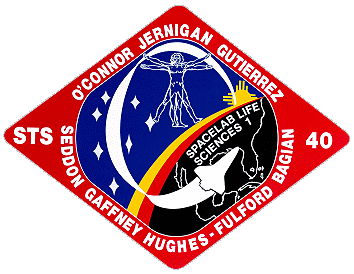 |
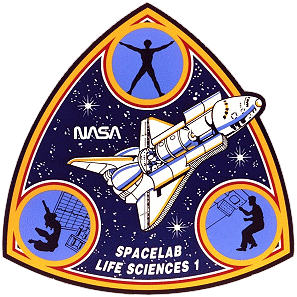 |
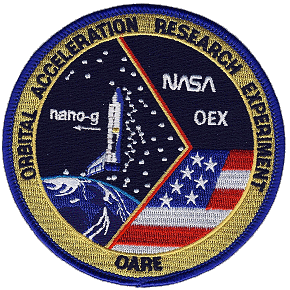 |
||
Launch, orbit and landing data
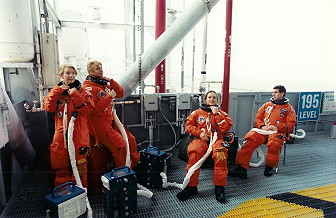
walkout photo |
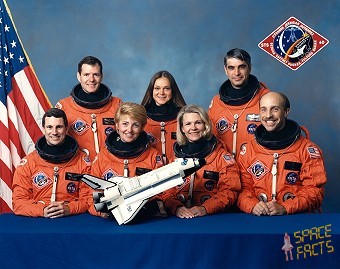 |
||||||||||||||||||||||||||||
alternative crew photo |
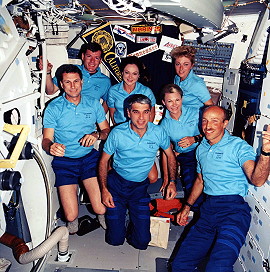
Crew
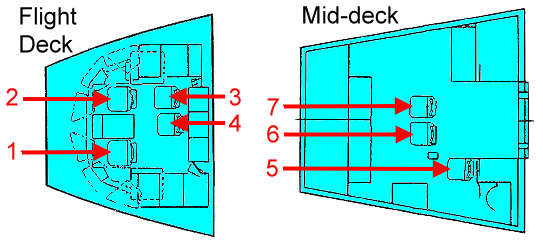
| No. | Surname | Given names | Position | Flight No. | Duration | Orbits | |
| 1 |  |
O'Connor | Bryan Daniel "O.C." | CDR | 2 | 9d 02h 14m 20s | 146 |
| 2 | |
Gutierrez | Sidney McNeill "Sid" | PLT | 1 | 9d 02h 14m 20s | 146 |
| 3 | |
Bagian | James Philipp | MS-1, EV-1 | 2 | 9d 02h 14m 20s | 146 |
| 4 | |
Jernigan | Tamara Elizabeth "Tammy" | MS-2, EV-2, FE | 1 | 9d 02h 14m 20s | 146 |
| 5 | |
Seddon | Margaret Rhea | MS-3 | 2 | 9d 02h 14m 20s | 146 |
| 6 | |
Gaffney | Francis Andrew "Drew" | PS-1 | 1 | 9d 02h 14m 20s | 146 |
| 7 | |
Hughes-Fulford | Millie Elizabeth | PS-2 | 1 | 9d 02h 14m 20s | 146 |
Crew seating arrangement
|
 |
|
||||||||||||||||||||||||||||||||
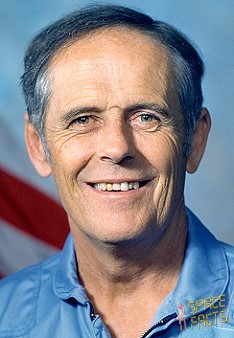
Backup Crew
|
 |
||||||||||
Hardware
| Orbiter : | OV-102 (11.) |
| SSME (1 / 2 / 3): | 2015 (6.) / 2022 (6.) / 2027 (6.) |
| SRB: | BI-044 / RSRM 16W |
| ET: | ET-41 (LWT-34) |
| OMS Pod: | Left Pod 03 (11.) / Right Pod 04 (7.) |
| FWD RCS Pod: | FRC 2 (11.) |
| RMS: | - |
| EMU: | EMU No. 2007 (PLSS No. 1014) / EMU No. 2010 (PLSS No. 1009) |
Flight
|
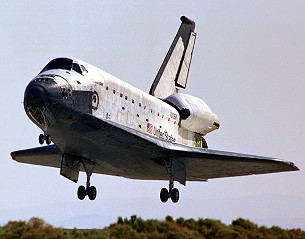
Launch from Cape Canaveral (KSC) and
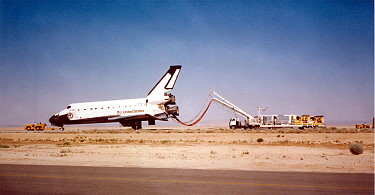
landing on the Edwards
AFB, Runway 22.
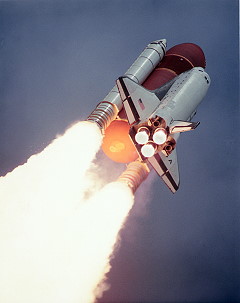
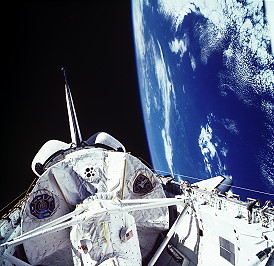
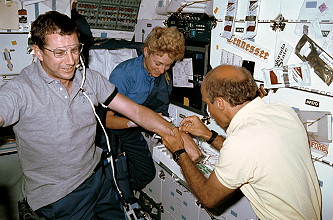
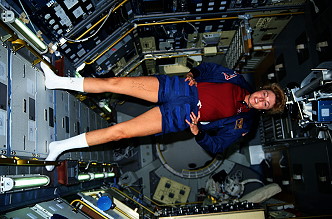
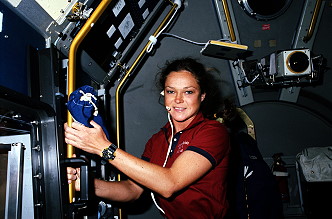
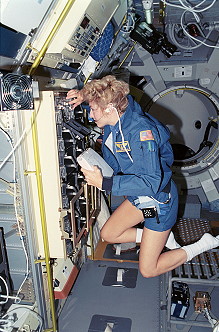
The launch was originally set for May 22, 1991. The mission was postponed less than 48 hours before launch when it became known that a leaking liquid hydrogen transducer in orbiter main propulsion system which was removed and replaced during leak testing in 1990, had failed an analysis by vendor. The launch was reset for June 01, 1991, but postponed again after several attempts to calibrate the inertial measurement unit 2 failed. Unit was replaced and retested, and the launch was rescheduled for June 05, 1991. STS-40 marked the fifth dedicated Spacelab mission, Spacelab Life Sciences-1, and first dedicated solely to life sciences, using the habitable module. During the SLS-1 mission, the STS-40 crew performed experiments which should explore how the heart, blood vessels, lungs, kidneys and hormone-secreting glands respond to microgravity, the causes of space sickness and changes in muscles, bones and cells during the microgravity environment of space flight and in the readjustment to gravity upon returning to Earth. The experiments performed on Columbia's crew and on laboratory animals provided the most detailed and interrelated physiological measurements acquired in the space flight environment since the Skylab program flights in 1973 and 1974. Millie Hughes-Fulford became the first female Payload Specialist. Many volumes of research remain to be recorded and studied regarding adaptation of humans to the weightless environment of space flight. The blanks, however, began to be filled following the broad range of experiments to be conducted on the Spacelab Life Sciences-1 (SLS-1). There were 18 primary experiments chosen for SLS-1. Influence Of Weightlessness Upon Human Autonomic Cardiovascular Controls: This experiment investigated the theory that lightheadedness and a reduction in blood pressures in astronauts upon standing after landing may arise because the normal reflex system regulating blood pressure behaves differently after having adapted to a microgravity environment. For this experiment, some SLS-1 crewmembers had to wear neck chambers that resemble whip-lash collars to detect blood pressure in the neck. Investigators took blood pressure measurements both before and after the flight for comparison. Astronauts took the same measurements themselves on orbit to map changes that occur during spaceflight. Inflight Study Of Cardiovascular Deconditioning: This experiment used a non-invasive technique of prolonged expiration and rebreathing - inhaling in previously exhaled gases - to measure the cardiovascular and respiratory changes. The technique furnished information on functions including the amount of blood pumped out of the heart, oxygen usage and carbon dioxide released by the body, heart contractions, blood pressure and lung functioning. Astronauts perform the rebreathing technique while resting and while pedaling on an exercise bike to provide a look at the heart's ability to cope with added physical stress. On the first and last days of the STS-40 mission, only resting measurements were taken. Rest and graded exercise measurements were made on most other days. One of the vestibular experiments was Protein Metabolism During Space Flight. This study involved several tests looking at the mechanisms involved in protein metabolism including changes in protein synthesis rates, muscle breakdown rates and use of dietary nitrogen in a weightless environment. This experiment examined whole body protein metabolism by measuring the concentration of 15N-glycine, an amino acid in protein, in saliva and urine samples from crew members and ground control subjects preflight, inflight and postflight. Crew members collected urine samples throughout the flight. On the second and eighth flight days, astronauts also took oral doses of 15N-glycine. Crew members collected and freezed a urine sample 10 hours after the ingestion of the glycine for postflight analyses. Urinary 3-methyl histidine, a marker for muscle protein breakdown also was monitored. Fluid-Electrolyte Regulation During Spaceflight: This experiment made detailed measurements before, during and after flight to determine immediate and long-term changes in kidney function; changes in water, salt and mineral balance; shifts in body fluids from cells and tissues; and immediate and long-term changes in levels of hormones which affect kidney function and circulation. Test protocol required that crew members collected urine samples throughout the flight. Body mass was measured daily and a log was kept of all food, fluids and medication taken in flight. Fasting blood samples were collected from the crew members as soon as possible inflight and at specified intervals on selected flight days thereafter. Tests determined the amount of certain tracers that can be released from a given volume of blood or plasma into urine in a specified amount of time, measuring the rate and loss of body water and determining changes in blood plasma volume and extracellular fluid. Measurements were made two times inflight by collecting blood samples at timed intervals after each subject had received a precalculated dose of a tracer, a chemical which allowed the compound to be tracked as it moves through the body. Total body water was measured during flight using water labeled with a heavy isotope of oxygen. Pulmonary Function During Weightlessness: This experiment provided an opportunity for study of the properties of the human lung without the influence of gravity. In the microgravity Spacelab, a model of lung function was developed to serve as a basis for comparison for the normal and diseased lung. There was a series of eight breath tests conducted with measurements taken at rest and after breathing various test bag mixtures. The test assembly allowed the subject to switch from breathing cabin air to inhaling premixed gases in separate breathing bags. Breathing exercises involved the inhalation of specially prepared gas mixtures. The tests were designed to examine the distribution and movement of blood and gas within the pulmonary system and how these measurements compare to normal respiration. By measuring gas concentrations, the flow of gas through the lungs into the blood stream and rate of blood flow into the lungs, investigators hope to better understand the human pulmonary function here on Earth and learn how gravity plays a part in influencing lung function. Lymphocyte Proliferation In Weightlessness: STS-40 repeated the basic Spacelab-1 experiment (STS-9). Lymphocytes was purified from human blood collected 12 hours before launch. The cells were resuspended in a culture medium, sealed in culture blocks and stowed on Columbia's middeck. Inflight, the samples were exposed to a mitogen (a substance that promotes cell division) and allowed to grow in the weightless environment. Some of the samples also were exposed to varying gravity levels on the low-gravity centrifuge. These samples served as a control group as they experienced the same environmental conditions with the exception of micro-gravity. Influence Of Space Flight On Erythrokinetics In Man: This experiment studied the mechanisms which may be responsible for this decrease, including the effect of space flight on red blood cell production rate and the role of changes in body weight and plasma volume on red blood cell production. Blood samples taken pre-, post- and inflight traced the life of astronauts' red blood cells. By measuring the volume of red blood cells and plasma, researchers checked the rate of production and destruction of blood in both normal and microgravity conditions. On flight day two, crew members received an injection of a tracer that measured the amount of new red blood cells. Tracers (chemicals that will attach to the red blood cell to allowing them to be tracked) injected before launch measured the destruction rate of red blood cells. Crew members draw blood samples on the second, third, fourth, eighth and ninth days of flight. Cardiovascular Adaptation To Microgravity: This experiment focused on the acute changes in cardiovascular function, heart dimensions and function at rest, response to maximal exercise and control mechanisms. The experiment seeked to increase the understanding of microgravity-induced changes in the cardiovascular structure and function responsible for a common problem during return to normal gravity of orthostatic hypotension or the inability to maintain normal blood pressure and flow while in an upright position. Central venous pressure - measurements of changes in the blood pressure in the great veins near the heart - was observed in one crew member. A cardiologist inserted a catheter into a vein in the arm and positioned it near the heart prior to flight. Measurements then were recorded for 24 hours beginning prior to launch and extending for at least 4 hours into space flight, at which time the catheter was removed. The catheter data indicated the degree of body fluid redistribution and the speed at which the redistribution occurs. Pathophysiology Of Mineral Loss During Space Flight: This experiment measured the changes which occur during space flight in circulating levels of calcium metabolizing hormones and to directly measure the uptake and release of calcium in the body. Investigators believed there may be significant changes in the amount of these hormones produced due to an increase in the breakdown and reassimilation of bone tissue and that these changes begin to occur within hours after entering the weightless environment. Each crew member was weighed daily and was kept a log of all food, fluids and medications ingested. They also draw blood samples on selected days to determine the role of calcium regulating hormones on the observed changes in calcium balance. The experiment was repeated on selected days preflight and postflight. A simultaneous ground experiment was performed using non-crew member subjects. Regulation Of Erythropoiesis During Space Flight / Regulation Of Blood Volume During Space Flight: This combined investigation explored the mechanisms for changes seen in red blood cell mass and blood volume in crews on previous space flights. Several factors known to affect erythropoiesis were examined. It also determined whether comparable changes occur in the rat and if the rat is a satisfactory model for studying microgravity-induced changes in human blood. The SLS-1 hematology experiments studied two parts of the blood system: the liquid portion (plasma), which contains water, proteins, nutrients, electrolytes, hormones and metabolic wastes and a cellular portion, which contains red and white blood cells and platelets. Bone, Calcium And Space Flight: Weightlessness causes a slow loss of calcium and phosphorus from the bones during and immediately following space flight. Negative calcium balance, decreased bone density and inhibition of bone formation have been reported. Most of the loss is thought to occur in the leg bones and the spine, which are responsible for movement and erect posture. Dr. Morey-Holton's experiment focused on growth that occurs in a number of specific bones such as the leg, spine and jaw. The study also documented alterations in bone growth patterns and bone-breaking strength in rodents exposed to weightlessness and it determined whether bone formation returns to normal levels after space flight. A Study Of The Effects Of Space Travel On Mammalian Gravity Receptors: The neurovestibular system, which helps animals orient their bodies, is very sensitive to gravity. In space, gravity no longer influences the tiny otolith crystals, which are small, calcified gravity receptors in the inner ear. In microgravity, information sent to the brain from the inner ear and other sensory organs may conflict with cues anticipated from past experiences in Earth's normal gravity field. This conflict results in disorientation. This study investigated structural changes that may occur within the inner ear in response to the microgravity of space. It seeked to define the effects of prolonged weightlessness on the otoliths. Scientists suspect that otolith degeneration may occur as a result of changes in the body's calcium levels, carbohydrate and protein metabolism, body fluid distribution and hormone secretions. Effects Of Microgravity-Induced Weightlessness On Aurelia Ephyra Differentiation And Statolith Synthesis: Jellyfish are among the simplest organisms possessing a nervous system. They use structures called rhophalia to maintain their correct orientation in water. Rhophalia have statoliths that are analogous to mammalian otoliths, the gravity-sensing organs of the inner ear that help mammals maintain balance. The purpose of this investigation was to determine the role microgravity plays in the development and function of gravity-receptor structures of Aurelia (a type of jellyfish). Ephyrae are a tiny form of the jellyfish. This experiment studied the gravity receptors of ephyrae to determine how microgravity influences their development and function, as well as the animals' swimming behavior. Skeletal Myosin Isoenzymes In Rats Exposed To Microgravity: Skeletal muscle fibers exist in two forms, classified as slow-twitch or fast-twitch, depending on how fast they contract. The two forms develop similar forces when contracting but they contract at different speeds. The speed of contraction is directly related to the amount of the protein myosin in muscle fibers. Myosin is made up of five isoenzymes, which differ in structure and in enzyme activity. This study examined how microgravity affects the speed of muscle contractions. Because stimuli to the slowtwitch anti-gravity muscles should be greatly reduced in microgravity, the concentration of myosin isoenzymes in these fibers should be lower. This experiment should provide additional data to help explain how microgravity affects the speed of muscle contractions and the growth and proliferation of slow-twitch and fast-twitch muscle fibers. Effects Of Microgravity On Biochemical And Metabolic Properties Of Skeletal Muscle In Rats: It has been proposed that a loss of muscle mass in astronauts during weightlessness produces the observed loss of strength and endurance, particularly in the anti-gravity muscles. One explanation is that exposure to microgravity results in the removal of sufficient stress or tension on the muscles to maintain adequate levels of certain proteins and enzymes. These proteins and enzymes enable cells to use oxygen to convert nutrients into energy. When gravitational stress is reduced, protein activity also decreases and muscles become more dependent on glycogen stored in the liver and muscles for energy. As the body metabolizes glycogen, muscle endurance decreases. Radioactive carbon compounds were used to evaluate energy metabolism in the hind leg muscles of the rats exposed to microgravity. The concentration of the enzymes reflects the kind of metabolic activity occurring in muscles during periods of reduced gravitational stress. In addition, skeletal muscle cells of flight and ground-control animals were compared to assess any changes in the concentration of enzymes that break down glycogen. The Effects Of Microgravity On The Electron Microscopy, Histochemistry And Protease Activities Of Rat Hindlimb Muscles: The anti-gravity skeletal muscles of astronauts exposed to microgravity for extended periods exhibit progressive weakness. Studies of rodents flown in space for 7 days on a previous mission have shown a 40 percent loss of mass in the anti-gravity leg muscles. Other studies indicate the loss of strength may result from simple muscle fiber shrinkage, death of muscle cells and/or degeneration of motor innervation. In addition, the biochemical process that generates energy in muscle cells was almost totally absent. The progressive atrophy of certain muscles in microgravity is the focus of this study, which compares the atrophy rates of muscles used primarily to oppose gravity with those muscles used for movement. Investigators examined muscle tissues of flight and ground-control rodents to look for the shrinkage or death of muscle cells, breakdown of muscle fibers or degeneration of motor nerves. Scientists also hoped to discover the chemical basis for atrophy by analyzing the concentration of enzymes that facilitate the breakdown of proteins within cells. Six Orbiter Experiments (OEX) Program experiments were flown on STS-40. Included among this group were five experiments which were intended to operate together as a complementary set of entry research instrumentation. This flight marked the second time since the September 1988 return-to-flight that the Langley experiments will fly as a complementary set. The Shuttle Entry Air Data System (SEADS) nosecap on the orbiter Columbia contains 14 penetration assemblies, each containing a small hole through which the surface air pressure is sensed. Measurement of the pressure levels and distribution allowed postflight determination of vehicle attitude and atmospheric density during entry. SEADS, which has flown on three previous flights of Columbia, operated in an altitude range of 300,000 (91,440 meters) feet to landing. The Shuttle Upper Atmosphere Mass Spectrometer (SUMS) experiment complemented SEADS by enabling measurement of atmospheric density above 300,000 feet (91,440 meters). SUMS sampled air through a small hole on the lower surface of the vehicle just aft of the nosecap. It utilized a mass spectrometer operating as a pressure sensing device to measure atmospheric density in the high altitude, rarefied flow regime where the pressure is too low for the use of ordinary pressure sensors. The mass spectrometer incorporated in the SUMS experiment was spare equipment originally developed for the Viking Mars Lander. This was the second opportunity for SUMS to fly since STS-61C in January 1986. The Aerodynamic Coefficient Identification Package (ACIP) instrumentation included triaxial sets of linear accelerometers, angular accelerometers and angular rate gyros, which sensed the orbiter's motions during flight. ACIP provided the vehicle motion data which is used in conjunction with the SEADS environmental information for determination of aerodynamic characteristics below about 300,000 feet (91,440 meters) altitude. The High-Resolution Accelerometer Package (HiRAP) instrument was a triaxial, orthogonal set of highly sensitive accelerometers which sense vehicle motions during the high-altitude portion (above 300,000 feet = 91,440 meters) of entry. This instrument provided the companion vehicle motion data to be used with the SUMS results. HiRAP has been flown on 12 previous missions of the orbiters Columbia and Challenger. The Orbital Acceleration Research Experiment (OARE) complemented the ACIP and HiRAP instruments by extending the altitude range over which vehicle acceleration data can be obtained to orbital altitudes. Like the HiRAP, the OARE instrument comprised a three-axis set of extremely sensitive linear accelerometers. The OARE sensors were substantially more sensitive than the HiRAP sensors. Because of their extreme measurement sensitivity, the OARE sensors cannot be adequately calibrated on the ground (in a 1-g environment). Consequently, the sensors were mounted on a rotary calibration table which enables an accurate instrument calibration to be performed on orbit. The OARE instrument was installed for flight on a special mounting plate within the orbiter's payload bay. OARE data were recorded on the mission payload recorder. This was the first flight for the OARE instrument. Shuttle Infrared Leeside Temperature Sensing (SILTS) used a scanning infrared radiometer located atop the vertical tail to collect infrared images of the orbiter's leeside (upper) surfaces during entry, for the purpose of measuring the temperature distribution and thereby the aerodynamic heating environment. On two previous missions, the experiment obtained images of the left wing. For STS-40, the experiment has been reconfigured to obtain images of the upper fuselage. The Aerothermal Instrumentation Package (AIP) comprised some 125 measurements of aerodynamic surface temperature and pressure at discrete locations on the upper surface of the orbiter's left wing and fuselage, and vertical tail. These sensors originally were part of the development flight instrumentation system which flew aboard Columbia during its Orbital Flight Test missions (STS-1, STS-2, STS-3, STS-4). They have been reactivated through the use of an AIP-unique data handling system. Among other applications, the AIP data provided "ground-truth" information for the SILTS experiment. Other payloads included twelve Getaway Special (GAS) canisters installed on GAS bridge in cargo bay for experiments in materials science, plant biology and cosmic radiation; Middeck Zero-Gravity Dynamics Experiment (MODE). |
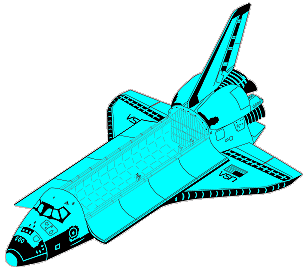
Photos / Graphics
 |
 |
|
source of all photos is NASA |
|
 |
 |
 |
 |
 |
 |
 |
 |
 |
 |
 |
 |
 |
 |
 |
 |
more Earth observation photos |
|
| © |  |
Last update on March 26, 2020.  |
 |