Human Orbital Spaceflights

International Flight No. 145Soyuz TM-14VityazRussia |
 |
 |
 |
 |
|
Launch, orbit and landing data
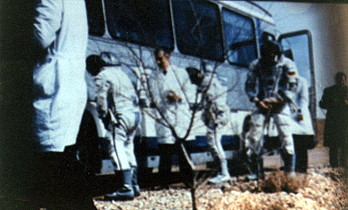
walkout photo |
 |
|||||||||||||||||||||||
alternative crew photo |
alternative crew photo |
|||||||||||||||||||||||
alternative crew photo |
alternative crew photo |
|||||||||||||||||||||||
alternative crew photo |
alternative crew photo |
|||||||||||||||||||||||
Crew
| No. | Surname | Given names | Position | Flight No. | Duration | Orbits | |
| 1 |  |
Viktorenko | Aleksandr Stepanovich | Commander | 3 | 145d 14h 10m 33s | 2303 |
| 2 | |
Kaleri | Aleksandr Yuriyevich | Flight Engineer | 1 | 145d 14h 10m 33s | 2303 |
| 3 |  |
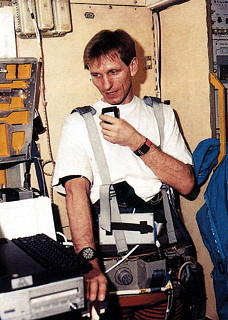
Flade | Klaus-Dietrich | Research Cosmonaut | 1 | 7d 21h 56m 32s | 124 |
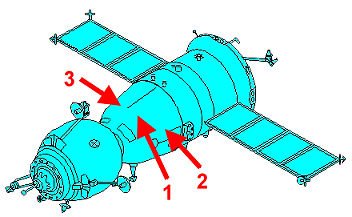
Crew seating arrangement
|
 |
|
||||||||||||||||
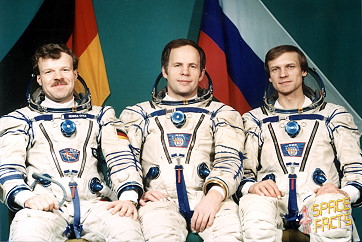
Backup Crew
|
 |
||||||||||||||||||||
 |
 |
||||||||||||||||||||
Hardware
| Launch vehicle: | Soyuz-U2 (No. R15000-056) |
| Spacecraft: | Soyuz TM-14 (7K-STM No. 64) |
Flight
|
Launch from the Baikonur Cosmodrome and
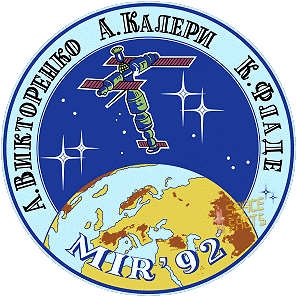
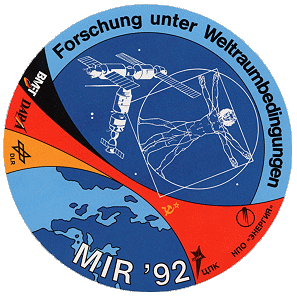
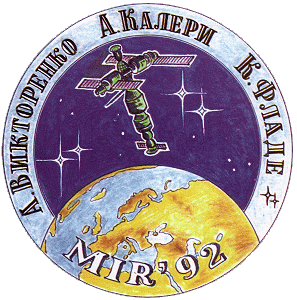
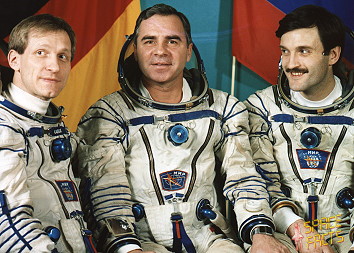
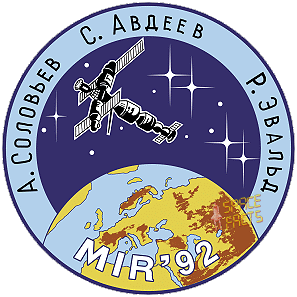
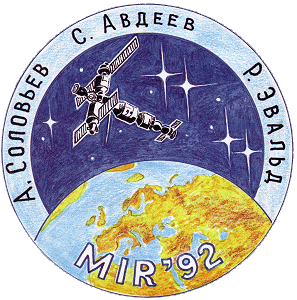
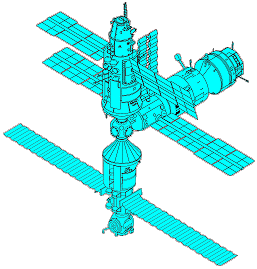
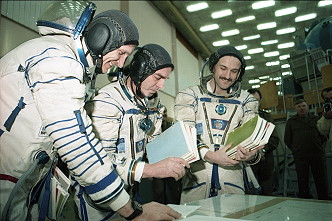
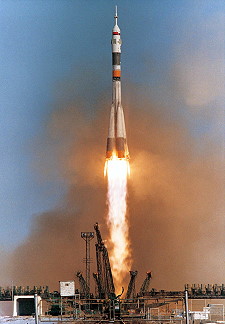
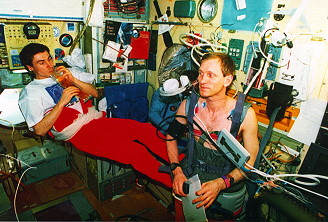
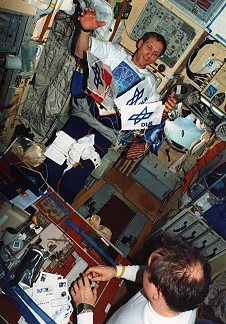
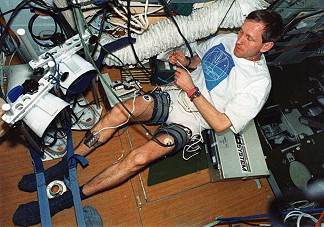
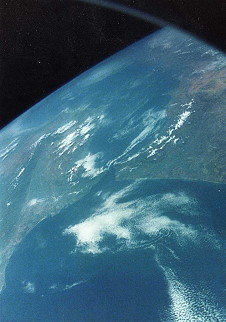
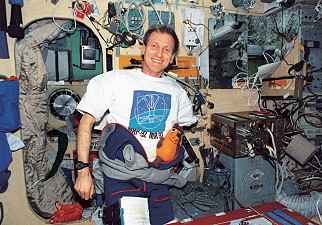
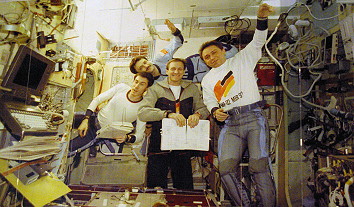
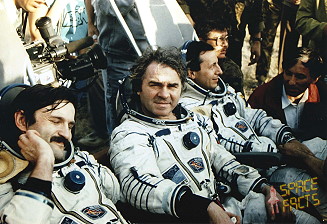
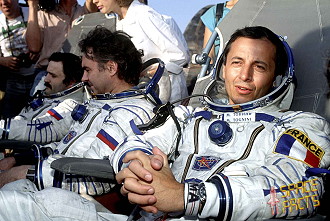
landing 141 km east of Dzheskasgan. It concerned the mission to Mir'92. After a two-day solo flight Soyuz TM-14 docked on March 19, 1992 to the complex Soyuz TM-13-Kvant1-Mir-Kristall-Kvant2. Within the scope of the mission Mir'92 the tenth resident crew performed scientific works in which Klaus-Dietrich Flade was particularly involved. He undertook 14 German experiments as a part of the preparation for the future space station projects and Columbus in the areas of Medicine, biology, physics and material research. Thus thermo-dynamic qualities of different substances were investigated in the physical test program TES. Medical investigations related changes in the genome (chromosome analysis), the sleep-wake cycle and the assessment of physical and mental performance, the study of the function of vestibular and orientation ability, furthermore the recording of eye movements during changes of the position, the performance of short term memory, the distribution of body fluids in the muscles and vessels (use of the negative pressure-suit TSCHIBIS) and the hormonal regulation of the human organism (blood and saliva samples). Material Scientific tests consisted mainly in the breeding of pure crystals. The main objective of the mission was the planned replacement of the resident crew. Aleksandr Kaleri and Aleksandr Viktorenko formed the eleventh resident crew. It was the first space flight since the end of the USSR and Russia's first space flight. It was also the first joint space flight of Russia and Germany. The unmanned resupply vessel Progress M-12 docked with Mir on April, 21, 1992 at 23:21:59 UTC, undocked on June 27, 1992 at 21:34:44 UTC and was destroyed in reentry on June 28, 1992 at 00:02:51 UTC. Progress M-12 had been docked to the forward docking port and was often used to correct the orbit of the complex. Progress M-13 docked with Mir on July 04, 1992 at 16:55:13 UTC, undocked on July 24, 1992 at 04:14:00 UTC and was destroyed in reentry on July 24, 1992 at 08:03:35 UTC. It was docked to Mir for only a few weeks, since on July 26, 1992 the Soyuz TM-15 was to be launched with a replacement crew and would need to use the same docking port. Aleksandr Kaleri and Aleksandr Viktorenko carried out the only EVA during this mission on July 08, 1992 (2h 03m). There was an exit inspection to assess the space station Mir especially gyrodyne orientation flywheels. The work to be done by the cosmonauts during that EVA was crucial for the operational existence of the Mir complex. 4 of the 6 gyrodynes in Kvant2 are out of order and so the attitude control of the complex is working unsatisfactorily. Before closing out the EVA, they tested binoculars compatible with a space suit visor for inspecting Mir's outlying areas. The eleventh resident crew of the Mir space station undertook experiments on materials research, space technology, astrophysics and earth observation during its nearly five-month mission. They bred super pure gallium arsenide crystals with the new system GRANAT on board of the crystal module, observed the exact composition of the cabin air in a long-time experiment, and studied the influence of movements of the astronauts to microgravity. Furthermore, they carried out astronomical observations in the ultraviolet and X-ray range. As part of the research program EARTH recordings of North Africa, North and South America, the Pacific and Australia were taken with the camera KFA 1000. With the topographical three-channel camera KATE 140 they also made photographic images of parts of Russia, Kazakhstan and Ukraine. Related to geological activity in the south of Ukraine the multichannel spectrometer MKS 2M (19 channels in the wavelength range between 415 nm and 1030 nm) was used. Further research concerned the crystal growth, the erosion of different materials by atomic oxygen, the injury of living cells by cosmic rays, the crystallization of biological macromolecules and the influence of artificial gravity on the growth of plants. With the multispectral camera MKF 6MA high-resolution images of the surface of the earth were made. Thanks to these recordings statements about environmental pollution, the suspected deposits of certain minerals or crop forecasts are possible. Soyuz TM-15 arrived on July 29, 1992 the Mir space station. Anatoli Soloviyov and Sergei Avdeyev relieved the Mir-11 crew. Together with them Michel Tognini, French Research Cosmonaut, reached the Mir. The Soyuz spacecraft is composed of three elements attached end-to-end - the Orbital Module, the Descent Module and the Instrumentation/Propulsion Module. The crew occupied the central element, the Descent Module. The other two modules are jettisoned prior to re-entry. They burn up in the atmosphere, so only the Descent Module returned to Earth. The deorbit burn lasted about 240 seconds. Having shed two-thirds of its mass, the Soyuz reached Entry Interface - a point 400,000 feet (121.9 kilometers) above the Earth, where friction due to the thickening atmosphere began to heat its outer surfaces. With only 23 minutes left before it lands on the grassy plains of central Asia, attention in the module turned to slowing its rate of descent. Eight minutes later, the spacecraft was streaking through the sky at a rate of 755 feet (230 meters) per second. Before it touched down, its speed slowed to only 5 feet (1.5 meter) per second, and it lands at an even lower speed than that. Several onboard features ensure that the vehicle and crew land safely and in relative comfort. Four parachutes, deployed 15 minutes before landing, dramatically slowed the vehicle's rate of descent. Two pilot parachutes were the first to be released, and a drogue chute attached to the second one followed immediately after. The drogue, measuring 24 square meters (258 square feet) in area, slowed the rate of descent from 755 feet (230 meters) per second to 262 feet (80 meters) per second. The main parachute was the last to emerge. It is the largest chute, with a surface area of 10,764 square feet (1,000 square meters). Its harnesses shifted the vehicle's attitude to a 30-degree angle relative to the ground, dissipating heat, and then shifted it again to a straight vertical descent prior to landing. The main chute slowed the Soyuz to a descent rate of only 24 feet (7.3 meters) per second, which is still too fast for a comfortable landing. One second before touchdown, two sets of three small engines on the bottom of the vehicle fired, slowing the vehicle to soften the landing. |
EVA data
| Name | Start | End | Duration | Mission | Airlock | Suit | Stripes | |
| EVA | Kaleri, Aleksandr | 08.07.1992, 12:38 UTC | 08.07.1992, 14:41 UTC | 2h 03m | Soyuz TM-14 | Mir - Kvant2 | Orlan-DMA No. 14 | blue |
| EVA | Viktorenko, Aleksandr | 08.07.1992, 12:38 UTC | 08.07.1992, 14:41 UTC | 2h 03m | Soyuz TM-14 | Mir - Kvant2 | Orlan-DMA No. 15 | red |
Note
|
Klaus-Dietrich
Flade returned to Earth on March 25, 1992 at 08:51:02
UTC with Soyuz
TM-13 spacecraft. |
Photos / Graphics
 |
 |
 |
 |
 |
 |
 |
 |
 |
 |
 |
 |
 |
 |
| © |  |
Last update on March 31, 2025.  |
 |