Resident Crews of the International Space Station (ISS)

ISS: Expedition 29 |
 |
 |
 |
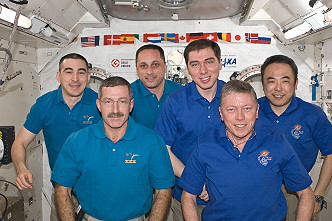
alternative crew photo |
|
 |
|
Crew, launch- and landing data
| No. | Nation | Surname | Given names | Position | Spacecraft (launch) |
Launch date |
Launch time |
Spacecraft (landing) |
Landing date |
Landing time |
Mission duration |
Orbits |
| 1 |  |
Fossum | Michael Edward | ISS-CDR | Soyuz TMA-02M | 07.06.2011 | 20:12:44.924 UTC | Soyuz TMA-02M | 22.11.2011 | 02:24:50 UTC | 167d 06h 12m 05s | 2614 |
| 2 |  |
Shkaplerov | Anton Nikolayevich | Flight Engineer-1 | Soyuz TMA-22 | 14.11.2011 | 04:14:03.953 UTC | Soyuz TMA-22 | 27.04.2012 | 11:45:35.2 UTC | 165d 07h 31m 31s | 2580 |
| 3 | |
Ivanishin | Anatoli Alekseyevich | Flight Engineer-2 | Soyuz TMA-22 | 14.11.2011 | 04:14:03.953 UTC | Soyuz TMA-22 | 27.04.2012 | 11:45:35.2 UTC | 165d 07h 31m 31s | 2580 |
| 4 | |
Burbank | Daniel Christopher | Flight Engineer-3 | Soyuz TMA-22 | 14.11.2011 | 04:14:03.953 UTC | Soyuz TMA-22 | 27.04.2012 | 11:45:35.2 UTC | 165d 07h 31m 31s | 2580 |
| 5 | |
Volkov | Sergei Aleksandrovich | Flight Engineer-4 | Soyuz TMA-02M | 07.06.2011 | 20:12:44.924 UTC | Soyuz TMA-02M | 22.11.2011 | 02:24:50 UTC | 167d 06h 12m 05s | 2614 |
| 6 |  |
Furukawa | Satoshi | Flight Engineer-5 | Soyuz TMA-02M | 07.06.2011 | 20:12:44.924 UTC | Soyuz TMA-02M | 22.11.2011 | 02:24:50 UTC | 167d 06h 12m 05s | 2614 |
unofficial Backup Crew
| No. | Nation | Surname | Given names | Position |
| 1 | |
Pettit | Donald Roy | ISS-CDR |
| 2 | |
Padalka | Gennadi Ivanovich | Flight Engineer |
| 3 | |
Revin | Sergei Nikolayevich | Flight Engineer |
| 4 | |
Acaba | Joseph Michael | Flight Engineer |
| 5 | |
Kononenko | Oleg Dmitriyevich | Flight Engineer |
| 6 |  |
Kuipers | André | Flight Engineer |
 |
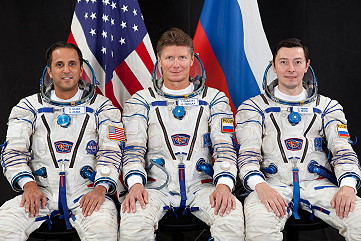 |
 |
Expedition Report
|
Launch from the Baikonur Cosmodrome (Anton
Shkaplerov, Anatoli
Ivanishin and Daniel
Burbank with
Soyuz
TMA-22). Sergei
Volkov, Michael
Fossum and Satoshi
Furukawa were onboard since June 09, 2011 (arrival with
Soyuz
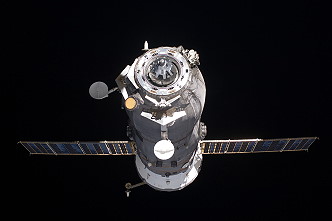
TMA-02M). ISS Expedition 29 began with the undocking of spacecraft Soyuz TMA-21 on September 16, 2011 at 00:38:12 UTC. The former Expedition 28 (Aleksandr Samokutyayev, Andrei Borisenko and Ronald Garan) returned safely to Earth. Soyuz TMA-22, which brought the remaining three Expedition 29 crew members (Anton Shkaplerov, Anatoli Ivanishin and Daniel Burbank) to the ISS, was originally scheduled to launch in September 2011, but due to the launch failure of the Progress M-12M resupply vehicle on August 24, 2011, its launch was delayed to November 11, 2011. It docked successfully to the ISS on November 16, 2011. The launch of the Progress M-13M spacecraft occurred at 10:11 UTC on October 30, 2011. The launch was the first successful Soyuz booster flight to the Space Station since the August 24, 2011 failure of the Soyuz-U booster carrying the Progress M-12M cargo ship. The temperature on the launch day was 39 °F (4 °C). Approximately nine minutes following the liftoff, the Progress M-13M spacecraft successfully reached orbit and deployed its solar arrays and navigation antennas. The spacecraft was inserted into a parking low-Earth orbit with 51.65 deg. inclination, 192.98 km minimal altitude, 252.9 km maximum altitude, 88.66 minutes orbital period. The Progress M-13M rendezvoused with and dock to the ISS at the Nadir port of the Pirs Docking Compartment November 02, 2011 at 11:41 UTC. The spacecraft followed an unusual three days of free flight instead of the usual two. The Pirs Nadir port was vacated by the Progress M-10M spacecraft on October 29, 2011, which undocked at 09:04 UTC. After arriving to the vicinity of the ISS, Progress M-13M began a flyaround maneuver to get lined up with the docking port. It then executed a roll maneuver to properly orient its forward nose probe with the Pirs Docking Compartment. A momentary station keeping hold with about 620 feet (190 m) between the two spacecraft allowed Russian flight controllers at the Moscow Mission Control to check the systems before issuing the approval to begin the 11-minute final approach to the ISS. The automated docking system of the Progress M-13M operated flawlessly and the linkup of Progress M-13M to the Space Station's Pirs docking port occurred just before an orbital sunset while the two spacecraft were orbiting 247 miles (398 km) above northern China. The Progress M-13M spacecraft was packed with 2.9 tons of food, fuel and supplies, including 1,653 pounds (750 kg) of propellant, 110 pounds (50 kg) of oxygen, 926 pounds (420 kg) of water, and 3,108 pounds (1,410 kg) of maintenance gear, spare parts and hardware for experiments. It also carried two iPads for personal use by the ISS Russian cosmonauts. Progress M-13M remained docked to the Space Station for 82 days. It undocked at 22:10 UTC from Pirs Nadir port on January 23, 2012, releasing the Chibis-M satellite which was produced by the Institute of Space Research Institute and the Lebedev Physical Institute (LPI) prior to de-orbiting. Undocking occurred as the ISS crossed into an orbital sunrise 252 miles (350 km) above the Chinese-Russian border. Progress engines performed a pair of posigrade burns later at 01:35 and 02:22 UTC on January 24, 2012. The first burn boosted Progress M-13M by 77.7 mph and the second by 58.7 mph to propel the spacecraft into an orbit more than 60 miles higher than the ISS. From its new altitude, the Progress M-13M spacecraft ejected the Chibis-M micro-satellite at 23:18 UTC on January 24, 2012. The 40 kg Chibis-M micro-satellite is designed to study gamma radiation in atmospheric lightning. It carried about 12 kg of equipment for the scientific study. Previously, other spacecraft have found that high-altitude thunderstorm is accompanied by powerful pulses of gamma-and X-ray and radio pulses of ultrahigh power. Once the deployment of the Chibis-M micro-satellite was successfully accomplished, the mission for Progress M-13M came to an end. The de-orbit braking maneuver for disposal into the South Pacific Ocean was initiated at 02:25 UTC on January 25, 2012 and lasted for three minutes and 56 seconds. The maneuver slowed Progress M-13M by 280 mph (450.6 km/h) to put its trajectory into the atmosphere to burn up. The spacecraft encountered the upper fringes of the atmosphere at 03:04 UTC and was expected to break up around 03:11 UTC. Any surviving debris was to splash harmlessly into the Pacific Ocean around 03:17 UTC on January 25, 2012. Production of Two Dimensional NanoTemplate in Microgravity (2D-NanoTemplate): Production of Two Dimensional NanoTemplate in Microgravity (2D-NanoTemplate) fabricates large and highly oriented nano-scale two-dimensional arranged peptide arrays by suppressing convection and sedimentation. Panasonic 3D Camera (3DA1 Camcorder): The Panasonic 3D Camera (3DA1 Camcorder) can record three-dimensional high-definition video onto secure digital memory cards, like the type used in many consumer cameras. The camera experiment compares the quality of file-based camcorders as opposed to videotape recorders, and examines how well the camera's sensors perform in space. The video also provides a unique virtual view of the International Space Station in 3-D. Alpha Magnetic Spectrometer - 02 (AMS-02): Stars, planets and the molecules that make them are only about five percent of the total mass in the universe - the rest is either dark matter or dark energy, but no one has ever seen this material or been able to study it. What's more, the Big Bang theory holds that the universe should be made of equal parts matter and antimatter, but scientists have never detected naturally occurring antimatter. The Alpha Magnetic Spectrometer - 02 looks for evidence of these mysterious substances, along with very high-energy radiation coming from distant stars that could harm crewmembers traveling to Mars. Amine Swingbed (Amine Swingbed): The Amine Swingbed experiment uses an amine-based chemical combined with the vacuum of space to filter and renew cabin air for breathing. Removing carbon dioxide and moisture from consumed air using this system reduces the demand to supply new air. Amine-based air filtering systems are now being tested for their efficiency and reliability on long-duration space missions. Area Passive Dosimeter for Life-Science Experiments in Space (Area PADLES): JAXA Area PADLES (Area Passive Dosimeter for Life-Science Experiments in Space) is an investigation that uses area dosimeters to continuously monitor the radiation dose aboard the International Space Station (ISS). Radiation exposure can have significant biological effects on living organisms, and on the biological investigations being done on ISS and on the Japanese Experiment Module Kibo. By installing area dosimeters at 17 fixed locations inside the Kibo Module, continuous area radiation monitoring can be provided throughout the ISS Kibo program. Coordinated Aurora Photography from Earth and Space (AuroraMAX): For Coordinated Aurora Photography from Earth and Space (AuroraMAX), crewmembers photograph the aurora borealis from the International Space Station (ISS). The photography may be timed with periods of increased solar activity to increase the chances of photographing auroras. This is a public outreach initiative designed to inspire the public to learn more about solar-terrestrial science and how solar activity affects Earth. Department of Defense Synchronized Position, Hold, Engage, Reorient, Experimental Satellites-Chip Scale Atomic Clock (DOD SPHERES-CSAC): Department of Defense Synchronized Position, Hold, Engage, Reorient, Experimental Satellites - Chip Scale Atomic Clock (DoD SPHERES - CSAC) demonstrates the performance of an atomic clock in the sustained microgravity environment of ISS. Atomic clocks are the most accurate time keepers in the world. An atomic clock is a precision clock that depends for its operation on an electrical oscillation regulated by the natural vibration frequencies of an atomic system. Early Detection of Osteoporosis in Space (EDOS): The Early Detection of Osteoporosis in Space (EDOS) project is investigating bone loss occurring in crewmembers which is similar to osteoporosis on Earth. This helps to test the efficiency of methods (exercise, dietary, etc.) currently used to counteract such conditions, and will help in the development of new methods in the future. This could also help feed into preventative methods and rehabilitation for patients on Earth with similar bone conditions such as osteoporosis. ESA NightPod (ESA NightPod): NightPod is a tracking device technology being tested on the International Space Station (ISS) for its ability to assist cameras in taking improved photographs of the Earth, especially at night (in low light conditions). The device compensates for ISS movement allowing a camera fitted to the device a longer exposure time on fixed targets on Earth. This is not only helpful for taking images of Earth for education, promotion or research activities, it also holds the potential for use on orbital craft on future missions around other planets and planetary bodies. Flame Extinguishment Experiment (FLEX): FLame Extinguishment Experiment (FLEX) will assess the effectiveness of fire suppressants in microgravity and quantify the effect of different possible crew exploration atmospheres on fire suppression. The goal of this research is to provide definition and direction for large scale fire suppression tests and selection of the fire suppressant for next generation crew exploration vehicles. Simulation of Geophysical Fluid Flow Under Microgravity - 2 (Geoflow-2): Simulation of Geophysical Fluid Flow under Microgravity - 2 (Geoflow-2) studies heat and fluid flow currents within the Earth's mantle. Geoflow-2 aims to improve computational methods that scientists and engineers use to understand and predict the processes in the Earth's mantle that lead to volcanic eruptions, plate tectonics and earthquakes. Neuroendocrine and Immune Responses in Humans During and After Long Term Stay at ISS (Immuno): Neuroendocrine and Immune Responses in Humans During and After Long Term Stay at ISS (Immuno) provides an understanding for the development of pharmacological tools to counter unwanted immunological side-effects during long-duration missions in space. Investigation of the Processes of Cultivation of Different Types of Cells (Kaskad (Cascade)): Investigation of cell cultivation of microorganisms, animals and human in microgravity conditions to obtain the concentrated biomass with a high content of cells providing the increased output of target bioactive substances (BAS). LEGO® Bricks, formerly known as NLO-Education-2 (LEGO Bricks): The LEGO® Bricks payload is a series of toy LEGO kits that are assembled on orbit and used to demonstrate scientific concepts. Some of these models include satellites, a space shuttle orbiter, and a scale model of the International Space Station (ISS). Monitor of All-sky X-ray Image (MAXI): The Monitor of All-sky X-ray Image (MAXI) investigation is designed to continuously monitor, through a systematic survey, X-ray sources and variabilities as the International Space Station (ISS) orbits Earth. Located at Equipment Exchange Unit (EER) site 1 on the Japanese Experiment Module - Exposed Facility (JEF), MAXI is comprised of a couple highly sensitive X-ray detectors, the Gas Slit Camera (GSC) and the Solid-state Slit Camera (SSC). Besides the goal of performing a complete sky survey, this research helps to address fundamental astrophysics questions and allows researchers to better understand the current state and evolution of our Universe. The Microstructure Formation in Casting of Technical Alloys under Diffusive and Magnetically Controlled Convective Conditions-2 (MICAST-2): Microgravity offers a unique way to study the solidification of metal mixtures, or alloys. The Microstructure Formation in Casting of Technical Alloys under Diffusive and Magnetically Controlled Convective Conditions-2 (MICAST-2) investigation will study a magnetic field's influence on the solidification of alloys containing aluminum-silicon (AlSi) and aluminum-silicon-iron (AlSiFe). The experiment will also inform computer models of metal casting, which could help the metals industry design better mixtures and processes. Chaos, Turbulence and its Transition Process in Marangoni Convection-Exp (Marangoni-Exp): Marangoni convection is the flow driven by the presence of a surface tension gradient which can be produced by temperature difference at a liquid/gas interface. The convection in liquid bridge of silicone oil is generated by heating the one disc higher than the other. Scientists are observing flow patterns of how fluids move to learn more about how heat is transferred in microgravity. In-situ Observation of Growth Mechanisms of Protein Crystals and Their Perfection Under Microgravity (Nano Step): The In-situ Observation of Growth Mechanisms of Protein Crystals and their Perfection under Microgravity (NanoStep) investigation aims to clarify the relationship between crystal growth mechanism, surface morphology, and the perfection of crystals. Crystallization of proteins in microgravity yields crystals with better perfection than crystallization on Earth. The reason for this phenomenon has not been explained from a viewpoint of crystal growth mechanism. Preliminary Advanced Colloids Experiment - 2: 3D Particle Test (PACE-2): Preliminary Advanced Colloids Experiment - 2 (PACE-2) characterizes the resolution of the high magnification colloid experiments with the Light Microscopy Module (LMM) to determine the minimum size of the particles that can be resolved by the Advanced Colloids Experiment (ACE). There is a direct relationship between magnification, particle size, test duration and on-orbit vibration that is quantified. Photosynth™ Three-Dimensional Modeling of ISS Interior and Exterior (Photosynth): Not everyone can be an astronaut - but with special image-processing software, anyone can virtually visit the International Space Station. A partnership between NASA and Microsoft Labs creates new 3-D models of the inside and outside of the ISS, stitching together images using Microsoft's Photosynth software. Photosynth™ Three-Dimensional Modeling of ISS Interior and Exterior (Photosynth) analyzes individual photographs and detects similarities among them, joining them together to produce a three-dimensional image of a scene. Robotic Refueling Mission (RRM): The Robotic Refueling Mission (RRM) investigation uses the International Space Station's two-armed robotic handyman, Dextre, to show how future robots could service and refuel satellites in space. RRM tests NASA-developed technologies, tools and procedures to refuel and repair satellites that were not originally designed to be serviced. RRM is expected to pave the way for future robotic servicing missions in space. Robonaut (Robonaut): Robonaut is a two-armed humanoid robot torso designed with the versatility and dexterity to manipulate hardware, work in high risk environments, and respond safely to unexpected obstacles. Robonaut is currently mounted inside the International Space Station (ISS); in the future, it will perform tasks both inside and outside the ISS. The Robonaut Teleoperations System enables Robonaut to mimic the motions of a crewmember wearing specialized gloves, a vest and a visor providing a three-dimensional view through Robonaut's eyes. Super-Sensitive High Definition TV (SS-HDTV): Super-Sensitive High Definition TV (SS-HDTV) system takes video images during orbital nights, Earth nights, lightning, auroras, cosmic showers, and other amazing events. The video images taken by SS-HDTV are recorded to SD cards, which are downlinked to the ground via data-relay satellites. Myotendinous and Neuromuscular Adaptation to Long-term Spaceflight (Sarcolab): Myotendinous and Neuromuscular Adaptation to Long-term Spaceflight (Sarcolab) investigates the adaptation and deterioration of the soleus, or calf muscle, where it joins the Achilles tendon, which links it to the heel and carries loads from the entire body. Muscle fiber samples are taken from crewmembers before and after flight, and analyzed for changes in structural and chemical properties. MRI and ultrasound tests and electrode stimulation are conducted to help assess muscle and tendon changes caused by microgravity exposure. Space Headaches (Space Headaches): Headaches can be a common complaint during spaceflight. The Space Headaches experiment improves our understanding of such conditions, which helps in the development of methods to alleviate associated symptoms, and improve the well-being and performance of crewmembers in orbit. This can also improve our knowledge of similar conditions on Earth. Tomatosphere-III (Tomatosphere-III): The primary objectives of the project are to increase student interest in space science and horticultural technology and to increase student familiarity and experience with research methodologies. Tomatosphere-III will send 600,000 tomato seeds to the International Space Station (ISS) for exposure to the space environment. The seeds will be returned to Earth for use in over 13,000 classrooms throughout Canada as a learning resource. Students will measure the germination rates, growth patterns and vigor of growth of the seeds. YouTube Space Lab (YouTube Space Lab): YouTube Space Lab is a world-wide contest for students 14-18 years old for which entries were submitted via a 2-minute YouTube video in the areas of physics or biology. Of the 2,000 entries received from around the world, the top 2 global winners were selected. These experiments examine the predatory behavior of a jumping spider and the anti-fungal properties of Bacillus subtilis, a naturally occurring bacteria that is commonly used as an anti-fungal agent for agricultural crops. Finally, the station command changed from US astronaut Michael Fossum to US astronaut Daniel Burbank. With undocking of Soyuz TMA-02M, carrying Sergei Volkov, Michael Fossum and Satoshi Furukawa on November 21, 2011 at 23:00:17 UTC the Expedition 29 concluded and the new ISS Expedition 30 began. During the stay on board of the ISS the crews of Expeditions 29 / 30 carried out the following scientific experiments: 2D-NanoTemplate (Production of Two Dimensional NanoTemplate in Microgravity), 3DA1 Camcorder (Panasonic 3D Camera), ALTEA-Dosi (Anomalous Long Term Effects in Astronauts' - Dosimetry), ALTEA-GAP (Anomalous Long Term Effects in Astronauts' Central Nervous System-GAP), ALTEA-Shield (Anomalous Long Term Effects in Astronauts' Central Nervous System - Shield), AMS-02 (Alpha Magnetic Spectrometer - 02), Actiwatch Spectrum (Actiwatch Spectrum System), Alloy Semiconductor (Crystal Growth of Alloy Semiconductor Under Microgravity), Amine Swingbed (Amine Swingbed), Aquatic Habitat (Aquatic Habitat), Area PADLES (Passive Dosimeter for Lifescience Experiment in Space), AuroraMAX (Coordinated Aurora Photography from Earth and Space (AuroraMAX)), BASS (Burning and Suppression of Solids), BCAT-3-4-CP (Binary Colloidal Alloy Test - 3 and 4: Critical Point), BCAT-4-Poly (Binodal Colloidal Aggregation Test - 4: Polydispersion), BCAT-5-3D-Melt (Binary Colloidal Alloy Test - 5: Three-Dimensional Melt), BCAT-5-PhaseSep (Binary Colloidal Alloy Test-5: Phase Separation), BCAT-5-Seeded Growth (Binary Colloidal Alloy Test - 5: Seeded Growth), BCAT-6-Colloidal Disks (Binary Colloidal Alloy Test - 6 - Colloidal Disks), BCAT-6-PS-DNA (Binary Colloidal Alloy Test - 6: Polystyrene - Deoxyribonucleic Acid), BCAT-6-Phase_Separation (Binary Colloidal Alloy Test - 6 - Phase Separation), BCAT-6-Seeded Growth (Binary Colloidal Alloy Test - 6: Seeded Growth), BioLab (Biological Experiment Laboratory), Biological Rhythms (The Effect of Long-term Microgravity Exposure on Cardiac Autonomic Function by Analyzing 24-hours Electrocardiogram), Bisphosphonates (Bisphosphonates as a Countermeasure to Space Flight Induced Bone Loss), CCF (Capillary Channel Flow), CEO (Crew Earth Observations), CEVIS (Cycle Ergometer with Vibration Isolation and Stabilization System), CFE-2 (Capillary Flow Experiment - 2), CIR (Combustion Integrated Rack - Fluids and Combustion Facility), COLBERT (Combined Operational Load Bearing External Resistance Treadmill), CSI-05 (Commercial Generic Bioprocessing Apparatus Science Insert - 05: Spiders, Fruit Flies and Directional Plant Growth), Card (Long Term Microgravity: A Model for Investigating Mechanisms of Heart Disease with New Portable Equipment), CsPINs (Dynamism of Auxin Efflux Facilitators, CsPINs, Responsible for Gravity-regulated Growth and Development in Cucumber), DECLIC-ALI (DEvice for the study of Critical LIquids and Crystallization - Alice Like Insert), DECLIC-DSI (DEvice for the study of Critical LIquids and Crystallization - Directional Solidification Insert), DECLIC-HTI (DEvice for the study of Critical LIquids and Crystallization - High Temperature Insert), DOD-SPHERES-CSAC (Department of Defense Synchronized Position, Hold, Engage, Reorient, Experimental Satellites-Chip Scale Atomic Clock), DTN (Disruption Tolerant Networking for Space Operations), Dynamic Surf (Experimental Assessment of Dynamic Surface Deformation Effects in Transition to Oscillatory Thermo capillary Flow in Liquid Bridge of High Prandtl Number Fluid), EDOS (Early Detection of Osteoporosis in Space), EDR (European Drawer Rack), EKE (Assessment of Endurance Capacity by Gas Exchange and Heart Rate Kinetics During Physical Training), EMCS (European Modular Cultivation System), EPM (European Physiology Module), EPO-Demos (Education Payload Operation - Demonstrations), ERB-2 (Erasmus Recording Binocular - 2), ESA-EPO (European Space Agency - Education Payload Operations), ESA Nodding Mechanism (ESA Nodding Mechanism), EXPRESS Racks (EXpedite the PRocessing of Experiments for Space Station Racks), EarthKAM (Earth Knowledge Acquired by Middle School Students), FIR (Fluids Integrated Rack - Fluids and Combustion Facility), FLEX (Flame Extinguishment Experiment), FLEX-2 (Flame Extinguishment Experiment - 2), FSL (Fluid Science Laboratory), Functional Task Test (Physiological Factors Contributing to Changes in Postflight Functional Performance), GLACIER (General Laboratory Active Cryogenic ISS Experiment Refrigerator), Geoflow-2 (Simulation of Geophysical Fluid Flow Under Microgravity - 2), HET-Smartphone (Human Exploration Telerobotics Smartphone), HREP-HICO (HICO and RAIDS Experiment Payload - Hyperspectral Imager for the Coastal Ocean), HREP-RAIDS (HICO and RAIDS Experiment Payload - Remote Atmospheric and Ionospheric Detection System (RAIDS)), HRF-1 (Human Research Facility - 1), HRF-2 (Human Research Facility - 2), Hair (Biomedical Analyses of Human Hair Exposed to a Long-term Space Flight), Hicari (Growth of Homogeneous SiGe Crystals in Microgravity by the TLZ Method), ISERV (ISS SERVIR Environmental Research and Visualization System), ISSAC (International Space Station Agricultural Camera), ISS Ham Radio (International Space Station Ham Radio), Ice Crystal 2 (Crystal growth mechanisms associated with the macromolecules adsorbed at a growing interface - Microgravity effect for self-oscillatory growth - 2), Immuno (Neuroendocrine and Immune Responses in Humans During and After Long Term Stay at ISS), InSPACE-3 (Investigating the Structure of Paramagnetic Aggregates from Colloidal Emulsions - 3), Integrated Cardiovascular (Cardiac Atrophy and Diastolic Dysfunction During and After Long Duration Spaceflight: Functional Consequences for Orthostatic Intolerance, Exercise Capability and Risk for Cardiac Arrhythmias), Integrated Immune (Validation of Procedures for Monitoring Crewmember Immune Function), JAXA-Commercial (Japan Aerospace Exploration Agency - Commercial Payload Program), JAXA EPO 7 (Japan Aerospace Exploration Agency Education Payload Observation 7), JAXA EPO 8 (Japan Aerospace Exploration Agency Education Payload Observation 8), JAXA PCG (Japan Aerospace Exploration Agency Protein Crystal Growth), Journals (Behavioral Issues Associated with isolation and Confinement: Review and Analysis of Astronaut Journals), Kubik (Kubik), LEGO Bricks (LEGO® Bricks, formerly known as NLO-Education-2), MAMS (Microgravity Acceleration Measurement System), MARES (Muscle Atrophy Research and Exercise System), MAXI (Monitor of All-sky X-ray Image), MCE (Multi-mission Consolidated Equipment), MELFI (Minus Eighty-Degree Laboratory Freezer for ISS), MERLIN (Microgravity Experiment Research Locker Incubator), MFMG (Miscible Fluids in Microgravity), MISSE-8 (Materials International Space Station Experiment - 8), MSG (Microgravity Science Glovebox), MSL-CETSOL and MICAST (Materials Science Laboratory - Columnar-to-Equiaxed Transition in Solidification Processing and Microstructure Formation in Casting of Technical Alloys under Diffusive and Magnetically Controlled Convective Conditions), MSRR-1 (Materials Science Research Rack-1), Marangoni-Exp (Chaos, Turbulence and its Transition Process in Marangoni Convection-Exp), Myco-3 (Mycological Evaluation of Crew Exposure to ISS Ambient Air - 3), NanoRacks-CubeLabs Platforms (NanoRacks-CubeLabs Platforms), NanoRacks-E-Book (NanoRacks-Electronic-Book), NanoRacks-FCA-Concrete Mixing (NanoRacks-Faith Christian Academy-Concrete Mixing Experiment), NanoRacks-FCHS-Robot (NanoRacks-Fremont Christian High School-Mini-Robot), NanoRacks-Fischer-18S-rRNA (NanoRacks-Fischer Institute of Air and Space-Footsteps of Creation and Origin of Life), NanoRacks-Fischer-Bone (NanoRacks-Fischer Institute of Air and Space-Bone Study), NanoRacks-Fischer-Early Development (NanoRacks-Fischer Institute of Air and Space-Early Development), NanoRacks-Fischer-Milk (NanoRacks-Fischer Institute of Air and Space-Probiotic Milk), NanoRacks-NanoKit-1 (NanoRacks-DreamUP!-Crystal Microplates-NanoKit-1), NanoRacks-Smartphone-2 (NanoRacks-Smartphone-2), NanoRacks-Terpene (NanoRacks-Terpene Extraction in Microgravity), NanoRacks-VCHS-B. Sphaericus (NanoRacks-Valley Christian High School- Bacillus Sphaericus Bacteria Growth), NanoRacks-VCHS-Electromagnetic Ferrofluid (NanoRacks-Valley Christian High School-Electromagnetic Effects on Ferrofluid), NanoRacks-VCHS-Electroplating (NanoRacks-Valley Christian High School-Electroplating), NanoRacks-VCHS-Plant Growth (NanoRacks-Valley Christian High School-Plant Growth), NanoRacks-VCHS-To Be Selected (NanoRacks-Valley Christian High School-To Be Selected Experiment), NanoRacks-WCHS-E. Coli and Kanamycin (NanoRacks-Whittier Christian High School-E.Coli Bacteria and Kanamycin Antibiotic), NanoRacks Plate Reader (NanoRacks Plate Reader), Nano Step (In-situ Observation of Growth Mechanisms of Protein Crystals and Their Perfection Under Microgravity), Neurospat (Effect of Gravitational Context on EEG Dynamics: A Study of Spatial Cognition, Novelty Processing and Sensorimotor Integration), Nutrition (Nutritional Status Assessment), Onboard Diagnostic Kit (Evaluation of Onboard Diagnostic Kit), PACE-2 (Preliminary Advanced Colloids Experiment - 2: 3D Particle Test), Particle Flux (Particle Flux Demonstrator), Passages (Scaling Body-Related Actions in the Absence of Gravity), Photosynth (Photosynth™ Three-Dimensional Modeling of ISS Interior and Exterior), Pro K (Dietary Intake Can Predict and Protect Against Changes in Bone Metabolism during Spaceflight and Recovery, REBR (ReEntry Breakup Recorder), ROALD-2 (ROle of Apoptosis in Lymphocyte Depression-2), RRM (Robotic Refueling Mission), Reaction Self Test (Psychomotor Vigilance Self Test on the International Space Station), Repository (National Aeronautics and Space Administration Biological Specimen Repository), Robonaut (Robonaut), Ryutai (Ryutai Experiment Rack), SAMS-II (Space Acceleration Measurement System-II), SATS-Interact (Supervision of Autonomous and Teleoperated Satellites - Interact), SCAN Testbed (Space Communications and Navigation Testbed), SEDA-AP (Space Environment Data Acquisition Equipment - Attached Payload), SLICE (Structure and Liftoff In Combustion Experiment), SMILES (Superconducting Submillimeter-Wave Limb-Emission Sounder), SNFM (Serial Network Flow Monitor), SODI-Colloid-2 (SODI-Colloid-2), SODI-DSC (Selectable Optical Diagnostics Instrument - Diffusion and Soret Coefficient), SOLO (SOdium LOading in Microgravity), SPHERES (Synchronized Position Hold, Engage, Reorient, Experimental Satellites), SPHERES-Zero-Robotics (Synchronized Position Hold, Engage, Reorient, Experimental Satellites-Zero-Robotics), SS-HDTV (Super-Sensitive High Definition TV), STP-H3-Canary (Space Test Program - Houston 3 - Canary), STP-H3-DISC (Space Test Program - Houston 3 - Digital Imaging Star Camera), STP-H3-MHTEX (Space Test Program - Houston 3 - Massive Heat Transfer Experiment), STP-H3-VADER (Space Test Program - Houston 3 - Variable emissivity radiator Aerogel insulation blanket Dual zone thermal control Experiment suite for Responsive space), Saibo (Saibo Experiment Rack), Solar-SOLACES (Sun Monitoring on the External Payload Facility of Columbus - SOLar Auto-Calibrating EUV/UV Spectrophotometers), Solar-SOLSPEC (Sun Monitoring on the External Payload Facility of Columbus -Sun Monitoring on the External Payload Facility of Columbus -SOLar SPECtral Irradiance Measurements), SpaceDRUMS (Space Dynamically Responding Ultrasonic Matrix System), Space Headaches (Space Headaches), Spin (Validation of Centrifugation as a Countermeasure for Otolith Deconditioning During Spaceflight), Sprint (Integrated Resistance and Aerobic Training Study), TEM (Transport Environment Monitor Packages), Thermolab (Thermoregulation in Humans During Long-Term Spaceflight), Tomatosphere-III (Tomatosphere-III), Treadmill Kinematics (Biomechanical Analysis of Treadmill Exercise on the International Space Station), UMS (Urine Monitoring System), Ultrasound 2 (Human Research Facility Ultrasound on the International Space Station 2), VIABLE ISS (eValuatIon And monitoring of microBiofiLms insidE International Space Station), VO2max (Evaluation of Maximal Oxygen Uptake and Submaximal Estimates of VO2max Before, During, and After Long Duration International Space Station Missions), Vascular (Cardiovascular Health Consequences of Long-Duration Space Flight), Vessel ID System (Vessel ID System), Vessel Imaging (Vascular Echography), WORF (Window Observational Research Facility), You Tube Space Lab (You Tube Space Lab). |
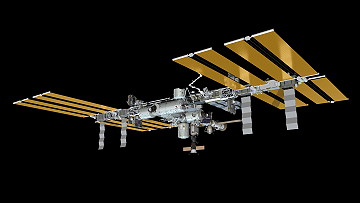
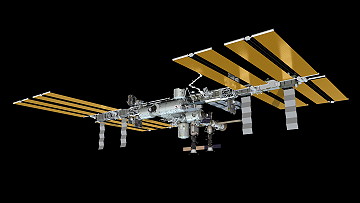
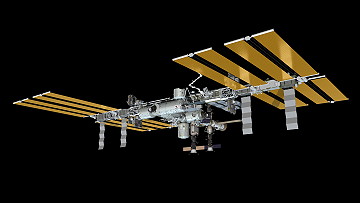
ISS Assembly
 |
 |
 |
|
Photos
 |
 |
 |
 |
 |
 |
 |
|
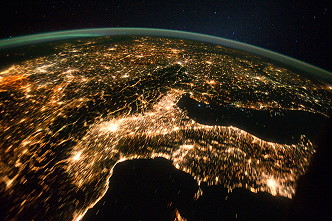
more Earth observation photos |
|
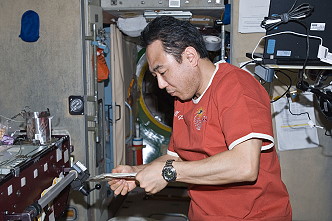
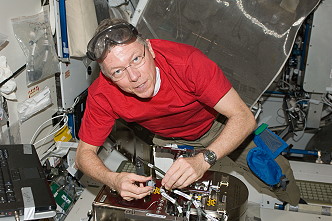
more onboard photos |
|
| © |  |
Last update on December 14, 2020.  |
 |