Human Orbital Spaceflights

International Flight No. 140STS-43Atlantis (9)42nd Space Shuttle missionUSA |
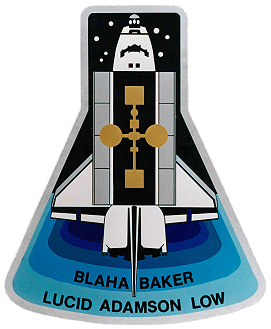 |
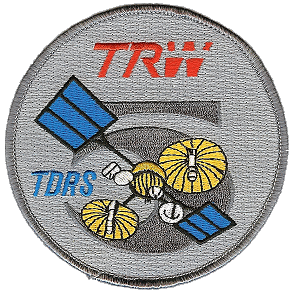 |
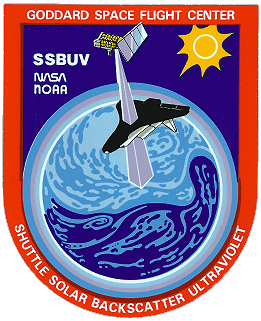 |
||
Launch, orbit and landing data
walkout photo |
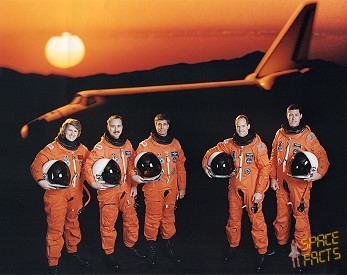 |
||||||||||||||||||||||||||||
alternative crew photo |
Crew
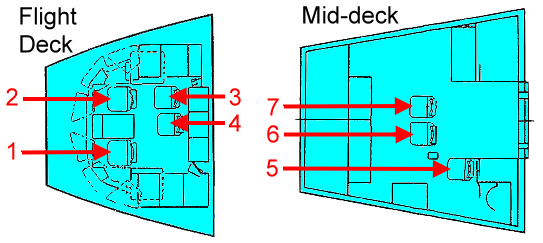
| No. | Surname | Given names | Position | Flight No. | Duration | Orbits | |
| 1 |  |
Blaha | John Elmer | CDR | 3 | 8d 21h 21m 25s | 142 |
| 2 | |
Baker | Michael Allen | PLT | 1 | 8d 21h 21m 25s | 142 |
| 3 | |
Lucid | Shannon Matilda Wells | MS-1 | 3 | 8d 21h 21m 25s | 142 |
| 4 | |
Low | George David | MS-2, EV-1, FE | 2 | 8d 21h 21m 25s | 142 |
| 5 | |
Adamson | James Craig | MS-3, EV-2 | 2 | 8d 21h 21m 25s | 142 |
Crew seating arrangement
|
 |
|
||||||||||||||||||||||||
Hardware
| Orbiter : | OV-104 (9.) |
| SSME (1 / 2 / 3): | 2024 (3.) / 2012 (12.) / 2028 (6.) |
| SRB: | BI-045 / RSRM 17W |
| ET: | ET-47 (LWT-40) |
| OMS Pod: | Left Pod 01 (15.) / Right Pod 01 (15.) |
| FWD RCS Pod: | FRC 4 (9.) |
| RMS: | - |
| EMU: | EMU No. 2014 (PLSS No. 1008) / EMU No. 2009 (PLSS No. 1006) |
Flight
|
Launch from Cape Canaveral (KSC) and
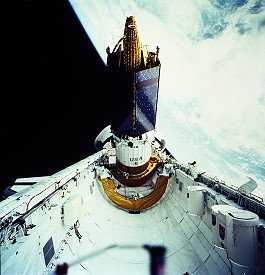
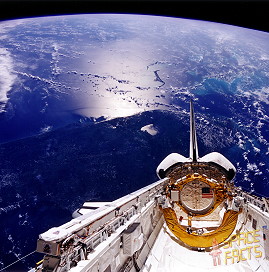
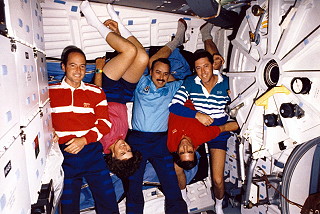
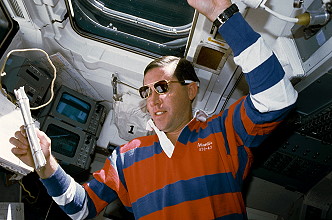
landing on Cape Canaveral (KSC), Runway 15. The launch was originally set for July 23, 1991 but was moved to July 24, 1991 to allow time to replace a faulty integrated electronics assembly that controls orbiter/external tank separation. The mission was postponed again about five hours before liftoff on July 24, 1991 due to a faulty main engine controller on number three main engine. The launch was reset for August 01, 1991. Due to cabin pressure vent valve reading and due to unacceptable return-to-launch site weather conditions the launch was postponed again. The primary payload, Tracking and Data Relay Satellite-5 (TDRS-5 or TDRS-E) attached to an Inertial Upper Stage (IUS), was scheduled to deploy about six hours into flight. Along with the TDRS-E/IUS in Atlantis' cargo bay for STS-43 was the Shuttle Solar Backscatter Ultraviolet instrument used to aid in calibrating ultraviolet satellites already in orbit that assist in measuring the Earth's ozone layer, among other functions; the Space Station Heat Pipe Advanced Radiator Element-II, a reflight of an earlier Shuttle experiment that tests a natural process incorporating no moving parts that may be used to cool Space Station Freedom; and the Optical Communications Through the Shuttle Window experiment that uses fiber optics for communications onboard the Shuttle. The Tracking and Data Relay Satellite (TDRS)-E was the fifth in a series of communications spacecraft planned for the Tracking and Data Relay Satellite System (TDRSS). TDRS-A, now in orbit and known as TDRS-1, was deployed from the Space Shuttle Challenger on April 5, 1983 on STS-6. TDRS-B was destroyed during the Challenger accident in January 1986. TDRS-C, known as TDRS-3 in orbit, was launched from Discovery on Sept. 29, 1988 on STS-26. TDRS-D, known as TDRS-4 in orbit, was launched from Discovery on March 13, 1989 on STS-29. At the time of launch, TDRS-4 was located at 41 degrees West longitude, over the Atlantic Ocean off Brazil, TDRS-3 was located at 174 degrees west longitude, and TDRS-1 was located at 171 degrees west longitude. Both TDRS-3 and TDRS-1 were over the Pacific, east of the Gilbert Islands and South of Hawaii. TDRS-4 also was known as TDRS-East and the combination of TDRS-1 and TDRS-4 provided the TDRS western satellite capability. The TDRSs are composed of three distinct modules: a spacecraft module, a payload module and an antenna module. The modular design reduces the cost of individual design and construction efforts that, in turn, lower the cost of each satellite. The spacecraft module, housing the subsystems that operate the satellite, is located in the lower hexagon of the spacecraft. The attitude control subsystem stabilizes the satellite to provide accurate antenna pointing and proper orientation of the solar panels to the sun. The electrical power subsystems consists of two solar panels that provide power of approximately 1,700 watts. The thermal control subsystem consists of surface coatings and controlled electric heaters. The payload module is composed of the electronic equipment required to provide communications between the user spacecraft and the ground. The receivers and transmitters for single access services are mounted in compartments on the back of the single-access antennas. The antenna module is composed of seven antenna systems: two single-access, the multiple access array and space-to-ground link and the S-band omni for satellite health and housekeeping. Commercial K-band and C-band antennas round out the complement. For single-access service, the TDRSs have dual-feed S-band, Ku-band parabolic (umbrella-like) antennas. These antennas are free to be positioned in two axes directing the radio beam to orbiting user spacecraft below. These antennas are used only to relay communications to and from user spacecraft. The high data rates provided by these antennas is available to users on a time-shared basis. Each antenna is capable of supporting two user spacecraft services simultaneously - one at S-band and one at Ku-band - provided both users are within the beam width of the antenna. The multiple access antenna array is hard-mounted in one position on the surface of the antenna module facing the Earth. Another antenna, a 6.5 foot (2-meter) parabolic reflector, provides the prime link for relaying transmissions to and from the ground terminal at Ku-band. IUS-15, the vehicle to be used on mission STS-43, is a two-stage rocket weighing approximately 32,500 pounds (14,742 kg). Each stage has a solid rocket motor, preferred over liquid-fueled engines for their relative simplicity, high reliability, low cost and safety. The IUS is 5.18 meters (17 feet) long and 2.8 meters (9.25 feet) in diameter. It consists of an aft skirt; an aft stage solid rocket motor containing 21,400 pounds (9,707 kg) of propellant generating approximately 42,000 pounds (19,051 kg) of thrust; an interstage; a forward stage solid rocket motor with 6,000 pounds (2,722 kg) of propellant generating approximately 18,000 pounds (8,165 kg) of thrust; and an equipment support section. After the orbiter payload bay doors were opened in orbit, the orbiter maintained a preselected attitude to keep the payload within thermal requirements and constraints. On-orbit predeployment checkout began, followed by an IUS command link check and spacecraft communications command check. Orbiter trim maneuver(s) were normally performed at this time. Forward payload restraints were released and the aft frame of the airborne support equipment tilt the IUS/TDRS to 29 degrees. This extended the TDRS into space just outside the orbiter payload bay, allowing direct communication with Earth during systems checkout. The orbiter then was maneuvered to the deployment attitude. Prior to deployment, the spacecraft electrical power source was switched from orbiter power to IUS internal power by the orbiter flight crew. After verifying that the spacecraft is on IUS internal power and that all IUS/TDRS predeployment operations have been successfully completed, a GO/NO-GO decision for IUS/TDRS deployment was sent to the crew. When the orbiter flight crew was given a GO decision, they activated the pyrotechnics that separate the IUS/TDRS umbilical cables. The crew then commanded under the lead of Shannon Lucid the electromechanical tilt actuator to raise the tilt table to a 58-degree deployment position. The orbiter's RCS thrusters were inhibited and a pyrotechnic separation device was initiated to physically separate the IUS/spacecraft combination from the tilt table. Compressed springs provide the force to jettison the IUS/TDRS from the orbiter payload bay at approximately 0.10 meters (4.2 inches) per second. The deployment normally is performed in the shadow of the orbiter or in Earth eclipse. The tilt table then was lowered to minus 6 degrees after IUS and its spacecraft are deployed. A small orbiter maneuver was made to back away from the IUS/TDRS. Approximately 19 minutes after IUS/TDRS deployment, the orbiter's engines were ignited to move the orbiter away from the IUS/spacecraft. At this point, the IUS/TDRS was controlled by the IUS onboard computers. Approximately 10 minutes after the IUS/TDRS was ejected from the orbiter, the IUS onboard computer sent signals used by the IUS and/or TDRS to begin mission sequence events. This signal also enabled the reaction control system. All subsequent operations were sequenced by the IUS computer, from transfer orbit injection through spacecraft separation and IUS deactivation. After the RCS was activated, the IUS maneuvers to the required thermal attitude and performed any required spacecraft thermal control maneuvers. At approximately 45 minutes after ejection from the orbiter, the pyrotechnic inhibits for the first solid rocket motor were removed. The belly of the orbiter was oriented towards the IUS/TDRS combination to protect the orbiter windows from the IUS's plume. The IUS recomputed the first ignition time and maneuvered necessary to attain the proper attitude for the first thrusting period. When the proper transfer orbit opportunity was reached, the IUS computer sent the signal to ignite the first stage motor. TDRS-E, which became TDRS-5 on orbit, was successfully boosted to geosynchronous orbit at more than 22,000 miles (35,400 kilometers) above Earth by two firings of the Inertial Upper Stage (IUS) booster, the last of which occurred approximately 12 ½ hours into the mission. TDRS then deployed its antennas and solar panels, and separation from the IUS took place less than 45 minutes later. The Shuttle Solar Backscatter Ultraviolet (SSBUV) instrument was developed by NASA to compare the observations of several ozone measuring instruments aboard the National Oceanic and Atmospheric Administration's TIROS satellites (NOAA-9 and NOAA-11) and NASA's NIMBUS-7 satellite. The SSBUV data is used to calibrate these instruments to insure the most accurate readings possible for the detection of ozone trends. The SSBUV helped scientists solve the problem of data reliability caused by the calibration drift of the Solar Backscatter Ultraviolet (SBUV) instruments on these satellites. The SSBUV used the Space Shuttle's orbital flight path to assess instrument performance by directly comparing data from identical instruments aboard the TIROS spacecraft and NIMBUS-7 as the Shuttle and satellite pass over the same Earth location within an hour. These orbital coincidences could occur 17 times a day. The satellite-based SBUV instruments estimate the amount and height distribution of ozone in the upper atmosphere by measuring the incident solar ultraviolet radiation and ultraviolet radiation backscattered from the Earth's atmosphere. The SBUV measures these parameters in 12 discrete wavelength channels in the ultraviolet. Because ozone absorbs in the ultraviolet, an ozone measurement can be derived from the ratio of backscattered radiation at different wavelengths, providing an index of the vertical distribution of ozone in the atmosphere. The two previous SSBUV flights occurred on STS-34 in October 1989 and STS-41 in October 1990. Five more flights were manifested through 1996, beginning with STS-48 in April 1992. During that mission, SSBUV data was used to calibrate measurements from the Upper Atmosphere Research Satellite, planned for launch September 1990 with STS-48. NASA's goal was to fly SSBUV missions approximately once a year between 1989 and 2000 to provide precise calibration measurements across a full 11-year solar cycle. The Protein Crystal Growth (PCG) payload aboard STS-43 was a continuing series of experiments leading toward major benefits in biomedical technology. The experiments on this Space Shuttle mission could improve pharmaceutical agents such as insulin for treatment of diabetes. Protein crystals like inorganic crystals such as quartz, are structured in a regular pattern. With a good crystal, roughly the size of a grain of table salt, scientists are able to study the protein's molecular architecture. Determining a protein crystal's molecular shape is an essential step in several phases of medical research. Once the three-dimensional structure of a protein is known, it may be possible to design drugs that will either block or enhance the protein's normal function within the body or other organisms. Protein crystals grown in Earth-based laboratories are typically small and lacking in uniformity or "order". However, lack of size and order greatly hamper procedures used to deduce the actual structure of the molecules constituting the protein crystal. The problem with growing larger and highly ordered crystals on Earth is analogous to trying to make a geometric shape out of Styrofoam cups on a breezy day. The "breeze" is caused by gravity-driven forces of convection that thwart attempts to arrange the cups (molecules) in a neat and orderly fashion. The growth of relatively large and highly ordered protein crystals in the almost "breeze-less" environment of space facilitates and greatly reduces the time required for the analysis of protein structure. During the STS-43 flight, experiments were conducted using bovine insulin. Though there were four processes used to grow crystals on Earth - vapor diffusion, liquid diffusion, dialysis and batch process - only batch process was used in this set of experiments. Shortly after achieving orbit, a crewmember activated the experiment to grow insulin crystals by decreasing the experiment's temperature from 40 degrees C to 22 degrees C as was done on STS-37. The results of the STS-37 experiment indicate that the space-grown crystals are much larger than their Earth-grown counterparts. The Investigations into Polymer Membrane Processing (IPMP), a middeck payload, made its third Space Shuttle flight. The objective of the IPMP was to investigate the physical and chemical processes that occur during the formation of polymer membranes in microgravity such that the improved knowledge base can be applied to commercial membrane processing techniques. Supporting the overall program objective, the STS-43 mission provided additional data on the polymer precipitation process. Polymer membranes have been used by industry in separation processes for many years. Typical applications include enriching the oxygen content of air, desalination of water and kidney dialysis. Polymer membranes frequently are made using a two-step process. A sample mixture of polymer and solvents is applied to a casting surface. The first step involves the evaporation of solvents from the mixture. In the second step, the remaining sample is immersed in a fluid (typically water) bath to precipitate the membrane from the solution and complete the process. On the STS-43 mission, Commander John Blaha operated the IPMP experiment. By turning the unit's valve to the first stop, the evaporation process was initiated. After a specified period consisting of several minutes, a quench procedure was initiated. The quench consisted of introducing a humid atmosphere which allowed the polymer membrane to precipitate out. The units were allowed to free float in the cabin for 10 minutes. Ground-based research indicated that the precipitation process should be complete after approximately 10 minutes, and the entire procedure was at that point effectively quenched. The two units were then restowed in the locker for the duration of the flight. The BioServe ITA Materials Dispersion Apparatus (BIMDA) primary elements, developed by ITA, were the Materials Dispersion Apparatus (MDA) minilabs and their controller with a self-contained power supply. The MDA minilab was a compact device capable of mixing as many as 150 samples, using liquid-to-liquid processes using two or three fluids, and can grow crystals, cast thin-film membranes and conduct biomedical and fluid science experiments. The MDA experiments included the study of protein crystal growth in space, collagen polymerization, fibrin clot formation, liquid-solid diffusion and the formation of thin film membranes. The BIMDA-2 mission was essentially a reflight of the BIMDA-1 flown aboard STS-37 with repeats of some experiments and some additional new experiments. The four MDA units to be flown on STS-43 were expected to yield over 200 separate data points from experiments conducted in the science disciplines of protein crystal growth, zeolite crystal formation, collagen and virus assembly, interferon induction, seed germination, cell fixation and fluid sciences/diffusion experiments. Another primary element of the BIMDA payload was the bioprocessing testbed, designed and developed by BioServe. The test bed contained the hardware for six bioprocessing modules and six cell syringes. The bioprocessing testbed elements were used to mix cells with various activation fluids followed by extended periods of metabolic activity and subsequent sampling into a fixative solution. The bioprocessing module and cell experiments were to determine the response of live cells to various hormones and stimulating agents under microgravity conditions. The Air Force Maui Optical Site (AMOS) tests allowed ground- based electro-optical sensors located on Mt. Haleakala, Maui, Hawaii, to collect imagery and signature data of the orbiter during cooperative overflights. The scientific observations made of the orbiter, while performing reaction control system thruster firings, water dumps or payload bay light activation, and were used to support the calibration of the AMOS sensors and the validation of spacecraft contamination models. The AMOS tests had no payload unique flight hardware and only required that the orbiter be in predefined attitude operations and lighting conditions. The Auroral Photography Experiment-B (APE-B) was an Air Force-sponsored payload designed to study the aurora, or the Northern and Southern lights, and the phenomena of Shuttle glow, an illumination around the shuttle caused as the spacecraft encounters atomic oxygen in orbit. APE-B hardware consisted of a Nikon 35 mm camera, a 55 mm lens and several filters and adapters. The camera could be mounted in the aft flight deck window using a special camera mount, and shrouds were provided to block out light from the crew compartment during exposures. The photography took place while Atlantis was in darkness, with crew cabin lights and cargo bay lights off. The Space Acceleration Measurement System (SAMS) payload was sponsored by NASA and used to collect data on accelerations felt onboard the Shuttle while it is in orbit, measuring the amount of disturbance to the weightless environment onboard. Located in the middeck, information from the sensors in the unit was stored on optical disks. The SAMS was activated by the crew about two and a half hours after launch, and the optical disks were changed periodically. Acceleration information were recorded throughout the flight, and during specific events such as orbital maneuvering system and reaction control system engine firings. The Space Station Heat Pipe Advanced Radiator Element II (SHARE II) was a reflight of an earlier Shuttle experiment that tested a natural process incorporating no moving parts that may be used to cool Space Station Freedom. Other experiments included Tank Pressure Control Equipment (TPCE); Optical Communications Through Windows (OCTW); Solid Surface Combustion Experiment (SSCE); Ultraviolet Plume imager (UVPI). The crew experienced some minor problems, none of them were critical to the safety or success of the mission. A cooling system for Auxiliary Power Unit (APU) 2 failed to activate during an on-orbit test. APU 2 is one of three redundant systems which provide hydraulic pressurization to orbiter steering systems during entry and landing. APU 2 was still available for use in landing. |
Photos / Graphics
 |
 |
 |
 |
 |
 |
 |
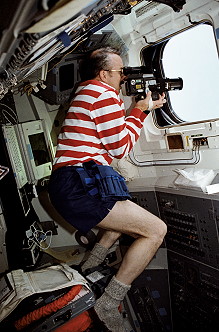 |
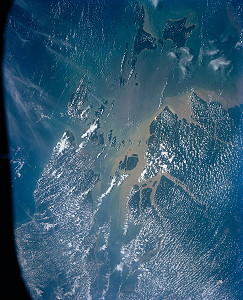 |
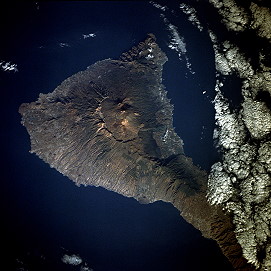 |
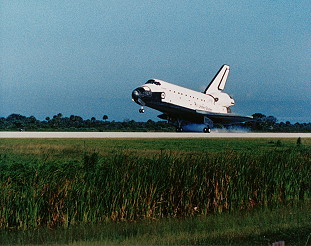 |
| © |  |
Last update on June 18, 2023.  |
 |