Human Orbital Spaceflights

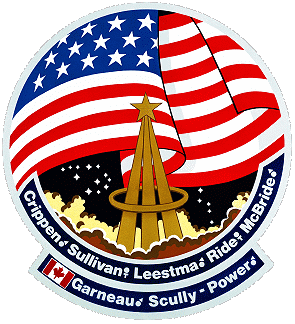
International Flight No. 98STS-41GChallenger (6)13th Space Shuttle missionUSA |
 |
 |
 |
||
Launch, orbit and landing data
walkout photo |
 |
||||||||||||||||||||||||||||
alternative crew photo |
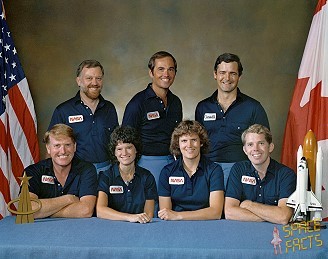
Crew
| No. | Surname | Given names | Position | Flight No. | Duration | Orbits | |
| 1 |  |
Crippen | Robert Laurel "Crip" | CDR | 4 | 8d 05h 23m 33s | 133 |
| 2 | |
McBride | Jon Andrew | PLT | 1 | 8d 05h 23m 33s | 133 |
| 3 | |
Sullivan | Kathryn Dwyer | MS-1, EV-2 | 1 | 8d 05h 23m 33s | 133 |
| 4 | |
Ride | Sally Kristen | MS-2, FE, RMS | 2 | 8d 05h 23m 33s | 133 |
| 5 | |
Leestma | David Cornell | MS-3, EV-1 | 1 | 8d 05h 23m 33s | 133 |
| 6 | |
Scully-Power | Paul Desmond | PS-1 | 1 | 8d 05h 23m 33s | 133 |
| 7 |  |
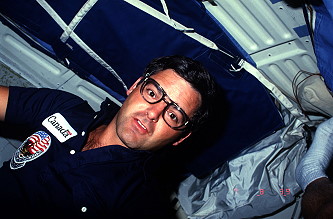
Garneau | Joseph Jean-Marie Marc | PS-2 | 1 | 8d 05h 23m 33s | 133 |
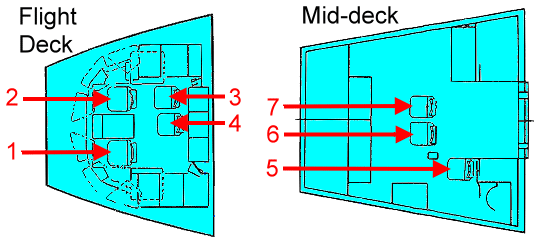
Crew seating arrangement
|
 |
|
||||||||||||||||||||||||||||||||
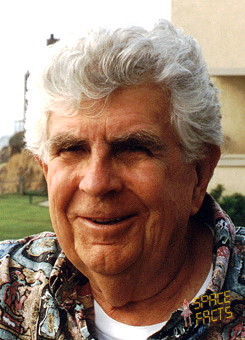
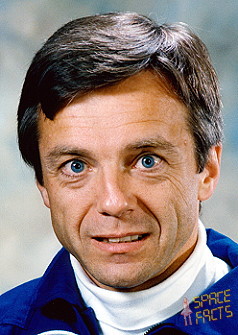
Backup Crew
|
|
 |
Hardware
| Orbiter : | OV-099 (6.) |
| SSME (1 / 2 / 3): | 2023 (1.) / 2020 (2.) / 2021 (2.) |
| SRB: | BI-013 |
| ET: | ET-15 (LWT-8) |
| OMS Pod: | Left Pod 01 (5.) / Right Pod 01 (6.) |
| FWD RCS Pod: | FRC 9 (6.) |
| RMS: | 302 (2.) |
| EMU: | EMU No. 1049 (PLSS No. 1003) / EMU No. 1050 (PLSS No. 1008) / EMU No. 1053 (PLSS No. 1005) |
Flight
|
Launch from Cape Canaveral (KSC) and
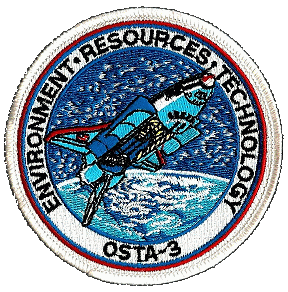
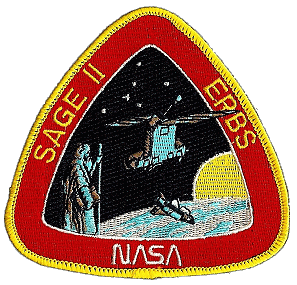
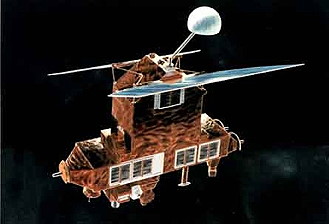
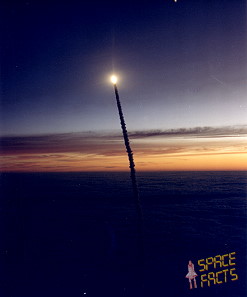
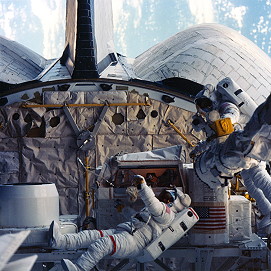
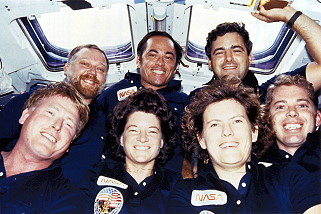
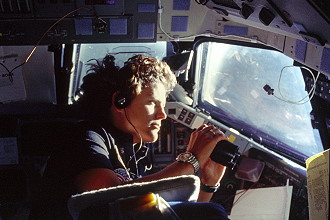
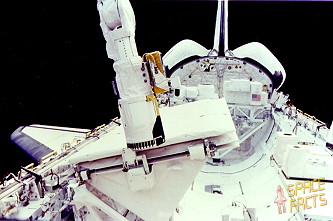
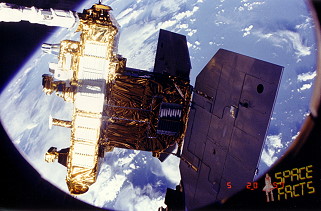
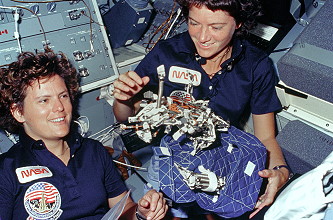
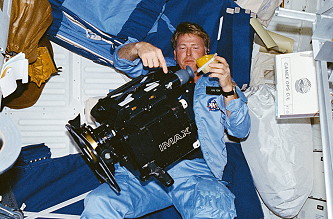
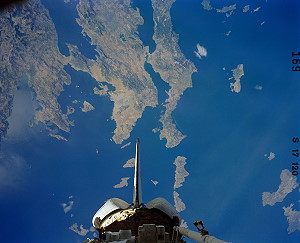
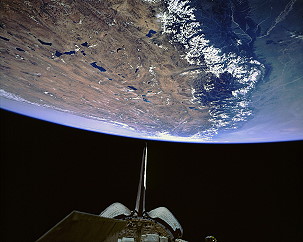
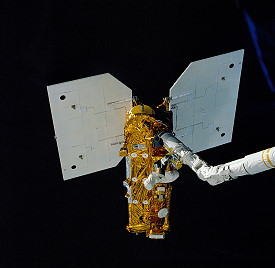
landing in Cape Canaveral (KSC), Runway 33. Challenger carried out the first crew of seven astronauts and it was the first Shuttle mission to include two women. Kathryn Sullivan became the first American woman to walk in space. The major payloads being flown on this mission include: NASA's Earth Radiation Budget Satellite (ERBS); NASA's Office of Space and Terrestrial Applications (OSTA-3) payload; Orbital Refueling System (ORS) experiment; and the Canadian National Research Council's scientific experiment packages known as CANEX. On Flight Day 1 the Earth Radiation Budget Satellite (ERBS) was deployed from the payload bay by the RMS arm, and its on-board thrusters boosted it into an orbit 350 miles (563 km) above the Earth. ERBS was the first of three planned satellites designed to measure the amount of energy received from the sun and reradiated into space. It also studied the seasonal movement of energy from the tropics to the polar regions. The Earth Radiation Budget Experiment (ERBE) is a three-satellite project that will accurately measure the amount of solar energy absorbed in different regions of Earth and the amount of thermal energy emitted back to space. The experiment consists of three sets of satellite-mounted instruments. One set is on the Earth Radiation Budget Satellite (ERBS), managed by NASA's Goddard Space Flight Center, that will be deployed during the STS-41G mission. A second set will be on a National Oceanic and Atmospheric Administration (NOAA) satellite, NOAA-F, scheduled for launch into near-polar orbit in late 1984. The third set will be aboard NOAA-G, scheduled for launch in late 1985 or early 1986. ERBE's primary goals are to determine, for at least one year: Earth's average monthly regional, zonal and global radiation budget; seasonal movement of energy from the tropics to the poles; and average daily variation in radiation on a 621-mile (999.4 km) regional scale for each month. Secondary ERBE goals are to insure the accuracy and efficiency of the ERBE instruments and develop analysis techniques for a highly reliable, economical and long-term monitoring system, needed to supply information for climate monitoring and mathematical modeling of climate patterns. The Earth Radiation Budget Satellite had three instruments - the Earth Radiation Budget Experiment Scanner (ERBE-S); the Earth Radiation Budget Experiment Non-Scanner (ERBE-NS), both of which were built by TRW in Redondo Beach, Calif.; and the Stratospheric Aerosol and Gas Experiment II (SAGE II), built by Ball Aerospace. The ERBE instruments set provided the measurements required determining the Earth radiation budget on several spatial and temporal scales. The instrument measurements of the reflected short-wave and emitted longwave radiation from the Earth was used to derive the solar-absorbed radiation and emitted thermal radiation monthly on regional, zonal and global scales. Data also were analyzed for equator to pole energy transfer gradient, average diurnal variations, monthly and regionally and the total solar energy output. Furthermore, the data were analyzed to ascertain instrument engineering integrity, calibration procedure effectiveness and the efficiency of sampling and analysis to determine changes in the radiation budget at the top of the atmosphere. The Stratospheric Aerosol and Gas Experiment (SAGE II) instrument monitored the vertical global distribution of aerosols and gases in the stratosphere by measuring the attenuation (reduction in intensity) of the sun's energy through Earth's atmosphere. SAGE II viewed about 15 sunrises and 15 sunsets each 24 hours, collecting solar attenuation profiles that will be mathematically reduced to atmospheric constituent concentration profiles. Each event occurs at a different latitude and longitude, and global coverage is repeated every three to four weeks. Another major mission activity was the operation of the Shuttle Imaging Radar-B (SIR-B). The SIR-B was part of the OSTA-3 experiment package in the payload bay, which also included the Large Format Camera (LFC) to photograph Earth, another camera called MAPS which measured air pollution, and a feature identification and location experiment called FILE, which consisted of two TV cameras and two 70 mm still cameras. The Large Format Camera (LFC) - first of its kind to orbit Earth - made its debut this mission from a special support structure aboard Challenger. The camera is bigger, more stable, more precise and more technologically advanced in optics and electronics than its airborne predecessors. A unique lens combines the high resolution and wide field of view for precise stereo photography. Other camera elements are derived from instruments built for Apollo, Skylab and the Viking Mars landers. Once calibrated the LFC assisted in worldwide exploration for oil and mineral resources, mapping and monitoring Earth's environment. The SIR-B was an improved version of a similar device flown on the OSTA-1 package during STS-2. It had an eight-panel antenna array measuring 35 feet by 7 feet (11 m by 2 m). It operated throughout the flight, but problems were encountered with Challenger's Ku band antenna, and therefore much of the data had to be recorded on board the orbiter rather than transmitted to Earth in real-time as was originally planned. Imaging radar produced photograph-like black-and-white images from data collected by transmitting millions of microwave radar pulses sequentially along a broad swath. Characteristics of the terrain alter the signals in different ways - dry sand reflects a signal differently than a rocky surface. The signal returns to the radar, and the unique signature of each reflected pulse is recorded. These millions of radar snapshots are then reconstructed by computers to produce detailed imagery. The SIR-B antenna consisted of a 35-by-7-foot (11 m by 2 m) array of eight panels (SIR-A had seven panels). The most significant new feature of the SIR subsystem was the antenna array tilt mechanism, which allows the antenna to be tilted to angles between 15 to 60 degrees. This allowed target areas to be viewed from several angles during successive orbital passes. In addition, the antenna could be specially tilted to image ground, water or vegetation surfaces that show greater detail when viewed from a steeper or shallower angle. At a command from the ground, the antenna moved from one orientation to another at the rate of about one degree per second. The MAPS experiment provided information as to what happens to industrial wastes after they enter the atmosphere, by measuring the distribution of carbon monoxide in the troposphere on a global scale. Subsequent flights of the MAPS experiment will be made to help determine the seasonal variation in this distribution. The equipment for MAPS consisted of an electro-optical sensor and electronic module, a digital tape recorder, and an aerial camera. This equipment was coupled to a cold plate and mounted on the pallet shelf. The Feature Identification and Location Experiment (FILE) was designed to help develop equipment which will make remote sensing instruments more efficient. Based on a simple classification algorithm, this is the first step toward the technology needed to select data at the sensing stage, thus reducing the data load and speeding data dissemination for Earth-observing missions. The FILE system consisted of two charged-coupled detector (CCD) television cameras (one camera equipped with an optical filter for visual read, the other with near infrared), a logic unit, a buffer memory, two Lockheed Mark V tape recorders and two Hasselblad 70 mm cameras. Payload Specialist Paul Scully-Power, an employee of the U.S. Naval Research Lab, performed a series of oceanography observations during the mission. Components of Orbital Refueling System (ORS) were connected in an EVA by Kathryn Sullivan and David Leestma on October 11, 1984 (3h 29m), demonstrating that it is possible to refuel satellites in orbit. The Orbital Refueling System experiment was a demonstration of Shuttle-human-tended capabilities to refuel already orbiting satellites once their self-contained thruster systems have depleted fuel reserves. This demonstration was a precursor to actual Shuttle refueling missions for satellites. For the final fuel transfer stage, mission specialists David Leestma and Kathryn Sullivan donned their spacesuits and proceed to the aft end of the payload bay where the ORS equipment was mounted on an MPESS (Mission Peculiar Experiment Support Structure) along with the Large Format Camera. There the crewmembers opened the tool kit and removed the hydrazine servicing tool - which was already be hooked up to the fuel supply tank. The crewmembers connected it to the ground fill panel of a simulated satellite panel, thus completing the fuel supply link. After pressure checking the hookup, the crewmembers returned to the cabin. The actual transfer of the hydrazine, which is a very toxic and corrosive material, was controlled from the aft flight deck experiment control panels. The ORS was equipped with sensors which provide pressure and temperature values and switch and valve positions. Marc Garneau, the Canadian payload specialist, conducted 10 experiments (Canadian Experiments (CANEX)) for the National Research Council (NRC) of Canada. The experiments fall into three categories: space technology, space science and life sciences. The National Research Council Space Vision System is a state-of-the-art development in robotic technology being designed to work with the Space Shuttle and Canadarm, the remote manipulator system that Canada contributed to the United States Space Shuttle program. The same technology also has many potential applications in the industrial community. Spacecraft structures and mechanisms have begun to make use of strong, lightweight composite materials of graphite fiber and epoxy compounds. There is some evidence that these materials deteriorate in the space environment through exposure to atomic oxygen at high velocities (eight kilometers a second). The Canadian-made Sunphotometer was a hand-held instrument which is pointed at the sun to obtain readings of solar radiation at several wavelengths in the visible and the near-infrared region of the spectrum. This instrument was used by the Canadian Atmospheric Environment Service to measure local atmospheric constituents and to monitor acidic haze. Marc Garneau conducted a set of experiments to isolate and measure several of the key adaptation processes occurring during the first days in space. The experiments located in the mid-deck examined vestibulo-ocular reflex, sensory function in limbs, proprioceptive illusions, awareness of external objects, space motion sickness and taste in space. Located in the mid-deck was an IMAX motion picture camera, making the third and final scheduled trip into space aboard the Shuttle. Footage from the Shuttle flights will be assembled into a film called "The Dream Is Alive". (including Kathryn Sullivan and David Leestma's EVA). The IMAX high-fidelity motion picture system uses a large 70 mm film frame which, because of its size, improves picture quality. IMAX films are displayed on a screen that is nine times larger than a conventional screen. Other Payloads were: Radiation Monitoring Equipment (RME) was used to actively measure any gamma radiation exposure to the crew in the orbiter cabin. The experiment consists of a handheld radiation monitor (Gamma and Electron Dosimeter) and two pocket RME meters (Neutron and Proton Dosimeter). The two meters are self-contained and each includes a 9-volt alkaline battery. Data will be collected several times throughout the mission, with the meters being operated by the crew. The Thermoluminescent Dosimeter (TLD) was a small portable dosimetry system developed by the Central Research Institute for Physics in Budapest, Hungary, and carried in a cabin locker. It was flown to obtain cosmic radiation doses during space flight for comparison with the presently used dosimetry systems. Eight small self-contained payloads were scheduled for the STS-41G Space Shuttle mission. |
EVA data
| Name | Start | End | Duration | Mission | Airlock | Suit | Stripes | |
| EVA | Leestma, David | 11.10.1984, 15:3? UTC | 11.10.1984, 19:0? UTC | 3h 29m | STS-41G | Challenger | EMU No. 1049 | red |
| EVA | Sullivan, Kathryn | 11.10.1984, 15:3? UTC | 11.10.1984, 19:0? UTC | 3h 29m | STS-41G | Challenger | EMU No. 1050 | without |
Photos / Graphics
 |
 |
 |
 |
 |
 |
 |
 |
 |
 |
 |
 |
 |
 |
 |
 |
 |
 |
 |
 |
 |
|
more EVA photos |
|
| © |  |
Last update on March 27, 2020.  |
 |