Human Orbital Spaceflights

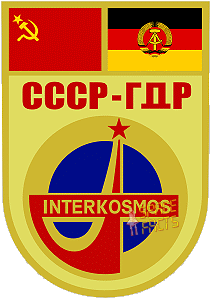
International Flight No. 66Soyuz 31Soyuz 29YastrebUSSR |
 |
 |
 |
||
Launch, orbit and landing data
walkout photo |
 |
|||||||||||||||||||||||||||||||
alternative crew photo |
alternative crew photo |
|||||||||||||||||||||||||||||||
alternative crew photo |
alternative crew photo |
|||||||||||||||||||||||||||||||
alternative crew photo |
alternative crew photo |
|||||||||||||||||||||||||||||||
Crew
| No. | Surname | Given names | Position | Flight No. | Duration | Orbits | |
| 1 |  |
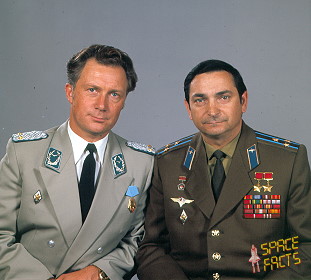
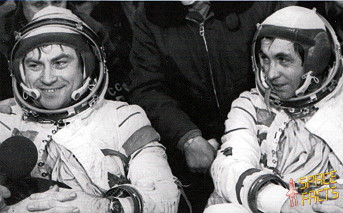
Bykovsky | Valeri Fyodorovich | Commander | 3 | 7d 20h 49m 04s | 124 |
| 2 |  |
Jähn | Sigmund Werner Paul "Sig" | Research Cosmonaut | 1 | 7d 20h 49m 04s | 124 |
Crew seating arrangement
|
 |
|
||||||||||||
Backup Crew
|
 |
|||||||||||||||
alternative crew photo |
||||||||||||||||
alternative crew photo |
||||||||||||||||
alternative crew photo |
Hardware
| Launch vehicle: | Soyuz-U (No. Yo15000-159) |
| Spacecraft: | Soyuz 31 (7K-T No. 47) |
Flight
|
Launch from the Baikonur Cosmodrome and
landing with Soyuz 29 spacecraft 143
km southeast of Dzheskasgan. The spacecraft
Soyuz 31 landed 162 km southeast of
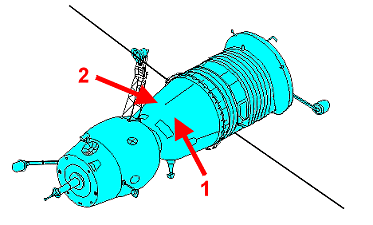
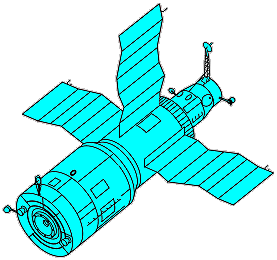
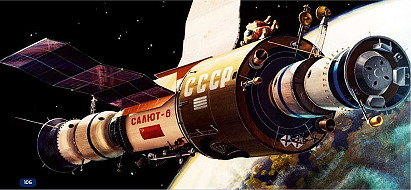
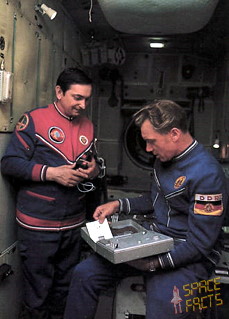
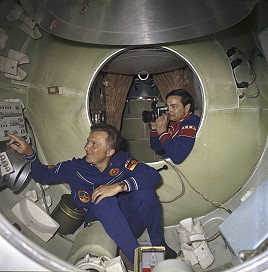
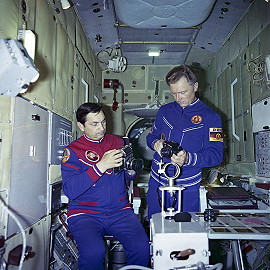
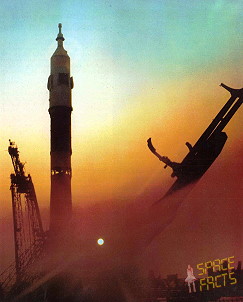
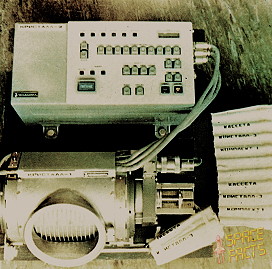
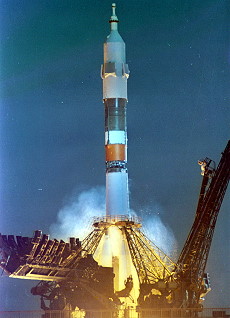
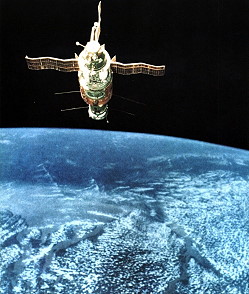
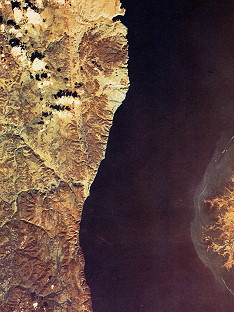
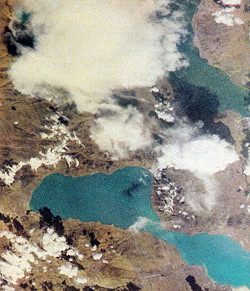
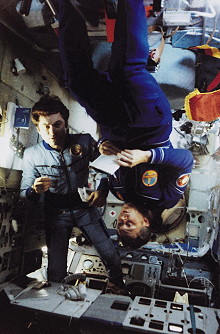
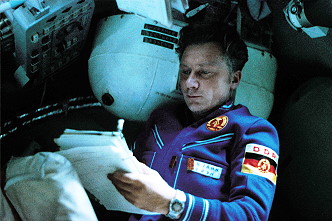
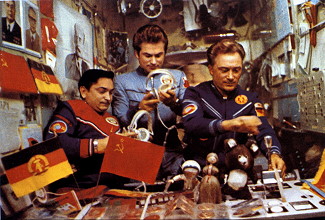
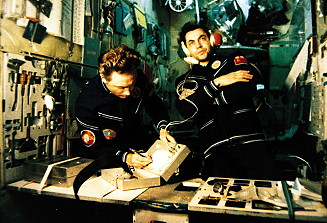
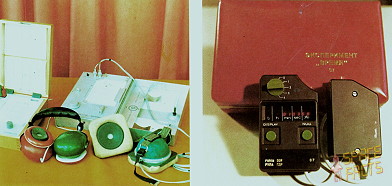
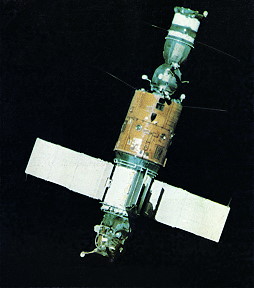
Dzheskasgan This spaceflight carried the third Intercosmos mission. Following a two-day solo flight Soyuz 31 docked with the Salyut 6 space station on August 28, 1978. Cosmonauts Valeri Bykovsky and Sigmund Jähn were greeted by resident crew Vladimir Kovalyonok and Aleksandr Ivanchenkov when they docked at the aft port of the Salyut 6 space station. The visitors brought with them fresh onions, garlic, lemons, apples and other food for the long-duration crew, then in space for more than two months. In the next days common work with the second resident crew was performed. When it came time to open the Soyuz hatch, however, it wouldn't budge. Each of them tried without success. For a while it looked as if their flight might end in failure and an ignominious return to earth, similar to that of Soyuz 10 some seven years earlier. In the end the two men joined forces, taking a firm stand against the wall of the orbital module, and finally met with success as the hatch reluctantly opened up. The presence of the East German cosmonaut was seen as significant because of the presence of the MKF-6M camera on the space station, built by the Carl Zeiss works at Jena. The MKF-6M was not simply a matter of point and shoot; first the camera had to be primed, then the Salyut station had to be oriented to aim the camera directly at the ground when the photograph had to be taken. Medical and biological experiments were carried out, including an audio experiment which tested sound and noise perception limits. An experiment called Berolina used the Splav furnace to process an ampoule of bismuth and antimonide with the material between two plates in the ampoule. The tree structure which resulted was four to six times larger than what had been produced on the ground. Another experiment tested using different photographic films on the station's interior. Sigmund Jähn became the first German in space. The crew conducted several scientific experiments in the areas materials research, Earth exploration, atmosphere research, medicine and biology. Using the two melting furnaces on board new connections and semiconductor structures were made of lead and tellurium, crystal growths experiments were performed and even optical glasses were melted. Observations to environmental pollutions were also performed. Life sciences experiments were performed in the fields of hearing sensitivity, time feeling and also tasting. Experiments to bacteria growth and for the development of single celled organisms had also been done. Science work of Earth exploration included earth photography and meteorological measurements. There was one touch of serendipity during Sigmund Jähn's tenure aboard Salyut 6. He had taken along a small figure of the Sandmännchen, a popular children's puppet character from television, inspired by the Little Sandman - a character from a story by Hans Christian Andersen. He was asked if he taken the little puppet on his flight as some sort of talisman. The Soyuz 31 crew swapped craft with the Soyuz 29 crew so as to supply the long-duration crew with a fresh craft. On September 02, 1978, the engines of Soyuz 29 were tested, 25 experiment containers with 100 experimental results were transferred, along with exposed film, and seat liners and centering weights were exchanged. The Soyuz 31 crew left in Soyuz 29 the next day and landed 180 km southeast of Dzhezkasgan. The Soyuz spacecraft is composed of three elements attached end-to-end - the Orbital Module, the Descent Module and the Instrumentation/Propulsion Module. The crew occupied the central element, the Descent Module. The other two modules are jettisoned prior to re-entry. They burn up in the atmosphere, so only the Descent Module returned to Earth. The deorbit burn lasted 188 seconds. Having shed two-thirds of its mass, the Soyuz reached Entry Interface - a point 400,000 feet (121.9 kilometers) above the Earth, where friction due to the thickening atmosphere began to heat its outer surfaces. With only 23 minutes left before it lands on the grassy plains of central Asia, attention in the module turned to slowing its rate of descent. Eight minutes later, the spacecraft was streaking through the sky at a rate of 755 feet (230 meters) per second. Before it touched down, its speed slowed to only 5 feet (1.5 meter) per second, and it lands at an even lower speed than that. Several onboard features ensure that the vehicle and crew land safely and in relative comfort. Four parachutes, deployed 15 minutes before landing, dramatically slowed the vehicle's rate of descent. Two pilot parachutes were the first to be released, and a drogue chute attached to the second one followed immediately after. The drogue, measuring 24 square meters (258 square feet) in area, slowed the rate of descent from 755 feet (230 meters) per second to 262 feet (80 meters) per second. The main parachute was the last to emerge. It is the largest chute, with a surface area of 10,764 square feet (1,000 square meters). Its harnesses shifted the vehicle's attitude to a 30-degree angle relative to the ground, dissipating heat, and then shifted it again to a straight vertical descent prior to landing. The main chute slowed the Soyuz to a descent rate of only 24 feet (7.3 meters) per second, which is still too fast for a comfortable landing. One second before touchdown, two sets of three small engines on the bottom of the vehicle fired, slowing the vehicle to soften the landing. The standard recovery procedure was changed with this flight, observers noted. In the past, the recovery of a civilian Salyut crew had been made on the orbit following the one which provided a nominal launch opportunity to Salyut. With this and subsequent flights, the landing occurred during the orbit which provided the nominal launch opportunity. The effect of this change was to have a landing window open some two to three days earlier than otherwise. |
Relocations of Manned Spacecrafts
| Spacecraft | from | Undocking | Time UTC | to | Redocking | Time UTC |
| Soyuz 31 | Salyut 6 - aft port | 07.09.1978 | 16:37:37 | Salyut 6 - front port | 07.09.1978 | 11:21:30 |
Photos / Graphics
 |
 |
|
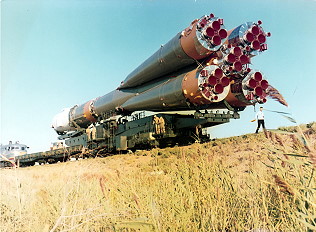
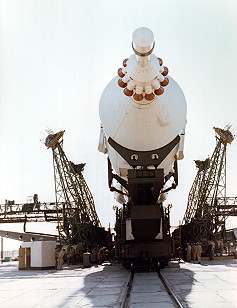
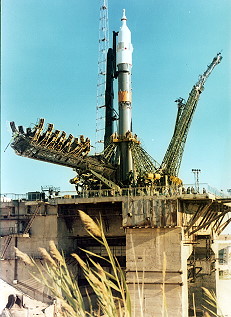
source of all photos is Roscosmos / TASS |
|
 |
 |
 |
 |
 |
 |
 |
 |
 |
 |
 |
 |
 |
 |
 |
 |
 |
 |
 |
 |
 |
| © |  |
Last update on May 13, 2021.  |
 |