Human Orbital Spaceflights

International Flight No. 25Soyuz 3ArgonUSSR |
 |
 |
Launch, orbit and landing data
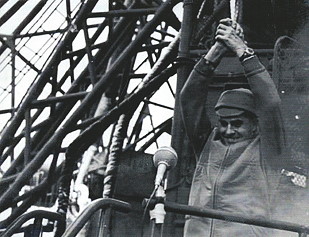
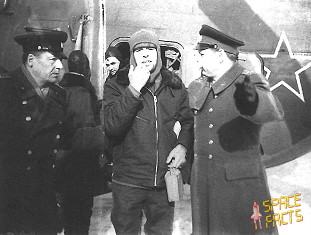
walkout photo |
 |
Crew
| No. | Surname | Given names | Position | Flight No. | Duration | Orbits | |
| 1 |  |
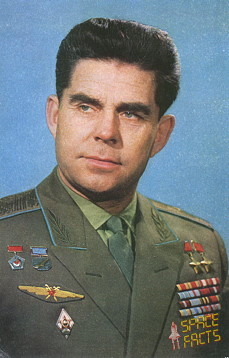
Beregovoy | Georgi Timofeyevich | Commander | 1 | 3d 22h 50m 45s | 64 |
Crew seating arrangement
|
 |
|
||||||||
1st Backup Crew
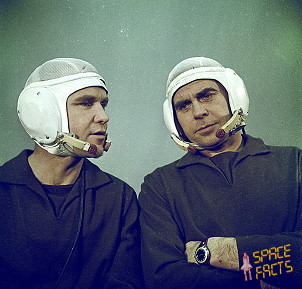 |
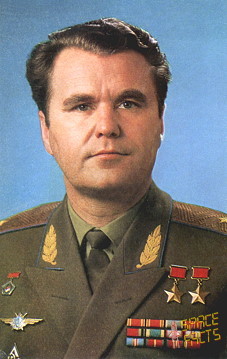 |
||||||||||
2nd Backup Crew
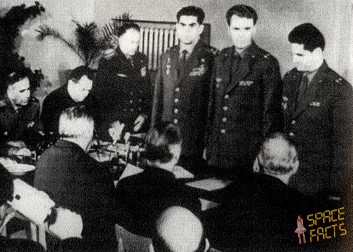 |
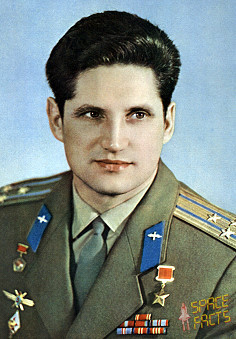 |
Hardware
| Launch vehicle: | Soyuz (No. Ya15000-10) |
| Spacecraft: | Soyuz 3 (7K-OK No. 10) |
Flight
|
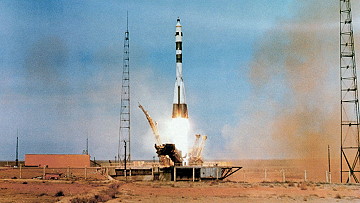
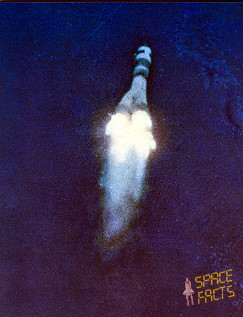
Launch from the Baikonur Cosmodrome; landing
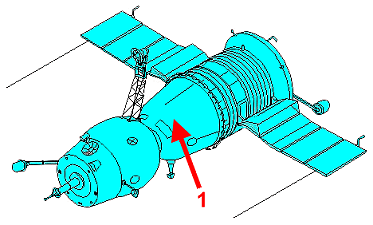
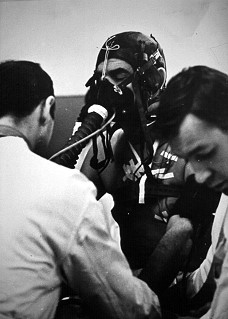
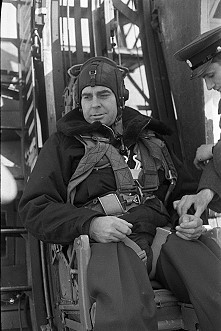
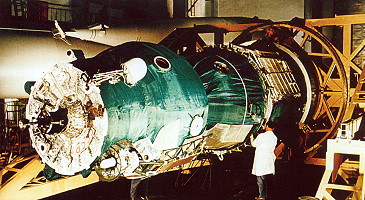
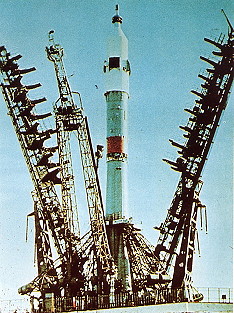
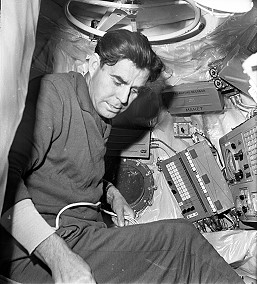
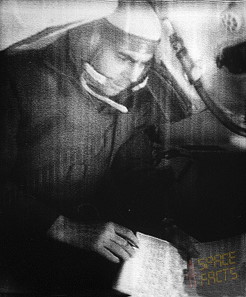
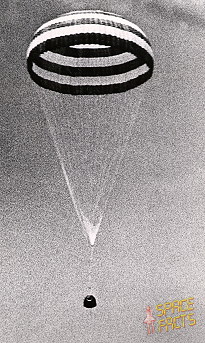
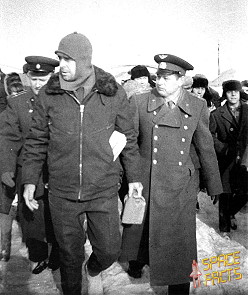
70 km north of Karaganda. Main objectives of this flight were a complex testing of all spacecraft systems, which was necessary after the Soyuz 1 accident and again a docking maneuver with an unmanned spacecraft (Soyuz 2). The closest distance of both spacecrafts in space was about 180 m, when Georgi Beregovoy turned over from automatic docking system to a manual docking. Unfortunately, while he was able to close the gap to only one meter, three following attempts to dock failed. Eventually, almost all of the maneuvering fuel was expended and the objective had to be abandoned. Telemetry analysis has shown Soyuz 3 used 30 kg of propellant during 20 minutes of maneuvering in the automatic regime during docking, followed by 40 kg consumed in two minutes of manual maneuvering. Essentially Georgi Beregovoy was trying to dock the spacecraft upside down. This was either due to incorrect configuration of the running lights or cosmonaut error. Soyuz 2 had two continuously illuminated lights on its upper side and two blinking lights on the lower side. Evidently Georgi Beregovoy didn't identify these correctly in weightlessness. Later on, the failure was blamed on Georgi Beregovoys piloting. Georgi Beregovoy stayed several more days in space and performed complex testing of the spaceship systems. Some systems failed. TV broadcasting was also performed. The Soyuz spacecraft is composed of three elements attached end-to-end - the Orbital Module, the Descent Module and the Instrumentation/Propulsion Module. The crew occupied the central element, the Descent Module. The other two modules are jettisoned prior to re-entry. They burn up in the atmosphere, so only the Descent Module returned to Earth. The deorbit burn lasted 188 seconds. Having shed two-thirds of its mass, the Soyuz reached Entry Interface - a point 400,000 feet (121.9 kilometers) above the Earth, where friction due to the thickening atmosphere began to heat its outer surfaces. With only 23 minutes left before it lands on the grassy plains of central Asia, attention in the module turned to slowing its rate of descent. Eight minutes later, the spacecraft was streaking through the sky at a rate of 755 feet (230 meters) per second. Before it touched down, its speed slowed to only 5 feet (1.5 meter) per second, and it lands at an even lower speed than that. Several onboard features ensure that the vehicle and crew land safely and in relative comfort. Four parachutes, deployed 15 minutes before landing, dramatically slowed the vehicle's rate of descent. Two pilot parachutes were the first to be released, and a drogue chute attached to the second one followed immediately after. The drogue, measuring 24 square meters (258 square feet) in area, slowed the rate of descent from 755 feet (230 meters) per second to 262 feet (80 meters) per second. The main parachute was the last to emerge. It is the largest chute, with a surface area of 10,764 square feet (1.000 square meters). Its harnesses shifted the vehicle's attitude to a 30-degree angle relative to the ground, dissipating heat, and then shifted it again to a straight vertical descent prior to landing. The main chute slowed the Soyuz to a descent rate of only 24 feet (7.3 meters) per second, which is still too fast for a comfortable landing. One second before touchdown, two sets of three small engines on the bottom of the vehicle fired, slowing the vehicle to soften the landing. The landing was only 10 km far from the target point. |
Photos
 |
 |
|
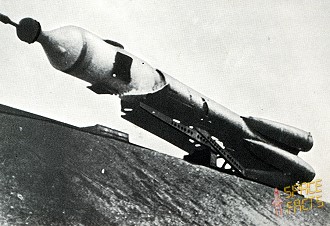
source of all photos is Roscosmos / TASS |
|
 |
 |
 |
 |
 |
 |
 |
 |
 |
 |
 |
| © |  |
Last update on March 28, 2020.  |
 |