Resident Crews of the International Space Station (ISS)

ISS: Expedition 12 |
 |
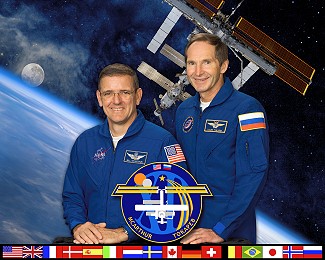
alternative crew photoalternative crew photoalternative crew photo |
 |
 |
|
 |
 |
Crew, launch- and landing data
| No. | Nation | Surname | Given names | Position | Spacecraft (launch) |
Launch date |
Launch time |
Spacecraft (landing) |
Landing date |
Landing time |
Mission duration |
Orbits |
| 1 |  |
McArthur | William Surles, Jr. "Bill" | ISS-CDR | Soyuz TMA-7 | 01.10.2005 | 03:54:53.094 UTC | Soyuz TMA-7 | 08.04.2006 | 23:47:12.5 UTC | 189d 19h 52m 20s | 2991 |
| 2 |  |
Tokarev | Valeri Ivanovich | Flight Engineer | Soyuz TMA-7 | 01.10.2005 | 03:54:53.094 UTC | Soyuz TMA-7 | 08.04.2006 | 23:47:12.5 UTC | 189d 19h 52m 20s | 2991 |
Backup Crew
| No. | Nation | Surname | Given names | Position |
| 1 | |
Williams | Jeffrey Nels | ISS-CDR |
| 2 | |
Tyurin | Mikhail Vladislavovich | Flight Engineer |
 |
Expedition Report
|
Expedition 12 launched with
Soyuz
TMA-7 from the Baikonur Cosmodrome and landed 55 km northeast of
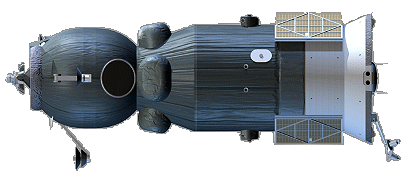
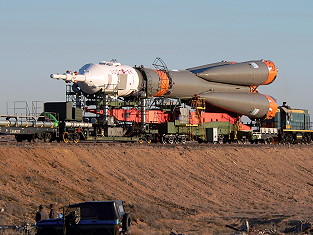
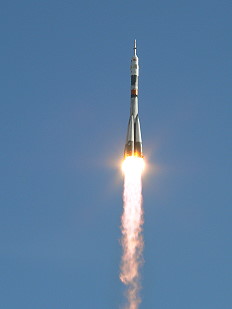
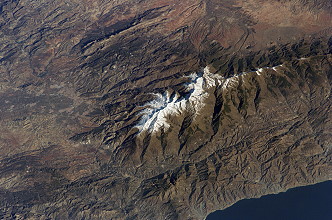
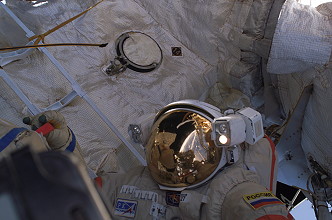
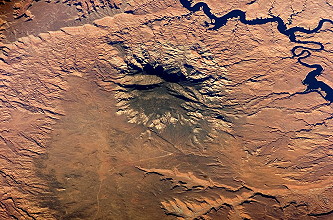
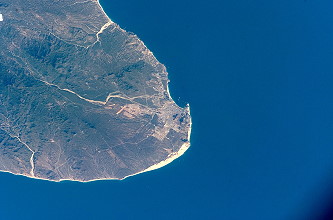
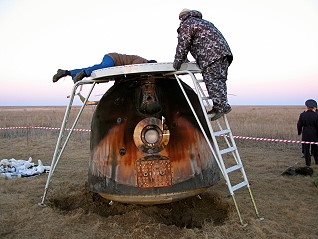
Arkalyk. The Expedition 12 officially began with undocking of Russian spacecraft Soyuz TMA-6 on October 10, 2005 at 21:49:14 UTC and Expedition 11 ended. The ISS Expedition 12 was called a "caretaker" crew. Following a two-day solo flight Soyuz TMA-7 docked to ISS on October 03, 2005. Valeri Tokarev and William McArthur replaced the Expedition 11 crew. The first EVA occurred on November 07, 2005 (5h 22m) to install a television camera on the station's part truss, needed for future assembly work, to remove the 5-year-old FPP experiment (Floating Potential Probe) from the top of the P6 truss and to remove and replace other equipment. On November 18, 2005 the Soyuz TMA-7 spacecraft was relocated from the Pirs docking port to the Nadir Docking port of the Zarya module. That was necessary to start the second EVA from out the Pirs Docking Compartment airlock. Progress M-55 was launched at 18:38:20 UTC on December 21, 2005. The spacecraft docked with the Pirs module at 19:46:18 UTC on December 23, 2005. Progress M-55 carried supplies to the International Space Station, including food, water and oxygen for the crew and equipment for conducting scientific research. The freighter remained docked for almost six months before undocking at 14:06:01 UTC on June 19, 2006 to make way for Progress M-57. It was deorbited at 17:06:01 UTC on June 19, 2006. The spacecraft burned up in the atmosphere over the Pacific Ocean, with any remaining debris landing in the ocean at around 17:53:14 UTC. The second and final EVA was performed on February 03, 2006 (5h 43m) to deploy SuitSat, an unneeded Russian spacesuit with an amateur radio transmitter. The SuitSat provided recorded greetings in six languages to ham radio operators for about two orbits of the Earth before it stopped transmitting, perhaps due to its batteries failing in the cold environment of space. They then removed a grapple fixture adapter for the Strela crane to the PMA-3 on the Unity module. Then they tried to securely install a safety bolt in a contingency cutting device for one of two cables that provide power, data and video to the Mobile Transporter rail car, but this failed. Finally, they retrieved an experiment to study the effect of the space environment on microorganisms from the Russian Pirs airlock and photographed the exterior of Zvezda. On March 20, 2006 the Soyuz TMA-7 spacecraft was relocated again, now from the Zarya module to the Zvezda port. Additional work during this mission included different research programs as Foot-Ground Reaction Forces during Space Flight experiment (FOOT), Protein Crystal Growth Monitoring by Digital Holographic Microscope for the International Space Station (PROMISS-4), Binary Colloidal Alloy Test, but also “housekeeping”, repairing work, unload and reload of Progress freighters and more. On March 29, 2006 a total solar eclipse took place, and a picture was taken by the Expedition 12 crew. It clearly shows the shadow of the Moon being cast on the Earth. Binary Colloidal Alloy Test-3: The BCAT-3 experiment combines a digital camera on board the International Space Station with a book-size collection of 10 sample cells. Each sample cell contains colloidal particles. The colloids in this science experiment are tiny plastic spheres that are about 100 times smaller than the diameter of a human hair. These small plastic balls are coated with a layer of PHSA (polyhydroxystearic acid) to get rid of electrical interactions and suspended in a fluid. These colloidal particles are small enough to behave like models of atoms, but big enough to interact with visible light. They move slowly enough that they can be used to model and directly observe all sorts of phenomena. While the 10 samples in the BCAT-3 experiment are made from the same ingredients, each recipe has different proportions. This enables researchers to probe nature's natural organizing tendencies when the effects of gravity are removed - that is, when the effects of sedimentation (settling) and convection (stirring) have been removed. The three frontiers of science probed by the BCAT-3 experiment are: critical point behavior (when a gas and liquid become indistinguishable), binary alloy formation (how nature forms ordered crystal structures from disordered mixtures of two different size spheres) and surface crystallization (or how collections of randomly jostling particles pin their neighbors to walls to form ordered structures). The Capillary Flow Experiments (CFE) are a suite of six related fluid physics experiments whose purpose is to investigate capillary flows and phenomena on board the International Space Station. Capillary action occurs between contacting surfaces of a liquid and a solid that distorts the liquid surface from a planar shape. An example of capillary flow is the ability of a narrow tube to draw a liquid upwards against the force of gravity. It happens when the adhesive forces between the liquid and solid are stronger than the cohesive forces within the liquid. The effect causes a concave meniscus to form where the liquid is in contact with a vertical surface. The same effect is what causes porous materials to soak up liquids. All CFE experimental units use similar fluid injection hardware, have simple and similarly sized test chambers, and rely solely on video for highly quantitative data. Differences between experimental units involve fluid properties, contact angle, or test cell cross section. Cellular Biotechnology Operations Support System-Fluid Dynamics Investigation (CBOSS-FDI): The Cellular Biotechnology Operations Support System (CBOSS) is a stationary bioreactor system developed by the NASA Cellular Biotechnology Program for the cultivation of cells and tissues on board the International Space Station. The CBOSS payload complement consists of the following hardware elements. Cell cultures are incubated in the Biotechnology Specimen Temperature Controller, which contains an isothermal chamber with carbon dioxide concentration control. The Gas Supply Module provides pressurized gases to the incubator unit, while the Biotechnology Refrigerator serves for cold storage of labile experiment components. The Biotechnology Cell Science Stowage is comprised of caddies containing experiment supplies and cryodewars for the transport of cryopreserved cells for on-orbit inoculation and the return of frozen biospecimen samples. Cellular Biotechnology Program experiments conducted in the ISS with this system during Increments 3, 4 and 5 involved human kidney cells, human colon cancer cells, rat adrenal gland tumor cells, ovarian cancer cells, mouse blood cancer cells, human immune system tissue and human liver cells, representing principal investigators from various institutions and private industry. Typically, CBOSS is used to provide a controlled environment for the cultivation of cells into functional three-dimensional tissue-equivalent ensembles. A critical step in performing these experiments involves complete mixing of cells and fluids during various tissue culture procedures. The CBOSS - Fluid Dynamics Investigation is comprised of a series of experiments aimed at optimizing CBOSS operations while contributing to the characterization of the CBOSS stationary bioreactor vessel (the Tissue Culture Module or TCM) in terms of fluid dynamics in microgravity. These experiments will also enhance our understanding of microgravity effects and validate the most efficient fluid/particle mixing techniques on orbit, which are essential to conduct cellular research in that environment and can be applied in other disciplines. Furthermore, some experiments will evaluate bubble removal approaches and examine microgravity biotechnology processes with applications to future research in space. Crew Earth Observations (CEO): By allowing photographs to be taken from space, the Crew Earth Observations (CEO) experiment provides people on Earth with image data needed to better understand our planet. The photographs - taken by crewmembers using handheld cameras - record observable Earth surface changes over a period of time, as well as more fleeting events such as storms, floods, fires and volcanic eruptions. Earth Knowledge Acquired by Middle School Students (EarthKAM): EarthKAM (Earth Knowledge Acquired by Middle school students) is a NASA education payload that enables students to photograph and examine Earth from a space crew's perspective. Using the Internet, working through the EarthKAM Mission Operations Center located at the University of California at San Diego (UCSD), middle school students direct a camera mounted at the science-grade window in the station's Destiny science module to capture high-resolution digital images of features around the globe. Students use these images to enhance their study of geography, geology, botany, history, earth science, and to identify changes occurring on the Earth's surface, all from the unique vantage point of space. Using the high-speed digital communications capabilities of the ISS, the images are downlinked in near real-time and posted on the EarthKAM Web site for the public and participating classrooms around the world to view. Education Payload Operations (EPO) is an education payload or activity designed to support the NASA Mission to inspire the next generation of explorers. Generally, these payloads and activities focus on demonstrating science, mathematics, technology, engineering or geography principles. Video recording of the demonstrations and/or still photographic documentation of a crewmember operating EPO hardware while on orbit will achieve EPO goals and objectives. Overall goal for every expedition is to facilitate education opportunities that use the unique environment of human spaceflight. FOOT Reaction Forces During Spaceflight: FOOT will accomplish its objective through direct measurement of forces on the feet, joint angles and muscle activity in astronauts during typical entire days of daily life both on Earth and on the space station. In addition, bone mineral density, muscle strength and muscle volume will be measured before and after the mission. The heart of Foot is an instrumented suit called the Lower Extremity Monitoring Suit (LEMS). This customized garment is a pair of Lycra cycling tights incorporating 20 carefully placed sensors and the associated wiring, control units and amplifiers. LEMS will enable the electrical activity of muscles, the angular motions of the hip, knee and ankle joints, and the force on both feet to be measured continuously. Information from the sensors can be recorded for up to 14 hours on a small wearable computer. Measurements will also be made of the arm muscles. The crewmembers will put the suit on in the morning before they start their work day and, after calibration, they will go about their regular daily activities. Throughout the day, the sensors will capture data that will allow researchers to characterize differences between use of the arms and legs on Earth and in space. Investigating the Structure of Paramagnetic Aggregates from Colloidal Emulsions (InSPACE): InSPACE is an International Space Station experiment that characterizes the performance properties of an exciting class of smart materials called magnetorheological (MR) fluids. MR fluids are suspensions of small (micron-sized), superparamagnetic particles that quickly solidify when exposed to a magnetic field and return to their original liquid state when the magnetic field is removed. This process involves visco-elastic properties useful for a variety of mechanical devices ranging from intricate robotic motions, strong braking and clutch mechanisms to human enhancements such as exoskeletons, and splints. InSPACE provides microgravity data on the internal particle structure and dynamics fluid properties essential to these applications. On Earth, gravity causes sedimentation, which means heavier groups of particles sink while lighter ones remain suspended. The low-gravity environment that is provided on the space station will eliminate the effects of sedimentation, which otherwise become significant for these structures. A pulsed magnetic field will be used to mimic the forces applied to these fluids in real applications. Behavioral Issues Associated with Isolation and Confinement: Review and Analysis of ISS Crew Journals: The purpose of this experiment is to collect behavioral and human factors data for analysis, with the intention of furthering our understanding of life in isolation and confinement. The objective of the experiment is to identify equipment, habitat and procedural features that help humans adjust to isolation and confinement and remain effective and productive during future long-duration space expeditions. The method used in the experiment is analyzing the content of journals maintained by International Space Station crews for this purpose. The Materials on the International Space Station Experiment (MISSE) Project is a NASA Langley Research Center-managed cooperative endeavor to fly materials and other types of space exposure experiments on the space station. The objective is to develop early, low-cost, non-intrusive opportunities to conduct critical space exposure tests of space materials and components planned for use on future spacecraft. Renal Stone Risk During Spaceflight: Assessment and Countermeasure Validation: This experiment examines the risk of renal (kidney) stone formation in crewmembers during the pre-flight, in-flight and post-flight timeframes. Potassium citrate (K-cit) is a proven ground-based treatment for patients suffering from renal stones. In this study, K-cit tablets will be administered to astronauts and multiple urine samples will be taken before, during and after spaceflight to evaluate the risk of renal stone formation. From the results, K-cit will be evaluated as a potential countermeasure to alter the urinary biochemistry and lower the risk for potential development of renal stones in microgravity. This study will also examine the influence of dietary factors on the urinary biochemistry, investigate the effect flight duration on renal stone formation and determine how long after spaceflight the risk exists. Space Acceleration Measurement System (SAMS) and Microgravity Acceleration Measurement System (MAMS): SAMS hardware measures the vibratory acceleration data (0.01 to 400 Hz). MAMS hardware measures the quasi-steady and vibratory acceleration data (10-5 to 100 Hz). William McArthur and Valeri Tokarev returned to Earth with the Soyuz TMA-7 spacecraft, together with crewmate, Brazilian astronaut Marcos Pontes. The Soyuz spacecraft is composed of three elements attached end-to-end - the Orbital Module, the Descent Module and the Instrumentation/Propulsion Module. The crew occupied the central element, the Descent Module. The other two modules are jettisoned prior to re-entry. They burn up in the atmosphere, so only the Descent Module returned to Earth. Having shed two-thirds of its mass, the Soyuz reached Entry Interface - a point 400,000 feet (121.9 kilometers) above the Earth, where friction due to the thickening atmosphere began to heat its outer surfaces. With only 23 minutes left before it lands on the grassy plains of central Asia, attention in the module turned to slowing its rate of descent. Eight minutes later, the spacecraft was streaking through the sky at a rate of 755 feet (230 meters) per second. Before it touched down, its speed slowed to only 5 feet (1.5 meter) per second, and it lands at an even lower speed than that. Several onboard features ensure that the vehicle and crew land safely and in relative comfort. Four parachutes, deployed 15 minutes before landing, dramatically slowed the vehicle's rate of descent. Two pilot parachutes were the first to be released, and a drogue chute attached to the second one followed immediately after. The drogue, measuring 24 square meters (258 square feet) in area, slowed the rate of descent from 755 feet (230 meters) per second to 262 feet (80 meters) per second. The main parachute was the last to emerge. It is the largest chute, with a surface area of 10,764 square feet (1,000 square meters). Its harnesses shifted the vehicle's attitude to a 30-degree angle relative to the ground, dissipating heat, and then shifted it again to a straight vertical descent prior to landing. The main chute slowed the Soyuz to a descent rate of only 24 feet (7.3 meters) per second, which is still too fast for a comfortable landing. One second before touchdown, two sets of three small engines on the bottom of the vehicle fired, slowing the vehicle to soften the landing. On April 01, 2006 Russian spacecraft Soyuz TMA-8 brought the Expedition 13 to the station. Finally, the station command changed from US astronaut William McArthur to Russian cosmonaut Pavel Vinogradov. Expedition 12 officially ended with undocking of Soyuz TMA-7, carrying William McArthur and Valeri Tokarev, on April 08, 2006 at 20:27:54 UTC. During the stay on board of the ISS the crew of Expedition 12 carried out the following scientific experiments: ADUM (Advanced Diagnostic Ultrasound in Microgravity), Akvarium (Study of the Stability of a Model of Self-Contained (Closed) Ecological System and Elements, Included in the Model in Microgravity), ALTCRISS (Alteino Long Term Cosmic Ray Measurements on board the International Space Station), ARISS (Amateur Radio on the International Space Station), BCAT-3-4-CP (Binary Colloidal Alloy Test - 3 and 4: Critical Point), BCAT-3-SC (Binary Colloidal Alloy Test - 3: Surface Crystallization), Biodegradation (Initial stage of Biodegradation and Biodeterioration in Space), Bioekologia (Generation of High Efficiency of Microorganisms for the Production of Preparations of Biodegradable Oil, Organophosphorus Material, Measures for the Protection of Plants, as well as, of Exopolysaddharides Uses in the Petroleum Industry), Bioemulsia (Research and Development of a Self-Contained Reactor of the Shielded Type For Production of Biomass of Microorganisms and Biologically Active Substances), Biorisk (Influence of Factors of the Space Environment on the Condition of the System of Microorganisms-Hosts Relating to the Problem of Environmental Safety of Flight Techniques and Planetary Quarantine), Cardio-ODNT (Dynamics of the Main Factors of Cardiac Function, of Central and Regional Circulation in Rest and During the Influence of Lower Body Negative Pressure), Cardiocog-2 (Cognitive Cardiovascular Experiment), CBOSS-FDI (Cellular Biotechnology Operations Support Systems: Fluid Dynamics Investigation), CEO (Crew Earth Observations), CFE (Capillary Flow Experiment), Chromosome-2 (Cytogenetic Effects of Ionizing Radiation in Peripheral Lymphocytes of ISS Crewmembers), Clinical Nutrition Assessment (Clinical Nutrition Assessment of ISS Astronauts, SMO-016E), Conjugation (Development of Methods for Designing New Recombinants Producing Strains of Bacteria in Space Flight), Diatomeya (Stability of Geographical Position and Configuration of Borders of Bioproductive Water Zones of the World Oceans, Observations by Orbition Station Crews), EarthKAM (Earth Knowledge Acquired by Middle School Students), Ekon (Experimental Survey on Evaluating the Possibility of Using th Russian Segment of ISS for Environmental Inspection of Work Areas of Various Facilities (Features)), Environmental Monitoring (Environmental Monitoring of the International Space Station), EPO-Demos (Education Payload Operation - Demonstrations), Epstein-Barr (Space Flight Induced Reactivation of Latent Epstein-Barr Virus), Foot (Foot Reaction Forces During Space Flight), Gematologia (Morphofunctional Characteristic of Blood Cells and the Intensity of Erythropoiesis in Humans by the Influence of Factors of Space Flight), Identifikatsia (Identification of the Sources of Dynamic Loads on ISS), Immuno (Neuroendocrine and Immune Responses in Humans During and After Long Term Stay at ISS), Inflight Education Downlinks (International Space Station Inflight Education Downlinks), InfoTekh (S Band Radio Signal Passage Through ISS and Test of Data Downlink), InSPACE (Investigating the Structure of Paramagnetic Aggregates from Colloidal Emulsions), ISS Acoustics (International Space Station Acoustic Measurement Program), Izgib (Effect of Performance of Flight and Science Activities on the Function of On-Orbit Systems on ISS (Mathematical Model)), JAXA-GCF (Japan Aerospace and Exploration Agency - Granada Crystallization Facility High Quality Protein Crystallization Project), Journals (Behavioral Issues Associated with isolation and Confinement: Review and Analysis of Astronaut Journals), Kristallizator (Crystalization of Biological Macromolecules and Generation of Biocrystal Film in the Conditions of Microgravity), Kromka (Verification of the Effectiveness of Devices for the Protection of the Exterior Surface of ISS from Contaminants Deposited by Pulsed Cycling of Liquid-Jet), Meteoroid (Recording Meteoroidal and Technogenic Particles on the External Surface of the Service Module of the Russian Segment of ISS), Mezhkletochnoe Vzaimodeistvie (Intercellular Interactions in Space Flight), MISSE-5 (Materials International Space Station Experiment - 5), Mobility (Promoting Sensorimotor Response Generalizability: A Countermeasure to Mitigate Locomotor Dysfunction After Long-Duration Space Flight), Muscle (Study of Low Back Pain in Crewmembers During Space Flight), NOA-2 (Exhaled Nitric Oxide-2), Pharmacokinetics (Pharmacokinetics and Contributing Physiologic Changes During Spaceflight, DSO 632B), Pilot (Individual Characteristics of Psychophysiological Regulatory Status and Reliaility of Professional Activities of Cosmonauts in Long Duration Space Flight), Plasma-MKS (Plasma-ISS: Examination of Plasmic Environments on the External Surface of ISS Through the Characterization of Optical Radiance), Plasma Crystal (Dusty and Liquid Plasma Crystals in Conditions of Microgravity), Plasma Interaction Model (Analysis of International Space Station Plasma Interaction), Profilaktika (Mechanisms of Action and Influence, and Effectiveness of Various Methods of Phrophylaxis Directed Toward Prevention of Disturbances of the Human Locomotion System in Weightlessness), Prognoz (Development of a Method of Operational Prediction of Work Load on Crew Piloting Objectives), Pulse (Vegatative (Autonomic) Regulation of the Cardio-Respiratory System of Humans in Conditions of Weightlessness), Radioskaf (Creation of Preparation and Launch in the Prcess of Mini-Satellites), Rastenia (Growth and Development of Higher Plants through Multiple Generations), Regeneratsia (Effect of Weightlessness on Processes of Regeneration by Electrophysiological and Morphological Factors), Relaksatia (Processes of Relaxation in the Ultraviolet Band Spectrum by High Velocity Interaction of Exhaust Products on ISS), Renal Stone (Renal Stone Risk During Spaceflight: Assessment and Countermeasure Validation), ROKVISS (Robotic Component Verification on the ISS: Verification of Lightweight Robotic Hinge Elements in Space), Sample (Study of Microbial Communities Exposed to Weightlessness), SKR (Skorpion: Development and Acquisition of Multifunctional Control-Measurement Device for Controlling the Environment of Scientific Experiments Inside a Pressurized Station), SNFM (Serial Network Flow Monitor), Sprut-MBI (Determination of Intracellular and Extracellular Fluid Volume in Humans in Space Flight), Sreda (Examination of the Features of IS as an Environment for Conducting Research), Statokonia (Growth Potency of Statoconia (Otoliths) in the Organ of Equilibrium of Gastropod Mollusks in Weightlessness), Suitsat-1 (Suit Satellite-1), SVS (CBC: Self-Propogating Hyperthermal Synthesis in Space), Uragan (Hurricane: Experimental Development of Groundbased System of Monitoring and Predicting the Progression of a Naturally Occurring Technogenic Catastrophe), Vektor-T (Study of a High Precision System for Prediction Motion of ISS), Volny (Waves: Observation in near Infrared Spectral Band Undulatory Disturbance in the Middle Atmosphere Layers of the Earth of Technogenic and Naturally Occurring Origin). |
EVA data
| Name | Start | End | Duration | Mission | Airlock | Suit | Stripes | |
| EVA | McArthur, William | 07.11.2005, 15:32 UTC | 07.11.2005, 20:54 UTC | 5h 22m | ISS-12 | ISS - Quest | EMU No. 3009 | unknown |
| EVA | Tokarev, Valeri | 07.11.2005, 15:32 UTC | 07.11.2005, 20:54 UTC | 5h 22m | ISS-12 | ISS - Quest | EMU No. 3010 | unknown |
| EVA | McArthur, William | 03.02.2006, 22:44 UTC | 04.02.2006, 04:27 UTC | 5h 43m | ISS-12 | ISS - Pirs | Orlan-M No. 25 | red |
| EVA | Tokarev, Valeri | 03.02.2006, 22:44 UTC | 04.02.2006, 04:27 UTC | 5h 43m | ISS-12 | ISS - Pirs | Orlan-M No. 27 | red |
Relocations of Manned Spacecrafts
| Spacecraft | from | Undocking | Time UTC | to | Redocking | Time UTC |
| Soyuz TMA-7 | ISS - Pirs | 18.11.2005 | 08:45:13 | ISS - Zarya | 18.11.2005 | 09:04:51 |
| Soyuz TMA-7 | ISS - Zarya | 20.03.2006 | 06:49:22 | ISS - Zvezda | 20.03.2006 | 07:11:23 |
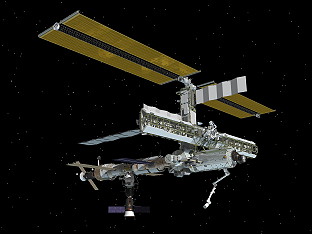
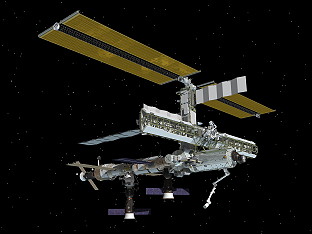
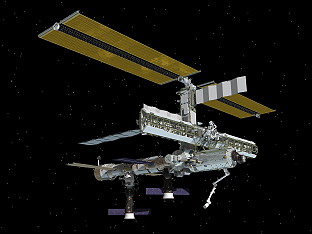
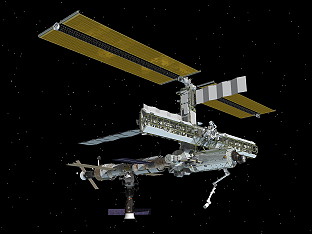
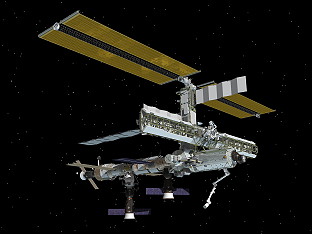
ISS Assembly
 |
 |
 |
 |
 |
|
Photos / Graphics
 |
 |
 |
 |
 |
 |
 |
 |
 |
 |
 |
|
more Earth observation photos |
|
more onboard photos |
|
| © |  |
Last update on November 06, 2020.  |
 |