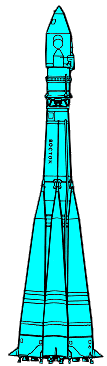
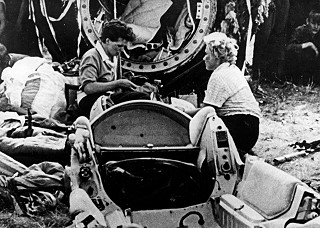
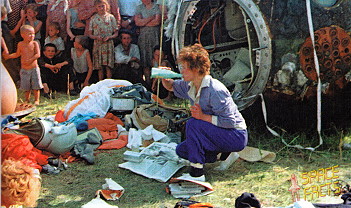
Launch from the Baikonur Cosmodrome; landing
620 km northeast of Karaganda or 200 km west of Barnaul The spacecraft carried
the
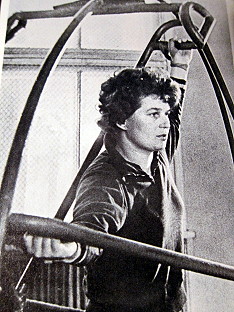
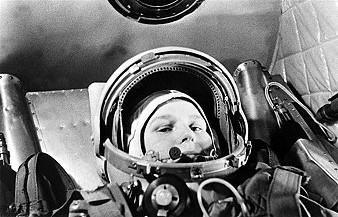
first female cosmonaut.
The flight objectives included:
Comparative analysis of the effect of various spaceflight factors on the male
and female organisms; medico biological research; further elaboration and
improvement of spaceship systems under conditions of joint flight.
This mission was a
rendezvous flight with
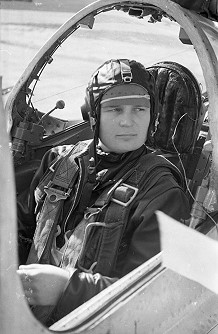
Vostok 5 (4.5 km distance) at
time. There was directly communication between both capsules during the closest
approach.
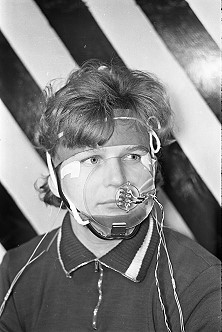
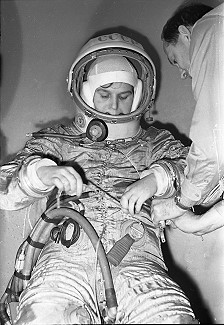
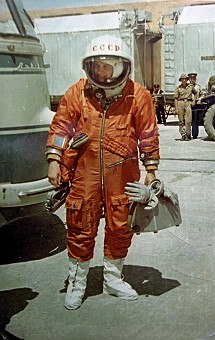
During the mission Valentina
Tereshkova suffered from space sickness and did not reply
during several communications sessions. It is unknown until today, if this was
due to an equipment failure or, that she had been paralyzed with fear. It was
also planned, that she took manual control of the spacecraft, but that was
cancelled. Valentina
Tereshkova hat also problems (pain) with her right shin. She
did not eat enough during their flight, because the bread was too dry.
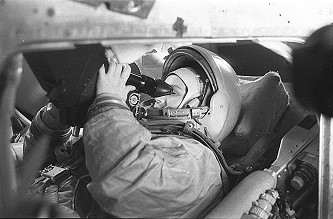
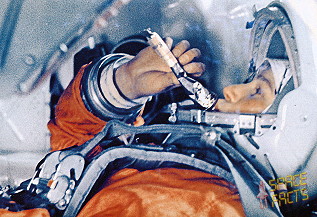
On the other side, she filmed cities, forests, and rivers, but didn't complete
the biological experiment - she couldn't reach the equipment. Star observations
were also performed and she took two photometric measurements, even writing was
no problem.
Data was collected on the female body's reaction to
spaceflight. Like other cosmonauts on
Vostok missions, she maintained a flight log, took
photographs, and manually oriented the spacecraft. Her photographs of the
horizon from space were later used to identify aerosol layers within the
atmosphere. The mission, a joint flight with
Vostok 5, was originally conceived as
being a joint mission with two
Vostok's each carrying a female cosmonaut, but this
changed as the
Vostok program experienced cutbacks as a precursor to
the retooling of the program into the
Voskhod program.
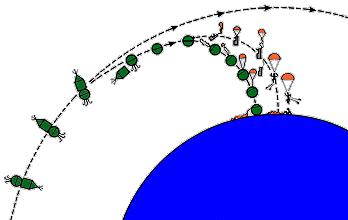
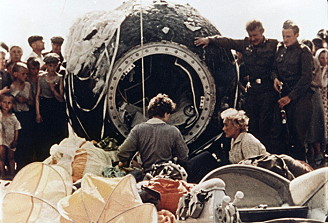
Many errors occurred in the
entire landing sequences, including actions of the
VVS recovery forces. Both spacecraft landed two
degrees of latitude north of the aim point. It was calculated that this could
have occurred by duplicate landing commands having been sent, but such a
failure could not be duplicated in post flight tests of ground
equipment.
It was revealed in 2004 that an error in the control program
made the spaceship ascend from orbit instead of descending. Valentina
Tereshkova noticed the fault on the first day of the flight
and reported it to Sergei Korolev. The mistake was promptly repaired. Valentina
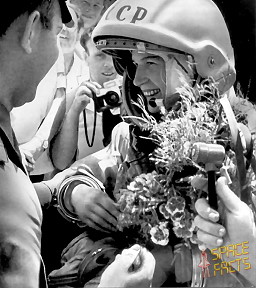
Tereshkova entered the data that she got from the Earth into
the descent program and landed safely.