Human Orbital Spaceflights

International Flight No. 120STS-27Atlantis (3)27th Space Shuttle missionUSA |
 |
 |
Launch, orbit and landing data
walkout photo |
 |
|||||||||||||||||||||||||||||
alternative crew photo |
alternative crew photo |
|||||||||||||||||||||||||||||
alternative crew photo |
alternative crew photo |
|||||||||||||||||||||||||||||
alternative crew photo |
alternative crew photo |
|||||||||||||||||||||||||||||
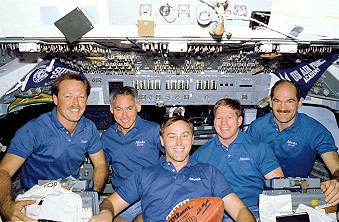
Crew
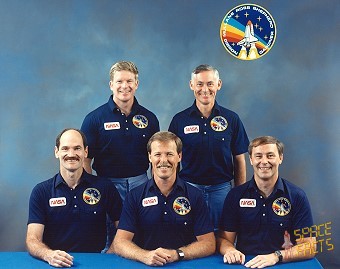
| No. | Surname | Given names | Position | Flight No. | Duration | Orbits | |
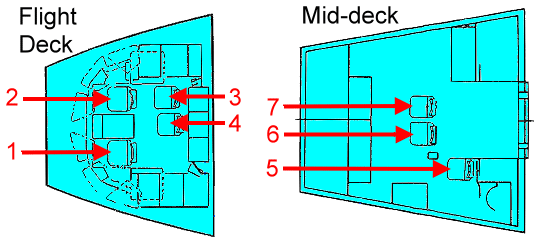
| 1 |  |
Gibson | Robert Lee "Hoot" | CDR | 3 | 4d 09h 05m 34s | 68 |
| 2 | |
Gardner | Guy Spence | PLT | 1 | 4d 09h 05m 34s | 68 |
| 3 | |
Mullane | Richard Michael | MS-1 | 2 | 4d 09h 05m 34s | 68 |
| 4 | |
Ross | Jerry Lynn | MS-2, EV-1, FE | 2 | 4d 09h 05m 34s | 68 |
| 5 | |
Shepherd | William McMichael | MS-3, EV-2, RMS | 1 | 4d 09h 05m 34s | 68 |
Crew seating arrangement
|
 |
|
||||||||||||||||||||||||
Hardware
| Orbiter : | OV-104 (3.) |
| SSME (1 / 2 / 3): | 2027 (1.) / 2030 (1.) / 2029 (1.) |
| SRB: | BI-030 / RSRM 2 |
| ET: | ET-23 (LWT-16) |
| OMS Pod: | Left Pod 01 (9.) / Right Pod 01 (9.) |
| FWD RCS Pod: | FRC 4 (3.) |
| RMS: | 201 (7.) |
| EMU: | EMU No. 1090 (PLSS No. 1011) / EMU No. 1092 (PLSS No. 1013) |
Flight
|
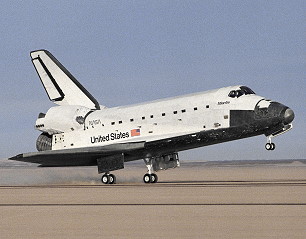
Launch from Cape Canaveral (KSC) and
landing on the Edwards
AFB, Runway 17.
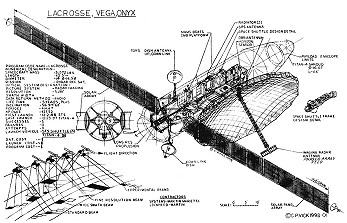
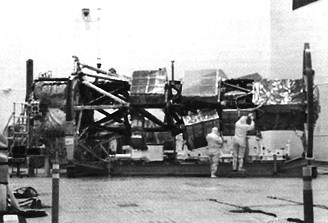
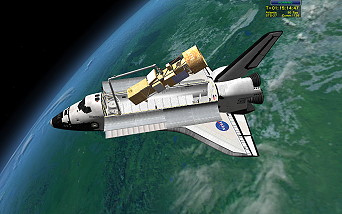
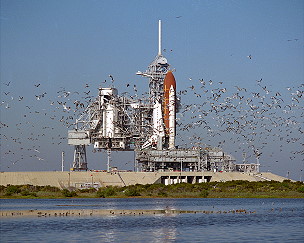
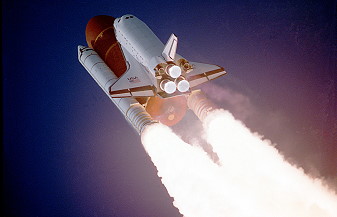
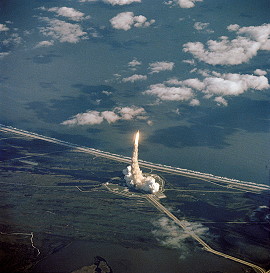
The launch was originally scheduled for December 01, 1988, but was postponed one day because of cloud cover and strong wind conditions at the launch site. This flight was the third mission dedicated to the Department of Defense, and most information about it remained classified. For the second time, NASA did not provide pre-launch commentary to the public until nine minutes before liftoff. It was the first military mission without an MSE among the crew members. The crew deployed successfully the reconnaissance satellite Lacrosse (USA-34), a side-looking radar, all-weather surveillance satellite, for the US National Reconnaissance Office (NRO) and the Central Intelligence Agency (CIA). Lacrosse used Synthetic Aperture Radar as its prime imaging instrument. It is able to see through cloud cover and also has some ability to penetrate soil, though there have been more powerful instruments deployed in space for this specific purpose. Early versions are believed to have used the Tracking and Data Relay Satellite System (TDRSS) to relay imagery to a ground station at White Sands, New Mexico. There are some indications that other relay satellites may now be available for use with Lacrosse. The name "Lacrosse" is used to refer to all variants, while "Onyx" is sometimes used to refer to the three newer units, According to former Director of Central Intelligence Admiral Stansfield Turner, Lacrosse had its origins in 1978 when a dispute between the Central Intelligence Agency and the U.S. Air Force as to whether a combined optical/radar reconnaissance satellite (the CIA proposal) or a radar-only one (the USAF proposal) should be developed was resolved in favor of the USAF. Unofficial was reported, that the satellite failed after deployment. Atlantis re-rendezvoused with the satellite and the crew repaired the payload. That would imply an EVA by Jerry Ross and/or William Shepherd. Lacrosse was successful after that. A confirmation for this EVA is not given until today. After the deployment the crew performed some classified experiments. The orbiter's Thermal Protection System tiles sustained unusually severe damage during the flight. A review panel investigation found that the most probable cause was ablative insulating material from the right-hand solid rocket booster nose cap hitting the orbiter about 85 seconds into the flight as seen in footage of the ascent. The crew made an inspection of the vehicle's impacted starboard side using the robot arm, but the limited resolution and range of the cameras made it impossible to determine the full extent of the tile damage. This was compounded by the fact that the crew was prohibited from using their standard method of sending images due to the classified nature of the mission. The crew was forced to use an encrypted method of sending images. It is believed that this caused the images NASA received to be of poor quality, causing them to think the damage was actually "just lights and shadows". They told the crew the damage didn't look any more severe than on past missions. One report describes the crew as "infuriated" that Mission Control seemed unconcerned. Commander Robert "Hoot" Gibson said in an interview he didn't think the shuttle would survive reentry, even after being told by NASA "The damage isn't that severe". Upon landing, over 700 damaged tiles were noted, and one tile was missing. The tile was located over the dense aluminum mounting plate for the L-band antenna, perhaps preventing a burn-through of the sort that doomed Columbia in 2003. |
Photos / Graphics
 |
 |
|
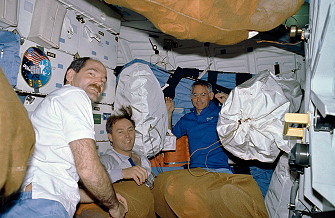
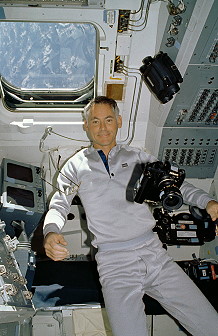
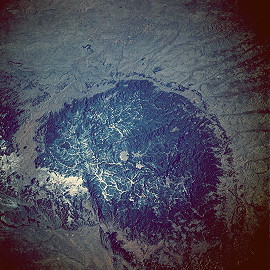
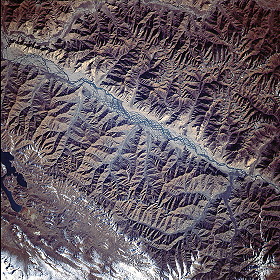
source of all photos is NASA |
|
 |
 |
 |
 |
 |
 |
 |
 |
 |
 |
 |
 |
 |
 |
 |
|
more Earth observation photos |
|
| © |  |
Last update on February 10, 2022.  |
 |