Resident Crews of the International Space Station (ISS)

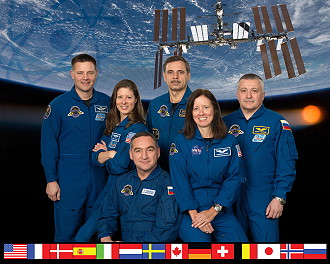
ISS: Expedition 24 |
 |
 |
 |
 |
 |
alternative crew photo |
alternative crew photo |
 |
|
alternative crew photo |
Crew, launch- and landing data
| No. | Nation | Surname | Given names | Position | Spacecraft (launch) |
Launch date |
Launch time |
Spacecraft (landing) |
Landing date |
Landing time |
Mission duration |
Orbits |
| 1 |  |
Skvortsov | Aleksandr Aleksandrovich Jr. | ISS-CDR | Soyuz TMA-18 | 02.04.2010 | 04:04:33.061 UTC | Soyuz TMA-18 | 25.09.2010 | 05:23:10.8 UTC | 176d 01h 18m 38s | 2772 |
| 3 |  |
Caldwell-Dyson | Tracy Ellen | Flight Engineer-2 | Soyuz TMA-18 | 02.04.2010 | 04:04:33.061 UTC | Soyuz TMA-18 | 25.09.2010 | 05:23:10.8 UTC | 176d 01h 18m 38s | 2772 |
| 2 | |
Korniyenko | Mikhail Borisovich | Flight Engineer-3 | Soyuz TMA-18 | 02.04.2010 | 04:04:33.061 UTC | Soyuz TMA-18 | 25.09.2010 | 05:23:10.8 UTC | 176d 01h 18m 38s | 2772 |
| 6 | |
Wheelock | Douglas Harry | Flight Engineer-4 | Soyuz TMA-19 | 15.06.2010 | 21:35:18.732 UTC | Soyuz TMA-19 | 26.11.2010 | 04:46:53.0 UTC | 163d 07h 11m 34s | 2570 |
| 4 | |
Yurchikhin | Fyodor Nikolayevich | Flight Engineer-5 | Soyuz TMA-19 | 15.06.2010 | 21:35:18.732 UTC | Soyuz TMA-19 | 26.11.2010 | 04:46:53.0 UTC | 163d 07h 11m 34s | 2570 |
| 5 | |
Walker | Shannon | Flight Engineer-6 | Soyuz TMA-19 | 15.06.2010 | 21:35:18.732 UTC | Soyuz TMA-19 | 26.11.2010 | 04:46:53.0 UTC | 163d 07h 11m 34s | 2570 |
unofficial Backup Crew
| No. | Nation | Surname | Given names | Position |
| 1 | |
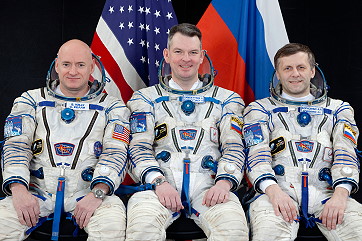
Samokutyayev | Aleksandr Mikhailovich | ISS-CDR |
| 2 | |
Kelly | Scott Joseph | Flight Engineer |
| 3 | |
Borisenko | Andrei Ivanovich | Flight Engineer |
| 4 | |
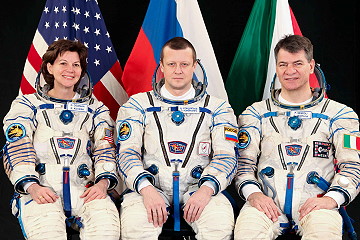
Coleman | Catherine Grace "Cady" | Flight Engineer |
| 5 | |
Kondratiyev | Dmitri Yuriyevich | Flight Engineer |
| 6 |  |
Nespoli | Paolo Angelo | Flight Engineer |
 |
 |
 |
Expedition Report
|
Launch from the Baikonur Cosmodrome (Fyodor
Yurchikhin, Shannon
Walker and Douglas
Wheelock with
Soyuz
TMA-19). Aleksandr
Skvortsov, Mikhail
Korniyenko and Tracy
Caldwell-Dyson were onboard since April 04, 2010 (arrival
with Soyuz
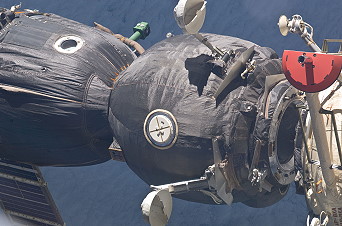
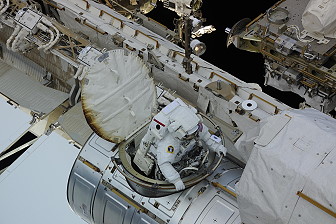
TMA-18). ISS Expedition 24 began with the undocking of spacecraft Soyuz TMA-17 on June 02, 2010 at 00:04:13 UTC. The former Expedition 23 (Oleg Kotov, Soichi Noguchi and Timothy Creamer) returned safely to Earth. With the arrival of Soyuz TMA-19 on June 17, 2010 at 22:21 UTC the Expedition 24 became a six-person-crew. Soyuz TMA-19 carried Fyodor Yurchikhin, Shannon Walker and Douglas Wheelock to the space station. On June 28, 2010 Fyodor Yurchikhin, Shannon Walker and Douglas Wheelock boarded the Soyuz TMA-19 vehicle that docked to Zvezda on June 18, 2010. They flew the Soyuz vehicle a short distance to Rassvet. The change of location made the Zvezda port free for the docking of a new Progress resupply vehicle on July 02, 2010. That port is the preferred location for the Progress, so it can help reboost the station and adjust its altitude. The Progress M-06M was launched successfully on June 30, 2010 at 15:35 UTC. The cargo ship was loaded with 870 kilograms (1,920 lb) of propellant, 50 kilograms (110 lb) of oxygen and air, 100 kilograms (220 lb) of water and 1,210 kilograms (2,670 lb) of equipment, spare parts and experiment hardware. While approaching the ISS on July 02, 2010, the spacecraft aborted the docking procedure after a critical communications error. The spacecraft bypassed the station at a safe distance. According to the official statement of the Moscow mission control, the approach to the ISS went normally until the distance of around 2 kilometers (1.2 mi) when the ship's KURS automated rendezvous system issued a command prohibiting further "dynamic operations". The telemetry between the spacecraft and the ISS was lost about 25 minutes before planned docking. According to NASA, the most likely cause of the aborted docking was traced to the activation of the TORU "Klest" TV transmitter, which created interference with TORU manual rendezvous system, causing a loss of the TORU command link between spacecraft and the ISS that triggered the abort of the Progress docking. The Russian flight control team later confirmed that the KURS system operated normally during the aborted docking attempt and did not fail, as was initially believed. Shortly after the abort, the situation was evaluated and a second attempt at docking on July 04, 2010 was planned and subsequently succeeded. Flying on autopilot using the KURS automated system, the spacecraft docked to the aft docking port of Zvezda. The Expedition 24 crew members monitored the arrival of the spacecraft and as a precautionary measure TORU was not activated for the second attempt. The docking occurred over four-corner border of Russia, Kazakhstan, China and Mongolia. Hooks and latches were engaged a few minutes later and the crew members entered the Progress around 19:30 UTC. An ISS reboost assisted by the attitude thrusters of Progress M-06M was initiated on July 16, 2010 to improve conditions for the landing of Soyuz TMA-18 and the docking of Progress M-07M. Following the commands from the space station Russian Segment Central Computer, the engines of the Progress M-06M spacecraft were started at 06:42:30 UTC. The operation lasted 1065 seconds raised the orbit of the space station by 3.7 km to 355.2 km. The Progress M-06M spacecraft loaded with trash and other items for disposal, undocked from the International Space Station at 11:25 UTC on August 31, 2010. Following undocking, Progress M-06M remained in orbit to conduct an experiment designation Radar-Progress. It was deorbited over the Pacific Ocean on September 06, 2010, with debris falling into an area known as the spacecraft cemetery. The retroburn was initiated at 13:13:50 UTC and the remaining parts of the Progress, which had not burnt during the reentry, fell down in the area of 42°07'S 138°25'W at about 13:53 UTC. The first EVA was performed by Fyodor Yurchikhin and Mikhail Korniyenko on July 27, 2010 (6h 42m) to prepare the recently delivered Russian Rassvet Module for future automated dockings by Russian spacecraft. The spacewalk also included routing and mating Command and Data Handling cables on the Zvezda and Zarya modules. A video camera was removed and replaced from the aft end of Zvezda which will be used to provide television views of the final approach and docking of future European Automated Transfer Vehicles carrying cargo to the complex. This was the 25th Russian spacewalk and the 147th spacewalk overall in support of station assembly and maintenance. During the spacewalk, two objects were detected floating away from the station. One was tentatively identified as a cable clamp, left outside the station from a previous Russian spacewalk. That object and another, not conclusively identified, both departed well below the vicinity of the complex and pose no threat to the orbiting laboratory. On July 31, 2010 the ammonia pump module that is part of coolant loop A, mounted on the right side of the station's main power truss, failed. A problem somewhere in the system caused a circuit breaker to trip, setting off multiple alarms and waking the crew. With half the station's cooling gone, flight controllers were forced to shut down two of the station's four U.S. control moment gyroscopes, used to help maintain the lab's orientation in space, one communications channel, several solar power current converters and a variety of computer control boxes known as multiplexer-demultiplexers. Tracy Caldwell-Dyson and Douglas Wheelock assisted with the powerdowns and hooked up jumper cables between the Russian Zarya module and the U.S. segment of the station to prevent additional cooling problems. The space station remained in a safe configuration throughout, officials said, with critical life support systems, computers and communications gear operating with coolant loop B. The six-member crew, they said, was never in any danger. Several hours later flight controllers attempted to restart the stalled pump, resetting the circuit breaker that opened late Saturday. Once again, the crew was awakened by alarms. Later in the morning, engineers restarted one of the two powered-down control moment gyroscopes and while the main bus switching units that direct power to various subsystems ran hotter than normal, engineers said the lab was stable. The space station features two independent coolant loops that use ammonia circulating through huge radiators to dissipate the heat generated by the station's electronic systems. Each loop is fed by a large tank of ammonia that includes an internal bellows pressurized by nitrogen. That pressurization system allows the loops to handle the periodic expansion and contraction of the ammonia coolant due to temperature changes in orbit. Spare coolant system components, including two pump modules, are mounted on external stowage platforms, one on the left side of the station and the other on the right, just ahead of the Quest airlock module. Meanwhile the managers decided to fix the problem in two difficult spacewalk repair jobs. A first EVA for repair work by Douglas Wheelock and Tracy Caldwell-Dyson occurred on August 07, 2010 (8h 03m). They removed hose clamps and then started disconnecting umbilicals from the broken space station coolant pump. However, difficulty unplugging one of the ammonia lines consumed a couple of hours and a leak seen from that connector once it finally cooperated prevented the astronauts from progressing any further in their work. Original plans had called for the pump's removal and installation of the new pump today, with a second spacewalk on August 11, 2010 to finish hooking up the replacement and stowing the old one. The second EVA was again performed by Douglas Wheelock and Tracy Caldwell-Dyson on August 11, 2010 (7h 26m) to repair the failed pump. They removed the old pump and stowed it on a payload attachment bracket on the Mobile Base System on the station's truss while preparing the replacement pump for its removal from a stowage platform adjacent to the Quest airlock and its installation on the truss during a third spacewalk. Douglas Wheelock successfully closed the quick disconnect valve for the fourth and final fluid connector for the failed pump, and detached the final fluid line from the failed pump. Tracy Caldwell-Dyson demated five electrical and data cables while Douglas Wheelock broke torque and removed four bolts from the old pump. The pump was extracted from the truss through the use of a grapple bar and installed on a payload bracket on the Mobile Base System on the station's truss. Tracy Caldwell-Dyson then prepared the spare pump for future installation, disconnecting three of five electrical cables and reconfiguring insulation. The third and final EVA for repair work by Douglas Wheelock and Tracy Caldwell-Dyson occurred on August 16, 2010 (7h 20m) to repair the failed pump. The astronauts performed the installation of a spare ammonia pump module on the S1 Truss. The pump module was successfully installed on the S1 Truss after Douglas Wheelock attached four bolts and Tracy Caldwell-Dyson mated five electrical connectors. Progress M-07M was launched at 10:22:28 UTC on September 10, 2010. The launch had previously been scheduled to occur at 11:11 UTC on September 08, 2010, however it was delayed due to unfavorable weather conditions. Docking with the aft port of the Zvezda module of the ISS had been scheduled for around 12:37 UTC on September 10, 2010, however due to the launch delay, it occurred on September 12, 2010 at 11:58 UTC. The approval to begin the 11-minute final approach was issued by the Russian flight controllers after assessing the systems during a brief stationkeeping hold with about 167.6 meters (550 ft) between the space station and the Progress spacecraft. The docking was executed flawlessly by the Kurs automated rendezvous system. Progress M-07M carried 2,515 kilograms (5,545 lb) of cargo to the International Space Station. This consisted of 1,120 kilograms (2,470 lb) of fuel, 49 kilograms (108 lb) of oxygen, and 210 kilograms (460 lb) of water. The remaining 1,136 kilograms (2,504 lb) was dry cargo, including components for the station's life support system, equipment for conducting maintenance and repairs, supplies for sanitation and hygiene, food, medical equipment, clothes and parcels for the cosmonauts aboard the station, cameras, and supplies for outfitting the Zarya, Poisk and Rassvet modules. Progress M-07M was used for three maneuvers to raise the orbit of the International Space Station. The first, which used eight of the Progress spacecraft's attitude control thrusters, was carried out on September 15, 2010. The engines ignited 09:04 UTC, and burned for 526 seconds, raising the orbit of the space station by 2 kilometers (1.2 mi) to 356 kilometers (221 mi), in preparation for the undocking and landing of Soyuz TMA-18 on September 25, 2010, and for the docking of Soyuz TMA-01M on October 10, 2010. A second orbit raising maneuver was conducted at 19:41 UTC on October 20, 2010, in preparation for the docking of Progress M-08M. The maneuver lasted 228.7 seconds, and left the space station in an orbit with a perigee of 350.7 kilometers (217.9 mi) and an apogee of 375.7 kilometers (233.4 mi). Progress M-08M was launched on October 27, 2010, and successfully docked two days later. The third maneuver was conducted on December 22, 2010, when eight thrusters were again used to raise the space station's orbit. This maneuver raised the orbit of the space station by 4.2 kilometers (2.6 mi) to 352.9 kilometers (219.3 mi) in preparation for the arrival of the Progress M-09M spacecraft, which is scheduled to launch on January 28, 2011, and for the docking of Space Shuttle Discovery on the STS-133 mission. It remained docked to the space station until February 20, 2011 when it undocked to make way for the Johannes Kepler Automated Transfer Vehicle. After undocking it was deorbited to a destructive reentry over the spacecraft cemetery in the Pacific Ocean. Filled with trash and spent equipment on board the ISS, Progress M-07M drowned in the Pacific Ocean at 14:58 UTC. A failure in the docking ring on the Mini-Research Module 2 (MRM-2) Poisk, caused a delay in the planned landing of the Soyuz TMA-18 spacecraft. Soyuz TMA-18 was originally planned to undock and land on September 24, 2010, but instead undocked less than 24 hours later on September 25, 2010. The failure is believed to be due to a faulty indication from a micro-switch on the hatch between the Soyuz and MRM-2. A drive gear, which is related to the docking mechanism was also found to have two broken teeth, and is believed to be related to the problem as well. With nearly 130 integrated investigations - the work of nearly 400 scientists around the globe, scientific throughput has quadrupled during the transition from assembly to the era of utilization. APEX-CSA2 will compare the gene expression and tissue organization of the white spruce (Picea glauca) in microgravity and on Earth. Bodies in the Space Environment (BISE) will evaluate adaptation to, the effect of, and recovery from long-duration microgravity exposure on the perception of orientation using the OCHART protocol. HYPERSOLE will determine the change in skin sensitivity post spaceflight for the application to balance control, specifically changes in skin sensitivity of the sole of the foot and which receptors may be influenced following a period of nonloading. Health Consequences of Long- Duration Flight (VASCULAR) will conduct an integrated investigation of mechanisms responsible for changes in blood vessel structure with long-duration space flight and will link this with functional and health consequences that parallel changes with the aging process. The Matroshka-2 experiment is carrying out a study of radiation absorption on the ISS using a simulated human Phantom and further investigating the effect of using different shielding materials on the process. MICAST carries out research into the formation of microstructures during the solidification of metallic alloys under diffusive and magnetically controlled convective conditions. The goal of PADIAC is to determine the different pathways used for activation of T cells, which play an important role in the immune system. PASSAGES is designed to test how astronauts interpret visual information due to exposure to weightlessness with a focus on the possible decrease in use of the "Eye-Height" strategy. Taste is part of the curriculum of school children across Europe. A tasting session will be recorded on the ISS in order to develop online material for use in the classroom. The Vessel ID System will demonstrate the space-based capability of identification of maritime vessels and also test the ability of an external grappling adaptor to accommodate small payloads. The main objective of Vessel Imaging is to evaluate the changes in the peripheral blood vessel wall properties (thickness and compliance) and cross-sectional areas during long-term spaceflight. The 2D Nanotemplate will quantitatively evaluate gravitational effects on a new nanomaterial during its chemical reaction process. To prepare the two-dimensional template with nanoditches for electronic devices. The template is prepared via an isothermal reaction upon mixing of peptides and alkali water. To prevent sedimentation and convective flow, microgravity is needed. Marangoni Exp: A liquid bridge 50 mm in diameter is formed between a pair of supporting disks. A temperature difference between disks is imposed gradually. Thermocapillary convection (Marangoni convection) occurs due to surface tension gradient. The flow and temperature fields are observed in each stage. The transition conditions and processes are investigated precisely. In this experiment, an insertion thermocouple will be used to measure the surface temperature fluctuation. Nanoskeleton1 will quantitatively evaluate gravitational effects on a new nanomaterial during its chemical reaction process. The nanoskeleton, a coined word that is defined as a functional nanoframework, is expected to be a highly functional material because of its high surface area. The high surface area is due to the pore structure and functionality of the framework itself. The TiO2 nanoskeleton, especially, has potential as a high-performance photocatalyst and highly efficient dyesensitized solar cell. The TiO2 nanoskeleton is synthesized from a mixture of CTAB surfactant solution and TiOSO4-H2SO4 solution at 40° C or 3 days under isothermal conditions. The nanoskeleton experiment will be performed using the CBEF in the SAIBO rack. Oil will be used to enlarge the pore size of the honeycomb structure of the TiO2 nanoskeleton so that flotation of the oil can be suppressed in microgravity. All of the experiment samples will be retrieved and evaluated on the ground. The retrieved samples will be evaluated to clarify convective flow, flotation, and sedimentation effects on the sample quality. During the experiment, temperature and downlinked images of the samples will be monitored. Results of this study may enable the synthesizing of nanoskeleton materials on a mass production scale, and eventually, commercial realization of nanoskeleton materials as photocatalytic particles and so on. This experiment will be performed under JAXA's ISS Applied Research Center promotion program, which is joint university/industry/government research. Scales, (UROKO in Japanese (regenerating scales)) collected from goldfish under anesthesia will be launched at +4° C. They will be incubated for 2 or 4 days at 20° C under microgravity using the cell biology experiment facility (CEBF) and compared with a 1G control in space. We will use the regenerating scales in goldfish because osteoblasts and osteoclasts in the regenerating scales were more active than those in normal scales. After the experiments, the specimens will be frozen at -80° C or fixed with formalin at 4° C. Biological Research in Canisters - 16 (BRIC-16) germinates Arabidopsis thaliana seeds in microgravity to be returned to Earth for analysis by investigator teams. Capillary Channel Flow (CCF) is a versatile experiment for studying a critical variety of inertial-capillary dominated flows key to spacecraft systems that cannot be studied on Earth. CCF results are immediately useful for the design, testing, and instrumentation for verification and validation of liquid management systems of current orbiting, design stage, and advanced spacecraft envisioned for future exploration missions. Constrained Vapor Bubble (CVB) operates a miniature wickless heat pipe, or heat exchanger, to understand the physics of evaporation and condensation as they affect heat transfer processes in microgravity. The Delay Tolerant Networking (DTN) will test communication protocols with the Commercial Generic Bioprocessing Apparatus (CGBA) onboard the International Space Station that can be used for exploration. The primary purpose of this activity is to rapidly mature the technology for use in NASA's exploration missions and space communications architecture. IntraVenous Fluid GENeration for Exploration Missions (IVGEN) will demonstrate the capability to purify water to the standards required for intravenous administration, then mix the water with salt crystals to produce normal saline. This hardware is a prototype that will allow flight surgeons more options to treat ill or injured crewmembers during future long-duration exploration missions. Kids In Micro-gravity! (Kids in Microg) is a student experiment design challenge geared toward grades 5 -8. Its purpose is to give students a hands-on opportunity to design an experiment or simple demonstration that could be performed both in the classroom and aboard the International Space Station. Microbiology - 2 (Micro-2) is a fundamental biology experiment and will expand our understanding of the fundamental basis of how spaceflight affects the biological and molecular functions of the cell and the molecular mechanisms by which cells and tissues respond to spaceflight conditions. Preliminary Advanced Colloids Experiment (PACE) will characterize the capability of conducting high magnification colloid experiments with the Light Microscopy Module (LMM) to determine the minimum size particles which can be resolved. The National Aeronautics and Space Administration Biological Specimen Repository (Repository) is a storage bank that is used to maintain biological specimens over extended periods of time and under well-controlled conditions. Biological samples from the International Space Station, including blood and urine, will be collected, processed and archived during the preflight, inflight and postflight phases of station missions. This investigation has been developed to archive biosamples for use as a resource for future spaceflight related research. Space Tissue Loss (STL) advances research objectives for U.S. Army's Combat Casualty Care Research Program by defining cellular effects and growth characteristics in microgravity for immune system modulation, shock response abatement and directed tissue regeneration. Vehicle Cabin Atmosphere Monitor (VCAM) identifies gases that are present in minute quantities in the International Space Station breathing air that could harm the crew's health. If successful, instruments like VCAM could accompany crewmembers during long-duration exploration missions. Asepsises: Development of the methods and onboard technical facilities of the ensuring the aseptic conditions of the undertaking BTH - an experiment in condition of the space flight. Matryeshka-R: Study of radiation environment dynamics along the ISS RS flight path and in ISS compartments, and dose accumulation in anthropomorphous phantom, located inside and outside ISS. Finally, the station command changed from Russian cosmonaut Aleksandr Skvortsov to US astronaut Douglas Wheelock. With undocking of Soyuz TMA-18, carrying Aleksandr Skvortsov, Mikhail Korniyenko and Tracy Caldwell-Dyson on September 25, 2010 at 02:02:12 UTC the Expedition 24 concluded and the new ISS Expedition 25 began. During the stay on board of the ISS the crews of Expeditions 23 / 24 carried out the following scientific experiments: 3D-Space (Mental Representation of Spatial Cues During Space Flight), ALTEA-Dosi (Anomalous Long Term Effects in Astronauts' - Dosimetry), ALTEA-Shield (Anomalous Long Term Effects in Astronauts' Central Nervous System - Shield), APEX-CSA2 (Advanced Plant Experiment - Canadian Space Agency 2), ARISS (Amateur Radio on the International Space Station), Aryl (Influencing Factors of Space Flight on Expression of Strains of Interleukin), Astrovakcina (Cultivation in Weightless of E.coli- Producer of the Caf1 Protein), Bacteriophage (Investigation of the Effects of Space Flight Factors on Bacteriophages), Bar (Choice and Development of Methods and Instruments to Detect the Location of a Loss of Pressurization of a Module on ISS), Bif (Investigation of the Effects of Space Flight Factors on the Technological and Biomedical Characteristics of Bifidobacterium), Biodegradation (Initial stage of Biodegradation and Biodeterioration in Space), Bioemulsia (Research and Development of a Self-Contained Reactor of the Shielded Type For Production of Biomass of Microorganisms and Biologically Active Substances), Biological Rhythms (The Effect of Long-term Microgravity Exposure on Cardiac Autonomic Function by Analyzing 24-hours Electrocardiogram), Biorisk (Influence of Factors of the Space Environment on the Condition of the System of Microorganisms-Hosts Relating to the Problem of Environmental Safety of Flight Techniques and Planetary Quarantine), BISE (Bodies In the Space Environment: Relative Contributions of Internal and External Cues to Self - Orientation, During and After Zero Gravity Exposure), Bisphosphonates (Bisphosphonates as a Countermeasure to Space Flight Induced Bone Loss), BRIC-16-Cytoskeleton (Biological Research In Canisters - 16: Investigations of the plant cytoskeleton in microgravity with gene profiling and cytochemistry), BRIC-16-DNA (Biological Research In Canisters - 16: The Impact of Spaceflight on Arabidopsis: Deep Sequencing and DNA Arrays as Collaborative Readouts of the Transcriptome of Arabidopsis Seedlings and Undifferentiated Cells in Space), BRIC-16-Regulation (Biological Research In Canisters -16: Actin Regulation of Arabidopsis Root Growth and Orientation During Space Flight), BTN-M1 (Examination of the Flow of High Speed and Thermal Neutrons), CEO (Crew Earth Observations), CSLM-2 (Coarsening in Solid Liquid Mixtures-2), CVB (Constrained Vapor Bubble), DECLIC-ALI (DEvice for the study of Critical LIquids and Crystallization - Alice Like Insert), DECLIC-DSI (DEvice for the study of Critical LIquids and Crystallization - Directional Solidification Insert), DECLIC-HTI (DEvice for the study of Critical LIquids and Crystallization - High Temperature Insert), DOSIS-DOBIES (Dose Distribution Inside ISS - Dosimetry for Biological Experiments in Space), DTN (Disruption Tolerant Networking for Space Operations), Dykhanie (Regulation and Biomechanics of Respiration in Space Flight), EarthKAM (Earth Knowledge Acquired by Middle School Students), EKE (Assessment of Endurance Capacity by Gas Exchange and Heart Rate Kinetics During Physical Training), Ekon (Experimental Survey on Evaluating the Possibility of Using th Russian Segment of ISS for Environmental Inspection of Work Areas of Various Facilities (Features)), EPO-Cloud Observation-Demos (Education Payload Operations-Cloud Observation-Demonstrations), EPO-Demos (Education Payload Operation - Demonstrations), ERB-2 (Erasmus Recording Binocular - 2), ExPRESS Payload Simulator (ExPRESS Payload Simulator), Facet (Investigation of Mechanism of Faceted Cellular Array Growth), Ferulate (Regulation by Gravity of Ferulate Formation in Cell Walls of Rice Seedlings), Fish Scales (Investigation of the Osteoclastic and Osteoblastic Responses to Microgravity Using Goldfish Scales), FLEX (Flame Extinguishment Experiment), FLEX-2 (Flame Extinguishment Experiment - 2), Functional Task Test (Physiological Factors Contributing to Changes in Postflight Functional Performance), Genara-A (Gravity Related Genes in Arabidopsis - A), HREP-HICO (HICO and RAIDS Experiment Payload - Hyperspectral Imager for the Coastal Ocean), HREP-RAIDS (HICO and RAIDS Experiment Payload - Remote Atmospheric and Ionospheric Detection System (RAIDS)), HydroTropi (Hydrotropism and Auxin-Inducible Gene expression in Roots Grown Under Microgravity Conditions), Hypersole (Cutaneous Hypersensitivity and Balance Control in Humans), Impuls (Impulse), Integrated Cardiovascular (Cardiac Atrophy and Diastolic Dysfunction During and After Long Duration Spaceflight: Functional Consequences for Orthostatic Intolerance, Exercise Capability and Risk for Cardiac Arrhythmias), Integrated Immune (Validation of Procedures for Monitoring Crewmember Immune Function), IVGEN (IntraVenous Fluid GENeration for Exploration Missions), Izgib (Effect of Performance of Flight and Science Activities on the Function of On-Orbit Systems on ISS (Mathematical Model)), JAXA-AstroReport (Japan Aerospace and Exploration Agency - Astronaut Report), JAXA EPO 1 (Japan Aerospace Exploration Agency Education Payload Observation 1), JAXA EPO 2 (Japan Aerospace Exploration Agency Education Payload Observation 2), JAXA EPO 3 (Japan Aerospace Exploration Agency Education Payload Observation 3), JAXA EPO 5 (Japan Aerospace Exploration Agency Education Payload Observation 5), JAXA PCG (Japan Aerospace Exploration Agency Protein Crystal Growth), Kids In Micro-g (Kids In Micro-gravity (2009-2010)), Kontur (Development of a System of Supervisory Control Over the Internet of the Robotic Manipulator in the Russian Segment of ISS), Lactolen (Influence of Factors of Space Flight on Lactolen Producer Strains), MAI-75 (Space Devices and Modern Technology for Personal Communication), MAXI (Monitor of All-sky X-ray Image), Micro-2 (Gravitational Effects on Biofilm Formation During Space Flight), MISSE-7 (Materials International Space Station Experiment - 7), Mouse Immunology (Mouse Antigen-Specific CD4+ T Cell Priming and Memory Response during Spaceflight), MSL-CETSOL and MICAST (Materials Science Laboratory - Columnar-to-Equiaxed Transition in Solidification Processing and Microstructure Formation in Casting of Technical Alloys under Diffusive and Magnetically Controlled Convective Conditions), MyoLab (Molecular Mechanism of Microgravity-Induced Skeletal Muscle Atrophy - Physiological Relevance of Cbl-b Ubiquitin Ligase), NanoRacks-CubeLabs Module-1 and -3 (NanoRacks-CubeLabs Module-1 and -3), NanoRacks-CubeLabs Module-2 and -4 (NanoRacks-CubeLabs Module-2 and -4), Nanoskeleton (Production of High Performance Nanomaterials in Microgravity), NeuroRad (Biological Effects of Space Radiation and Microgravity on Mammalian Cells), NLP-Cells-3 (National Laboratory Pathfinder - Cells - 3: Jatropha Biofuels), NLP-Cells-4 (National Laboratory Pathfinder - Cells - 4: Jatropha-2), NLP-Vaccine-MRSA (National Laboratory Pathfinder - Vaccine - Methicillin-resistant Staphylococcus aureus), NLP-Vaccine-Salmonella (National Laboratory Pathfinder - Vaccine - Salmonella), Nutrition (Nutritional Status Assessment), OChB (Influence of Factors of Space Flight on Superoxide Strain Producer), Otolith (Otolith Assessment During Postflight Re-adaptation), Passages (Scaling Body-Related Actions in the Absence of Gravity), Pilot (Individual Characteristics of Psychophysiological Regulatory Status and Reliaility of Professional Activities of Cosmonauts in Long Duration Space Flight), Plasma Crystal (Dusty and Liquid Plasma Crystals in Conditions of Microgravity), Pneumocard (Examination of the Influencing Factors of Space Flight on Autonomic Regulation of Blood Circulation, Respiration and Cardiac Contractile Function in Long Duration Space Flight), Poligen (Revealing Genotypical Characteristics, Defining Individual Differences in Resistance of Biological Oranisms to Factors of Long Duration Space Flight), Pro K (Dietary Intake Can Predict and Protect Against Changes in Bone Metabolism during Spaceflight and Recovery), Reaction Self Test (Psychomotor Vigilance Self Test on the International Space Station), Relaksatia (Processes of Relaxation in the Ultraviolet Band Spectrum by High Velocity Interaction of Exhaust Products on ISS), Repository (National Aeronautics and Space Administration Biological Specimen Repository), Rusalka (Development of Methods to Determine the Carbon Dioxide and Methane (Greehouse Gases) Content in the Earths Atmosphere from On-Board ISS), SAME (Smoke and Aerosol Measurement Experiment), SEDA-AP (Space Environment Data Acquisition Equipment - Attached Payload), SIMPLEX (Shuttle Ionospheric Modification with Pulsed Localized Exhaust Experiments), Sleep-Long (Sleep-Wake Actigraphy and Light Exposure During Spaceflight-Long), Sleep-Short (Sleep-Wake Actigraphy and Light Exposure During Spaceflight-Short), SMILES (Superconducting Submillimeter-Wave Limb-Emission Sounder), SNFM (Serial Network Flow Monitor), SODI-Colloid (Selectable Optical Diagnostics Instrument - Aggregation of Colloidal Solutions), SOLO (SOdium LOading in Microgravity), Sonokard (Physiological Functions (cardio-respiratory) of Humans Using Contactless Methods During Sleep in Long Duration Space Flight), SpaceDRUMS (Space Dynamically Responding Ultrasonic Matrix System), SPHERES (Synchronized Position Hold, Engage, Reorient, Experimental Satellites), SPHERES-Zero-Robotics (Synchronized Position Hold, Engage, Reorient, Experimental Satellites-Zero-Robotics), Spinal Elongation (Spinal Elongation and its Effects on Seated Height in a Microgravity Environment), Sreda (Examination of the Features of IS as an Environment for Conducting Research), STL-Microbial Immunity (Space Tissue Loss - Microbial Immunity), STL-Regeneration (Space Tissue Loss - Stem Cell Regeneration), TAGES (Transgenic Arabidopsis Gene Expression System), Taste In Space (Taste In Space), Thermolab (Thermoregulation in Humans During Long-Term Spaceflight), Tipologia (Study of the Typological Characteristis of ISS Crew Operators Activity at the Stages of Long Term Space Flight), Tropi (Analysis of a Novel Sensory Mechanism in Root Phototropism), Try Zero-G (Try Zero-Gravity), Uragan (Hurricane: Experimental Development of Groundbased System of Monitoring and Predicting the Progression of a Naturally Occurring Technogenic Catastrophe), Vascular (Cardiovascular Health Consequences of Long-Duration Space Flight), VCAM (Vehicle Cabin Atmosphere Monitor), Vektor-T (Study of a High Precision System for Prediction Motion of ISS), Vessel ID System (Vessel ID System), Vessel Imaging (Vascular Echography), VO2max (Evaluation of Maximal Oxygen Uptake and Submaximal Estimates of VO2max Before, During, and After Long Duration International Space Station Missions), Vsplesk (Burst: Monitoring of Seismic Effects - Bursts of High Energy Particles in Low Earth Space Region (Orbit)), Vzaimodeystviye (Interactions: Monitoring of Space Crew Interactions During Extended Space Flight), WAICO (Waving and Coiling of Arabidopsis Roots at Different g-levels), Zag (Ambiguous Tilt and Translation Motion Cues After Space Flight). |
EVA data
| Name | Start | End | Duration | Mission | Airlock | Suit | Stripes | |
| EVA | Korniyenko, Mikhail | 27.07.2010, 04:1? UTC | 27.07.2010, 10:5? UTC | 6h 42m | ISS-24 | ISS - Pirs | Orlan-MK No. 6 | blue |
| EVA | Yurchikhin, Fyodor | 27.07.2010, 04:1? UTC | 27.07.2010, 10:5? UTC | 6h 42m | ISS-24 | ISS - Pirs | Orlan-MK No. 4 | blue |
| EVA | Wheelock, Douglas | 07.08.2010, 11:19 UTC | 07.08.2010, 19:22 UTC | 8h 03m | ISS-24 | ISS - Quest | EMU No. 3005 | red |
| EVA | Caldwell-Dyson, Tracy | 07.08.2010, 11:19 UTC | 07.08.2010, 19:22 UTC | 8h 03m | ISS-24 | ISS - Quest | EMU No. 3009 | without |
| EVA | Wheelock, Douglas | 11.08.2010, 12:27 UTC | 11.08.2010, 19:53 UTC | 7h 26m | ISS-24 | ISS - Quest | EMU No. 3005 | red |
| EVA | Caldwell-Dyson, Tracy | 11.08.2010, 12:27 UTC | 11.08.2010, 19:53 UTC | 7h 26m | ISS-24 | ISS - Quest | EMU No. 3009 | without |
| EVA | Wheelock, Douglas | 16.08.2010, 10:20 UTC | 16.08.2010, 17:40 UTC | 7h 20m | ISS-24 | ISS - Quest | EMU No. 3005 | red |
| EVA | Caldwell-Dyson, Tracy | 16.08.2010, 10:20 UTC | 16.08.2010, 18:40 UTC | 7h 20m | ISS-24 | ISS - Quest | EMU No. 3009 | without |
Relocations of Manned Spacecrafts
| Spacecraft | from | Undocking | Time UTC | to | Redocking | Time UTC |
| Soyuz TMA-19 | ISS - Zvezda | 28.06.2010 | 19:13:48 | ISS - Rassvet | 28.06.2010 | 19:37:58 |
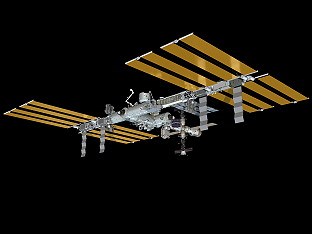
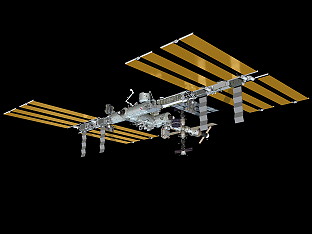
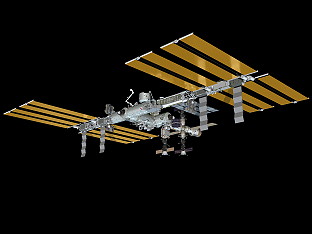
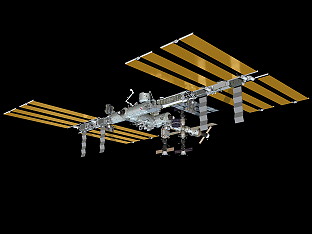
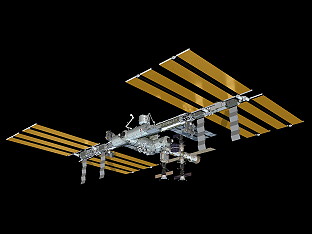
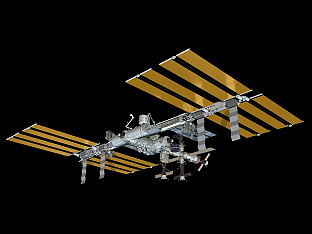
ISS Assembly
 |
 |
 |
 |
 |
 |
Photos
 |
 |
|
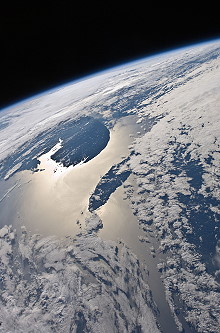
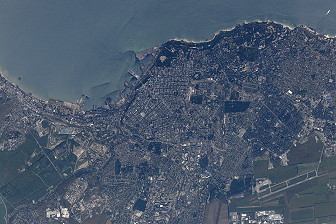
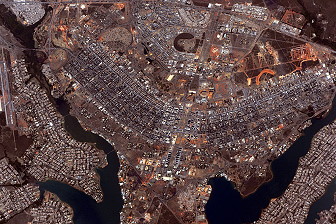
source of all photos is Roscosmos / NASA |
|
 |
 |
 |
 |
 |
 |
 |
 |
more Earth observation photos |
|
more EVA photos |
|
more onboard photos |
|
| © |  |
Last update on December 14, 2020.  |
 |